

DAILY PRAYER / 30 READINGS

नित्यप्रार्थनाः

Everyday Shlokas

Thirty Sanskrit prayers for the rhythm of an ordinary day.

A practical collection of thirty short prayers traditionally recited from waking and study through meals, worship, travel and rest. Each entry includes the Sanskrit, Roman transliteration, an original DHIH English meaning, a traditional-use label and devotional artwork.

Begin with the first shloka ↓
A family moving through a devotional day of prayer, study, food, an evening lamp and rest.
Original DHIH illustration of prayer woven through an ordinary day.

FROM WAKING TO REST

Choose a moment in the day

A small Ganesha image beside an open notebook in warm morning light.
Original devotional artwork prepared for DHIH.

Vakratuṇḍa Mahākāya

वक्रतुण्ड महाकाय सूर्यकोटिसमप्रभ । निर्विघ्नं कुरु मे देव सर्वकार्येषु सर्वदा ॥

vakratuṇḍa mahākāya sūryakoṭisamaprabha | nirvighnaṃ kuru me deva sarvakāryeṣu sarvadā ||

Line-by-line meaning

  1. He had a curved beak and a huge body, radiant like millions of suns. O Lord, please make me free from obstacles in all my endeavors at all times.

Short meaning

O curved-trunked, vast-bodied Lord, radiant as ten million suns, remove obstacles from all my undertakings, always.

Traditional context and source note

Traditional opening prayer.

This concise meaning is original DHIH prose prepared from the Sanskrit reading shown above.
Link to this shlokaBack to top ↑

A guru teaching disciples beside a river at dawn.
Original devotional artwork prepared for DHIH.

Gururbrahmā Gururviṣṇuḥ

गुरुर्ब्रह्मा गुरुर्विष्णुः गुरुर्देवो महेश्वरः । गुरुः साक्षात् परं ब्रह्म तस्मै श्रीगुरवे नमः ॥

gururbrahmā gururviṣṇuḥ gururdevo maheśvaraḥ | guruḥ sākṣāt paraṃ brahma tasmai śrīgurave namaḥ ||

Line-by-line meaning

  1. The spiritual master is Brahmā, the spiritual master is Vishnu, the spiritual master is God and the spiritual master is Maheśvara. The spiritual master is directly the Supreme Absolute Truth. I offer my respectful obeisances unto him.

Short meaning

The guru is understood as Brahmā, Viṣṇu and Maheśvara, and directly as the supreme reality. Reverence to that honoured teacher.

Traditional context and source note

Traditional guru verse.

This concise meaning is original DHIH prose prepared from the Sanskrit reading shown above.

Link to this shlokaBack to top ↑

A family beginning a devotional day with prayer, study, food, a lamp and rest.
Original devotional artwork prepared for DHIH.

Karāgre Vasate Lakṣmīḥ

कराग्रे वसते लक्ष्मीः करमध्ये सरस्वती । करमूले तु गोविन्दः प्रभाते करदर्शनम् ॥

karāgre vasate lakṣmīḥ karamadhye sarasvatī | karamūle tu govindaḥ prabhāte karadarśanam ||

Line-by-line meaning

  1. Lakshmi resides at the tip of the hand and Saraswati in the middle. At the root of the hand, Govinda is seen in the morning.

Short meaning

Lakṣmī is remembered at the fingertips, Sarasvatī in the centre of the hands, and Govinda at their base. At dawn, one looks upon the hands with this remembrance.

Traditional context and source note

Traditional morning prayer.

This concise meaning is original DHIH prose prepared from the Sanskrit reading shown above.
Link to this shlokaBack to top ↑

A serene devotional morning in a landscape of mountains and flowing water.
Original devotional artwork prepared for DHIH.

Samudravasane Devi

समुद्रवसने देवि पर्वतस्तनमण्डले । विष्णुपत्नि नमस्तुभ्यं पादस्पर्शं क्षमस्व मे ॥

samudravasane devi parvatastanamaṇḍale | viṣṇupatni namastubhyaṃ pādasparśaṃ kṣamasva me ||

Line-by-line meaning

  1. O goddess dressed in the sea, you are surrounded by mountain breasts. O wife of Lord Viṣṇu, I offer my respectful obeisances unto You. Please forgive me for touching Your feet.

Short meaning

O Goddess clothed by the oceans and adorned with mountains, consort of Viṣṇu, I bow to you. Please forgive the touch of my feet upon the earth.

Traditional context and source note

Traditional earth salutation.

This concise meaning is original DHIH prose prepared from the Sanskrit reading shown above.

Link to this shlokaBack to top ↑

A devotional landscape suggesting sacred rivers, dawn and daily prayer.
Original devotional artwork prepared for DHIH.

Gaṅge Ca Yamune

गङ्गे च यमुने चैव गोदावरि सरस्वति । नर्मदे सिन्धु कावेरि जलेऽस्मिन् सन्निधिं कुरु ॥

gaṅge ca yamune caiva godāvari sarasvati | narmade sindhu kāveri jale'smin sannidhiṃ kuru ||

Line-by-line meaning

  1. The Ganges, Yamuna, Godavari and Sarasvatī rivers are also known. O Narmadā, O Sindhu, O Cauvery, please make your presence felt in this water.

Short meaning

O Gaṅgā, Yamunā, Godāvarī, Sarasvatī, Narmadā, Sindhu and Kāverī, may your sacred presence be in this water.

Traditional context and source note

Traditional bathing prayer.

This concise meaning is original DHIH prose prepared from the Sanskrit reading shown above.
Link to this shlokaBack to top ↑

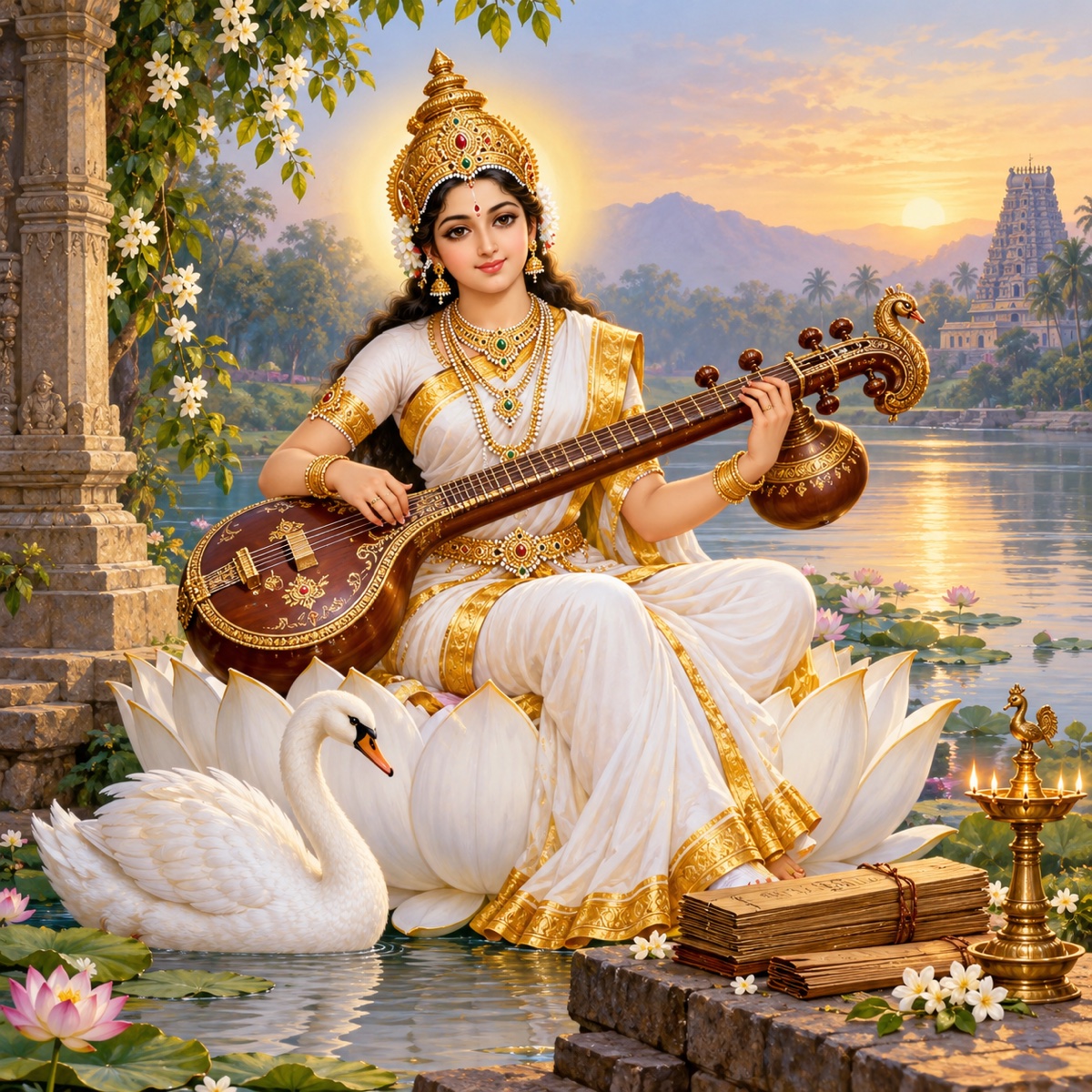
Original devotional illustration of Goddess Saraswati with the veena.
Original devotional artwork prepared for DHIH.

Sarasvati Namastubhyaṃ

सरस्वति नमस्तुभ्यं वरदे कामरूपिणि । विद्यारम्भं करिष्यामि सिद्धिर्भवतु मे सदा ॥

sarasvati namastubhyaṃ varade kāmarūpiṇi | vidyārambhaṃ kariṣyāmi siddhirbhavatu me sadā ||

Line-by-line meaning

  1. O Sarasvatī, bestower of boons, in the form of desire, I offer my obeisances unto you. I shall begin my studies May I always attain perfection

Short meaning

Reverence to Sarasvatī, giver of blessings and embodiment of aspiration. As I begin learning, may understanding and accomplishment remain with me.

Traditional context and source note

Traditional study prayer.

This concise meaning is original DHIH prose prepared from the Sanskrit reading shown above.

Link to this shlokaBack to top ↑

A teacher and students gathered for study beside a river at dawn.
Original devotional artwork prepared for DHIH.

Saha Nāvavatu

ॐ सह नाववतु । सह नौ भुनक्तु । सह वीर्यं करवावहै । तेजस्विनावधीतमस्तु । मा विद्विषावहै ॥ ॐ शान्तिः शान्तिः शान्तिः ॥

oṃ saha nāvavatu | saha nau bhunaktu | saha vīryaṃ karavāvahai | tejasvināvadhītamastu | mā vidviṣāvahai || oṃ śāntiḥ śāntiḥ śāntiḥ ||

Line-by-line meaning

  1. OM Saha Navavatu. Let’s eat nine with. Let’s get semen together. Let him be killed by the brilliant. Let us not hate each other. ॐ peace, peace, peace.

Short meaning

May we both be protected and nourished. May we work together with energy; may our study be radiant; may we not be hostile to one another. Peace, peace, peace.

Traditional context and source note

Taittirīya Upaniṣad peace invocation.

This concise meaning is original DHIH prose prepared from the Sanskrit reading shown above.

Link to this shlokaBack to top ↑

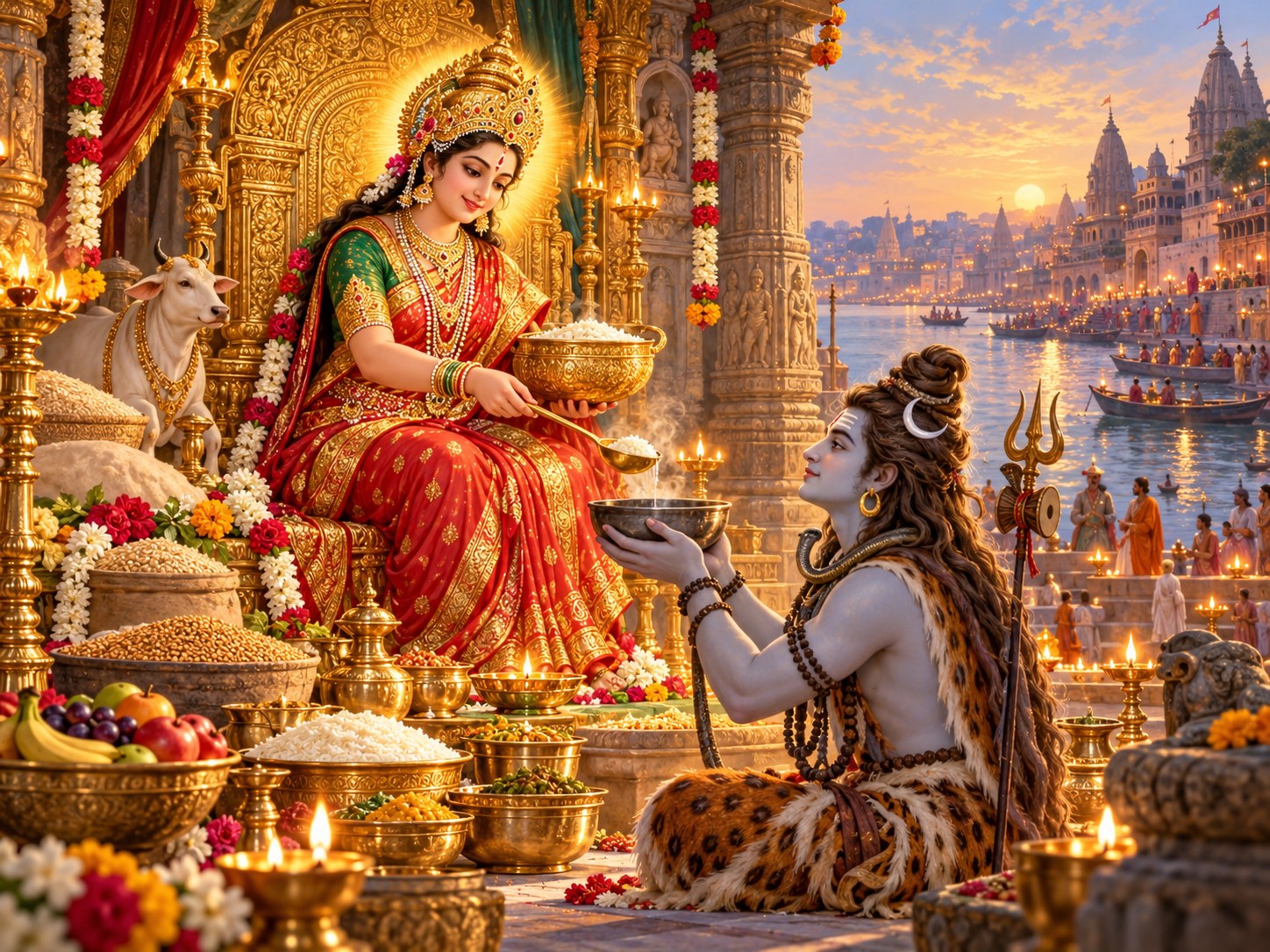
Goddess Annapurna offering nourishing food in Kashi.
Original devotional artwork prepared for DHIH.

Brahmārpaṇam

ब्रह्मार्पणं ब्रह्म हविर्ब्रह्माग्नौ ब्रह्मणा हुतम् । ब्रह्मैव तेन गन्तव्यं ब्रह्मकर्मसमाधिना ॥

brahmārpaṇaṃ brahma havirbrahmāgnau brahmaṇā hutam | brahmaiva tena gantavyaṃ brahmakarmasamādhinā ||

Line-by-line meaning

  1. Brahma-arpana is Brahma-havir, offered in the Brahma-agni by Brahma. By meditating on the Absolute Truth, one should reach the Absolute Truth.

Short meaning

The offering, the oblation, the fire and the one who offers are all Brahman. One absorbed in action as Brahman reaches Brahman alone.

Traditional context and source note

Bhagavad Gītā 4.24.

This concise meaning is original DHIH prose prepared from the Sanskrit reading shown above.

Link to this shlokaBack to top ↑

A devotional scene of Annapurna offering food as sacred nourishment.
Original devotional artwork prepared for DHIH.

Ahaṃ Vaiśvānaro Bhūtvā

अहं वैश्वानरो भूत्वा प्राणिनां देहमाश्रितः । प्राणापानसमायुक्तः पचाम्यन्नं चतुर्विधम् ॥

ahaṃ vaiśvānaro bhūtvā prāṇināṃ dehamāśritaḥ | prāṇāpānasamāyuktaḥ pacāmyannaṃ caturvidham ||

Line-by-line meaning

  1. I am the fire-god, and I take shelter of the body of living beings. I cook four kinds of food, concentrating on breathing and inhaling.

Short meaning

Dwelling in living bodies as the digestive fire and joined with the inward and outward breaths, I digest the four kinds of food.

Traditional context and source note

Bhagavad Gītā 15.14.

This concise meaning is original DHIH prose prepared from the Sanskrit reading shown above.

Link to this shlokaBack to top ↑

Goddess Annapurna offering food in a luminous temple setting.
Original devotional artwork prepared for DHIH.

Annapūrṇe Sadāpūrṇe

अन्नपूर्णे सदापूर्णे शङ्करप्राणवल्लभे । ज्ञानवैराग्यसिद्ध्यर्थं भिक्षां देहि च पार्वति ॥

annapūrṇe sadāpūrṇe śaṅkaraprāṇavallabhe | jñānavairāgyasiddhyarthaṃ bhikṣāṃ dehi ca pārvati ||

Line-by-line meaning

  1. O full of food, always full, dear to the life of Lord Śiva, O Parvatī, please give me alms for the perfection of knowledge and renunciation.

Short meaning

O Annapūrṇā, ever complete and dear to Śaṅkara, O Pārvatī, grant the nourishment through which knowledge and inner freedom may mature.

Traditional context and source note

Traditional Annapūrṇā prayer.

This concise meaning is original DHIH prose prepared from the Sanskrit reading shown above.
Link to this shlokaBack to top ↑

A family devotional scene with a glowing evening lamp.
Original devotional artwork prepared for DHIH.

Śubhaṃ Karoti Kalyāṇam

शुभं करोति कल्याणम् आरोग्यं धनसम्पदः । शत्रुबुद्धिविनाशाय दीपज्योतिर्नमोऽस्तु ते ॥

śubhaṃ karoti kalyāṇam ārogyaṃ dhanasampadaḥ | śatrubuddhivināśāya dīpajyotirnamo'stu te ||

Line-by-line meaning

  1. It brings good fortune, welfare, health, wealth and prosperity. Obeisances unto You, the effulgence of a lamp, who destroy the intelligence of Your enemies.

Short meaning

The light of the lamp brings auspiciousness, well-being, health and abundance, and dispels hostile thought. Reverence to this sacred light.

Traditional context and source note

Traditional lamp prayer.

This concise meaning is original DHIH prose prepared from the Sanskrit reading shown above.
Link to this shlokaBack to top ↑

A devotional illustration joining forms of Vishnu, Krishna and Rama.
Original devotional artwork prepared for DHIH.

Śrīrāma Rāma Rāmeti

श्रीराम राम रामेति रमे रामे मनोरमे । सहस्रनाम तत्तुल्यं रामनाम वरानने ॥

śrīrāma rāma rāmeti rame rāme manorame | sahasranāma tattulyaṃ rāmanāma varānane ||

Line-by-line meaning

  1. Śrī Rāma, Rāma, Rāma, Rāma, Rāma, delightful. O beautiful one the name of Rama is equal to a thousand names

Short meaning

Repeating “Śrī Rāma, Rāma, Rāma,” the mind delights in Rāma. The name of Rāma is traditionally praised as equal to the thousand names.

Traditional context and source note

Traditional Viṣṇu Sahasranāma closing verse.

This concise meaning is original DHIH prose prepared from the Sanskrit reading shown above.
Link to this shlokaBack to top ↑

A devotional day moving from dawn study to the light of an evening lamp.
Original devotional artwork prepared for DHIH.

Asato Mā Sadgamaya

ॐ असतो मा सद्गमय । तमसो मा ज्योतिर्गमय । मृत्योर्मा अमृतं गमय ॥ ॐ शान्तिः शान्तिः शान्तिः ॥

oṃ asato mā sadgamaya | tamaso mā jyotirgamaya | mṛtyormā amṛtaṃ gamaya || oṃ śāntiḥ śāntiḥ śāntiḥ ||

Line-by-line meaning

  1. ॐ Do not go to the truth of the untruth. Don’t let the light go from the darkness. Do not go to the immortality of death. ॐ peace, peace, peace.

Short meaning

Lead me from the unreal to the real, from darkness to light, and from mortality to the deathless. Peace, peace, peace.

Traditional context and source note

Bṛhadāraṇyaka Upaniṣad 1.3.28.

This concise meaning is original DHIH prose prepared from the Sanskrit reading shown above.

Link to this shlokaBack to top ↑

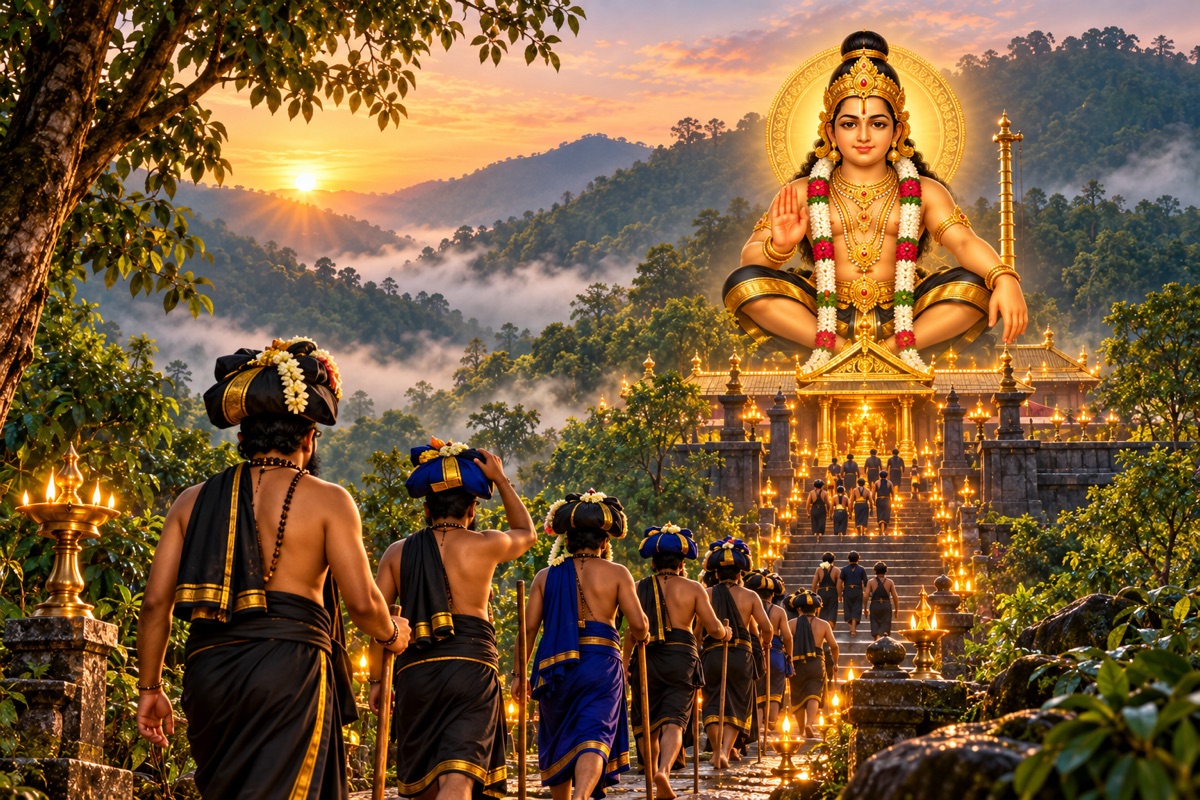
Lord Ayyappa in a lamp-lit temple setting associated with pilgrimage and worship.
Original devotional artwork prepared for DHIH.

Yāni Kāni Ca Pāpāni

यानि कानि च पापानि जन्मान्तरकृतानि च । तानि तानि विनश्यन्ति प्रदक्षिणपदे पदे ॥

yāni kāni ca pāpāni janmāntarakṛtāni ca | tāni tāni vinaśyanti pradakṣiṇapade pade ||

Line-by-line meaning

  1. What are the sins committed in the next life? Those things are destroyed at every step of circumambulation.

Short meaning

With every step of reverent circumambulation, may harmful actions accumulated across lives be dissolved.

Traditional context and source note

Traditional pradakṣiṇā prayer.

This concise meaning is original DHIH prose prepared from the Sanskrit reading shown above.

Link to this shlokaBack to top ↑

A family devotional scene representing care, learning, nourishment and peace.
Original devotional artwork prepared for DHIH.

Sarve Bhavantu Sukhinaḥ

सर्वे भवन्तु सुखिनः सर्वे सन्तु निरामयाः । सर्वे भद्राणि पश्यन्तु मा कश्चिद्दुःखभाग्भवेत् ॥

sarve bhavantu sukhinaḥ sarve santu nirāmayāḥ | sarve bhadrāṇi paśyantu mā kaścidduḥkhabhāgbhavet ||

Line-by-line meaning

  1. May all be happy and may all be healthy. May all be well-wishers and may no one be a victim of suffering.

Short meaning

May all be happy and free from illness. May all behold what is good; may no one have to bear sorrow.

Traditional context and source note

Traditional peace prayer.

This concise meaning is original DHIH prose prepared from the Sanskrit reading shown above.

Link to this shlokaBack to top ↑

A devotional illustration with Vishnu, Krishna and Rama in a radiant sacred setting.
Original devotional artwork prepared for DHIH.

Rāmaṃ Skandaṃ Hanūmantaṃ

रामं स्कन्दं हनूमन्तं वैनतेयं वृकोदरम् । शयने यः स्मरेन्नित्यं दुःस्वप्नं तस्य नश्यति ॥

rāmaṃ skandaṃ hanūmantaṃ vainateyaṃ vṛkodaram | śayane yaḥ smarennityaṃ duḥsvapnaṃ tasya naśyati ||

Line-by-line meaning

  1. I worship Lord Rāma, Lord Skanda, Lord Hanuman, Lord Vainateya and Lord Bhīma. He who constantly remembers this in bed his nightmares are destroyed

Short meaning

One remembers Rāma, Skanda, Hanumān, Garuḍa and Bhīma before sleep; the verse traditionally asks that troubling dreams disappear.

Traditional context and source note

Traditional bedtime remembrance.

This concise meaning is original DHIH prose prepared from the Sanskrit reading shown above.
Link to this shlokaBack to top ↑

A compassionate form of the Goddess offering refuge and nourishment.
Original devotional artwork prepared for DHIH.

Vivāde Viṣāde

विवादे विषादे प्रमादे प्रवासे जले चानले पर्वते शत्रुमध्ये । अरण्ये शरण्ये सदा मां प्रपाहि गतिस्त्वं गतिस्त्वं त्वमेका भवानि ॥

vivāde viṣāde pramāde pravāse jale cānale parvate śatrumadhye | araṇye śaraṇye sadā māṃ prapāhi gatistvaṃ gatistvaṃ tvamekā bhavāni ||

Line-by-line meaning

  1. In dispute, in depression, in negligence, in travel, in water, in fire, in mountains, in the midst of enemies. O forest, shelter of all, always protect me. You are the only refuge, the only refuge.

Short meaning

In conflict, grief, danger or travel; amid water, fire, mountains, enemies or forest—O Bhavānī, refuge of all, always protect me. You alone are my shelter.

Traditional context and source note

Bhavānī Aṣṭakam, verse 7; traditionally attributed to Ādi Śaṅkara.

This concise meaning is original DHIH prose prepared from the Sanskrit reading shown above.

Link to this shlokaBack to top ↑

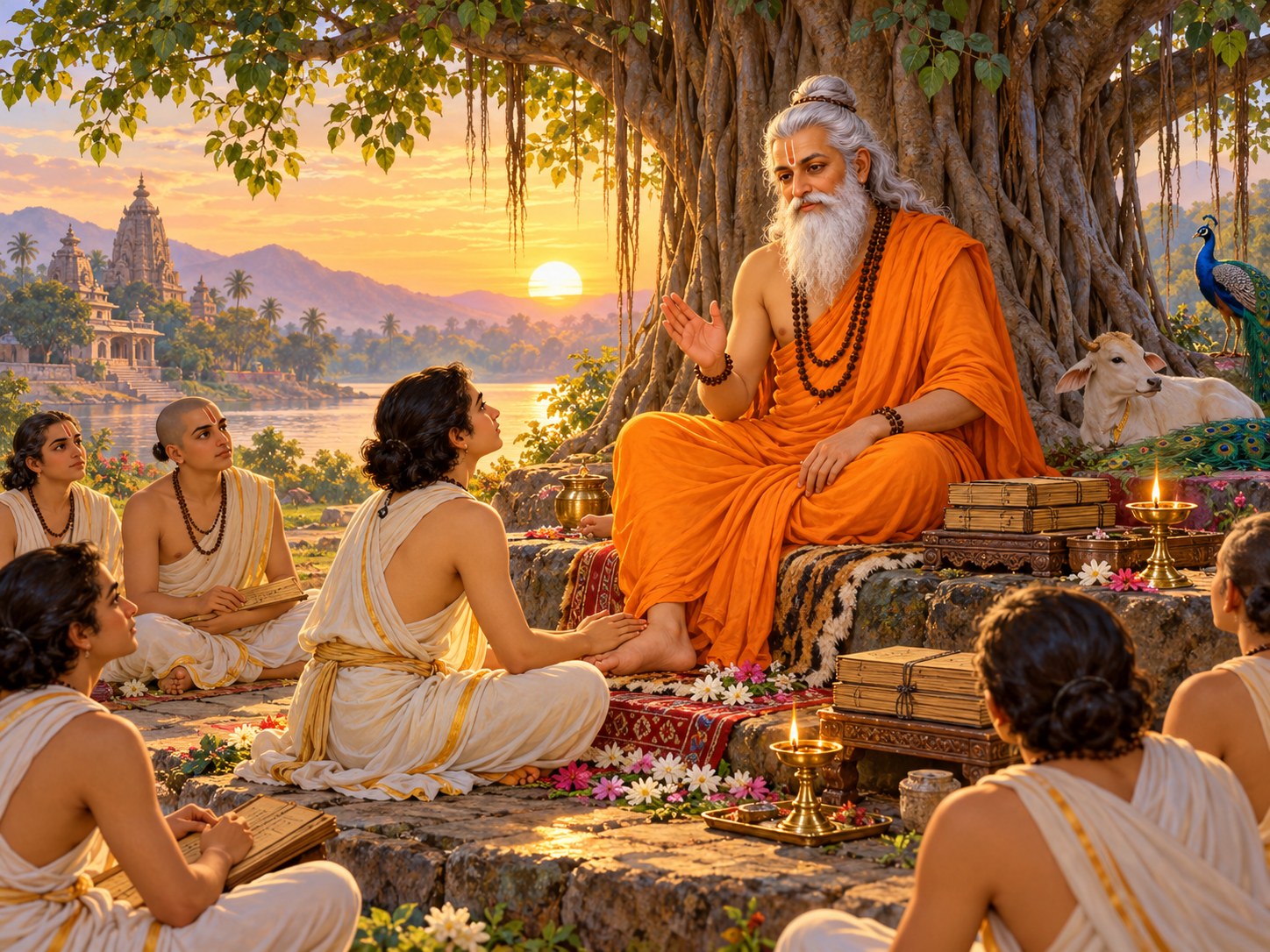
Lord Dakshinamurti teaching in silence beneath a banyan tree.
Original devotional artwork prepared for DHIH.

Gurave Sarvalokānām

गुरवे सर्वलोकानां भिषजे भवरोगिणाम् । निधये सर्वविद्यानां दक्षिणामूर्तये नमः ॥

gurave sarvalokānāṃ bhiṣaje bhavarogiṇām | nidhaye sarvavidyānāṃ dakṣiṇāmūrtaye namaḥ ||

Line-by-line meaning

  1. I am the spiritual master of all the worlds and the physician of the sick of this world. O treasure of all knowledge, O Dakṣiṇā-murti, I offer my respectful obeisances unto You.

Short meaning

Reverence to Dakṣiṇāmūrti, teacher of all worlds, physician of those afflicted by worldly becoming, and treasury of every branch of knowledge.

Traditional context and source note

Traditional Dakṣiṇāmūrti salutation.

This concise meaning is original DHIH prose prepared from the Sanskrit reading shown above.

Link to this shlokaBack to top ↑

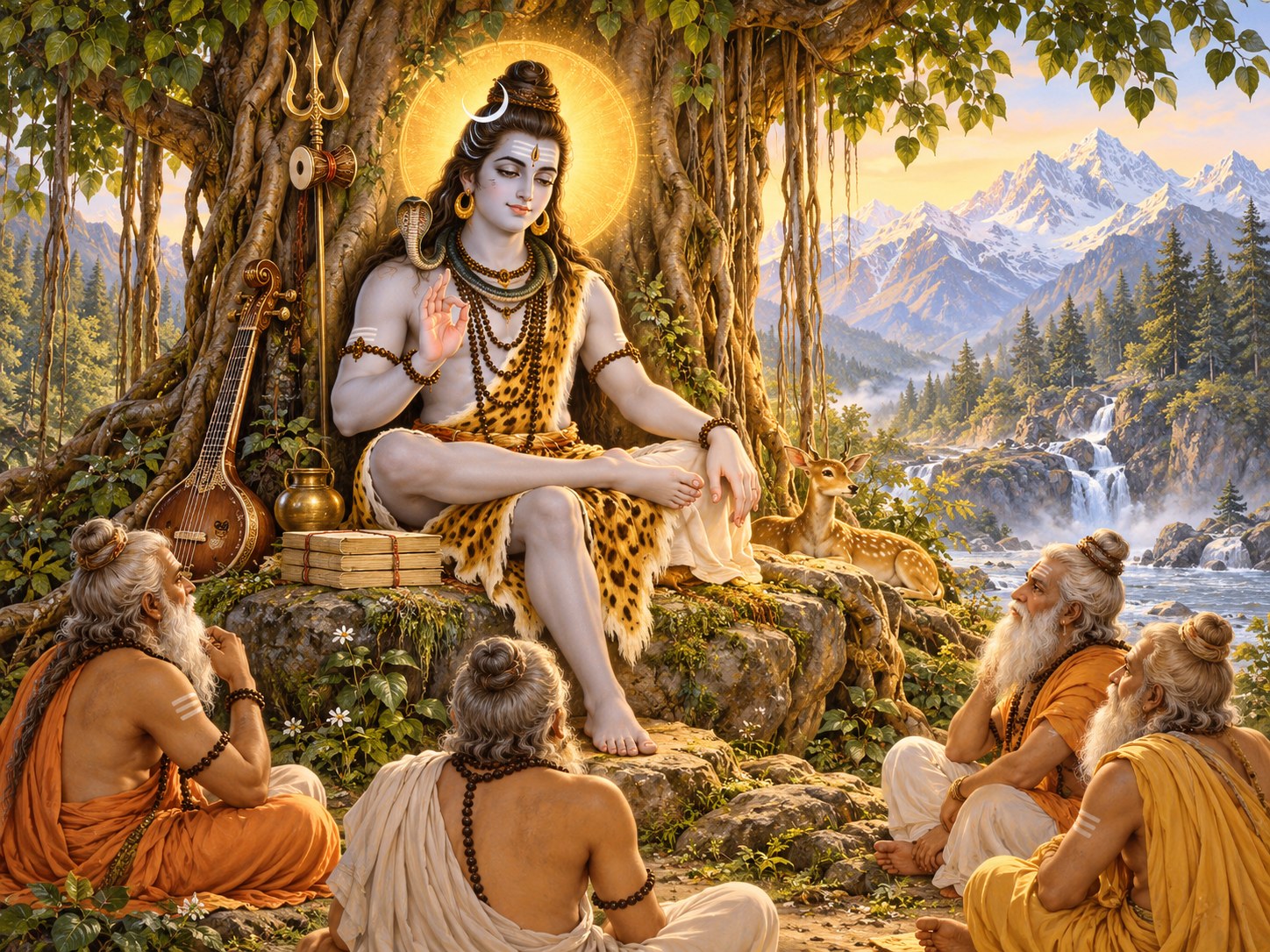
A serene form of Shiva as Dakshinamurti beneath a banyan tree.
Original devotional artwork prepared for DHIH.

Śivaṃ Śivakaraṃ Śāntam

शिवं शिवकरं शान्तं शिवात्मानं शिवोत्तमम् । शिवमार्गप्रणेतारं प्रणतोऽस्मि सदाशिवम् ॥

śivaṃ śivakaraṃ śāntaṃ śivātmānaṃ śivottamam | śivamārgapraṇetāraṃ praṇato'smi sadāśivam ||

Line-by-line meaning

  1. Lord Śiva is the hand of Lord Śiva, the peaceful soul of Lord Śiva, and the best of Lord Śiva. I offer my obeisances to Lord Sadaśiva, the pioneer of the path of Lord Śiva.

Short meaning

I bow to Sadāśiva: auspicious, peace-giving, supremely benevolent, and the guide along the path of auspiciousness.

Traditional context and source note

Traditional Śiva meditation verse.

This concise meaning is original DHIH prose prepared from the Sanskrit reading shown above.

Link to this shlokaBack to top ↑

Goddess Annapurna, a benevolent form of Parvati, offering nourishment.
Original devotional artwork prepared for DHIH.

Sarvamaṅgalamāṅgalye

सर्वमङ्गलमाङ्गल्ये शिवे सर्वार्थसाधिके । शरण्ये त्र्यम्बके गौरि नारायणि नमोऽस्तु ते ॥

sarvamaṅgalamāṅgalye śive sarvārthasādhike | śaraṇye tryambake gauri nārāyaṇi namo'stu te ||

Line-by-line meaning

  1. O auspicious one, auspicious to all, auspicious, fulfiller of all purposes, Obeisances unto You, O protector of all, O Trimbake, O Gauri, O Nārāyaṇi!

Short meaning

O most auspicious among all that is auspicious, fulfiller of every worthy aim, refuge, three-eyed Gaurī and Nārāyaṇī, reverence to you.

Traditional context and source note

Nārāyaṇī Stuti, traditional Devī prayer.

This concise meaning is original DHIH prose prepared from the Sanskrit reading shown above.

Link to this shlokaBack to top ↑

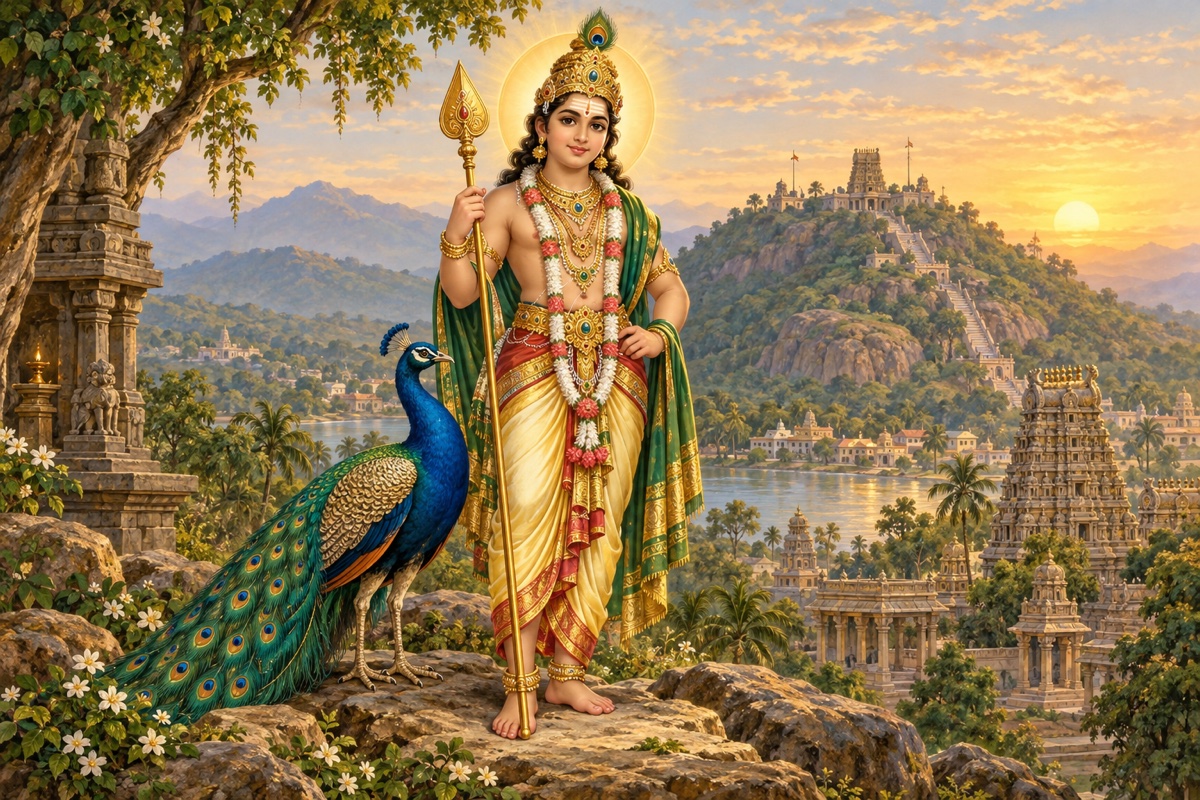
Lord Murugan holding the vel beside a peacock and a hill temple.
Original devotional artwork prepared for DHIH.

Yogīśvaro Mahāsenaḥ

योगीश्वरो महासेनः कार्तिकेयोऽग्निनन्दनः । स्कन्दः कुमारः सेनानीः स्वामी शङ्करसम्भवः ॥

yogīśvaro mahāsenaḥ kārtikeyo'gninandanaḥ | skandaḥ kumāraḥ senānīḥ svāmī śaṅkarasambhavaḥ ||

Line-by-line meaning

  1. The lord of yogis is Mahasena and Kartikeya is the delight of the fire. Skanda is the young warrior and lord born of Lord Śiva

Short meaning

He is lord of yogins, leader of the great army, Kārttikeya, child of Agni, Skanda, Kumāra, commander, master, and son of Śaṅkara.

Traditional context and source note

Traditional Kārttikeya names verse.

This concise meaning is original DHIH prose prepared from the Sanskrit reading shown above.

Link to this shlokaBack to top ↑

Lord Vishnu with devotional scenes of Krishna and Rama.
Original devotional artwork prepared for DHIH.

Śāntākāraṃ Bhujagaśayanam

शान्ताकारं भुजगशयनं पद्मनाभं सुरेशं विश्वाधारं गगनसदृशं मेघवर्णं शुभाङ्गम् । लक्ष्मीकान्तं कमलनयनं योगिभिर्ध्यानगम्यं वन्दे विष्णुं भवभयहरं सर्वलोकैकनाथम् ॥

śāntākāraṃ bhujagaśayanaṃ padmanābhaṃ sureśaṃ viśvādhāraṃ gaganasadṛśaṃ meghavarṇaṃ śubhāṅgam | lakṣmīkāntaṃ kamalanayanaṃ yogibhirdhyānagamyaṃ vande viṣṇuṃ bhavabhayaharaṃ sarvalokaikanātham ||

Line-by-line meaning

  1. He is peaceful in form, lying on a serpent, with a lotus-navel, Lord of the gods, the basis of the universe, and resembling the sky with the color of a cloud. I offer my respectful obeisances unto Lord Viṣṇu, the lover of all opulences, whose eyes are like lotuses, whom yogīs can meditate upon.

Short meaning

I bow to Viṣṇu, serene in form and reclining on the serpent, lotus-navelled lord of the gods, foundation of the universe, vast as the sky, cloud-hued and auspicious; beloved of Lakṣmī, lotus-eyed, reached through meditation, remover of worldly fear, and lord of all worlds.

Traditional context and source note

Traditional Viṣṇu meditation verse.

This concise meaning is original DHIH prose prepared from the Sanskrit reading shown above.

Link to this shlokaBack to top ↑

Goddess Lakshmi showering golden light beside a humble home.
Original devotional artwork prepared for DHIH.

Padmāsanasthite Devi

पद्मासनस्थिते देवि परब्रह्मस्वरूपिणि । परमेशि जगन्मातर्महालक्ष्मि नमोऽस्तु ते ॥

padmāsanasthite devi parabrahmasvarūpiṇi | parameśi jaganmātarmahālakṣmi namo'stu te ||

Line-by-line meaning

  1. O goddess, seated on the lotus seat, you are the embodiment of the Supreme Absolute Truth. O Supreme Lord, mother of the universe, O greatly fortunate one, I offer my obeisances unto You.

Short meaning

O Goddess seated upon the lotus, embodiment of the supreme reality, sovereign Mother of the universe, Mahālakṣmī, reverence to you.

Traditional context and source note

Traditional Mahālakṣmī prayer.

This concise meaning is original DHIH prose prepared from the Sanskrit reading shown above.

Link to this shlokaBack to top ↑

A devotional illustration joining Vishnu and Krishna with sacred symbols.
Original devotional artwork prepared for DHIH.

Kṛṣṇāya Vāsudevāya

कृष्णाय वासुदेवाय देवकीनन्दनाय च । नन्दगोपकुमाराय गोविन्दाय नमो नमः ॥

kṛṣṇāya vāsudevāya devakīnandanāya ca | nandagopakumārāya govindāya namo namaḥ ||

Line-by-line meaning

  1. O Lord Kṛṣṇa, Lord Vāsudeva, You are the son of Devakī. Obeisances to Govinda, the son of Nanda and Gopa.

Short meaning

Repeated reverence to Kṛṣṇa, son of Vasudeva and joy of Devakī, the young child of Nandagopa, Govinda.

Traditional context and source note

Traditional Kṛṣṇa salutation.

This concise meaning is original DHIH prose prepared from the Sanskrit reading shown above.

Link to this shlokaBack to top ↑

Original devotional illustration of Hanuman standing with the gada at dawn.
Original devotional artwork prepared for DHIH.

Buddhirbalaṃ Yaśodhairyam

बुद्धिर्बलं यशो धैर्यं निर्भयत्वमरोगता । अजाड्यं वाक्पटुत्वं च हनुमत्स्मरणाद्भवेत् ॥

buddhirbalaṃ yaśo dhairyaṃ nirbhayatvamarogatā | ajāḍyaṃ vākpaṭutvaṃ ca hanumatsmaraṇādbhavet ||

Line-by-line meaning

  1. Intelligence, strength, fame, patience, fearlessness and health. By remembering Hanuman one becomes free from ignorance and eloquent in speech.

Short meaning

Remembering Hanumān is traditionally associated with intelligence, strength, good name, courage, fearlessness, health, alertness and eloquence.

Traditional context and source note

Traditional Hanumān remembrance verse.

This concise meaning is original DHIH prose prepared from the Sanskrit reading shown above.

Link to this shlokaBack to top ↑

Original devotional illustration of Surya encircled by the other eight Navagrahas.
Original devotional artwork prepared for DHIH.

Namaḥ Sūryāya Candrāya

नमः सूर्याय चन्द्राय मङ्गलाय बुधाय च । गुरुशुक्रशनिभ्यश्च राहवे केतवे नमः ॥

namaḥ sūryāya candrāya maṅgalāya budhāya ca | guruśukraśanibhyaśca rāhave ketave namaḥ ||

Line-by-line meaning

  1. I offer my respectful obeisances unto the sun, moon, auspiciousness and Mercury. I offer my obeisances to Guru, Venus, Saturn, Rāhu and Ketu.

Short meaning

Reverence to Sūrya, Candra, Maṅgala and Budha; reverence also to Guru, Śukra, Śani, Rāhu and Ketu—the nine planetary powers.

Traditional context and source note

Traditional Navagraha salutation.

This concise meaning is original DHIH prose prepared from the Sanskrit reading shown above.

Link to this shlokaBack to top ↑

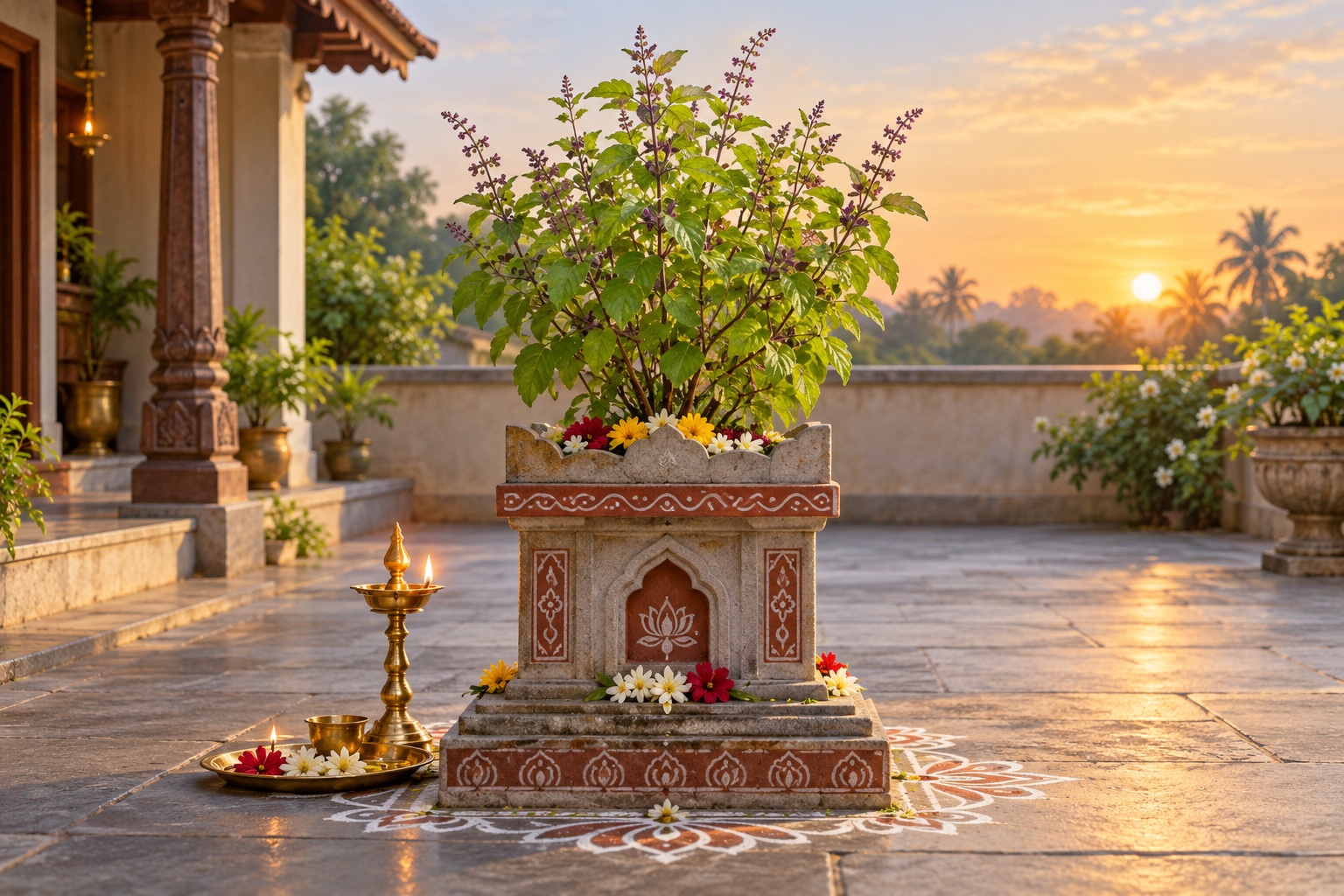
A sacred Tulasi plant in a traditional courtyard at dawn, lit by oil lamps.
Original devotional artwork prepared for DHIH.

Namastulasi Kalyāṇi

नमस्तुलसि कल्याणि नमो विष्णुप्रिये शुभे । नमो मोक्षप्रदे देवि नमः सम्पत्प्रदायिके ॥

namastulasi kalyāṇi namo viṣṇupriye śubhe | namo mokṣaprade devi namaḥ sampatpradāyike ||

Line-by-line meaning

  1. Obeisances to you, auspicious Tulasi, dear to Lord Viṣṇu. O goddess who bestows liberation, I offer my respectful obeisances unto you.

Short meaning

Reverence to sacred Tulasī, bringer of well-being, auspicious and dear to Viṣṇu; reverence to the Goddess who is praised as granting freedom and abundance.

Traditional context and source note

Traditional Tulasī prayer.

This concise meaning is original DHIH prose prepared from the Sanskrit reading shown above.

Link to this shlokaBack to top ↑

Original devotional illustration of Bharata Mata before the Himalayas, holding a lotus and book.
Original devotional artwork prepared for DHIH.

Ratnākarādhautapadām

रत्नाकराधौतपदां हिमालयकिरीटिनीम् । ब्रह्मराजर्षिरत्नाढ्यां वन्दे भारतमातरम् ॥

ratnākarādhautapadāṃ himālayakirīṭinīm | brahmarājarṣiratnāḍhyāṃ vande bhāratamātaram ||

Line-by-line meaning

  1. Her feet were washed with jewels and she wore a crown of Himalayas. I offer my obeisances to the mother of India, rich in jewels among the sages and kings of the brāhmaṇas.

Short meaning

I salute Mother Bhārata, whose feet are washed by the ocean, whose crown is the Himalaya, and whose heritage is adorned by seers, sages and noble guides.

Traditional context and source note

Patriotic Sanskrit salutation; not presented as an ancient scripture.

This concise meaning is original DHIH prose prepared from the Sanskrit reading shown above.

Link to this shlokaBack to top ↑

Original devotional illustration of seven sages meditating beneath a starlit sky.
Original devotional artwork prepared for DHIH.

Kaśyapo’trirbharadvājaḥ

कश्यपोऽत्रिर्भरद्वाजो विश्वामित्रोऽथ गौतमः । जमदग्निर्वसिष्ठश्च सप्तैते ऋषयः स्मृताः ॥

kaśyapo'trirbharadvājo viśvāmitro'tha gautamaḥ | jamadagnirvasiṣṭhaśca saptaite ṛṣayaḥ smṛtāḥ ||

Line-by-line meaning

  1. Kaśyapa, Atri, Bharadvāja, Vishvāmitra and Gautama. Jamadagni and Vasiṣṭha are the seven sages mentioned above.

Short meaning

Kaśyapa, Atri, Bharadvāja, Viśvāmitra, Gautama, Jamadagni and Vasiṣṭha—these seven seers are remembered.

Traditional context and source note

Traditional seven-sages remembrance.

This concise meaning is original DHIH prose prepared from the Sanskrit reading shown above.

Link to this shlokaBack to top ↑

A devotional illustration of Vishnu with Krishna and Rama in a radiant sacred setting.
Original devotional artwork prepared for DHIH.

Kāyena Vācā

कायेन वाचा मनसेन्द्रियैर्वा बुद्ध्यात्मना वा प्रकृतेः स्वभावात् । करोमि यद्यत् सकलं परस्मै नारायणायेति समर्पयामि ॥

kāyena vācā manasendriyairvā buddhyātmanā vā prakṛteḥ svabhāvāt | karomi yadyat sakalaṃ parasmai nārāyaṇāyeti samarpayāmi ||

Line-by-line meaning

  1. Whether it is through the body, speech, mind, senses, intelligence or the soul, it is the nature of nature. Whatever I do, I offer to the Supreme Personality of Godhead, Nārāyaṇa.

Short meaning

Whatever I do through body, speech, mind, senses, understanding, self or natural impulse, I offer it all to the supreme Nārāyaṇa.

Traditional context and source note

Traditional dedication prayer.

This concise meaning is original DHIH prose prepared from the Sanskrit reading shown above.

Link to this shlokaBack to top ↑

READ WITH CONTEXT

Sources and editorial approach

The Gurukula Everyday Shlokas page was used as the thirty-item checklist. Sanskrit readings were normalized independently in Devanagari and IAST and compared with public prayer collections and identified scriptural references. Gurukula stories, audio, illustrations and explanatory translations are not reproduced. English meanings are original DHIH AI-assisted prose reviewed against this edition. This is a devotional reading edition, not a critical edition or a claim of human scholarly certification.

Edition: DHIH normalized Devanagari and IAST reading edition, October 2026.

Attribution: Traditional prayers from multiple sources; individual authorship varies or is unknown.

← Return to the DHIH collection