Search DHIH library

SHIVA · FOUR FOUNDATIONAL READINGS

शिवमन्त्राः प्रार्थनाश्च

Essential Shiva Mantras and Prayers

Four foundational Shiva readings with Sanskrit, Roman transliteration and clear English guidance.

This collection brings together a short salutation, two Vedic mantras and a concluding prayer of forgiveness. Each reading keeps the original Sanskrit separate from its line-by-line English sense and its broader devotional interpretation.

Begin with Om Namah Shivaya ↓
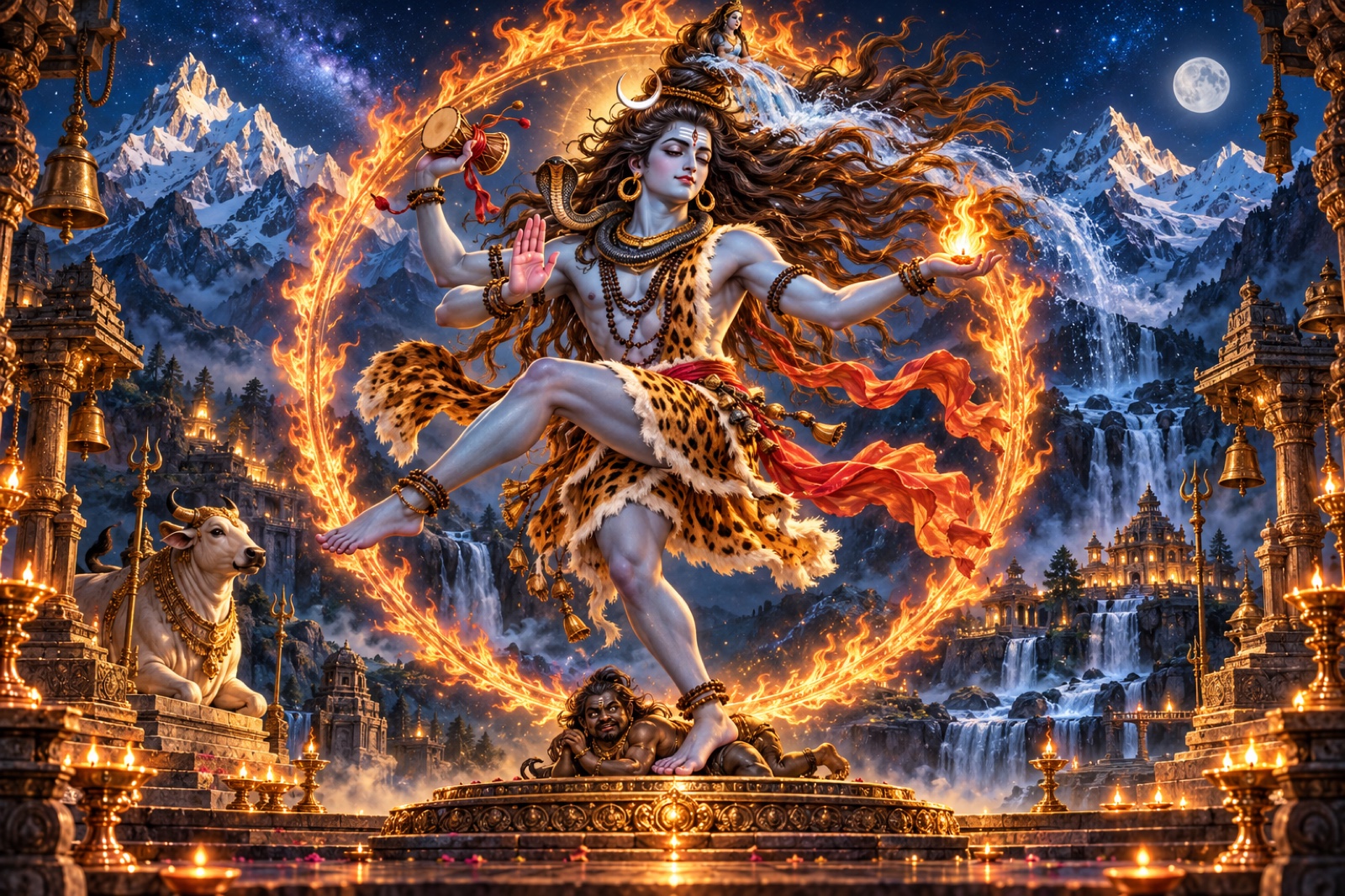
Lord Shiva in a luminous cosmic Himalayan landscape, in an original devotional painting.
Original DHIH illustration of Shiva as stillness, power and transformation.

SALUTATION · HEALING PRAYER · MEDITATION · FORGIVENESS

Choose a Shiva mantra or prayer

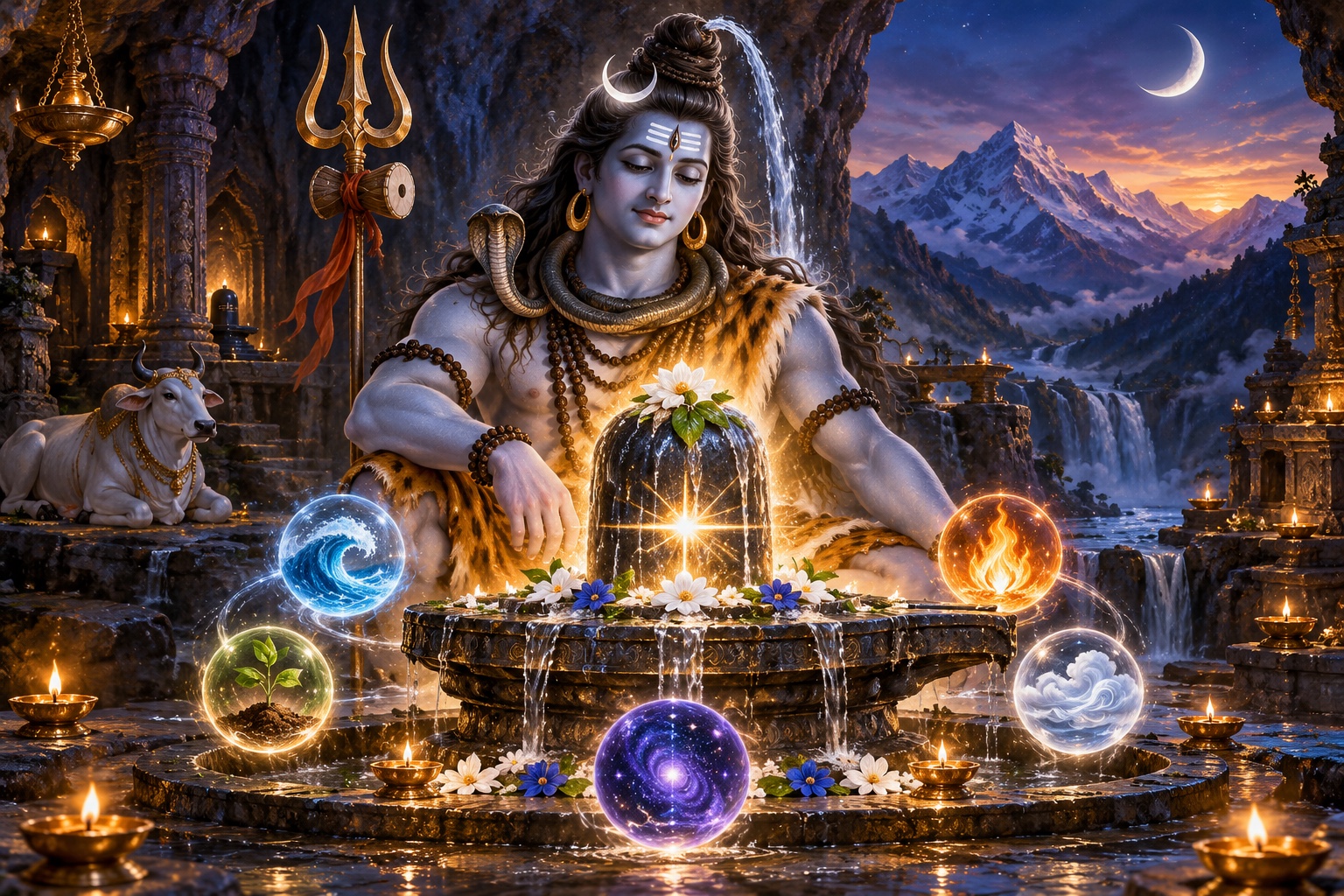
A radiant Shiva linga surrounded by five luminous syllable emblems, in an original devotional illustration for the Panchakshara mantra.
Original devotional artwork prepared for DHIH.

ॐ नमः शिवाय

Om Namah Shivaya

ॐ नमः शिवाय ॥

oṃ namaḥ śivāya ||

Line-by-line English meaning

  1. Om. I bow in reverence to Shiva, the auspicious one.

Short meaning

This compact salutation turns the mind toward Shiva with humility and surrender. The core five syllables na-ma-śi-vā-ya are known as the Panchakshara; with Om placed before them, the mantra is commonly called Om Namah Shivaya.

Traditional context and source note

Shri Rudram / Panchakshara tradition. The Panchakshara formula नमः शिवाय occurs within the Shri Rudram tradition. This page presents the familiar devotional form with Om prefixed; it does not prescribe one lineage's ritual procedure.

The English line senses, short meaning and usage note are original DHIH prose for this edition.
Link to this mantraBack to top ↑

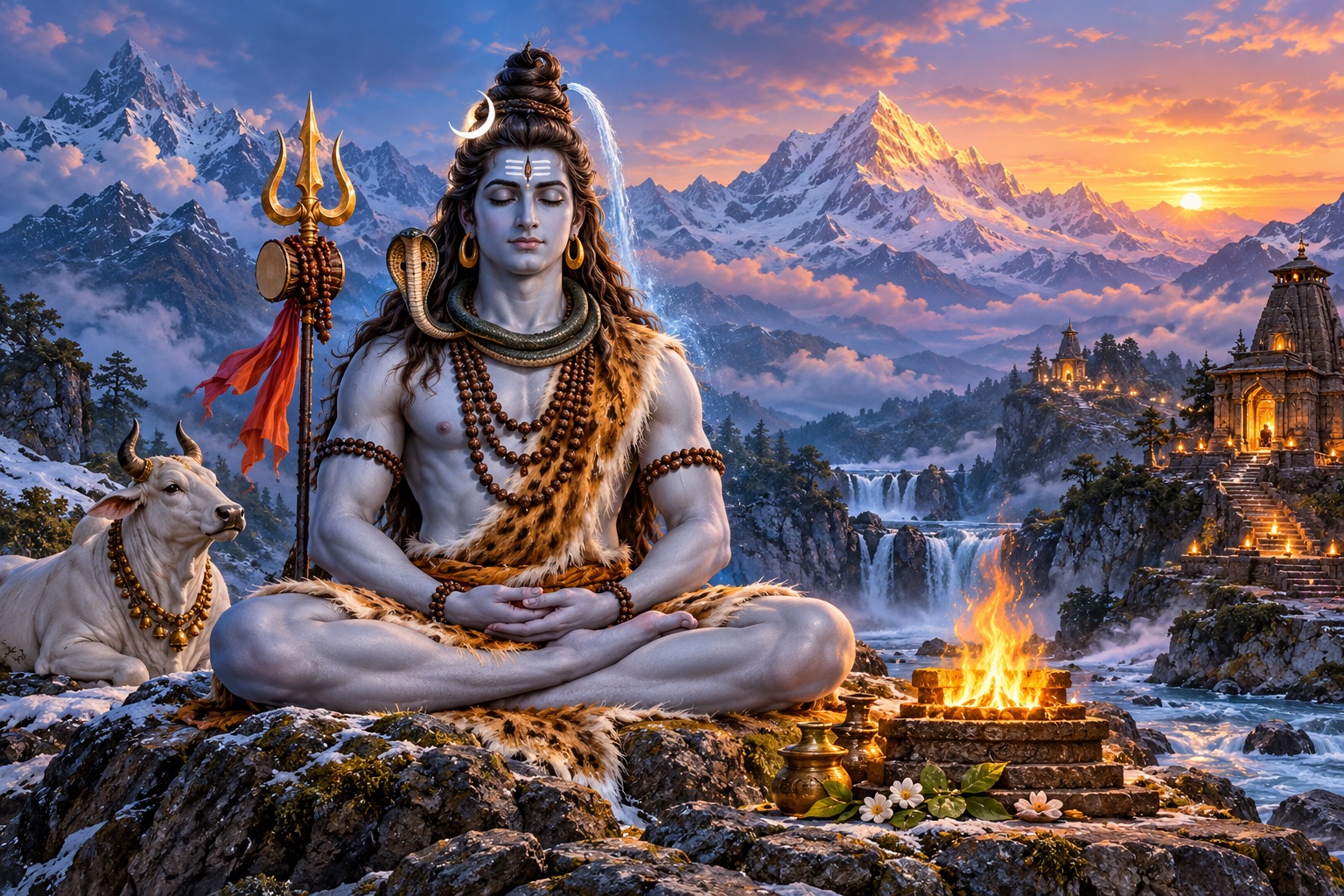
Lord Shiva as Tryambaka in meditation with healing light, herbs and a moonlit Himalayan river, in an original devotional painting.
Original devotional artwork prepared for DHIH.

महामृत्युञ्जयमन्त्रः

Maha Mrityunjaya Mantra

ॐ त्र्यम्बकं यजामहे सुगन्धिं पुष्टिवर्धनम् । उर्वारुकमिव बन्धनान्मृत्योर्मुक्षीय मामृतात् ॥

oṃ tryambakaṃ yajāmahe sugandhiṃ puṣṭivardhanam | urvārukam iva bandhanān mṛtyor mukṣīya mā'mṛtāt ||

Line-by-line English meaning

  1. We worship the three-eyed one, fragrant with grace and increasing our nourishment and fullness.
  2. Like a ripe cucumber freed from its stem, may I be released from death-bound limitation, not from immortality.

Short meaning

This Vedic prayer addresses Shiva as Tryambaka, the three-eyed one. It asks for ripeness, healing and freedom from the fear and bondage of death while remaining rooted in the immortal.

Traditional context and source note

Rigveda 7.59.12. The mantra is Rigveda 7.59.12, traditionally addressed to Rudra as Tryambaka. DHIH retains the same Sanskrit and reviewed English used on its existing standalone Mahamrityunjaya reading.

The English line senses, short meaning and usage note are original DHIH prose for this edition.
Link to this mantraBack to top ↑

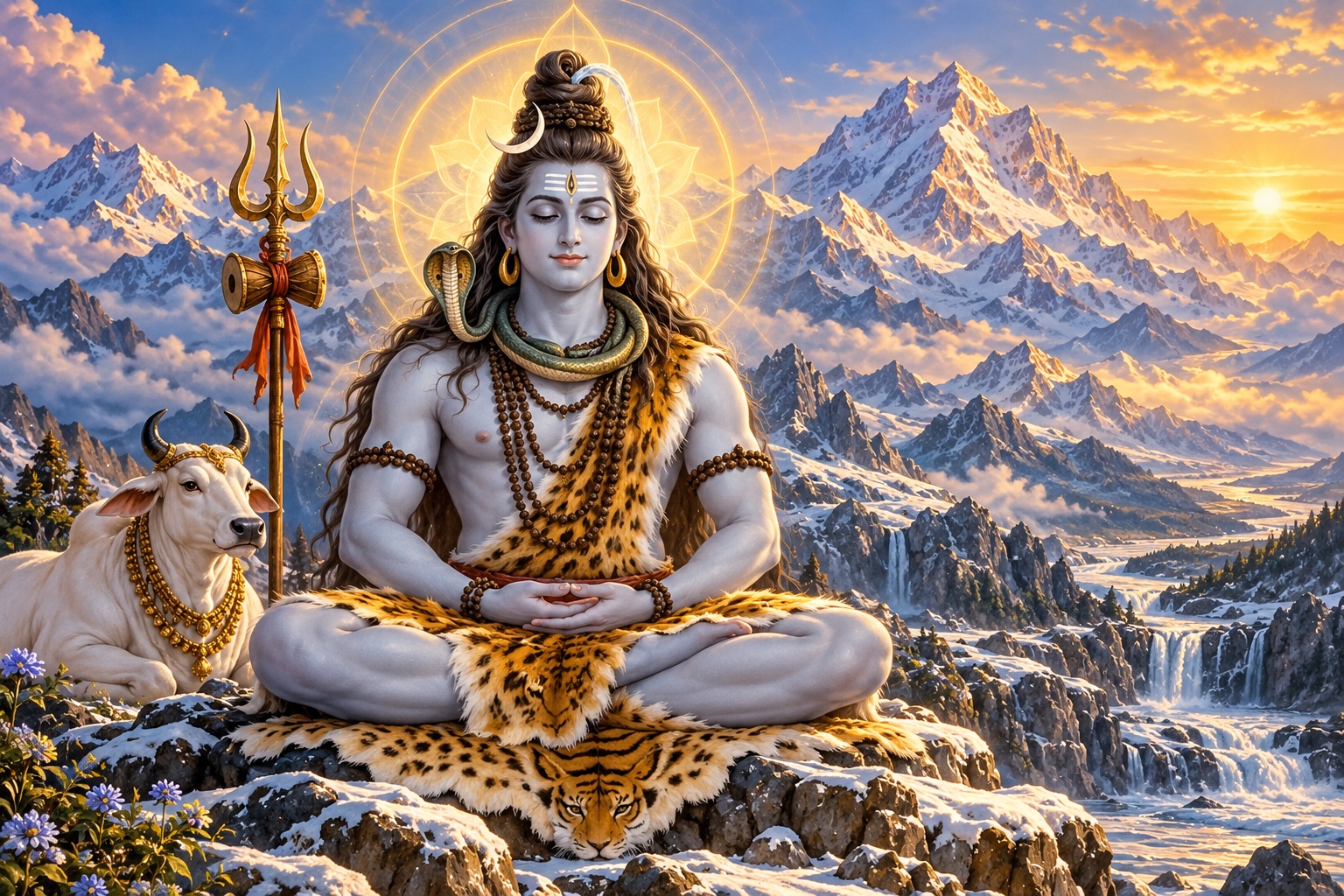
Lord Shiva in meditation with the Ganga flowing from his matted hair, in an original devotional illustration for the Shiva Gayatri.
Original devotional artwork prepared for DHIH.

शिवगायत्रीमन्त्रः

Shiva Gayatri Mantra

ॐ तत्पुरुषाय विद्महे । महादेवाय धीमहि । तन्नो रुद्रः प्रचोदयात् ॥

oṃ tatpuruṣāya vidmahe | mahādevāya dhīmahi | tanno rudraḥ pracodayāt ||

Line-by-line English meaning

  1. Om. May we come to know that Supreme Person.
  2. May we meditate upon the Great God.
  3. May Rudra inspire and guide our understanding.

Short meaning

The mantra moves through knowing, meditation and inner illumination. It invokes Shiva as Tatpurusha, Mahadeva and Rudra, asking that understanding be directed toward what is highest.

Traditional context and source note

Taittiriya Aranyaka 10.20 / Mahanarayana Upanishad. This Rudra Gayatri is preserved in the Taittiriya Aranyaka and the Mahanarayana Upanishad tradition; section numbering varies between editions. The three displayed lines follow the familiar unaccented reading.

The English line senses, short meaning and usage note are original DHIH prose for this edition.
Link to this mantraBack to top ↑

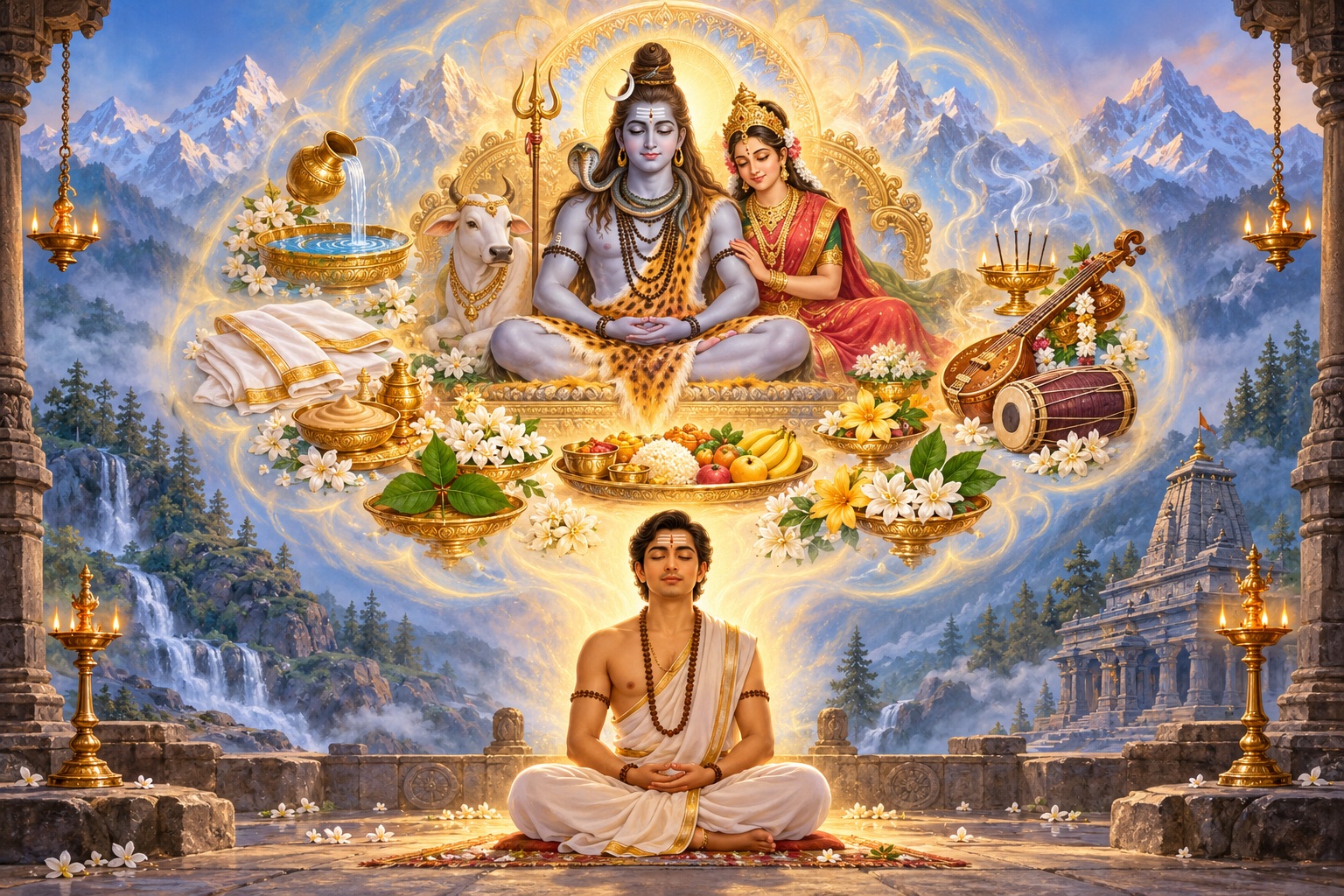
A devotee performing an inward Shiva puja through meditation and the light of the heart, in an original devotional illustration.
Original devotional artwork prepared for DHIH.

करचरणकृतं वाक्कायजम्

Karacharana Kritam — Forgiveness Prayer

करचरणकृतं वाक्कायजं कर्मजं वा । श्रवणनयनजं वा मानसं वापराधम् । विहितमविहितं वा सर्वमेतत्क्षमस्व । जय जय करुणाब्धे श्रीमहादेवशम्भो ॥ ५॥

karacaraṇakṛtaṃ vākkāyajaṃ karmajaṃ vā | śravaṇanayanajaṃ vā mānasaṃ vāparādham | vihitamavihitaṃ vā sarvametat kṣamasva | jaya jaya karuṇābdhe śrīmahādeva śambho || 5 ||

Line-by-line English meaning

  1. Forgive the wrong done by hands or feet, by speech or body, or through action.
  2. Forgive what arose through hearing or sight, or as an offence within the mind.
  3. Whether commanded or forbidden, forgive all of it.
  4. Victory to you, ocean of compassion, great God Shambhu.

Short meaning

This closing prayer asks forgiveness for conscious and unconscious faults of action, speech, perception and thought. It ends by addressing Mahadeva as an ocean of compassion rather than by hiding human fallibility.

Traditional context and source note

Shiva Manasa Puja, verse 5. This is verse 5 of Shiva Manasa Puja. The hymn is traditionally attributed to Adi Shankara; DHIH preserves that devotional attribution without presenting historical authorship as established.

The English line senses, short meaning and usage note are original DHIH prose for this edition.

Link to this mantraBack to top ↑

READ WITH CONTEXT

Sources and editorial approach

Edition: DHIH source-audited Shiva mantra reading edition, October 2026.

Attribution: Traditional Sanskrit prayers; the Karacharana prayer is the closing verse of Shiva Manasa Puja, traditionally attributed to Adi Shankara.

DHIH checked the Sanskrit against the linked traditional records, then prepared independent English reading aids. No linked modern translation, audio or artwork is reproduced.

Read the DHIH source policy →

← Explore all Shiva readings