Search DHIH library

DEITY LIBRARY / 38 READINGS

देवताप्रार्थनाः

Famous Shlokas by Deity

Thirty-eight widely recited Sanskrit prayers across major deities, sacred forms and all nine grahas.

Browse a deity, read the original Sanskrit and Roman transliteration, then follow each source line through an accessible English sense and a short overall meaning. Longer hymns already published by DHIH remain available as complete readings; this collection offers a concise path into their most familiar invocations.

Choose a deity ↓
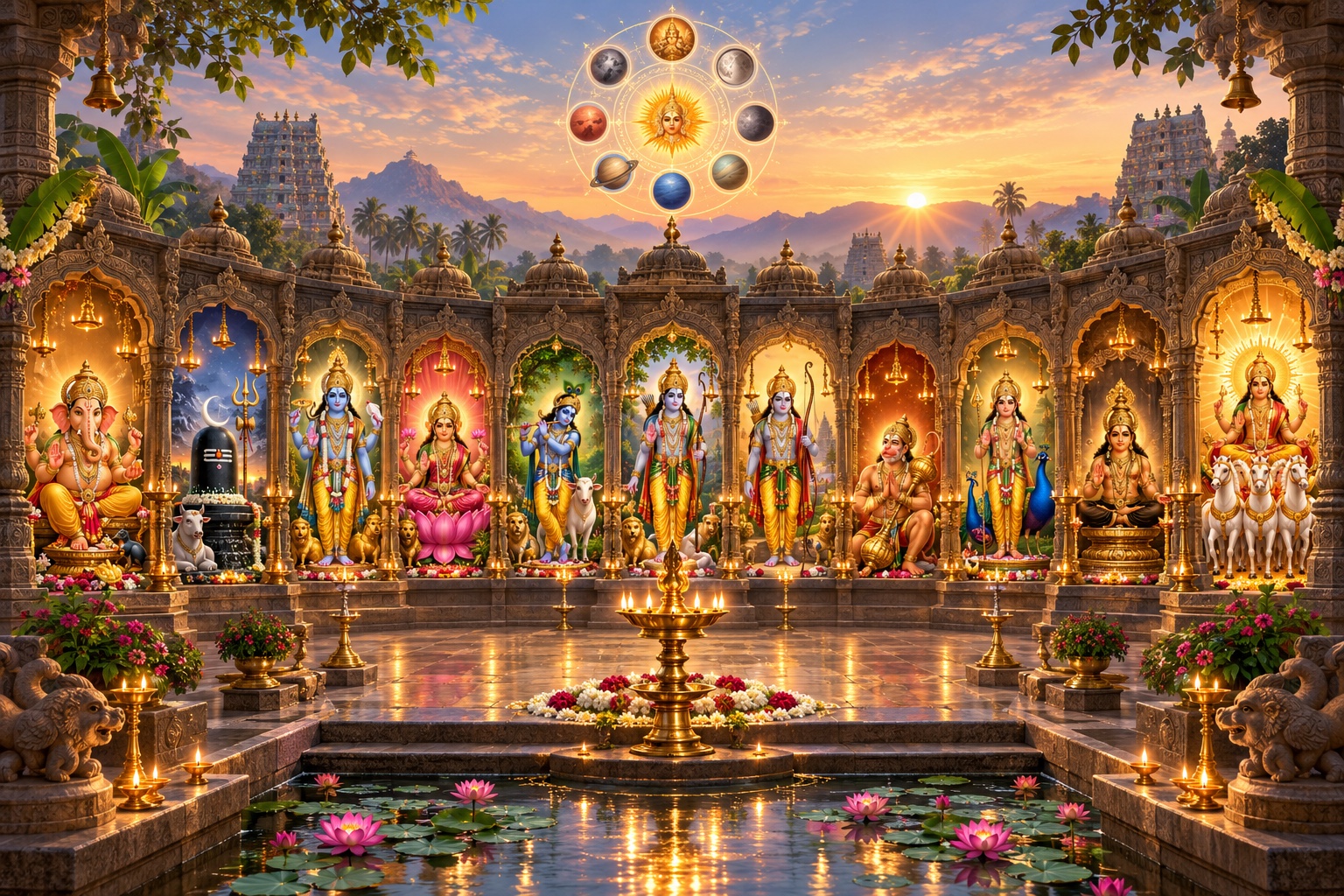
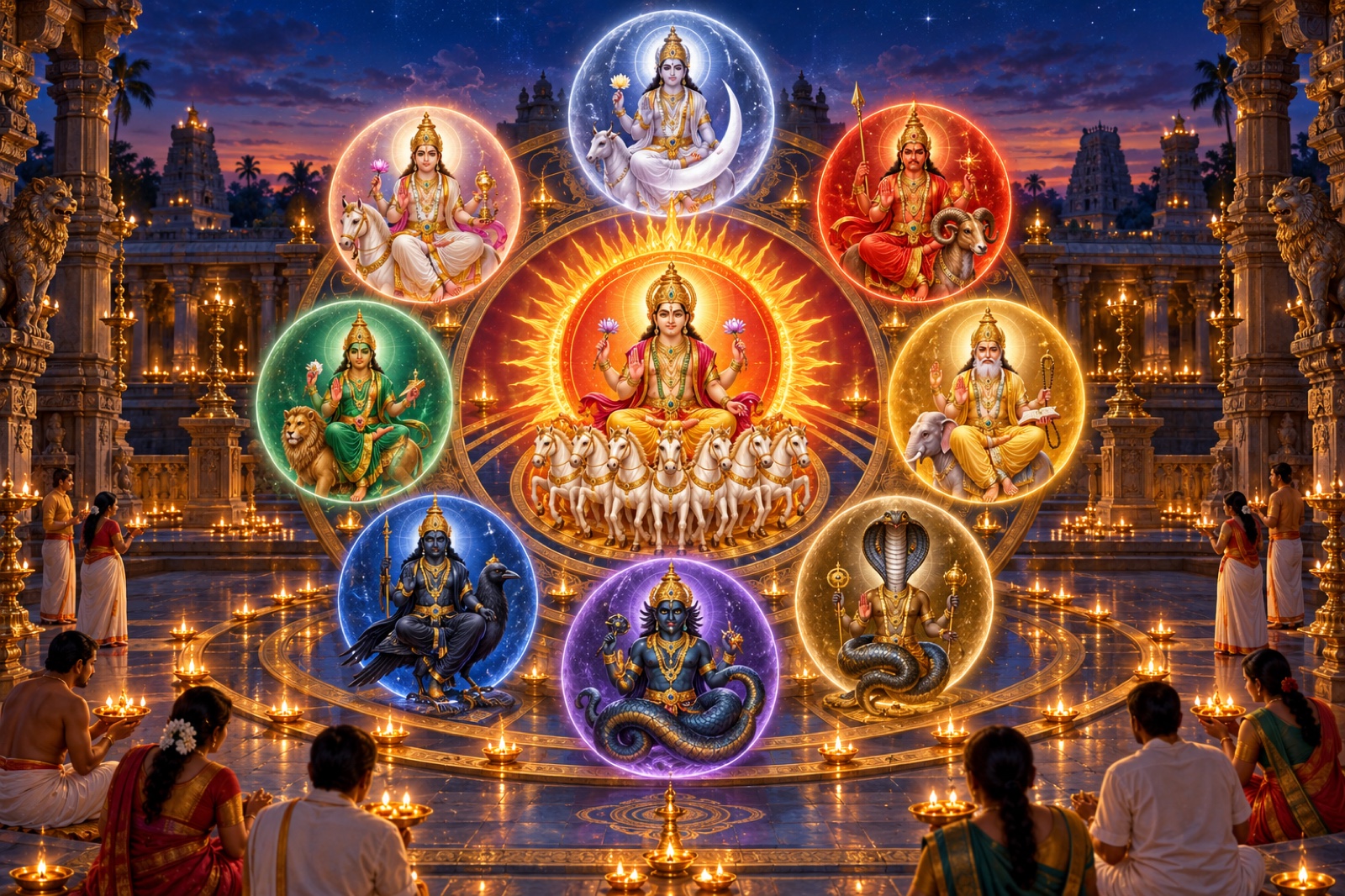
A lamp-lit temple courtyard with shrines for major Hindu deities and a celestial Navagraha mandala.
Original DHIH illustration for this deity-indexed collection.

MAJOR DEITIES · SACRED FORMS · NAVAGRAHAS

Choose a deity or sacred form

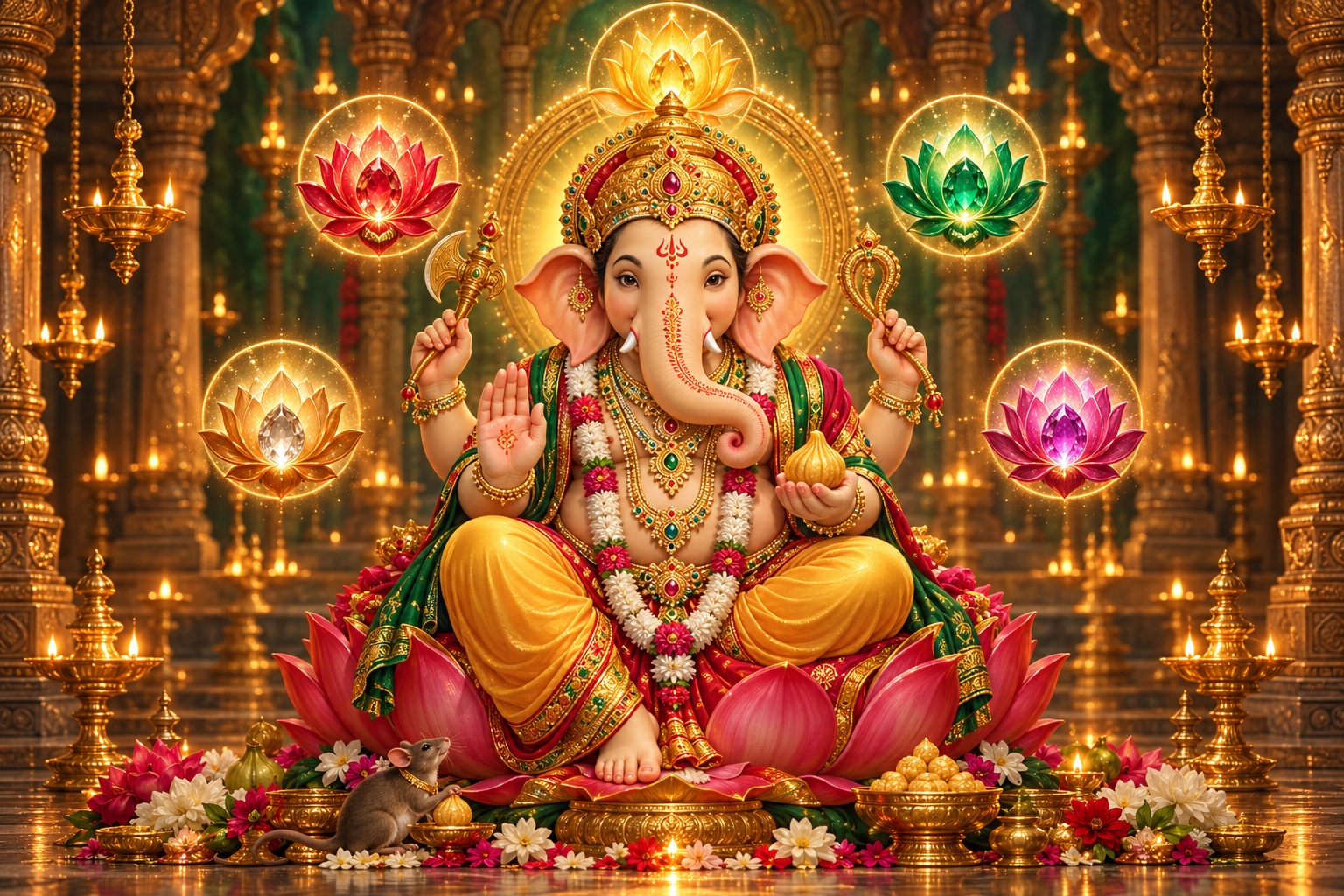
Lord Ganesha seated beneath a flowering tree as devotees offer lamps.
Original devotional artwork prepared for DHIH.

Gajānanaṃ Bhūtagaṇādisevitam

गजाननं भूतगणादिसेवितं कपित्थजम्बूफलसारभक्षितम् । उमासुतं शोकविनाशकारकं नमामि विघ्नेश्वरपादपङ्कजम् ॥

gajānanaṃ bhūtagaṇādisevitaṃ kapitthajambūphalasārabhakṣitam | umāsutaṃ śokavināśakārakaṃ namāmi vighneśvarapādapaṅkajam ||

Line-by-line meaning

  1. I bow to the elephant-faced Lord, served by Shiva’s attendant hosts.
  2. He delights in the essence of kapittha and jambu fruits.
  3. Uma’s son removes grief and sorrow.
  4. I bow at the lotus feet of the Lord of obstacles.

Short meaning

This beloved Ganesha prayer asks the remover of obstacles to replace grief with steadiness and auspicious beginnings.

Traditional context and source note

Traditional prayer compared with public Sanskrit prayer compilations; DHIH normalized this reading independently.

This concise English meaning is original DHIH prose prepared from the displayed Sanskrit reading.

Link to this shlokaBack to top ↑

Lord Shiva meditating in the Himalayas with the Ganga flowing from his matted hair.
Original devotional artwork prepared for DHIH.

Karpūragauraṃ Karuṇāvatāram

कर्पूरगौरं करुणावतारं संसारसारं भुजगेन्द्रहारम् । सदा वसन्तं हृदयारविन्दे भवं भवानीसहितं नमामि ॥

karpūragauraṃ karuṇāvatāraṃ saṃsārasāraṃ bhujagendrahāram | sadā vasantaṃ hṛdayāravinde bhavaṃ bhavānīsahitaṃ namāmi ||

Line-by-line meaning

  1. I bow to the one radiant as camphor and embodied as compassion.
  2. He is the heart of worldly existence and wears the king of serpents as a garland.
  3. May he dwell forever in the lotus of the heart.
  4. I bow to Bhava together with Bhavani.

Short meaning

Shiva and Bhavani are welcomed into the heart as inseparable compassion, stillness and the sustaining essence of life.

Traditional context and source note

Traditional prayer compared with public Sanskrit prayer compilations; DHIH normalized this reading independently.

This concise English meaning is original DHIH prose prepared from the displayed Sanskrit reading.
Link to this shlokaBack to top ↑

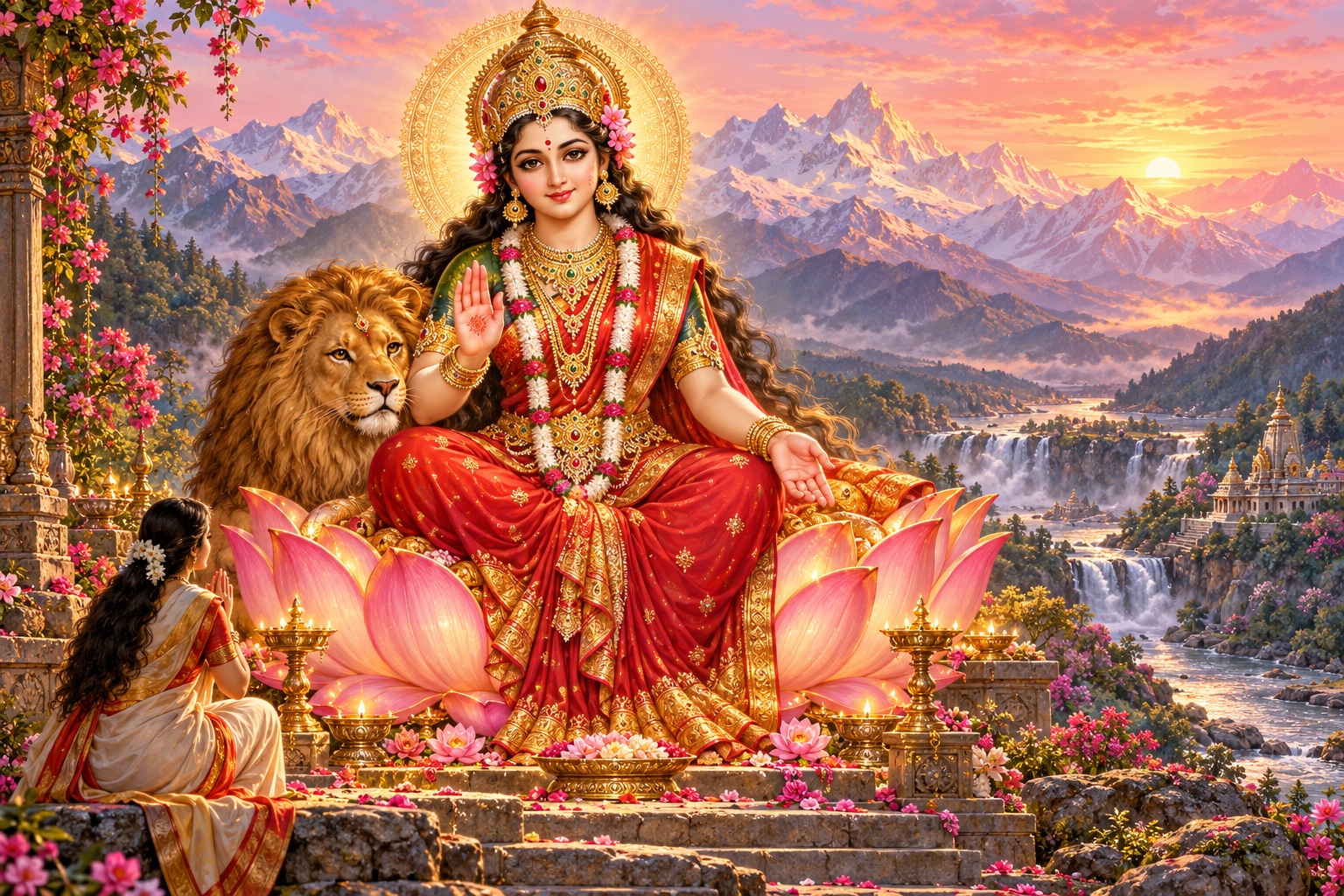
Goddess Bhavani offering protection in a lamp-lit mountain shrine.
Original devotional artwork prepared for DHIH.

Sarvamaṅgalamāṅgalye

सर्वमङ्गलमाङ्गल्ये शिवे सर्वार्थसाधिके । शरण्ये त्र्यम्बके गौरि नारायणि नमोऽस्तु ते ॥

sarvamaṅgalamāṅgalye śive sarvārthasādhike | śaraṇye tryambake gauri nārāyaṇi namo'stu te ||

Line-by-line meaning

  1. O most auspicious among all that is auspicious.
  2. O gracious one who brings worthy aims to fulfilment.
  3. O three-eyed Gauri, refuge of those who seek shelter.
  4. O Narayani, my reverent salutations to you.

Short meaning

The verse approaches the Divine Mother as auspiciousness, refuge and the power that brings life’s worthy purposes to completion.

Traditional context and source note

A verse of the Devi Mahatmya traditionally recited as a prayer to Gauri and Narayani.

This concise English meaning is original DHIH prose prepared from the displayed Sanskrit reading.
Link to this shlokaBack to top ↑

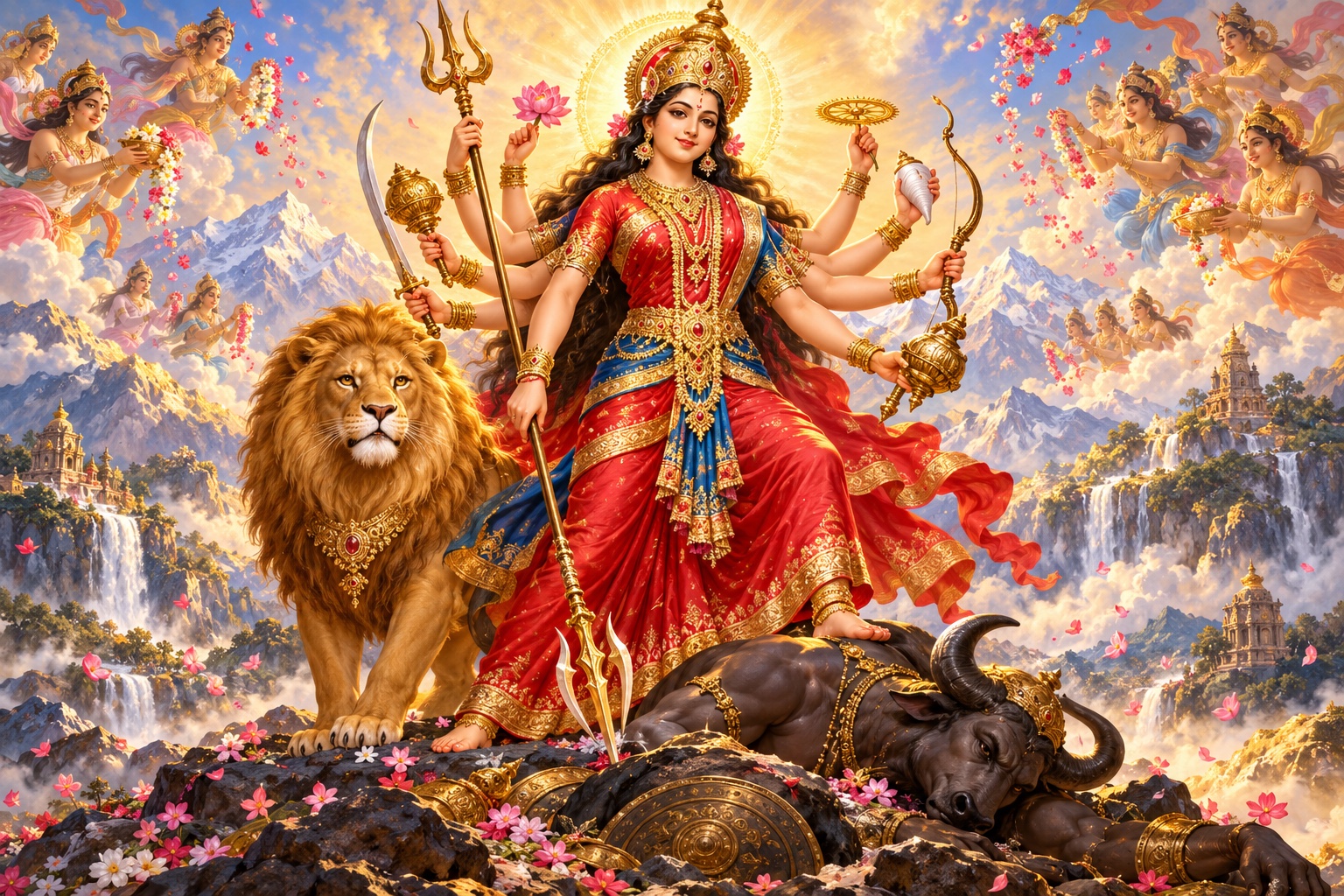
Goddess Durga as Mahishasuramardini in a radiant devotional painting.
Original devotional artwork prepared for DHIH.

Yā Devī Sarvabhūteṣu

या देवी सर्वभूतेषु शक्तिरूपेण संस्थिता । नमस्तस्यै नमस्तस्यै नमस्तस्यै नमो नमः ॥

yā devī sarvabhūteṣu śaktirūpeṇa saṃsthitā | namastasyai namastasyai namastasyai namo namaḥ ||

Line-by-line meaning

  1. To the Goddess who abides in every being.
  2. She is present as power and living energy.
  3. Salutations to her, salutations to her.
  4. Again and again, reverent salutations to her.

Short meaning

The prayer recognizes divine Shakti within every being and answers that recognition with repeated reverence.

Traditional context and source note

A recurring refrain of the Devi Mahatmya; the Shakti form is selected here.

This concise English meaning is original DHIH prose prepared from the displayed Sanskrit reading.
Link to this shlokaBack to top ↑

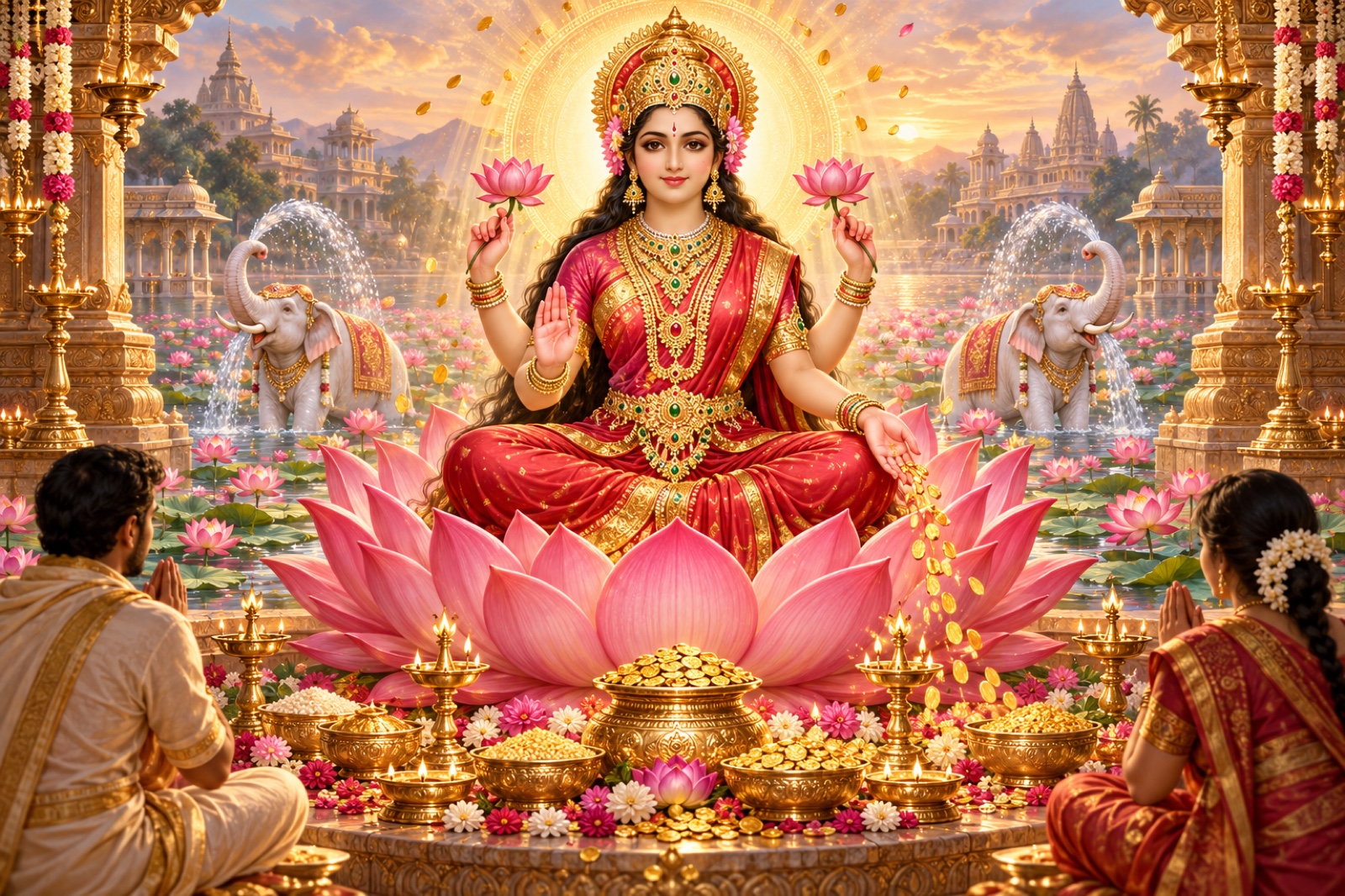
Goddess Mahalakshmi seated on a lotus amid lamps, elephants and golden light.
Original devotional artwork prepared for DHIH.

Namaste'stu Mahāmāye

नमस्तेऽस्तु महामाये श्रीपीठे सुरपूजिते । शङ्खचक्रगदाहस्ते महालक्ष्मि नमोऽस्तु ते ॥

namaste'stu mahāmāye śrīpīṭhe surapūjite | śaṅkhacakragadāhaste mahālakṣmi namo'stu te ||

Line-by-line meaning

  1. Salutations to you, great divine power.
  2. You are enthroned in splendour and worshipped by the devas.
  3. You hold the conch, discus and mace.
  4. O Mahalakshmi, my salutations to you.

Short meaning

Mahalakshmi is praised as sacred abundance joined with divine authority, protection and sustaining grace.

Traditional context and source note

Opening verse of the traditional Mahalakshmi Ashtakam.

This concise English meaning is original DHIH prose prepared from the displayed Sanskrit reading.
Link to this shlokaBack to top ↑

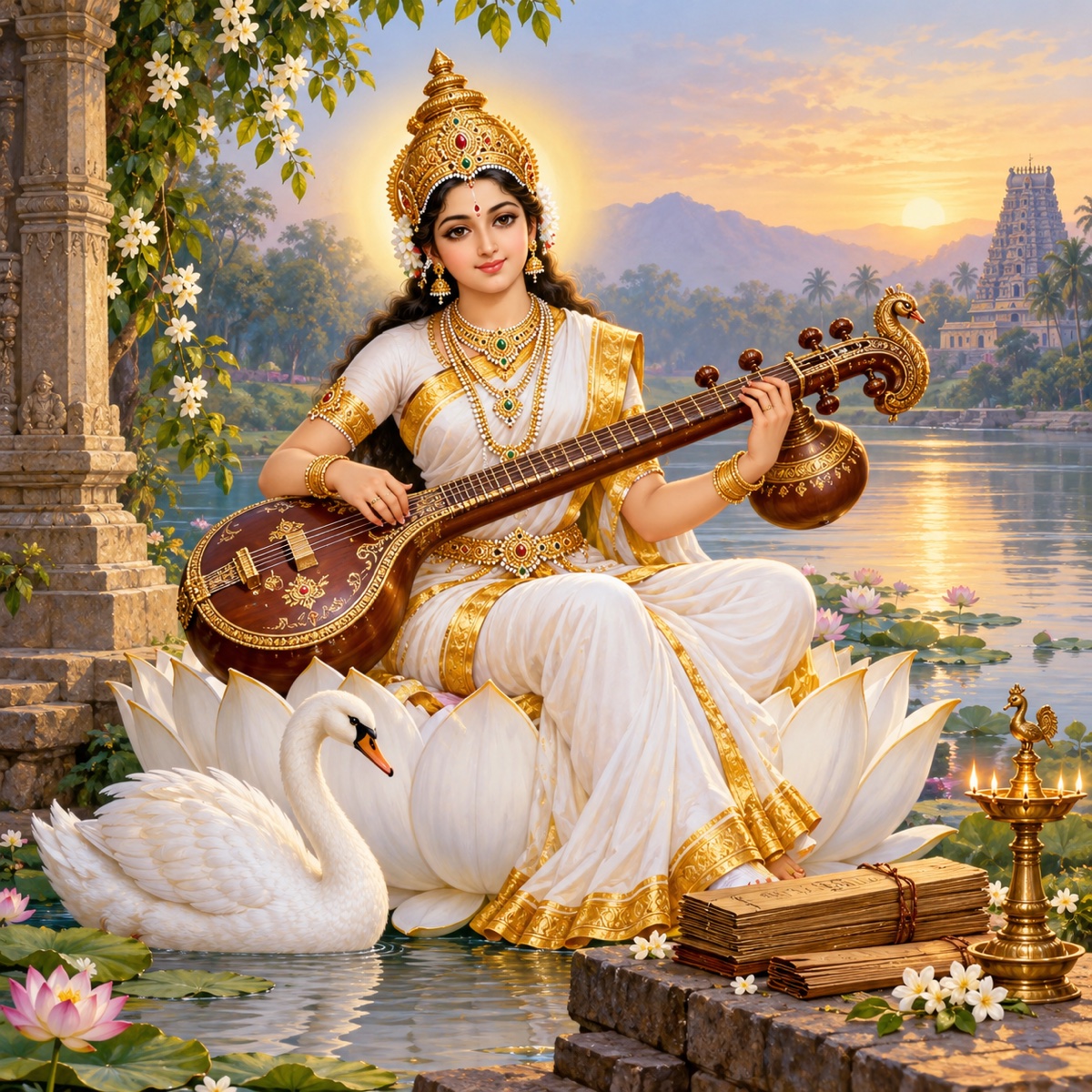
Goddess Saraswati with a veena, books and a white lotus in a devotional illustration.
Original devotional artwork prepared for DHIH.

Yā Kundendutuṣārahāradhavalā

या कुन्देन्दुतुषारहारधवला या शुभ्रवस्त्रावृता । या वीणावरदण्डमण्डितकरा या श्वेतपद्मासना ॥ या ब्रह्माच्युतशङ्करप्रभृतिभिर्देवैः सदा वन्दिता । सा मां पातु सरस्वती भगवती निःशेषजाड्यापहा ॥

yā kundendutuṣārahāradhavalā yā śubhravastrāvṛtā | yā vīṇāvaradaṇḍamaṇḍitakarā yā śvetapadmāsanā || yā brahmācyutaśaṅkaraprabhṛtibhir devaiḥ sadā vanditā | sā māṃ pātu sarasvatī bhagavatī niḥśeṣajāḍyāpahā ||

Line-by-line meaning

  1. She is radiant like jasmine, the moon, snow and a white garland.
  2. She is clothed in pure white garments.
  3. Her hands are adorned by the veena’s graceful staff.
  4. She is seated upon a white lotus.
  5. Brahma, Vishnu, Shiva and the other devas continually honour her.
  6. May Goddess Saraswati protect me and remove every trace of dullness.

Short meaning

Saraswati’s luminous white form represents clarity, learning, music and the removal of mental inertia.

Traditional context and source note

Traditional prayer compared with public Sanskrit prayer compilations; DHIH normalized this reading independently.

This concise English meaning is original DHIH prose prepared from the displayed Sanskrit reading.
Link to this shlokaBack to top ↑

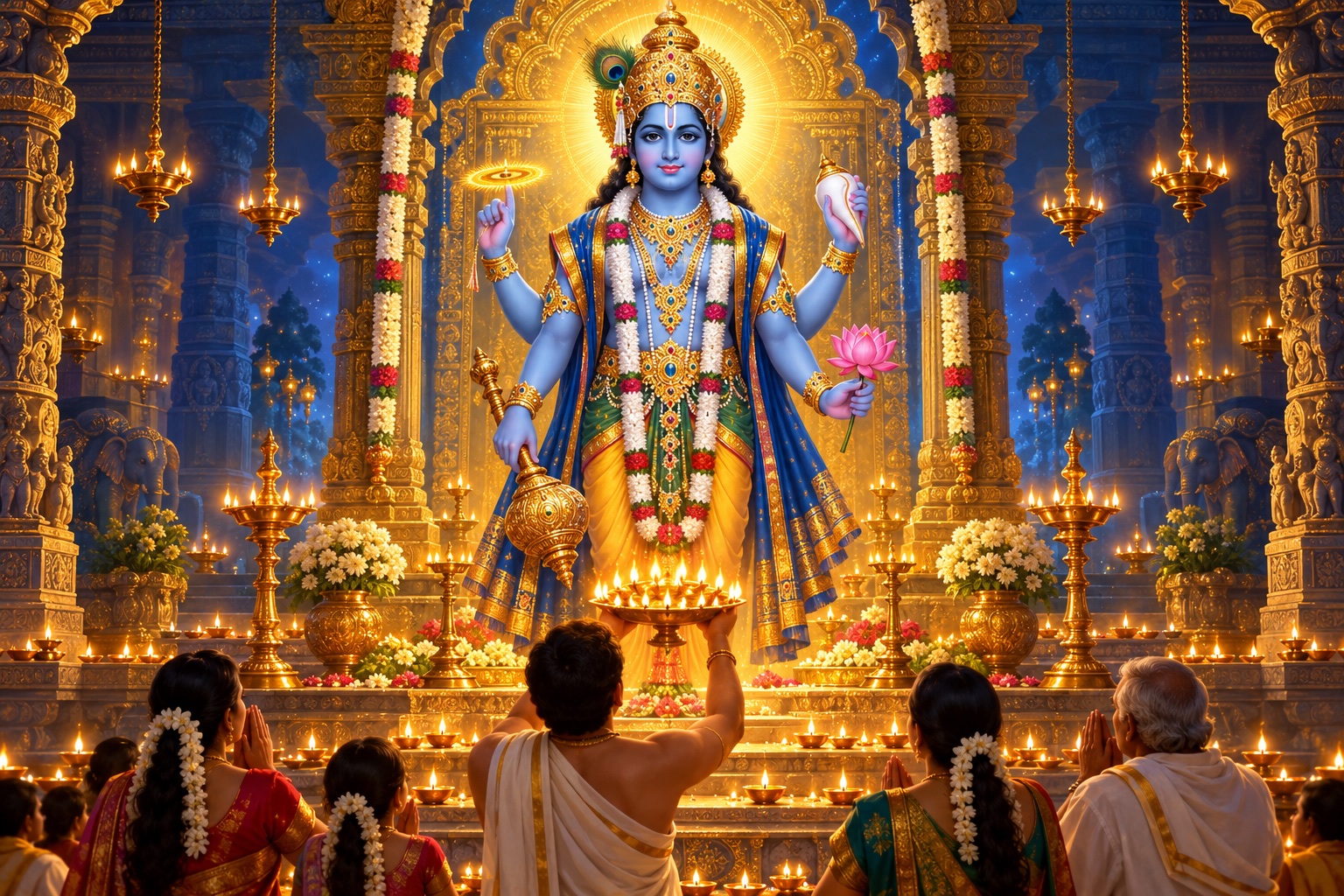
Lord Vishnu in a lamp-lit shrine as a family offers aarti.
Original devotional artwork prepared for DHIH.

Śāntākāraṃ Bhujagaśayanam

शान्ताकारं भुजगशयनं पद्मनाभं सुरेशम् । विश्वाधारं गगनसदृशं मेघवर्णं शुभाङ्गम् ॥ लक्ष्मीकान्तं कमलनयनं योगिभिर्ध्यानगम्यम् । वन्दे विष्णुं भवभयहरं सर्वलोकैकनाथम् ॥

śāntākāraṃ bhujagaśayanaṃ padmanābhaṃ sureśam | viśvādhāraṃ gaganasadṛśaṃ meghavarṇaṃ śubhāṅgam || lakṣmīkāntaṃ kamalanayanaṃ yogibhirdhyānagamyam | vande viṣṇuṃ bhavabhayaharaṃ sarvalokaikanātham ||

Line-by-line meaning

  1. I bow to the one whose form is peace and whose couch is the cosmic serpent.
  2. The lotus-navelled Lord is sovereign among the devas.
  3. He supports the universe and is boundless like the sky.
  4. His cloud-dark form is beautiful and auspicious.
  5. He is Lakshmi’s beloved and lotus-eyed.
  6. Yogis reach him through meditation.
  7. I bow to Vishnu, who removes the fear of worldly existence.
  8. He is the one Lord of all worlds.

Short meaning

Vishnu is contemplated as limitless peace, the support of the cosmos and the refuge that releases fear.

Traditional context and source note

Traditional prayer compared with public Sanskrit prayer compilations; DHIH normalized this reading independently.

This concise English meaning is original DHIH prose prepared from the displayed Sanskrit reading.
Link to this shlokaBack to top ↑

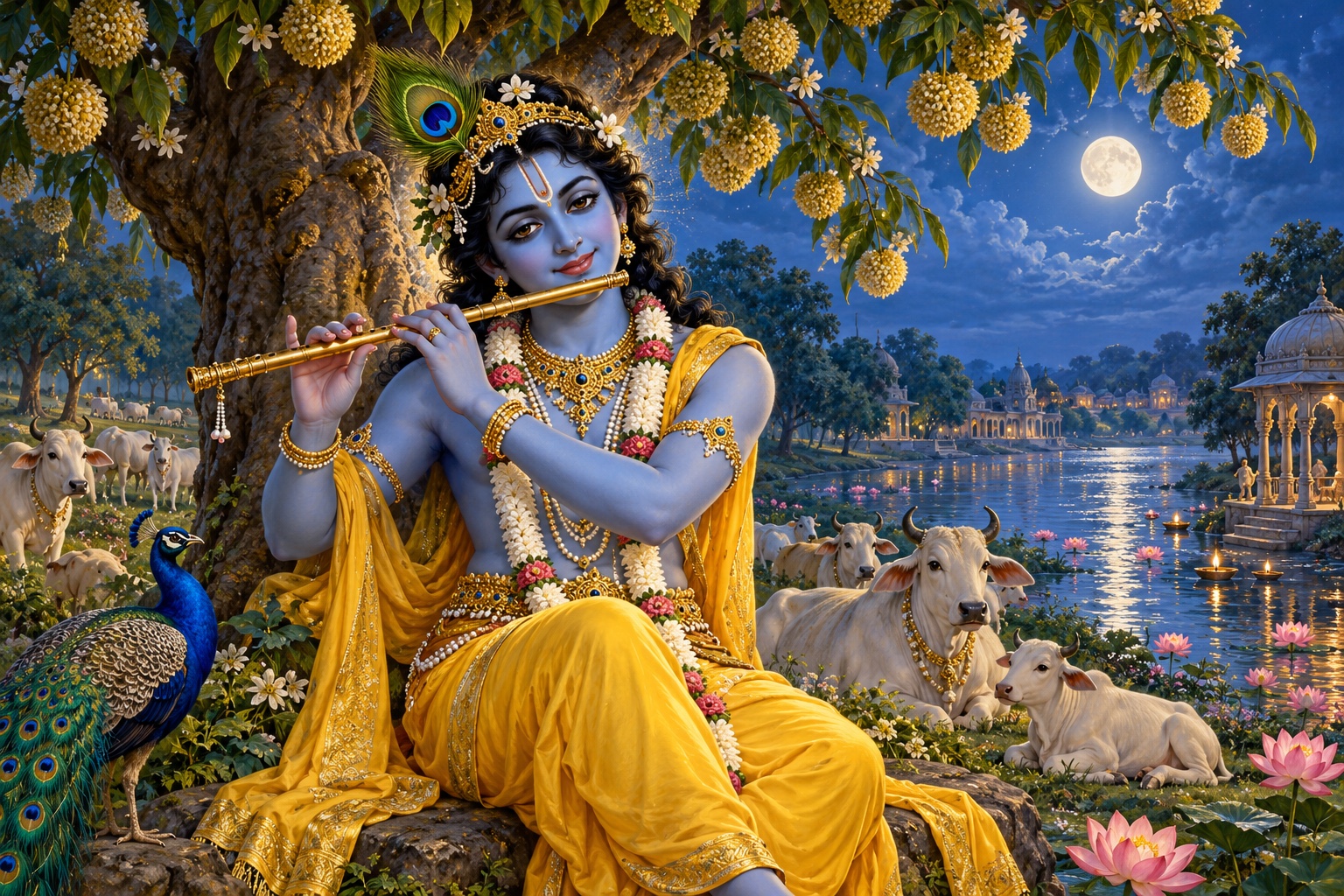
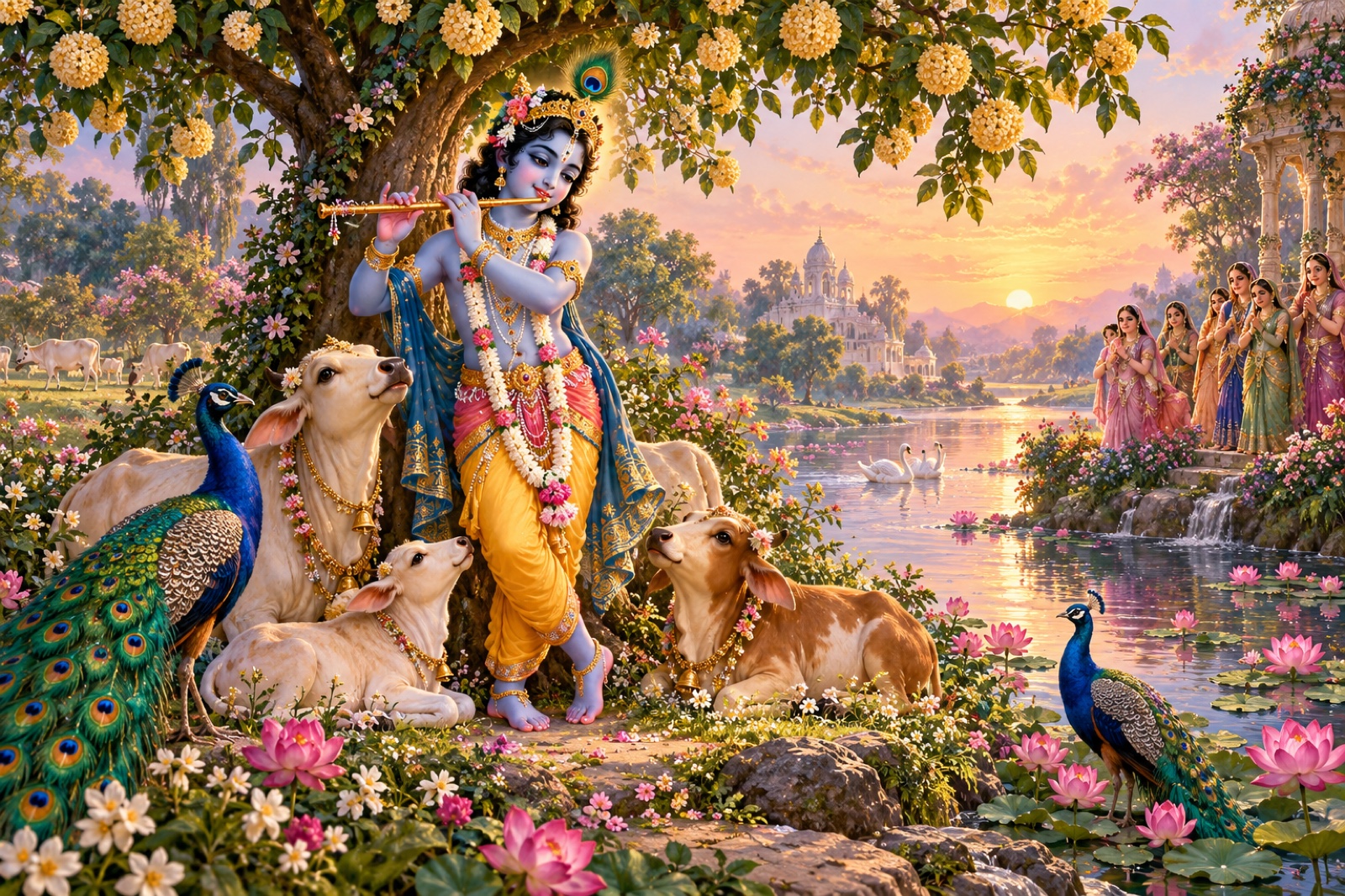
Krishna playing the flute beside the Yamuna with cows and peacocks.
Original devotional artwork prepared for DHIH.

Vāsudevasutaṃ Devam

वासुदेवसुतं देवं कंसचाणूरमर्दनम् । देवकीपरमानन्दं कृष्णं वन्दे जगद्गुरुम् ॥

vāsudevasutaṃ devaṃ kaṃsacāṇūramardanam | devakīparamānandaṃ kṛṣṇaṃ vande jagadgurum ||

Line-by-line meaning

  1. I honour the divine son of Vasudeva.
  2. He defeated Kamsa and Chanura.
  3. He is Devaki’s supreme joy.
  4. I bow to Krishna, teacher of the world.

Short meaning

Krishna is remembered as beloved child, defender against tyranny and universal teacher.

Traditional context and source note

Traditional prayer compared with public Sanskrit prayer compilations; DHIH normalized this reading independently.

This concise English meaning is original DHIH prose prepared from the displayed Sanskrit reading.
Link to this shlokaBack to top ↑

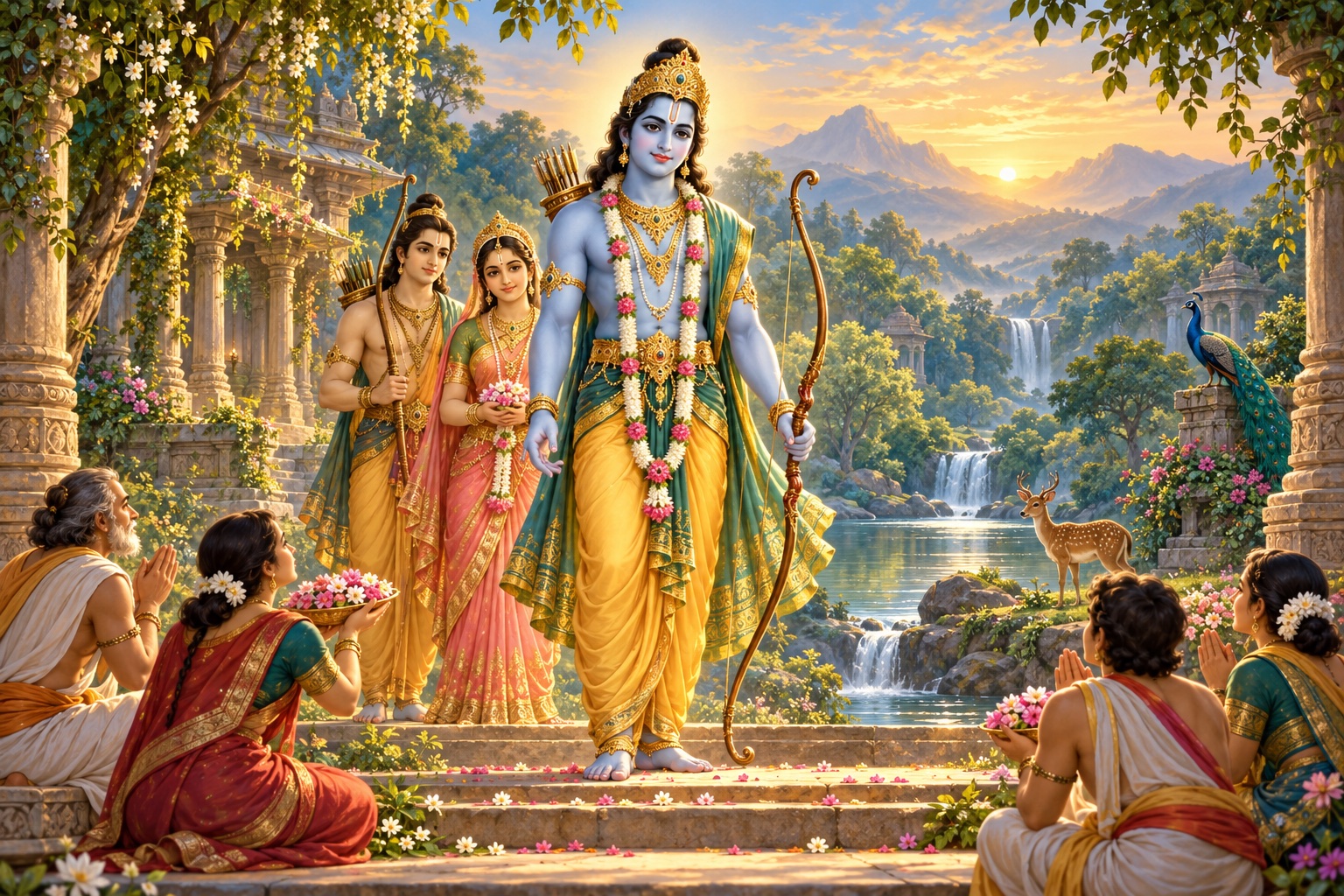
Lord Rama with Sita, Lakshmana and Hanuman in a serene forest-temple setting.
Original devotional artwork prepared for DHIH.

Rāmāya Rāmabhadrāya

रामाय रामभद्राय रामचन्द्राय वेधसे । रघुनाथाय नाथाय सीतायाः पतये नमः ॥

rāmāya rāmabhadrāya rāmacandrāya vedhase | raghunāthāya nāthāya sītāyāḥ pataye namaḥ ||

Line-by-line meaning

  1. Salutations to Rama and to gracious Ramabhadra.
  2. Salutations to Ramachandra, the wise and creative Lord.
  3. Salutations to the Lord of Raghu’s lineage, the true refuge.
  4. Salutations to Sita’s beloved husband.

Short meaning

The verse gathers Rama’s cherished names and honours him as wise ruler, refuge and faithful companion of Sita.

Traditional context and source note

Traditional prayer compared with public Sanskrit prayer compilations; DHIH normalized this reading independently.

This concise English meaning is original DHIH prose prepared from the displayed Sanskrit reading.
Link to this shlokaBack to top ↑

Sita beside Rama, Lakshmana and Hanuman in a serene forest-temple setting.
Original devotional artwork prepared for DHIH.

Udbhavasthitisaṃhārakāriṇīm

उद्भवस्थितिसंहारकारिणीं क्लेशहारिणीम् । सर्वश्रेयस्करीं सीतां नतोऽहं रामवल्लभाम् ॥

udbhavasthitisaṃhārakāriṇīṃ kleśahāriṇīm | sarvaśreyaskarīṃ sītāṃ nato'haṃ rāmavallabhām ||

Line-by-line meaning

  1. She is the power within creation, preservation and dissolution.
  2. She removes affliction.
  3. Sita brings every form of true well-being.
  4. I bow to her, the beloved of Rama.

Short meaning

Sita is honoured as compassionate cosmic power and as the giver of enduring welfare.

Traditional context and source note

Sanskrit invocation from the opening of Tulsidas’s Ramcharitmanas.

This concise English meaning is original DHIH prose prepared from the displayed Sanskrit reading.
Link to this shlokaBack to top ↑

Krishna playing the flute beneath a flowering tree beside the Yamuna.
Original devotional artwork prepared for DHIH.

Taptakāñcanagaurāṅgi

तप्तकाञ्चनगौराङ्गि राधे वृन्दावनेश्वरि । वृषभानुसुते देवि प्रणमामि हरिप्रिये ॥

taptakāñcanagaurāṅgi rādhe vṛndāvaneśvari | vṛṣabhānusute devi praṇamāmi haripriye ||

Line-by-line meaning

  1. O Radha, whose radiant form gleams like molten gold.
  2. O sovereign of Vrindavan.
  3. O Goddess, daughter of Vrishabhanu.
  4. I bow to you, beloved of Hari.

Short meaning

Radha is approached as Vrindavan’s radiant queen and the embodiment of devoted love for Krishna.

Traditional context and source note

Traditional Radha pranama mantra in the Gaudiya Vaishnava tradition.

This concise English meaning is original DHIH prose prepared from the displayed Sanskrit reading.
Link to this shlokaBack to top ↑

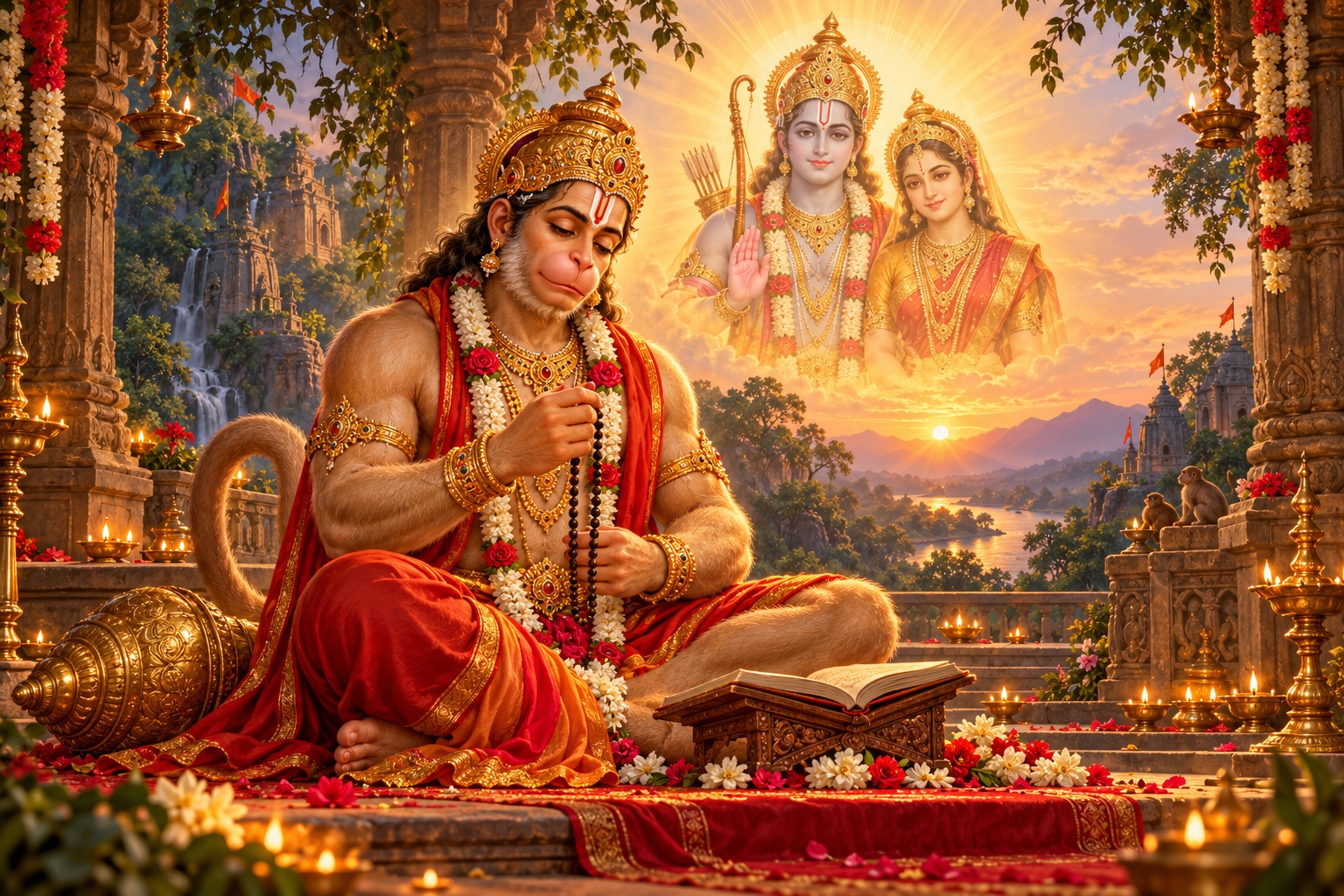
Lord Hanuman kneeling before Rama and Sita in a devotional painting.
Original devotional artwork prepared for DHIH.

Manojavaṃ Mārutatulyavegam

मनोजवं मारुततुल्यवेगं जितेन्द्रियं बुद्धिमतां वरिष्ठम् । वातात्मजं वानरयूथमुख्यं श्रीरामदूतं शरणं प्रपद्ये ॥

manojavaṃ mārutatulyavegaṃ jitendriyaṃ buddhimatāṃ variṣṭham | vātātmajaṃ vānarayūthamukhyaṃ śrīrāmadūtaṃ śaraṇaṃ prapadye ||

Line-by-line meaning

  1. I seek the one swift as thought and equal to the wind in speed.
  2. He has mastered the senses and stands foremost among the wise.
  3. He is the Wind-god’s son and leader among the vanaras.
  4. I take refuge in Shri Rama’s messenger.

Short meaning

Hanuman is praised for speed guided by discipline, intelligence, leadership and unwavering service to Rama.

Traditional context and source note

Traditional Hanuman verse also transmitted with the Rama Raksha Stotram.

This concise English meaning is original DHIH prose prepared from the displayed Sanskrit reading.
Link to this shlokaBack to top ↑

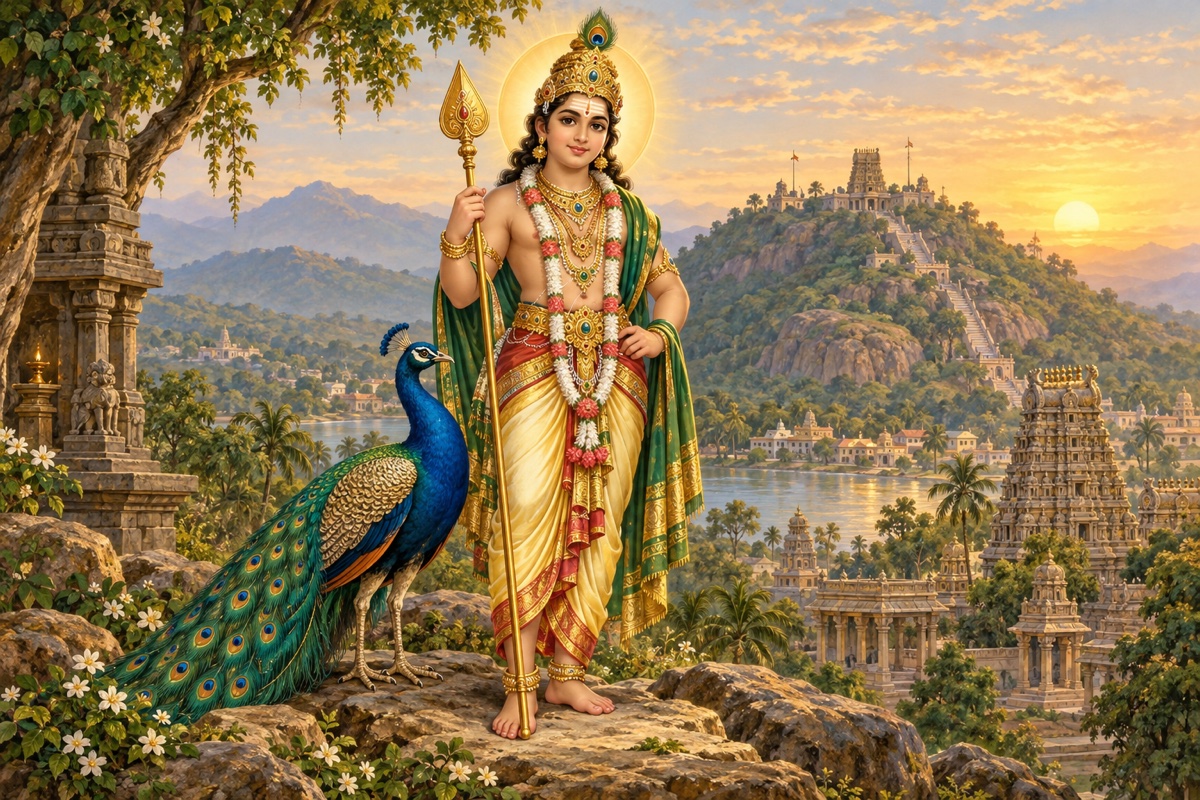
Lord Murugan holding the vel beside a peacock at a hill temple.
Original devotional artwork prepared for DHIH.

Ṣaḍānanaṃ Kuṅkumaraktavarṇam

षडाननं कुङ्कुमरक्तवर्णं महामतिं दिव्यमयूरवाहनम् । रुद्रस्य सूनुं सुरसैन्यनाथं गुहं सदाहं शरणं प्रपद्ये ॥

ṣaḍānanaṃ kuṅkumaraktavarṇaṃ mahāmatiṃ divyamayūravāhanam | rudrasya sūnuṃ surasainyanāthaṃ guhaṃ sadāhaṃ śaraṇaṃ prapadye ||

Line-by-line meaning

  1. I approach the six-faced Lord, radiant red like saffron.
  2. He is greatly wise and rides the divine peacock.
  3. He is Rudra’s son and commander of the celestial hosts.
  4. I always take refuge in Guha.

Short meaning

Murugan is invoked as wise warrior, divine commander and refuge whose power is directed by insight.

Traditional context and source note

Traditional prayer compared with public Sanskrit prayer compilations; DHIH normalized this reading independently.

This concise English meaning is original DHIH prose prepared from the displayed Sanskrit reading.
Link to this shlokaBack to top ↑

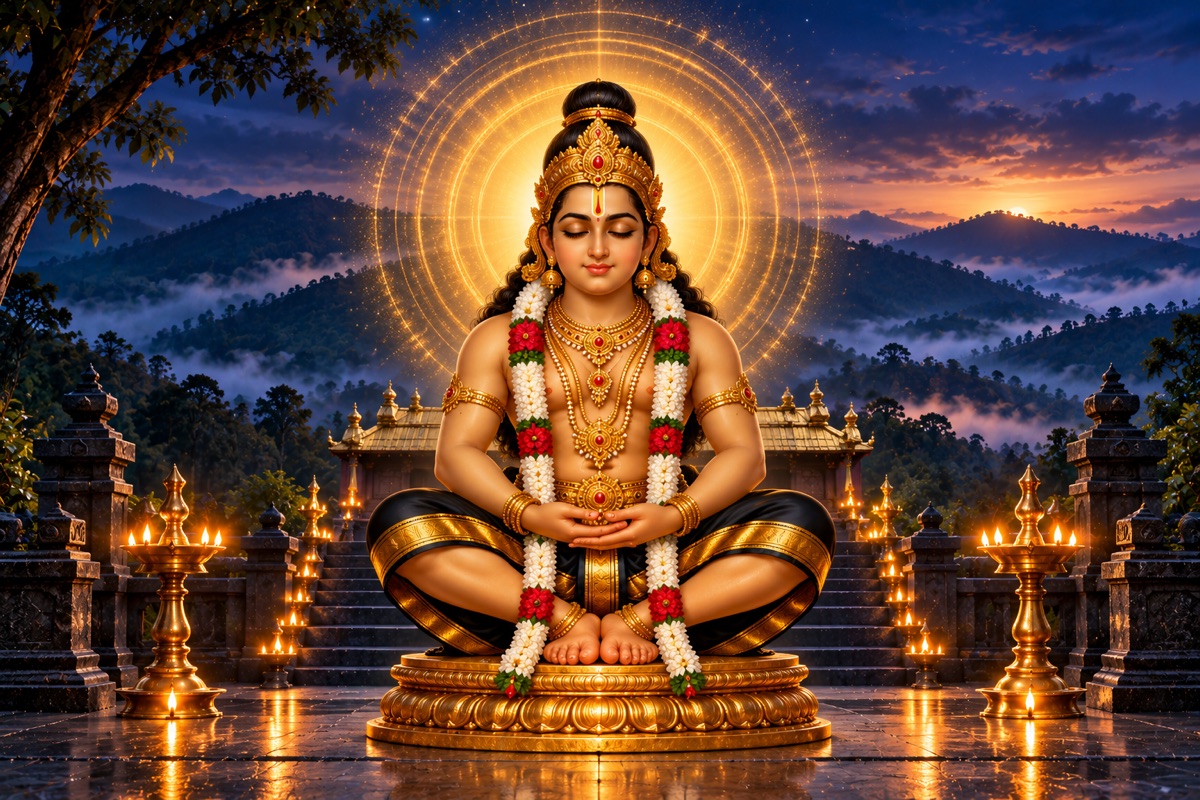
Lord Ayyappa seated in yogic posture in a mountain temple landscape.
Original devotional artwork prepared for DHIH.

Lokavīraṃ Mahāpūjyam

लोकवीरं महापूज्यं सर्वरक्षाकरं विभुम् । पार्वतीहृदयानन्दं शास्तारं प्रणमाम्यहम् ॥

lokavīraṃ mahāpūjyaṃ sarvarakṣākaraṃ vibhum | pārvatīhṛdayānandaṃ śāstāraṃ praṇamāmyaham ||

Line-by-line meaning

  1. I bow to the hero of the world, greatly worthy of worship.
  2. The all-pervading Lord grants protection to all.
  3. He is the joy of Parvati’s heart.
  4. I bow to Shasta.

Short meaning

Ayyappa is honoured as Shasta, courageous protector and a source of joy within the divine family.

Traditional context and source note

Traditional Ayyappa dhyana verse used in South Indian worship.

This concise English meaning is original DHIH prose prepared from the displayed Sanskrit reading.
Link to this shlokaBack to top ↑

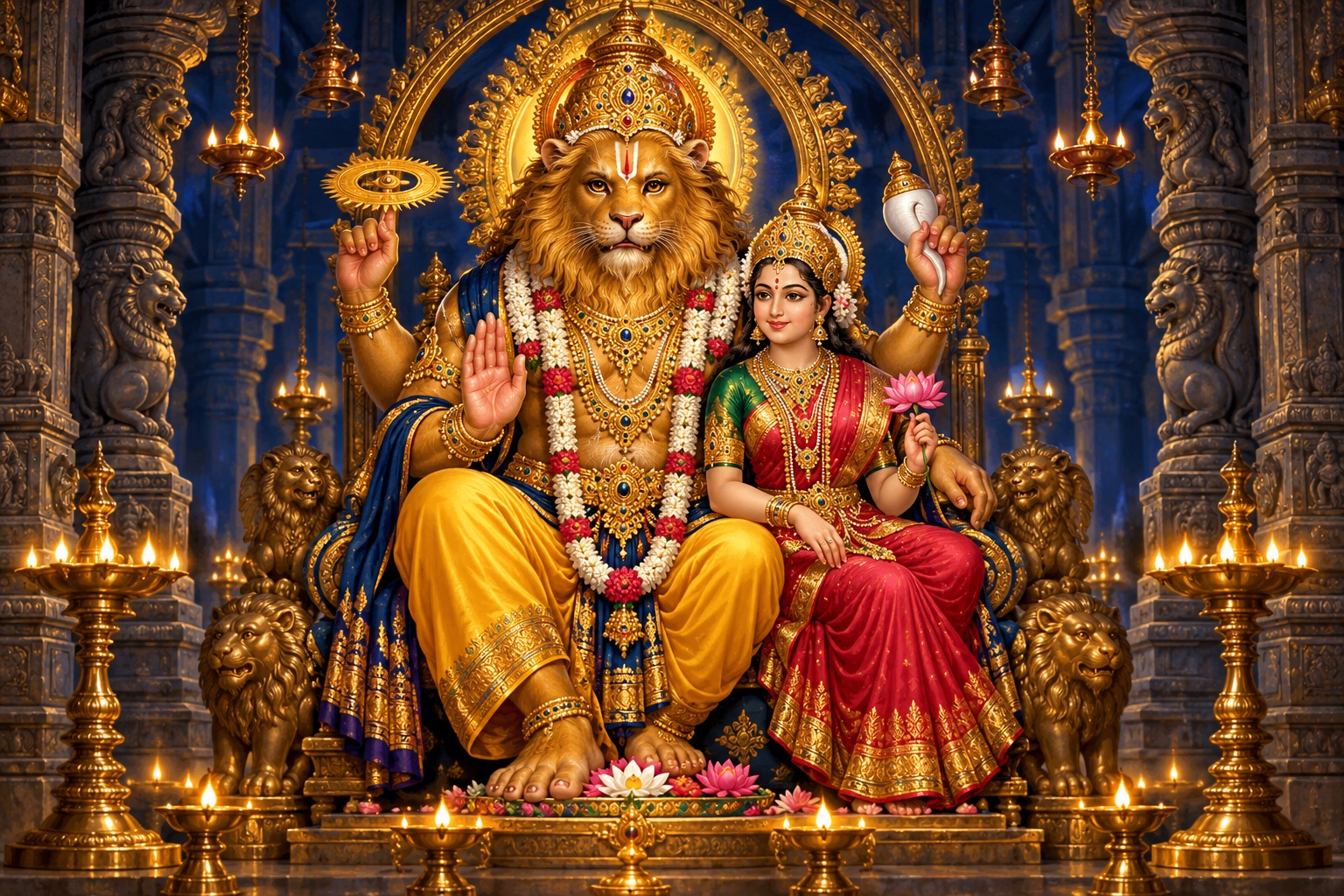
Lord Narasimha seated protectively with Goddess Lakshmi in a lamp-lit temple.
Original devotional artwork prepared for DHIH.

Ugraṃ Vīraṃ Mahāviṣṇum

उग्रं वीरं महाविष्णुं ज्वलन्तं सर्वतोमुखम् । नृसिंहं भीषणं भद्रं मृत्युमृत्युं नमाम्यहम् ॥

ugraṃ vīraṃ mahāviṣṇuṃ jvalantaṃ sarvatomukham | nṛsiṃhaṃ bhīṣaṇaṃ bhadraṃ mṛtyumṛtyuṃ namāmyaham ||

Line-by-line meaning

  1. I bow to the formidable hero, the great all-pervading Vishnu.
  2. He blazes with awareness facing every direction.
  3. Narasimha is awe-inspiring and also auspiciously protective.
  4. I bow to the one who is death even to death.

Short meaning

Narasimha’s fierce radiance is remembered as protective courage that overcomes terror itself.

Traditional context and source note

Traditional Narasimha mantra widely recited in Vaishnava worship.

This concise English meaning is original DHIH prose prepared from the displayed Sanskrit reading.
Link to this shlokaBack to top ↑

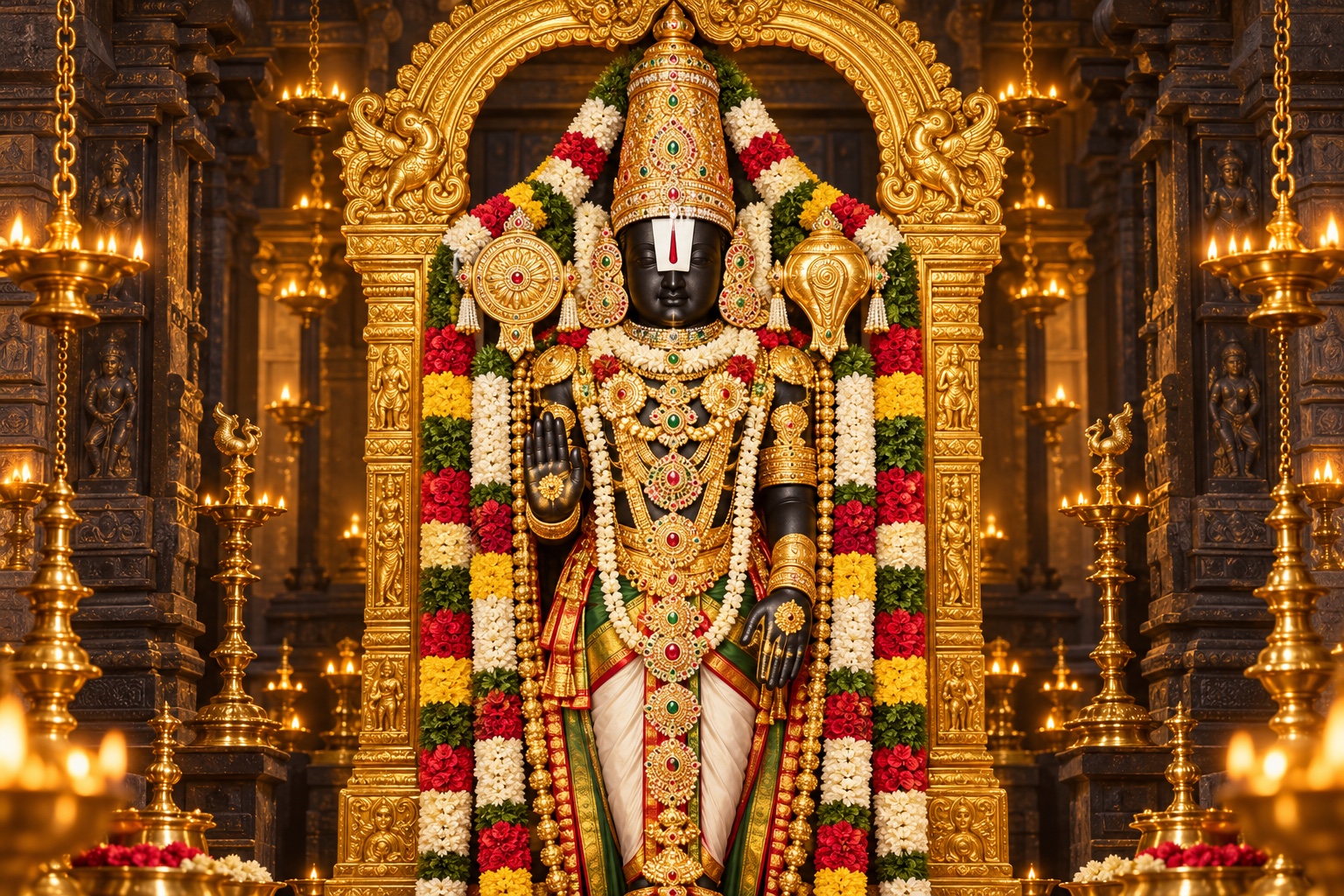
Lord Venkateswara adorned with crown, ornaments and flower garlands in a lamp-lit sanctum.
Original devotional artwork prepared for DHIH.

Vinā Veṅkaṭeśaṃ Na Nāthaḥ

विना वेङ्कटेशं न नाथो न नाथः सदा वेङ्कटेशं स्मरामि स्मरामि । हरे वेङ्कटेश प्रसीद प्रसीद प्रियं वेङ्कटेश प्रयच्छ प्रयच्छ ॥

vinā veṅkaṭeśaṃ na nātho na nāthaḥ sadā veṅkaṭeśaṃ smarāmi smarāmi | hare veṅkaṭeśa prasīda prasīda priyaṃ veṅkaṭeśa prayaccha prayaccha ||

Line-by-line meaning

  1. Apart from Venkatesha, I know no other Lord or refuge.
  2. Again and again, I remember Venkatesha always.
  3. O Hari, O Venkatesha, be gracious, be gracious.
  4. O Venkatesha, grant what is truly dear and worthy.

Short meaning

The devotee places complete trust in Venkateswara, repeatedly asking for grace and the gift of what is truly beneficial.

Traditional context and source note

Traditional Venkateswara prayer transmitted in the Tirumala devotional tradition.

This concise English meaning is original DHIH prose prepared from the displayed Sanskrit reading.
Link to this shlokaBack to top ↑

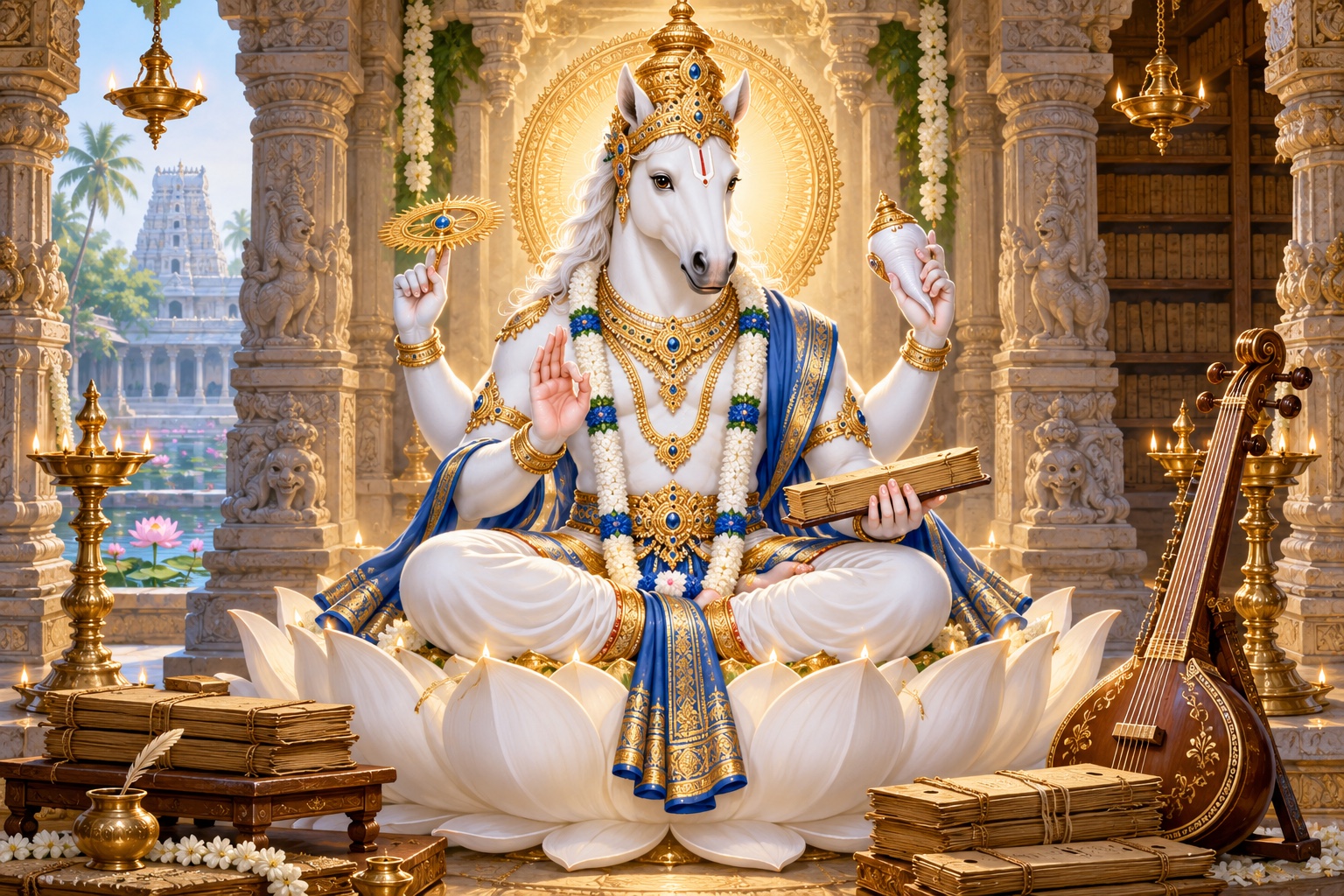
Lord Hayagriva seated on a white lotus with sacred books, conch and discus.
Original devotional artwork prepared for DHIH.

Jñānānandamayaṃ Devam

ज्ञानानन्दमयं देवं निर्मलस्फटिकाकृतिम् । आधारं सर्वविद्यानां हयग्रीवमुपास्महे ॥

jñānānandamayaṃ devaṃ nirmalasphaṭikākṛtim | ādhāraṃ sarvavidyānāṃ hayagrīvamupāsmahe ||

Line-by-line meaning

  1. We contemplate the Lord whose nature is knowledge and bliss.
  2. His form is pure and clear like spotless crystal.
  3. He is the foundation of every field of learning.
  4. We worship Hayagriva.

Short meaning

Hayagriva is invoked as the lucid source of knowledge, learning and the joy that arises from understanding.

Traditional context and source note

Opening verse of Vedanta Desika’s traditional Hayagriva Stotram.

This concise English meaning is original DHIH prose prepared from the displayed Sanskrit reading.
Link to this shlokaBack to top ↑

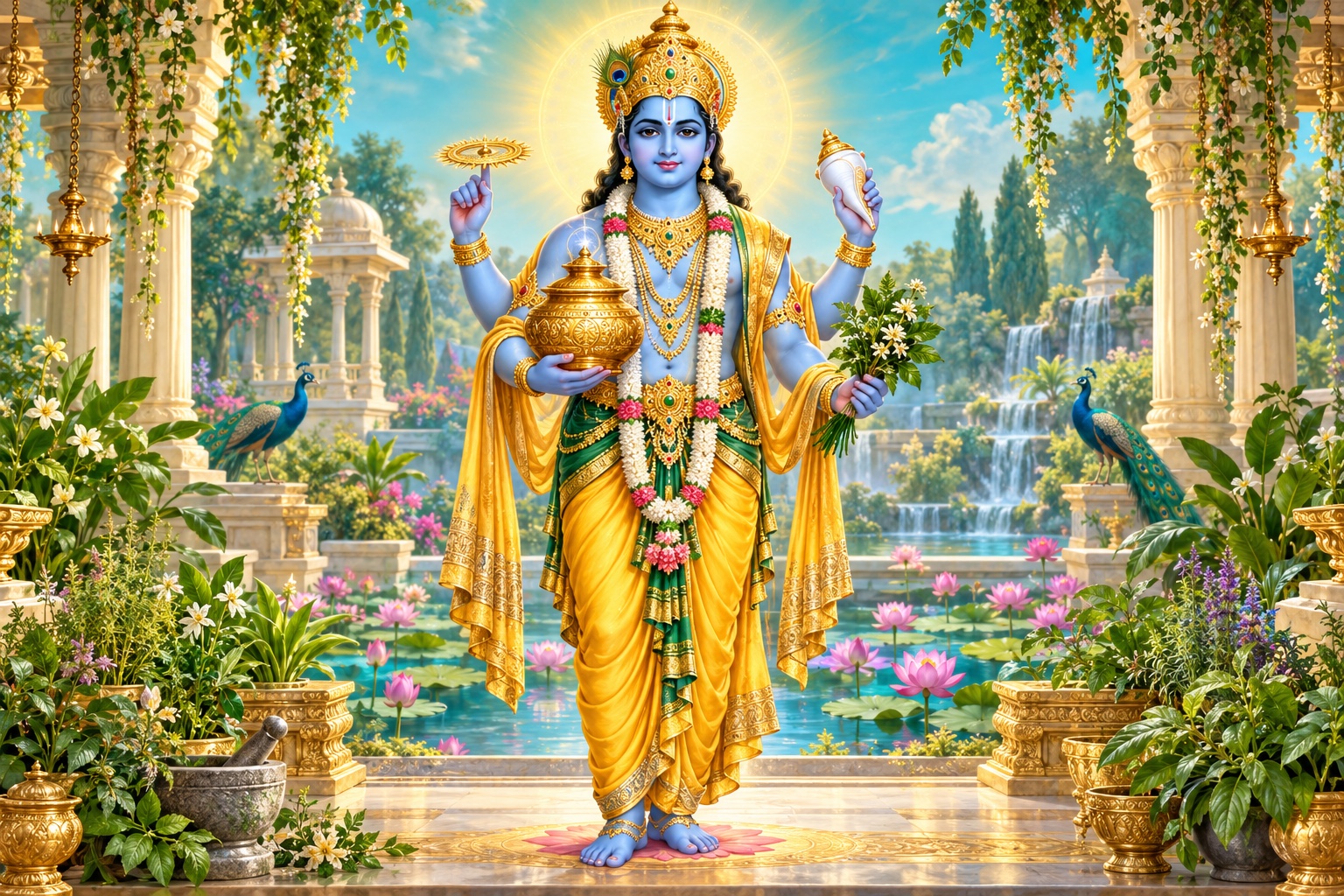
Lord Dhanvantari holding the amrita vessel, conch, discus and healing herbs in a temple garden.
Original devotional artwork prepared for DHIH.

Dhanvantari Mantra

ॐ नमो भगवते धन्वन्तरये अमृतकलशहस्ताय । सर्वामयविनाशनाय त्रिलोकनाथाय विष्णवे स्वाहा ॥

oṃ namo bhagavate dhanvantaraye amṛtakalaśahastāya | sarvāmayavināśanāya trilokanāthāya viṣṇave svāhā ||

Line-by-line meaning

  1. Om; reverence to the blessed Lord Dhanvantari.
  2. He holds the vessel of amrita in his hand.
  3. He removes every illness and is Lord of the three worlds.
  4. To Vishnu, may this offering be received.

Short meaning

The mantra seeks Dhanvantari’s healing grace while recognizing him as a form of Vishnu who protects life and well-being.

Traditional context and source note

Traditional forty-one-syllable Dhanvantari mantra; display line breaks added for reading.

This concise English meaning is original DHIH prose prepared from the displayed Sanskrit reading.
Link to this shlokaBack to top ↑

Goddess Durga in a radiant devotional painting, representing the protective Kali tradition.
Original devotional artwork prepared for DHIH.

Jayantī Maṅgalā Kālī

जयन्ती मङ्गला काली भद्रकाली कपालिनी । दुर्गा क्षमा शिवा धात्री स्वाहा स्वधा नमोऽस्तु ते ॥

jayantī maṅgalā kālī bhadrakālī kapālinī | durgā kṣamā śivā dhātrī svāhā svadhā namo'stu te ||

Line-by-line meaning

  1. She is victorious, auspicious Kali.
  2. She is protective Bhadrakali and the bearer of the skull-bowl.
  3. She is Durga, patience, auspiciousness and the sustaining mother.
  4. She is the sacred offering to gods and ancestors; salutations to her.

Short meaning

The Divine Mother is praised through fierce and nurturing names, holding destruction, forgiveness and sustenance within one reality.

Traditional context and source note

Traditional Devi prayer transmitted in the Devi Mahatmya worship tradition.

This concise English meaning is original DHIH prose prepared from the displayed Sanskrit reading.
Link to this shlokaBack to top ↑

Lord Shiva in meditation as the sacred Ganga descends through his matted hair.
Original devotional artwork prepared for DHIH.

Devi Sureśvari Bhagavati Gaṅge

देवि सुरेश्वरि भगवति गङ्गे त्रिभुवनतारिणि तरलतरङ्गे । शङ्करमौलिविहारिणि विमले मम मतिरास्तां तव पदकमले ॥

devi sureśvari bhagavati gaṅge tribhuvanatāriṇi taralataraṅge | śaṅkaramaulivihāriṇi vimale mama matirāstāṃ tava padakamale ||

Line-by-line meaning

  1. O divine Ganga, sovereign among the devas.
  2. Your dancing waves carry beings across the three worlds.
  3. Pure river who moves through Shiva’s crown.
  4. May my mind rest at your lotus feet.

Short meaning

Ganga is revered as a purifying river of grace flowing from Shiva and carrying beings toward freedom.

Traditional context and source note

Opening verse of the traditional Ganga Stotram, popularly attributed to Adi Shankara.

This concise English meaning is original DHIH prose prepared from the displayed Sanskrit reading.
Link to this shlokaBack to top ↑

Krishna playing the flute beside the sacred Yamuna with cows and peacocks.
Original devotional artwork prepared for DHIH.

Namāmi Yamunāmahaṃ

नमामि यमुनामहं सकलसिद्धिहेतुं मुदा मुरारिपदपङ्कजस्फुरदमन्दरेणूत्कटाम् । तटस्थनवकाननप्रकटमोदपुष्पाम्बुना सुरासुरसुपूजितस्मरपितुः श्रियं बिभ्रतीम् ॥

namāmi yamunāmahaṃ sakalasiddhihetuṃ mudā murāripadapaṅkajasphuradamandareṇūtkaṭām | taṭasthanavakānanaprakaṭamodapuṣpāmbunā surāsurasupūjitasmarapituḥ śriyaṃ bibhratīm ||

Line-by-line meaning

  1. Joyfully I bow to Yamuna, a source of spiritual accomplishment.
  2. Her waters are enriched by the abundant dust of Murari’s lotus feet.
  3. Fresh groves along her banks bloom fragrantly beside her water.
  4. Honoured by devas and asuras, she bears the splendour of Krishna, the source of love.

Short meaning

Yamuna is celebrated as Krishna’s sacred river, whose banks, waters and memory awaken devotion and joy.

Traditional context and source note

Opening verse of Vallabhacharya’s Yamunashtakam.

This concise English meaning is original DHIH prose prepared from the displayed Sanskrit reading.
Link to this shlokaBack to top ↑

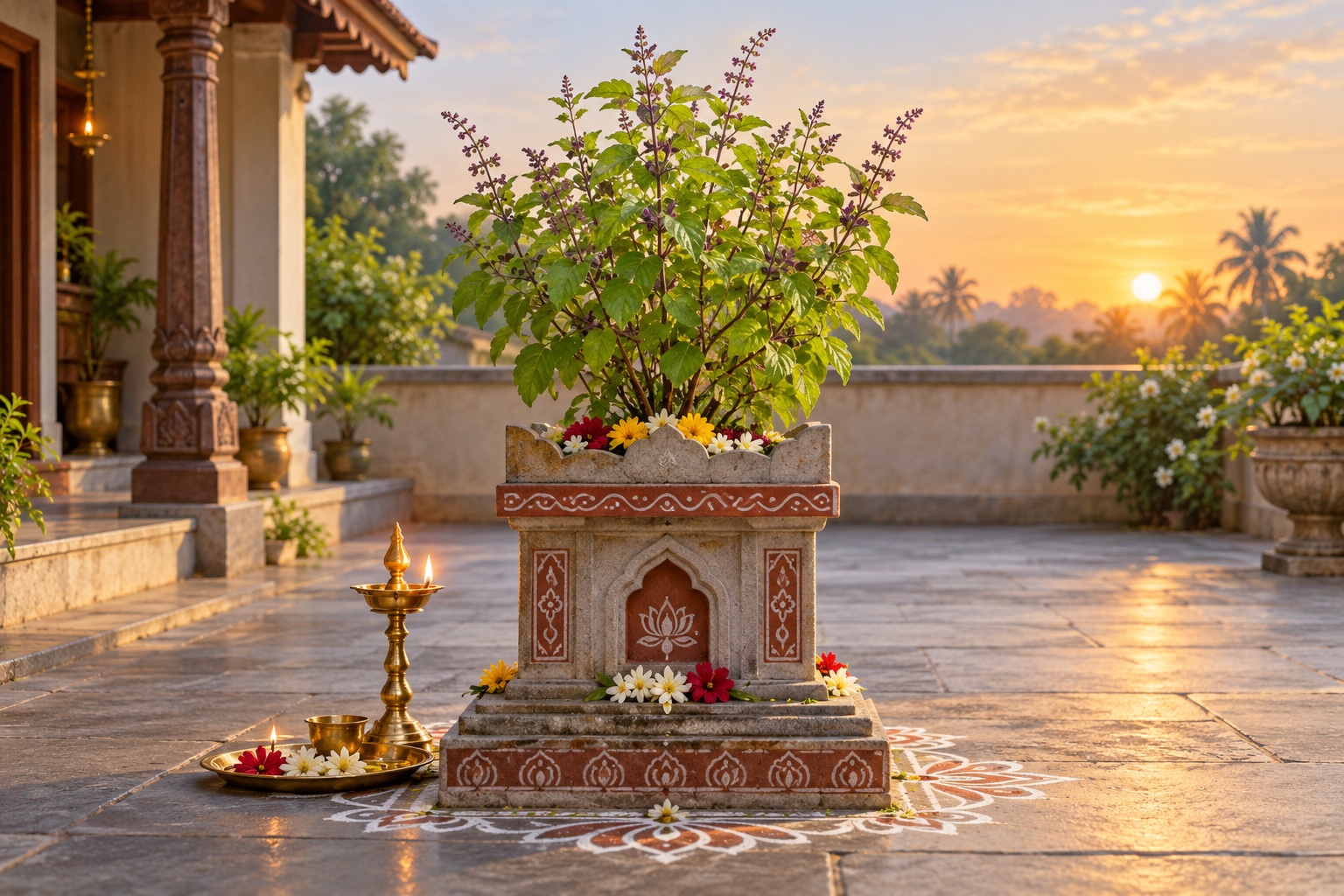
A sacred Tulasi plant growing on a decorated altar in a peaceful courtyard.
Original devotional artwork prepared for DHIH.

Vṛndāyai Tulasīdevyai

वृन्दायै तुलसीदेव्यै प्रियायै केशवस्य च । विष्णुभक्तिप्रदे देवि सत्यवत्यै नमो नमः ॥

vṛndāyai tulasīdevyai priyāyai keśavasya ca | viṣṇubhaktiprade devi satyavatyai namo namaḥ ||

Line-by-line meaning

  1. Salutations to Vrinda, Goddess Tulasi.
  2. She is dear to Keshava.
  3. O Goddess, you bestow devotion to Vishnu.
  4. Repeated salutations to the truthful and sacred one.

Short meaning

Tulasi is honoured as Vishnu’s beloved sacred plant and as a giver of steadfast devotion.

Traditional context and source note

Traditional Tulasi pranama mantra.

This concise English meaning is original DHIH prose prepared from the displayed Sanskrit reading.
Link to this shlokaBack to top ↑

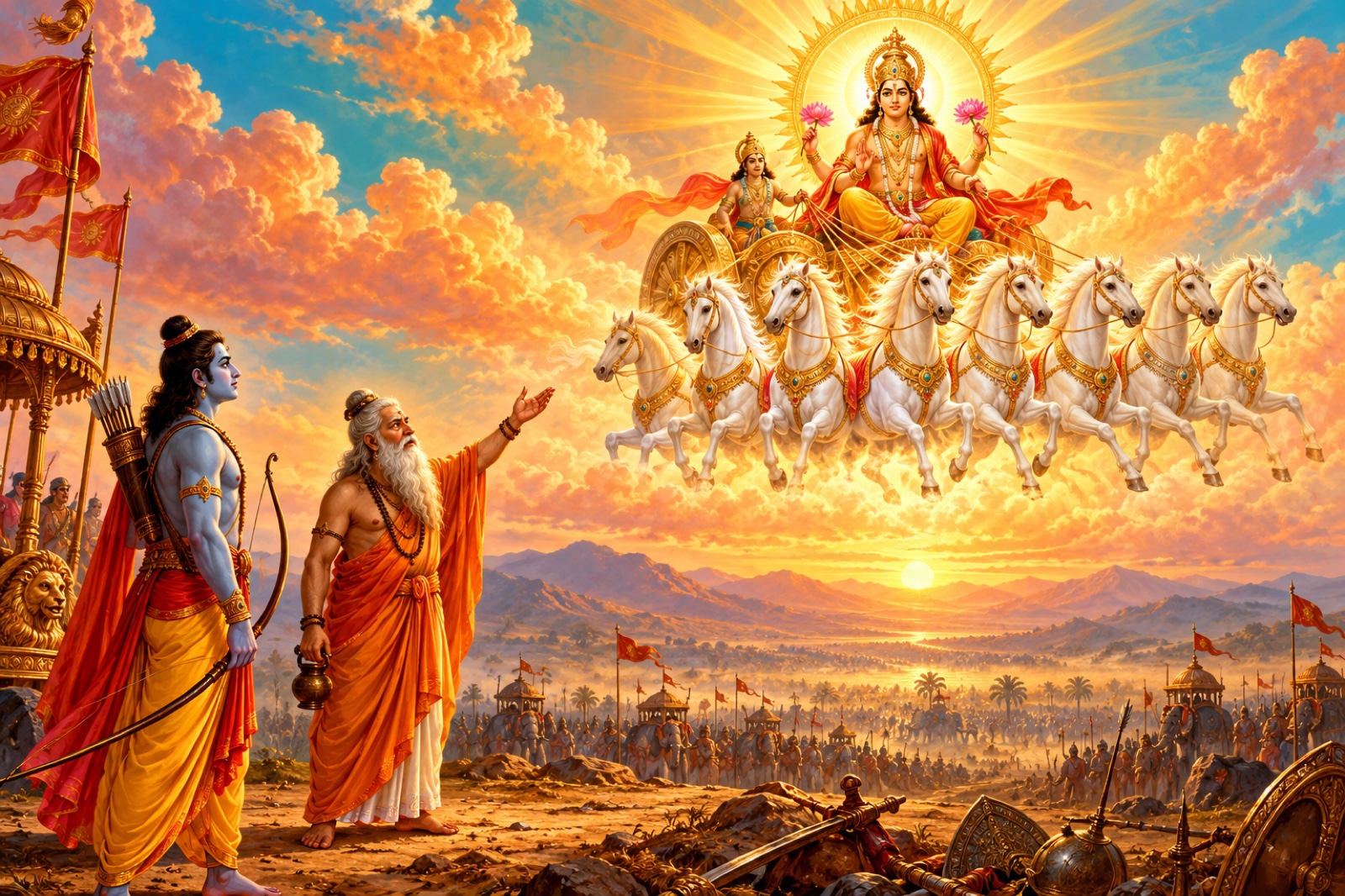
Radiant Surya on a celestial chariot, representing the solar Savitr of the Gayatri mantra.
Original devotional artwork prepared for DHIH.

Gāyatrī Mantra

ॐ भूर्भुवः स्वः । तत्सवितुर्वरेण्यं भर्गो देवस्य धीमहि । धियो यो नः प्रचोदयात् ॥

oṃ bhūrbhuvaḥ svaḥ | tatsaviturvareṇyaṃ bhargo devasya dhīmahi | dhiyo yo naḥ pracodayāt ||

Line-by-line meaning

  1. Om; the earthly, atmospheric and celestial realms.
  2. That excellent radiance of Savitr.
  3. We meditate upon the divine splendour.
  4. May it inspire and guide our understanding.

Short meaning

The Gayatri asks the solar divine radiance of Savitr to illumine and direct human understanding.

Traditional context and source note

Rigveda 3.62.10 with the traditional mahavyahriti invocation.

This concise English meaning is original DHIH prose prepared from the displayed Sanskrit reading.
Link to this shlokaBack to top ↑

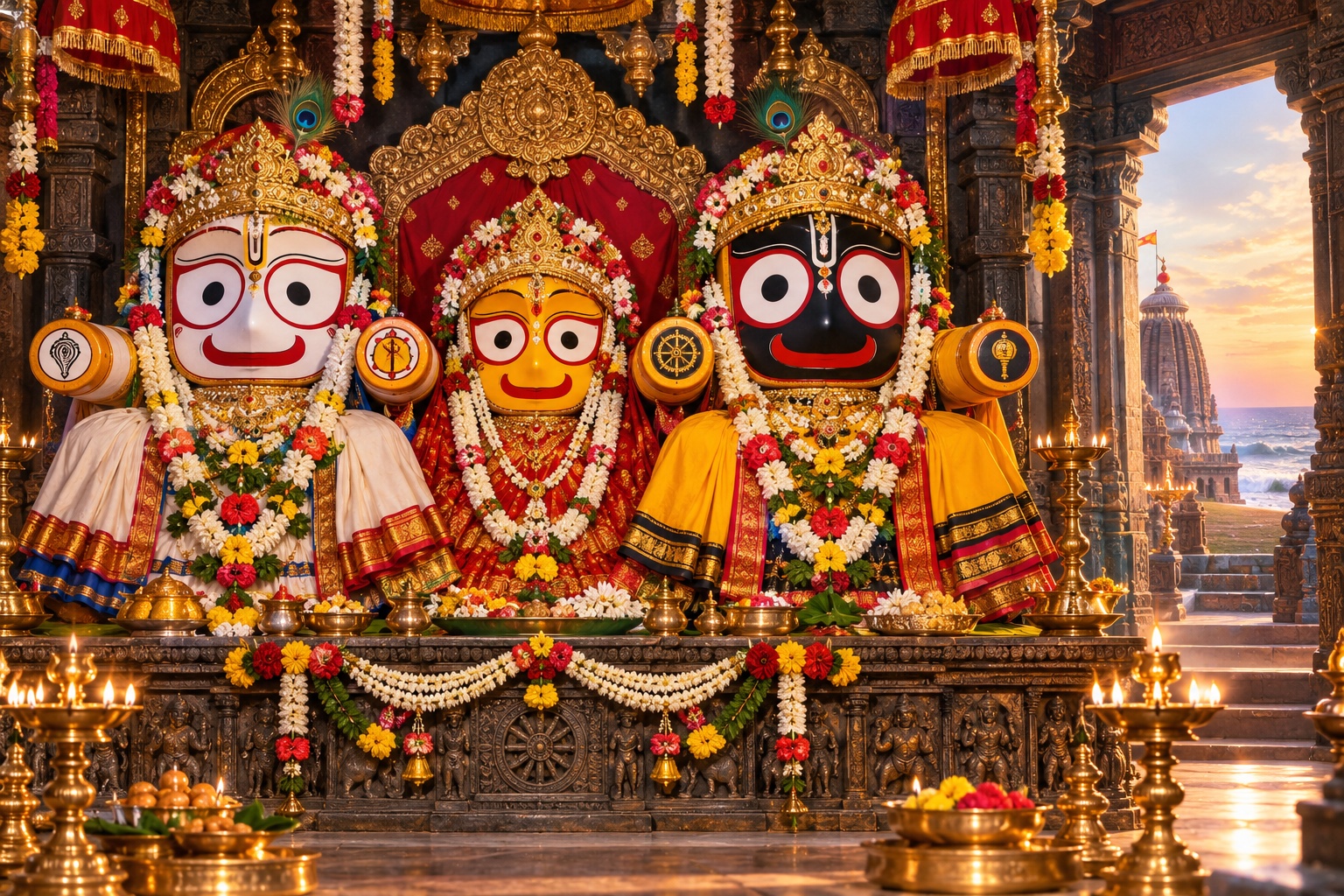
Lord Jagannath with Balabhadra and Subhadra on a flower-adorned altar.
Original devotional artwork prepared for DHIH.

Kadācit Kālindītaṭa

कदाचित्कालिन्दीतटविपिनसङ्गीतकरवो मुदा गोपीनारीवदनकमलास्वादमधुपः । रमाशम्भुब्रह्मामरपतिगणेशार्चितपदो जगन्नाथः स्वामी नयनपथगामी भवतु मे ॥

kadācit kālindītaṭavipinasaṅgītakaravo mudā gopīnārīvadanakamalāsvādamadhupaḥ | ramāśambhubrahmāmarapatigaṇeśārcitapado jagannāthaḥ svāmī nayanapathagāmī bhavatu me ||

Line-by-line meaning

  1. At times he fills the groves on the Yamuna’s bank with music.
  2. Joyfully he is like a bee tasting the lotus faces of the gopis.
  3. Lakshmi, Shiva, Brahma, Indra and Ganesha worship his feet.
  4. May Lord Jagannath appear upon the path of my sight.

Short meaning

Jagannath is remembered as Krishna of the Yamuna groves and as the Lord whose presence the devotee longs to behold.

Traditional context and source note

Opening verse of the traditional Jagannathashtakam.

This concise English meaning is original DHIH prose prepared from the displayed Sanskrit reading.
Link to this shlokaBack to top ↑

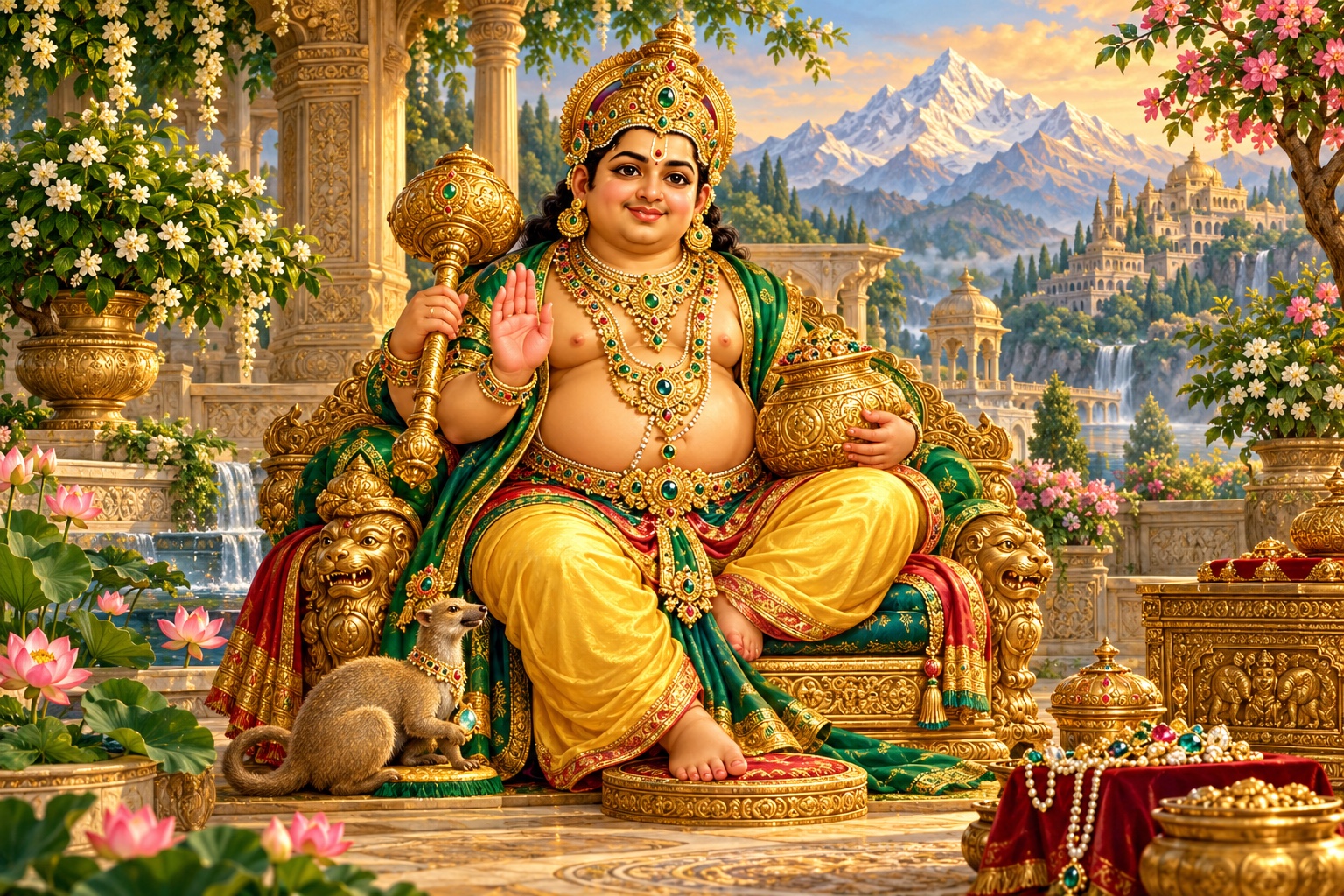
Lord Kubera seated in a Himalayan palace garden with a wealth vessel and blessing hand.
Original devotional artwork prepared for DHIH.

Yakṣāya Kuberāya

ॐ यक्षाय कुबेराय वैश्रवणाय धनधान्याधिपतये । धनधान्यसमृद्धिं मे देहि दापय स्वाहा ॥

oṃ yakṣāya kuberāya vaiśravaṇāya dhanadhānyādhipataye | dhanadhānyasamṛddhiṃ me dehi dāpaya svāhā ||

Line-by-line meaning

  1. Om; reverence to the yaksha Kubera, also called Vaishravana.
  2. He is guardian of wealth and grain.
  3. Grant and cause the growth of sufficient resources and nourishment.
  4. May this offering be received.

Short meaning

The Kubera mantra asks for responsible material sufficiency, food security and prosperity that can sustain a worthy life.

Traditional context and source note

Traditional Kubera mantra; fresh DHIH normalization of the widely recited reading.

This concise English meaning is original DHIH prose prepared from the displayed Sanskrit reading.

Link to this shlokaBack to top ↑

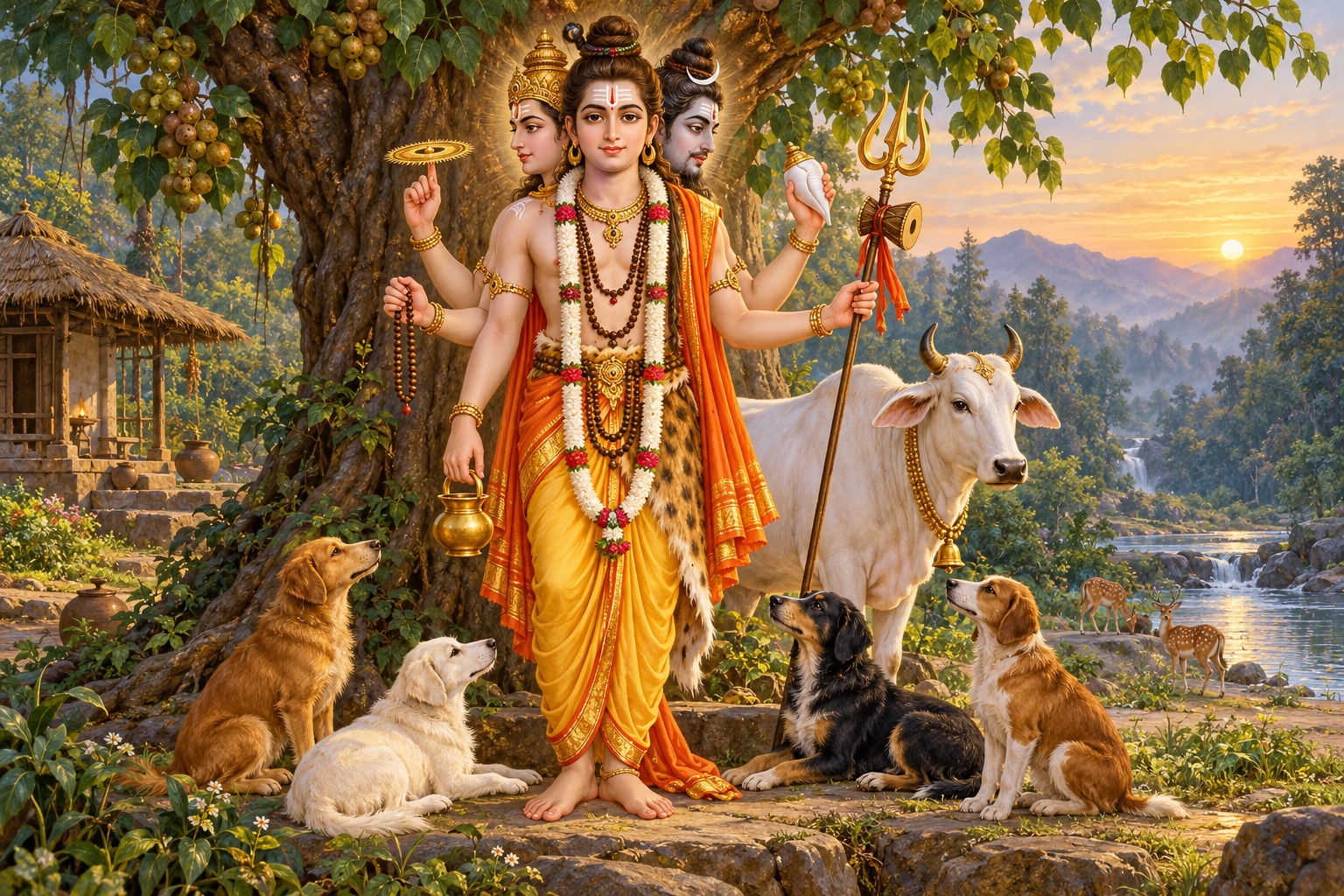
Lord Dattatreya beneath a sacred tree with a cow and four dogs symbolizing the Vedas.
Original devotional artwork prepared for DHIH.

Jaṭādharaṃ Pāṇḍurāṅgam

जटाधरं पाण्डुराङ्गं शूलहस्तं कृपानिधिम् । सर्वरोगहरं देवं दत्तात्रेयमहं भजे ॥

jaṭādharaṃ pāṇḍurāṅgaṃ śūlahastaṃ kṛpānidhim | sarvarogaharaṃ devaṃ dattātreyamahaṃ bhaje ||

Line-by-line meaning

  1. I adore the matted-haired Lord of luminous form.
  2. He holds the trident and is a treasury of compassion.
  3. The divine one removes every affliction.
  4. I worship Dattatreya.

Short meaning

Dattatreya is approached as the compassionate teacher whose integrated wisdom heals affliction.

Traditional context and source note

Traditional Dattatreya dhyana verse.

This concise English meaning is original DHIH prose prepared from the displayed Sanskrit reading.

Link to this shlokaBack to top ↑

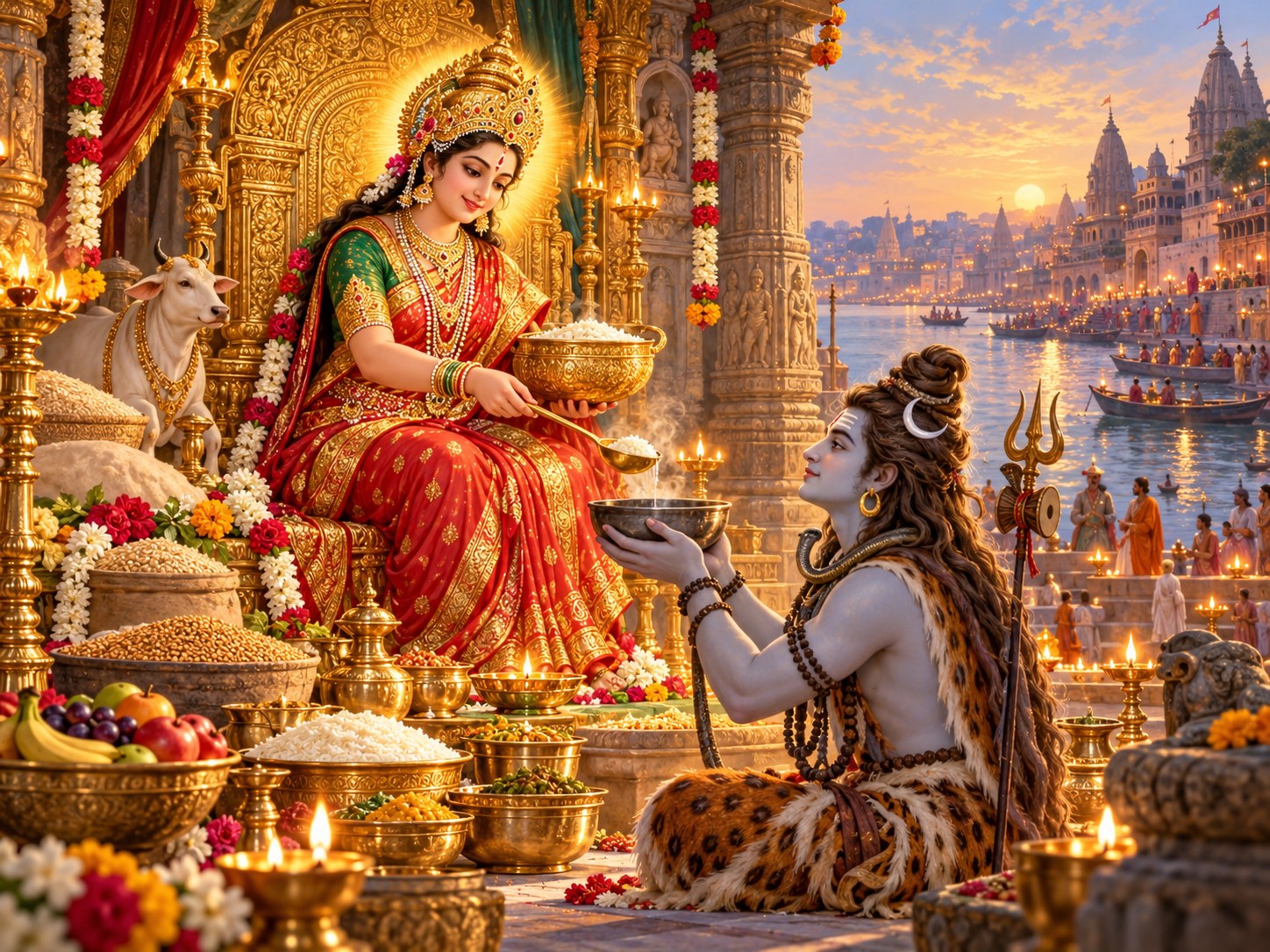
Goddess Annapurna offering nourishing food in Kashi.
Original devotional artwork prepared for DHIH.

Annapūrṇe Sadāpūrṇe

अन्नपूर्णे सदापूर्णे शङ्करप्राणवल्लभे । ज्ञानवैराग्यसिद्ध्यर्थं भिक्षां देहि च पार्वति ॥

annapūrṇe sadāpūrṇe śaṅkaraprāṇavallabhe | jñānavairāgyasiddhyarthaṃ bhikṣāṃ dehi ca pārvati ||

Line-by-line meaning

  1. O Annapurna, always complete and ever abundant.
  2. You are beloved as Shiva’s very life.
  3. For the fulfilment of knowledge and non-attachment.
  4. O Parvati, grant the sustaining alms I seek.

Short meaning

The prayer asks Annapurna for nourishment that supports both bodily life and the maturity of knowledge and non-attachment.

Traditional context and source note

Traditional Annapurna prayer also included in DHIH’s Everyday Shlokas collection.

This concise English meaning is original DHIH prose prepared from the displayed Sanskrit reading.

Link to this shlokaBack to top ↑

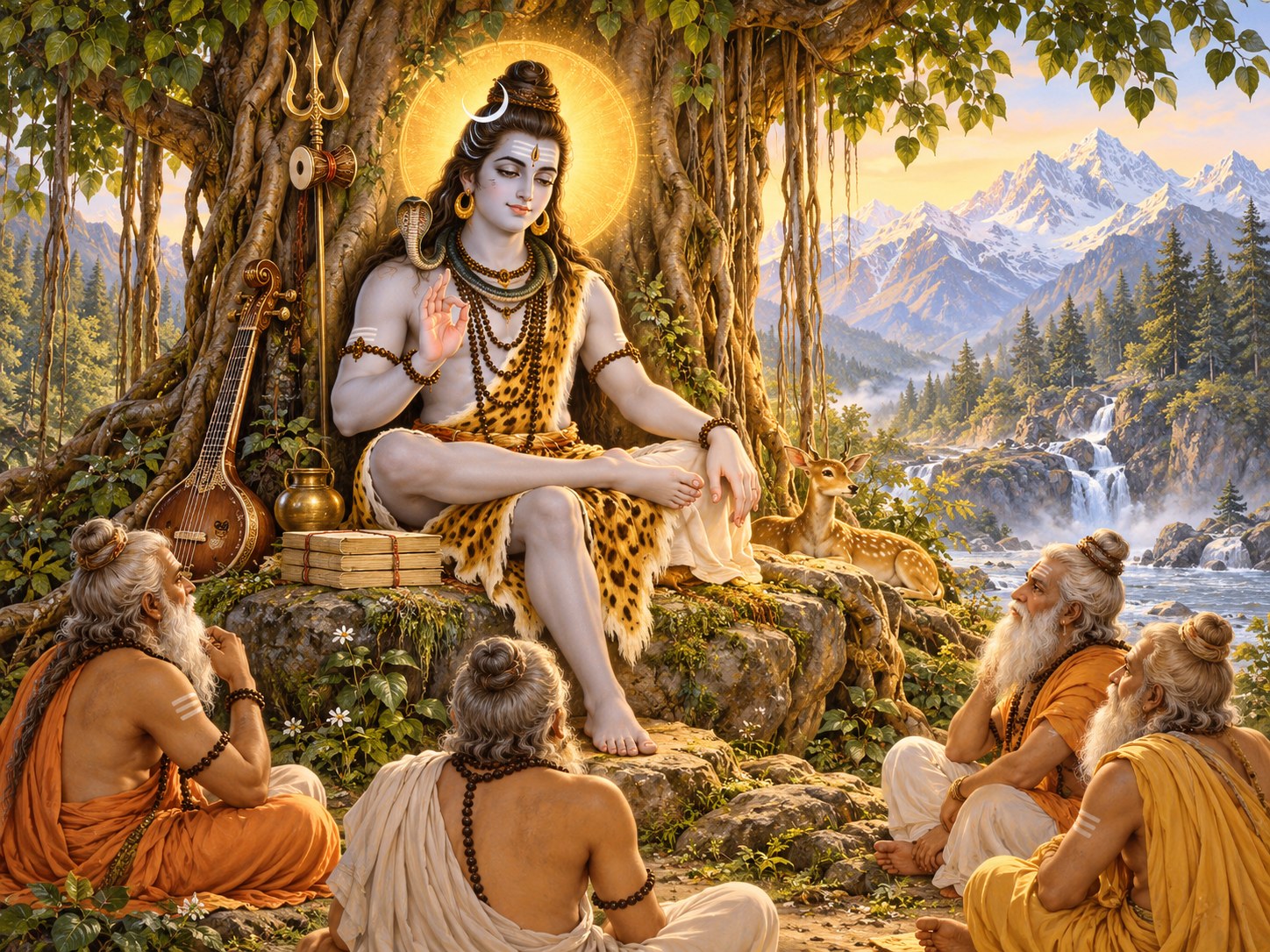
Lord Dakshinamurti teaching in silence beneath a banyan tree.
Original devotional artwork prepared for DHIH.

Gurave Sarvalokānām

गुरवे सर्वलोकानां भिषजे भवरोगिणाम् । निधये सर्वविद्यानां दक्षिणामूर्तये नमः ॥

gurave sarvalokānāṃ bhiṣaje bhavarogiṇām | nidhaye sarvavidyānāṃ dakṣiṇāmūrtaye namaḥ ||

Line-by-line meaning

  1. Salutations to the teacher of all worlds.
  2. He is the physician for those afflicted by conditioned existence.
  3. He is the treasury of every form of knowledge.
  4. Salutations to Dakshinamurti.

Short meaning

Dakshinamurti is honoured as the silent teacher whose knowledge heals the deepest confusion about existence.

Traditional context and source note

Traditional Dakshinamurti prayer also included in DHIH’s Everyday Shlokas collection.

This concise English meaning is original DHIH prose prepared from the displayed Sanskrit reading.

Link to this shlokaBack to top ↑

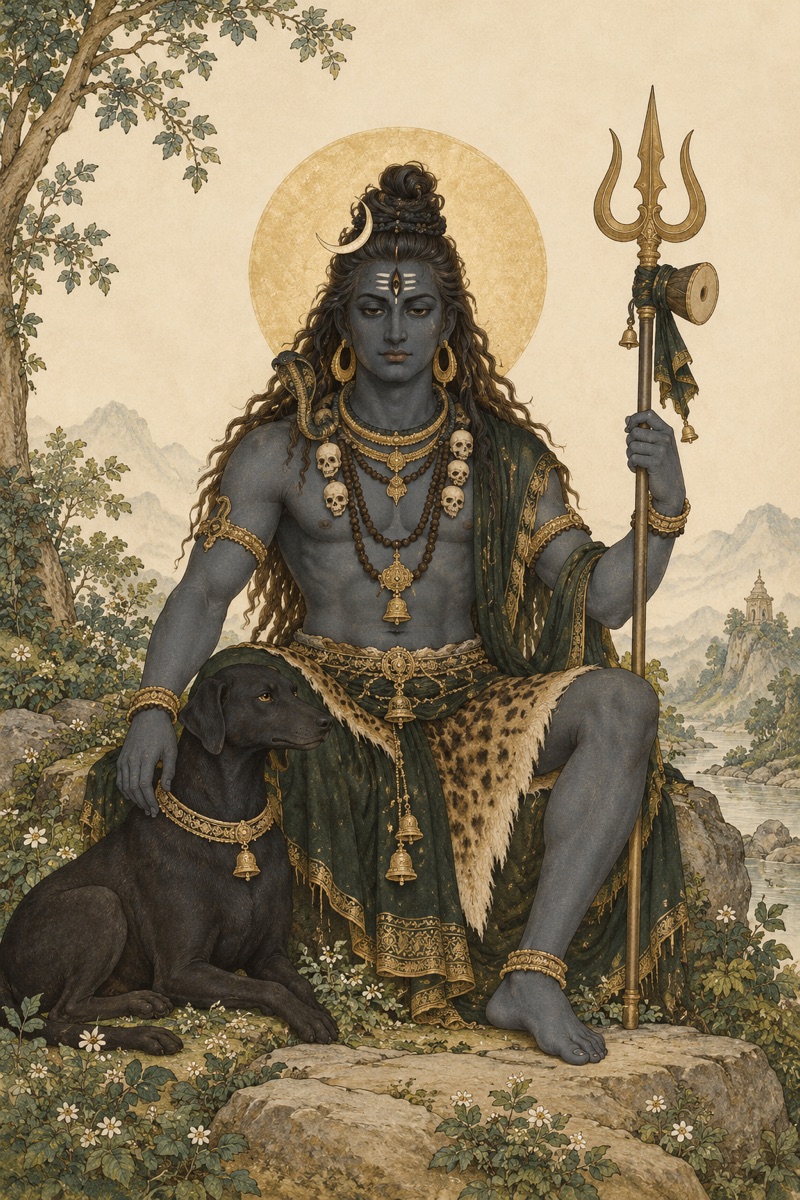
Kala Bhairava with trident and black dog in a devotional illustration.
Original devotional artwork prepared for DHIH.

Devarājasevyamāna

देवराजसेव्यमानपावनाङ्घ्रिपङ्कजं व्यालयज्ञसूत्रमिन्दुशेखरं कृपाकरम् । नारदादियोगिवृन्दवन्दितं दिगम्बरं काशिकापुराधिनाथकालभैरवं भजे ॥

devarājasevyamānapāvanāṅghripaṅkajaṃ vyālayajñasūtraminduśekharaṃ kṛpākaram | nāradādiyogivṛndavanditaṃ digambaraṃ kāśikāpurādhināthakālabhairavaṃ bhaje ||

Line-by-line meaning

  1. I worship the one whose purifying lotus feet are served by the king of the devas.
  2. His sacred thread is a serpent; he bears the moon and is a source of compassion.
  3. Narada and hosts of yogis honour the sky-clad Lord.
  4. I adore Kala Bhairava, guardian and sovereign of Kashi.

Short meaning

Kala Bhairava is praised as Kashi’s fierce yet compassionate guardian, honoured by devas and contemplatives alike.

Traditional context and source note

Selected from the complete traditional reading already published and source-audited by DHIH.

This concise English meaning is original DHIH prose prepared from the displayed Sanskrit reading.

Link to this shlokaBack to top ↑

READ WITH CONTEXT

Scope, sources and editorial approach

This is a curated collection of widely recited prayers rather than a claim that any finite page can exhaust every Hindu deity, regional form or recension. Traditional Sanskrit readings were normalized independently and compared with public prayer compilations, existing source-audited DHIH editions and identified premodern works. No modern translation or third-party artwork is reproduced. English line senses and short meanings are original DHIH AI-assisted prose reviewed structurally against the displayed reading; they are devotional aids, not a critical scholarly edition.

Edition: DHIH normalized Devanagari and IAST reading edition, October 2026.

Attribution: Traditional prayers from multiple textual and living recitation traditions; individual authorship is stated only where the selected source supports it.

Read complete stotrams →
Explore longer devotional classics →
Browse prayers by time of day →

← Return to the DHIH collection