Search DHIH library

VĀLMĪKI RĀMĀYAṆA · CHAPTER 14

सुन्दरकाण्डम् · सर्गः १४

A hidden place to watch

Hanuman enters the flowering grove, studies its pools and paths, and hides in a leafy shimshapa tree.

52 versesSanskrit + English1 illustration
Begin reading ↓

An edition-specific reading with original English meanings. Source & reading notes

SCENE 01 · VERSES 1–52

Watching from the shimshapa

Hanuman enters the flowering grove, studies its pools and paths, and hides in a leafy shimshapa tree.

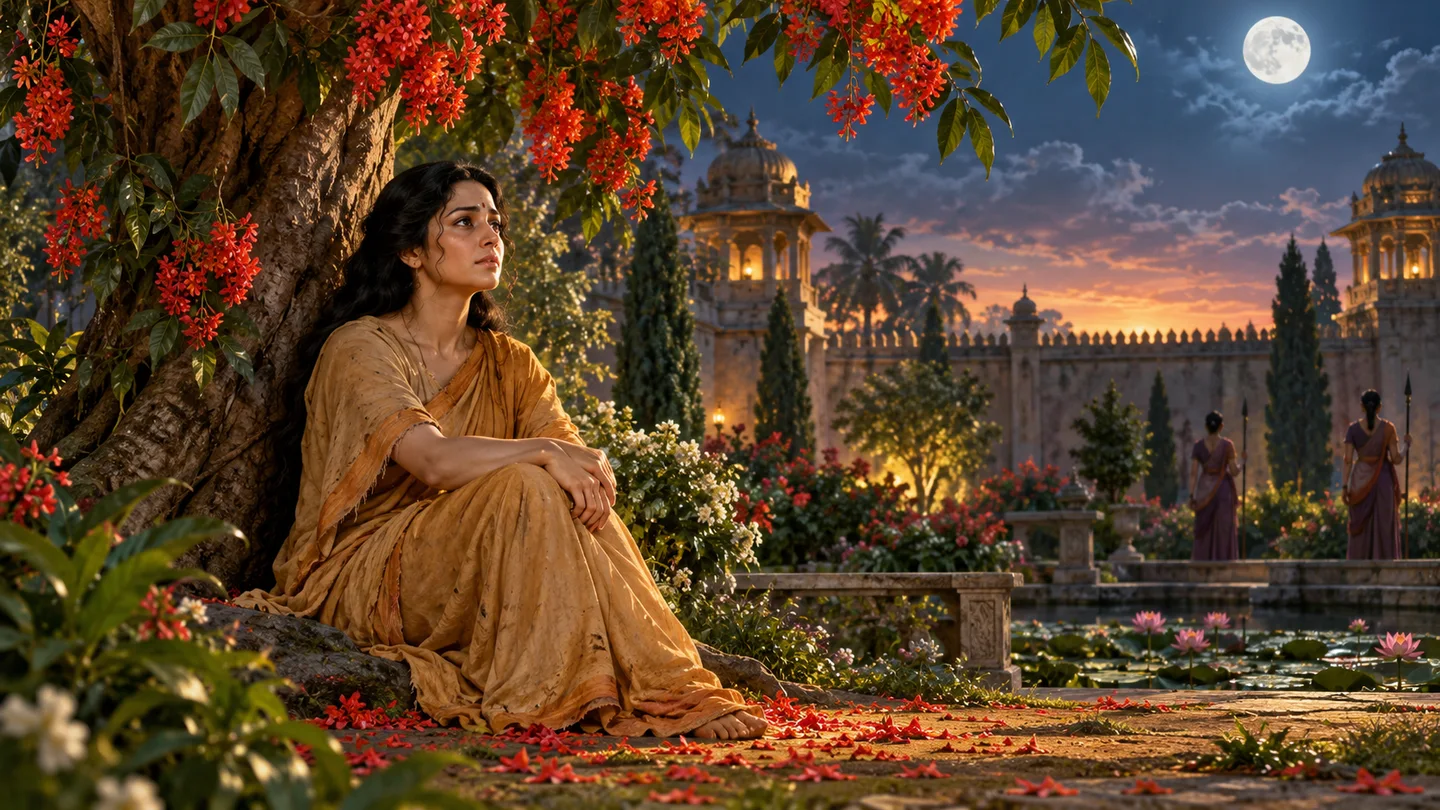
Sita sits beneath a flowering tree in the Ashoka grove, holding to hope.
Original DHIH illustration · artistic interpretation

Verse 1 · 5.14.1

#

स मुहूर्तमिव ध्यात्वा मनसा चाधिगम्य ताम् ।

After reflecting briefly and approaching the grove in his mind,

अवप्लुतो महातेजाः प्राकारं तस्य वेश्मनः ॥

the radiant one leapt onto the wall of the residence.

Verse 2 · 5.14.2

#

स तु संहृष्टसर्वांगः प्राकारस्थो महाकपिः ।

Standing upon the wall, every limb filled with joy,

पुष्पिताग्रान् वसन्तादौ ददर्श विविधान् द्रुमान् ॥

the great vanara saw many trees flowering at spring's beginning.

Verse 3 · 5.14.3

#

सालानशोकान् भव्यांश्च चम्पकांश्च सुपुष्पितान् ।

There were shala, ashoka, bhavya, and richly flowering champaka trees,

उद्दालकान् नागवृक्षांश्चूतान् कपिमुखानपि ॥

uddalaka, naga trees, mangoes, and kapimukha trees.

Verse 4 · 5.14.4

#

तथाऽऽम्रवणसम्पन्नाँल्लताशतसमन्वितान् ।

Rich with mango groves and hundreds of creepers,

ज्यामुक्त इव नाराचः पुप्लुवे वृक्षवाटिकाम् ॥

the garden received his leap like an arrow released from a bow.

Verse 5 · 5.14.5

#

स प्रविश्य विचित्रां तां विहगैरभिनादिताम् ।

He entered that varied grove ringing with birds,

राजतैः काञ्चनैश्चैव पादपैः सर्वतो वृताम् ॥

surrounded on every side by silver and golden trees.

Verse 6 · 5.14.6

#

विहगैर्मृगसङ्घैश्च विचित्रां चित्रकाननाम् ।

Strong Hanuman saw the wonderfully varied woodland,

उदितादित्यसंकाशां ददर्श हनुमान् बली ॥

filled with birds and herds of animals and bright as the rising sun.

Verse 7 · 5.14.7

#

वृतां नानाविधैर्वृक्षैः पुष्पोपगफलोपगैः ।

It was enclosed by many kinds of flowering and fruit-bearing trees,

कोकिलैर्भृङ्गराजैश्च मत्तैर्नित्यनिषेविताम् ॥

continually attended by delighted cuckoos and bhringaraja birds.

Verse 8 · 5.14.8

#

प्रहृष्टमनुजां काले मृगपक्षिमदाकुलाम् ।

In its season it delighted people and stirred animals and birds,

मत्तबर्हिणसंघुष्टां नानाद्विजगणायुताम् ॥

resounding with excited peacocks and many kinds of birds.

Verse 9 · 5.14.9

#

मार्गमाणो वरारोहां राजपुत्रीमनिन्दिताम् ।

Searching for the faultless, graceful princess,

सुखप्रसुप्तान् विहगान् बोधयामास वानरः ॥

the vanara awakened birds that had been sleeping peacefully.

Verse 10 · 5.14.10

#

उत्पतद्भिर्द्विजगणैः पक्षैर्वातैः समाहताः ।

As the flocks flew up, the wind of their wings struck the trees,

अनेकवर्णा विविधा मुमुचुः पुष्पवृष्टयः ॥

releasing showers of many-colored flowers.

Verse 11 · 5.14.11

#

पुष्पावकीर्णः शुशुभे हनूमान् मारुतात्मजः ।

Covered with blossoms, Hanuman, son of the Wind, shone

अशोकवनिकामध्ये यथा पुष्पमयो गिरिः ॥

in the ashoka grove like a mountain made of flowers.

Verse 12 · 5.14.12

#

दिशः सर्वाभिधावन्तं वृक्षखण्डगतं कपिम् ।

Seeing him dart through the clusters of trees in every direction,

दृष्ट्वा सर्वाणि भूतानि वसन्त इति मेनिरे ॥

all the creatures thought that spring itself had arrived.

Verse 13 · 5.14.13

#

वृक्षेभ्यः पतितैः पुष्पैरवकीर्णाः पृथग्विधैः ।

The ground, scattered with different flowers fallen from the trees,

रराज वसुधा तत्र प्रमदेव विभूषिता ॥

shone like a woman adorned with ornaments.

Verse 14 · 5.14.14

#

तरस्विना ते तरवस्तरसा बहु कम्पिताः ।

Shaken vigorously by the swift vanara,

कुसुमानि विचित्राणि ससृजुः कपिना तदा ॥

the trees released their varied flowers.

Verse 15 · 5.14.15

#

निर्धूतपत्रशिखराः शीर्णपुष्पफलद्रुमाः ।

With their leafy crowns shaken bare and flowers and fruit fallen,

निक्षिप्तवस्त्राभरणा धूर्ता इव पराजिताः ॥

the trees resembled defeated gamblers stripped of clothes and ornaments.

Verse 16 · 5.14.16

#

हनूमता वेगवता कम्पितास्ते नगोत्तमाः ।

Those excellent, fruit-laden trees, shaken by swift Hanuman,

पुष्पपत्रफलान्याशु मुमुचुः फलशालिनः ॥

quickly shed their flowers, leaves, and fruit.

Verse 17 · 5.14.17

#

विहंगसङ्घैर्हीनास्ते स्कन्धमात्राश्रया द्रुमाः ।

Deprived of the birds and left chiefly with their trunks,

बभूवुरगमाः सर्वे मारुतेन विनिर्धुताः ॥

the trees seemed thoroughly shaken by the wind.

Verse 18 · 5.14.18

#

विधूतकेशी युवतिर्यथा मृदितवर्णका ।

Like a young woman with loosened hair and rubbed-off cosmetics,

निपीतशुभदन्तोष्ठी नखैर्दन्तैश्च विक्षता ॥

her lovely lip kissed and her skin marked by nails and teeth—

Verse 19 · 5.14.19

#

तथा लांगूलहस्तैस्तु चरणाभ्यां च मर्दिता ।

so the ashoka grove, pressed by his tail, hands, and feet,

तथैवाशोकवनिका प्रभग्नवनपादपा ॥

had its woodland trees broken and disordered.

Verse 20 · 5.14.20

#

महालतानां दामानि व्यधमत् तरसा कपिः ।

The vanara swiftly scattered the long festoons of creepers,

यथा प्रावृषि वेगेन मेघजालानि मारुतः ॥

as wind in the rainy season scatters masses of clouds.

Verse 21 · 5.14.21

#

स तत्र मणिभूमीश्च राजतीश्च मनोरमाः ।

Moving there, he saw delightful grounds paved with jewels and silver,

तथा काञ्चनभूमीश्च विचरन् ददृशे कपिः ॥

and other areas made of gold.

Verse 22 · 5.14.22

#

वापीश्च विविधाकाराः पूर्णाः परमवारिणा ।

Here and there were pools of varied shapes filled with excellent water,

महार्हैर्मणिसोपानैरुपपन्नास्ततस्ततः ॥

provided with steps of costly jewels.

Verse 23 · 5.14.23

#

मुक्ताप्रवालसिकताः स्फाटिकान्तरकुट्टिमाः ।

Their sand was pearl and coral, their inner paving crystal;

काञ्चनैस्तरुभिश्चित्रैस्तीरजैरुपशोभिताः ॥

beautiful golden trees growing on the banks adorned them.

Verse 24 · 5.14.24

#

बुद्धपद्मोत्पलवनाश्चक्रवाकोपशोभिताः ।

They held beds of open lotuses and blue water-lilies, with chakravakas,

नत्यूहरुतसंघुष्टा हंससारसनादिताः ॥

resounding with waterfowl, swans, and cranes.

Verse 25 · 5.14.25

#

दीर्घाभिर्द्रुमयुक्ताभिः सरिद्भिश्च समन्ततः ।

Pleasant long streams, lined with trees on every side

अमृतोपमतोयाभिः शिवाभिरुपसंस्कृताः ॥

and bearing water like nectar, embellished the grounds.

Verse 26 · 5.14.26

#

लताशतैरवतताः संतानकुसुमावृताः ।

Hundreds of creepers spread over them, with clusters of santanaka flowers,

नानागुल्मावृतवनाः करवीरकृतान्तराः ॥

woods of many shrubs, and oleanders filling the spaces.

Verse 27 · 5.14.27

#

ततोऽम्बुधरसंकाशं प्रवृद्धशिखरं गिरिम् ।

Then he saw a cloudlike hill with a lofty summit,

विचित्रकूटं कूटैश्च सर्वतः परिवारितम् ॥

picturesque peaks surrounded by other heights—

Verse 28 · 5.14.28

#

शिलागृहैरवततं नानावृक्षसमावृतम् ।

covered with stone chambers and many kinds of trees;

ददर्श कपिशार्दूलो रम्यं जगति पर्वतम् ॥

the foremost vanara saw that delightful mountain on the ground.

Verse 29 · 5.14.29

#

ददर्श च नगात् तस्मान्नदीं निपतितां कपिः ।

The vanara saw a stream falling from that hill,

अंकादिव समुत्पत्य प्रियस्य पतितां प्रियाम् ॥

like a beloved woman springing from her lover's lap.

Verse 30 · 5.14.30

#

जले निपतिताग्रैश्च पादपैरुपशोभिताम् ।

Trees whose tips fell into the water beautified it,

वार्यमाणामिव क्रुद्धां प्रमदां प्रियबन्धुभिः ॥

as though dear friends were restraining the angry woman.

Verse 31 · 5.14.31

#

पुनरावृत्ततोयां च ददर्श स महाकपिः ।

The great vanara saw its waters turn back again,

प्रसन्नामिव कान्तस्य कान्तां पुनरुपस्थिताम् ॥

like a beloved woman reconciled and returning to her lover.

Verse 32 · 5.14.32

#

तस्यादूरात् स पद्मिन्यो नानाद्विजगणायुताः ।

Not far away, mighty Hanuman, son of the Wind,

ददर्श कपिशार्दूलो हनूमान् मारुतात्मजः ॥

saw lotus ponds attended by many flocks of birds.

Verse 33 · 5.14.33

#

कृत्रिमां दीर्घिकां चापि पूर्णां शीतेन वारिणा ।

He also saw an artificial tank filled with cool water,

मणिप्रवरसोपानां मुक्तासिकतशोभिताम् ॥

with steps of excellent gems and sand shining like pearls.

Verse 34 · 5.14.34

#

विविधैर्मृगसङ्घैश्च विचित्रां चित्रकाननाम् ।

It was made varied by many herds of animals and picturesque woods,

प्रासादैः सुमहद्भिश्च निर्मितैर्विश्वकर्मणा ॥

and by great buildings fashioned by Vishvakarma.

Verse 35 · 5.14.35

#

काननैः कृत्रिमैश्चापि सर्वतः समलंकृताम् ।

Artificial groves decorated it on every side;

ये केचित् पादपास्तत्र पुष्पोपगफलोपगाः ॥

whatever flowering and fruit-bearing trees stood there—

Verse 36 · 5.14.36

#

सच्छत्राः सवितर्दीकाः सर्वे सौवर्णवेदिकाः ।

all had canopies, raised seats, and golden platforms.

लताप्रतानैर्बहुभिः पर्णैश्च बहुभिर्वृताम् ॥

Covered with many spreading vines and abundant leaves—

Verse 37 · 5.14.37

#

काञ्चनीं शिंशपामेकां ददर्श स महाकपिः ।

the great vanara saw a single golden shimshapa tree,

वृतां हेममयीभिस्तु वेदिकाभिः समन्ततः ॥

surrounded on every side by platforms of gold.

Verse 38 · 5.14.38

#

सोऽपश्यद् भूमिभागांश्च नगप्रस्रवणानि च ।

He saw the grounds and the mountain springs,

सुवर्णवृक्षानपरान् ददर्श शिखिसंनिभान् ॥

and other golden trees shining like fire.

Verse 39 · 5.14.39

#

तेषां द्रुमाणां प्रभया मेरोरिव महाकपिः ।

From the brilliance of those trees, like that of Meru,

अमन्यत तदा वीरः काञ्चनोऽस्मीति सर्वतः ॥

the heroic vanara thought his whole body had become golden.

Verse 40 · 5.14.40

#

तान् काञ्चनान् वृक्षगणान् मारुतेन प्रकम्पितान् ।

Seeing those golden trees shaken by the wind

किङ्किणीशतनिर्घोषान् दृष्ट्वा विस्मयमागमत् ॥

and ringing with the sound of hundreds of little bells, he marveled.

Verse 41 · 5.14.41

#

सुपुष्पिताग्रान् रुचिरांस्तरुणाङ्कुरपल्लवान् ।

Among lovely flowering crowns and young shoots and leaves,

तामारुह्य महावेगः शिंशपां पर्णसंवृताम् ॥

the swift one climbed that densely leafed shimshapa.

Verse 42 · 5.14.42

#

इतो द्रक्ष्यामि वैदेहीं रामदर्शनलालसाम् ।

'From here I shall see Sita, longing to see Rama,

इतश्चेतश्च दुःखार्तां सम्पतन्तीं यदृच्छया ॥

wandering here and there as sorrow moves her.'

Verse 43 · 5.14.43

#

अशोकवनिका चेयं दृढं रम्या दुरात्मनः ।

'This wicked ruler's ashoka grove is indeed delightful,

चन्दनैश्चम्पकैश्चापि बकुलैश्च विभूषिता ॥

adorned with sandalwood, champaka, and bakula trees.'

Verse 44 · 5.14.44

#

इयं च नलिनी रम्या द्विजसङ्घनिषेविता ।

'This lovely lotus pool is visited by flocks of birds.

इमां सा राजमहिषी नूनमेष्यति जानकी ॥

Surely Janaki, the royal lady, will come here.'

Verse 45 · 5.14.45

#

सा रामा राजमहिषी राघवस्य प्रिया सती ।

'That lovely queen, Rama's faithful beloved,

वनसंचारकुशला ध्रुवमेष्यति जानकी ॥

is accustomed to walking in forests; surely Janaki will come.'

Verse 46 · 5.14.46

#

अथवा मृगशावाक्षी वनस्यास्य विचक्षणा ।

'Or the doe-eyed woman, familiar with the ways of forests,

वनमेष्यति साद्येह रामचिन्तासुकर्शिता ॥

may come here today, worn thin by thoughts of Rama.'

Verse 47 · 5.14.47

#

रामशोकाभिसंतप्ता सा देवी वामलोचना ।

'Scorched by sorrow for Rama, the lovely-eyed lady

वनवासरता नित्यमेष्यते वनचारिणी ॥

who always delighted in forest life will come wandering here.'

Verse 48 · 5.14.48

#

वनेचराणां सततं नूनं स्पृहयते पुरा ।

'Rama's noble, faithful beloved, Janaka's daughter,

रामस्य दयिता चार्या जनकस्य सुता सती ॥

has always cared for the creatures of the forest.'

Verse 49 · 5.14.49

#

संध्याकालमनाः श्यामा ध्रुवमेष्यति जानकी ।

'Mindful of twilight observance, lovely Janaki will surely come

नदीं चेमां शुभजलां संध्यार्थे वरवर्णिनी ॥

to this river with its pure water for her evening worship.'

Verse 50 · 5.14.50

#

तस्याश्चाप्यनुरूपेयमशोकवनिका शुभा ।

'This lovely ashoka grove is suited to that virtuous woman,

शुभायाः पार्थिवेन्द्रस्य पत्नी रामस्य सम्मता ॥

the honored wife of Rama, foremost among kings.'

Verse 51 · 5.14.51

#

यदि जीवति सा देवी ताराधिपनिभानना ।

'If the moon-faced lady is alive,

आगमिष्यति सावश्यमिमां शीतजलां नदीम् ॥

she will certainly come to this river of cool water.'

Verse 52 · 5.14.52

#

एवं तु मत्वा हनुमान् महात्मा

Thinking thus, noble Hanuman

प्रतीक्षमाणो मनुजेन्द्रपत्नीम् ।

waited for the king's wife.

अवेक्षमाणश्च ददर्श सर्वं

He looked carefully over everything,

सुपुष्पिते पर्णघने निलीनः ॥

hidden in the richly flowering, densely leafed tree.

CHAPTER 14 COMPLETE

The journey continues.

From his concealed lookout, he waits for the woman he hopes to find.

NEXT CHAPTER

Continue Hanuman’s journey in the next chapter.

About this reading

Vālmīki Rāmāyaṇa, Sundara Kanda, chapter 14. This reading follows Sanskrit Wikisource revision 354227, with all 52 numbered verses. Verse divisions and wording vary between editions.

The Sanskrit is preserved with normalized display spacing and line breaks. Some sentences continue across verse boundaries; the English follows that continuity. A yojana is a traditional distance unit, retained without assigning a modern measurement. Shape-changing and celestial beings belong to the epic’s sacred narrative.

English line senses and short meanings are original AI-assisted DHIH renderings checked against this Sanskrit reading; they are not a word-for-word grammatical commentary or a claim of human scholarly certification. Roman transliteration is generated mechanically in IAST. Names may also appear in familiar English spellings.

Sanskrit transcription credit: Wikisource contributors, revision history. The adapted reading text and DHIH English on this chapter page are offered under CC BY-SA 4.0. The ancient Sanskrit work is in the public domain. Illustrations are separately commissioned AI-generated DHIH artwork.

Historical comparison: M. N. Dutt’s Ramayana, volume II, a public-domain translation, was consulted for narrative context. The English displayed here is a fresh rendering of the pinned Sanskrit, not a reproduction of that translation.

The full text includes a brief adult poetic comparison in verses18–19. It also describes a secret rescue mission; children should not imitate entering unfamiliar places or hiding from trusted grown-ups. Audio will be added only when suitable recording permissions are available.