Search DHIH library

VĀLMĪKI RĀMĀYAṆA · CHAPTER 15

सुन्दरकाण्डम् · सर्गः १५

Hanuman recognizes Sita

A sorrowful woman sits beneath the trees. Hanuman carefully compares her appearance, clothing, and ornaments with Rama’s account.

54 versesSanskrit + English1 illustration
Begin reading ↓

An edition-specific reading with original English meanings. Source & reading notes

SCENE 01 · VERSES 1–54

The signs come together

A sorrowful woman sits beneath the trees. Hanuman carefully compares her appearance, clothing, and ornaments with Rama’s account.

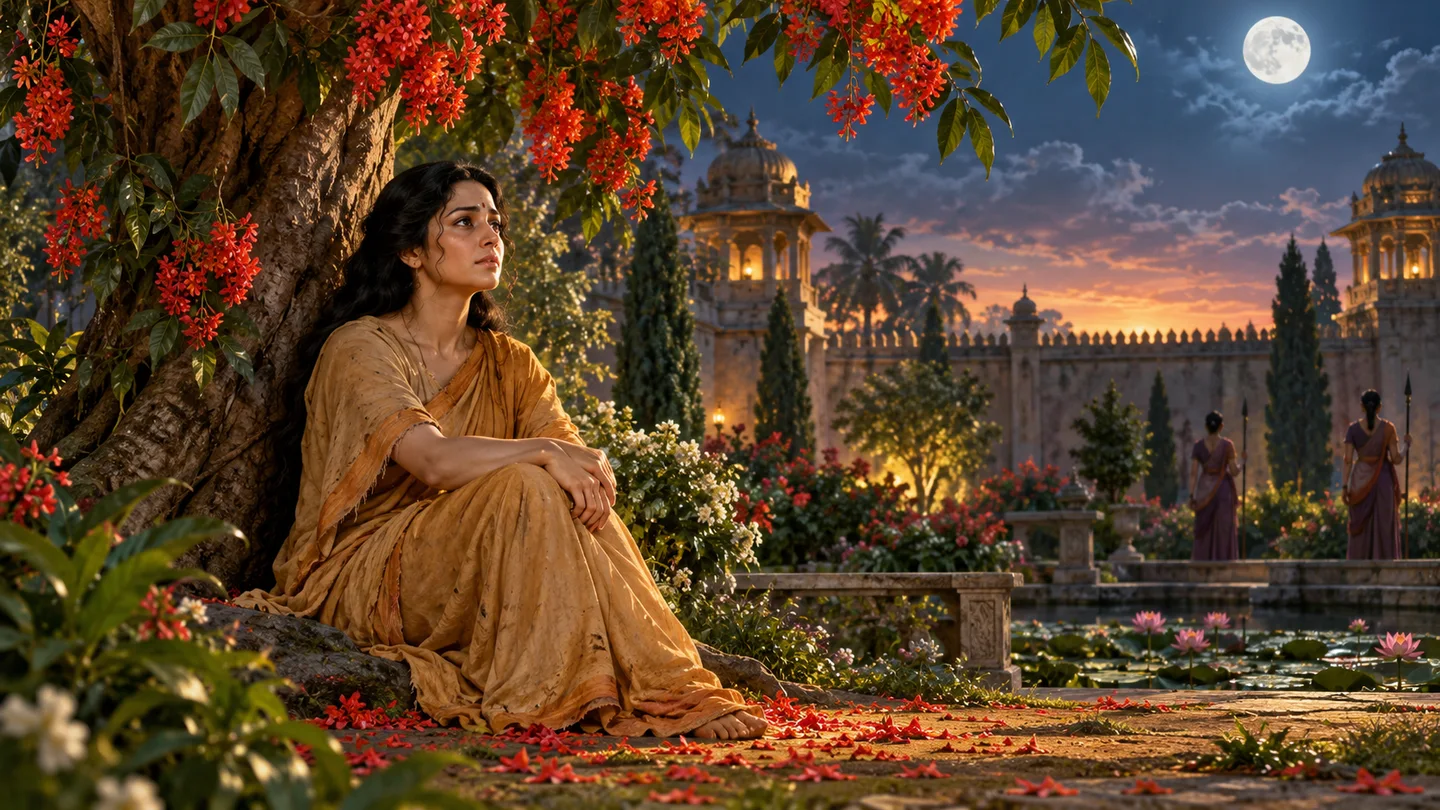
Sita sits beneath a flowering tree in the Ashoka grove, holding to hope.
Original DHIH illustration · artistic interpretation

Verse 1 · 5.15.1

#

स वीक्षमाणस्तत्रस्थो मार्गमाणश्च मैथिलीम् ।

Remaining there, looking about and searching for the princess of Mithila,

अवेक्षमाणश्च महीं सर्वां तामन्ववैक्षत ॥

he surveyed the whole stretch of ground.

Verse 2 · 5.15.2

#

संतानकलताभिश्च पादपैरुपशोभिताम् ।

It was beautified by santanaka creepers and trees,

दिव्यगन्धरसोपेतां सर्वतः समलंकृताम् ॥

rich in heavenly fragrance and sweetness and adorned on every side.

Verse 3 · 5.15.3

#

तां स नन्दनसंकाशां मृगपक्षिभिरावृताम् ।

It resembled Nandana, filled with animals and birds,

हर्म्यप्रासादसम्बाधां कोकिलाकुलनिःस्वनाम् ॥

crowded with houses and palaces and alive with cuckoos' calls.

Verse 4 · 5.15.4

#

काञ्चनोत्पलपद्माभिर्वापीभिरुपशोभिताम् ।

Pools of golden lotuses and water-lilies beautified it;

बह्वासनकुथोपेतां बहुभूमिगृहायुताम् ॥

it held many seats and carpets and many chambers upon its grounds.

Verse 5 · 5.15.5

#

सर्वर्तुकुसुमै रम्यैः फलवद्भिश्च पादपैः ।

With lovely flowers of every season and fruit-bearing trees,

पुष्पितानामशोकानां श्रिया सूर्योदयप्रभाम् ॥

the blossoming ashoka trees made it bright as sunrise.

Verse 6 · 5.15.6

#

प्रदीप्तामिव तत्रस्थो मारुतिः समुदैक्षत ।

From his place the son of the Wind saw it as though aflame,

निष्पत्रशाखां विहगैः क्रियमाणामिवासकृत् ॥

its branches repeatedly seeming stripped of leaves by birds—

Verse 7 · 5.15.7

#

विनिष्पतद्भिः शतशश्चित्रैः पुष्पावतंसकैः ।

hundreds of colorful birds flying out among flower ornaments,

समूलपुष्परचितैरशोकैः शोकनाशनैः ॥

and ashoka trees covered in blossom down to their roots, banishing sorrow—

Verse 8 · 5.15.8

#

पुष्पभारातिभारैश्च स्पृशद्भिरिव मेदिनीम् ।

their branches burdened by flowers and almost touching the ground,

कर्णिकारैः कुसुमितैः किंशुकैश्च सुपुष्पितैः ॥

with flowering karnikara and richly blooming kimshuka trees.

Verse 9 · 5.15.9

#

स देशः प्रभया तेषां प्रदीप्त इव सर्वतः ।

Their brilliance seemed to set the whole place alight;

पुंनागाः सप्तपर्णाश्च चम्पकोद्दालकास्तथा ॥

punnaga, saptaparna, champaka, and uddalaka trees—

Verse 10 · 5.15.10

#

विवृद्धमूला बहवः शोभन्ते स्म सुपुष्पिताः ।

many with well-grown roots, shone in full bloom.

शातकुम्भनिभाः केचित् केचिदग्निशिखप्रभाः ॥

Some were the color of refined gold, others bright as flames.

Verse 11 · 5.15.11

#

नीलाञ्जननिभाः केचित् तत्राशोकाः सहस्रशः ।

Some were dark as collyrium, with ashoka trees in their thousands;

नन्दनं विबुधोद्यानं चित्रं चैत्ररथं यथा ॥

it resembled the gods' Nandana garden and beautiful Chaitraratha.

Verse 12 · 5.15.12

#

अतिवृत्तमिवाचिन्त्यं दिव्यं रम्यश्रियायुतम् ।

Its divine and delightful splendor seemed almost unimaginable,

द्वितीयमिव चाकाशं पुष्पज्योतिर्गणायुतम् ॥

like a second sky filled with stars made of flowers.

Verse 13 · 5.15.13

#

पुष्परत्नशतैश्चित्रं पञ्चमं सागरं यथा ।

Patterned with hundreds of flower-jewels, it seemed a fifth ocean;

सर्वर्तुपुष्पैर्निचितं पादपैर्मधुगन्धिभिः ॥

it was filled with flowers of every season and honey-scented trees.

Verse 14 · 5.15.14

#

नानानिनादैरुद्यानं रम्यं मृगगणद्विजैः ।

The lovely garden rang with varied cries of animals and birds,

अनेकगन्धप्रवहं पुण्यगन्धं मनोहरम् ॥

sending forth many fragrances, pure and delightful.

Verse 15 · 5.15.15

#

शैलेन्द्रमिव गन्धाढ्यं द्वितीयं गन्धमादनम् ।

It was fragrant like the king of mountains, a second Gandhamadana;

अशोकवनिकायां तु तस्यां वानरपुंगवः ॥

within that ashoka grove, the foremost vanara—

Verse 16 · 5.15.16

#

स ददर्शाविदूरस्थं चैत्यप्रासादमूर्जितम् ।

saw nearby a lofty sacred pavilion,

मध्ये स्तम्भसहस्रेण स्थितं कैलासपाण्डुरम् ॥

standing among a thousand pillars, white as Kailasa.

Verse 17 · 5.15.17

#

प्रवालकृतसोपानं तप्तकाञ्चनवेदिकम् ।

Its steps were coral and its platform burnished gold,

मुष्णन्तमिव चक्षूंषि द्योतमानमिव श्रिया ॥

as though dazzling the eyes with its shining splendor.

Verse 18 · 5.15.18

#

निर्मलं प्रांशुभावत्वादुल्लिखन्तमिवाम्बरम् ।

Clear and so tall that it seemed to scratch the sky, it rose above him.

ततो मलिनसंवीतां राक्षसीभिः समावृताम् ॥

Then he saw a woman in soiled clothing, surrounded by rakshasis—

Verse 19 · 5.15.19

#

उपवासकृशां दीनां निःश्वसन्तीं पुनः पुनः ।

thin from fasting, sorrowful, and sighing repeatedly,

ददर्श शुक्लपक्षादौ चन्द्ररेखामिवामलाम् ॥

yet pure like the crescent moon at the beginning of the bright fortnight.

Verse 20 · 5.15.20

#

मन्दप्रख्यायमानेन रूपेण रुचिरप्रभाम् ।

Her loveliness was only faintly visible, though still graceful,

पिनद्धां धूमजालेन शिखामिव विभावसोः ॥

like a flame enclosed in a mass of smoke.

Verse 21 · 5.15.21

#

पीतेनैकेन संवीतां क्लिष्टेनोत्तमवाससा ।

She wore a single fine yellow garment, now worn and soiled;

सपङ्कामनलंकारां विपद्मामिव पद्मिनीम् ॥

without ornaments and covered with dirt, she was like a lotus pond without flowers.

Verse 22 · 5.15.22

#

पीडितां दुःखसंतप्तां परिक्षीणां तपस्विनीम् ।

Afflicted, scorched by sorrow, diminished, and pitiable,

ग्रहेणांगारकेणेव पीडितामिव रोहिणीम् ॥

she resembled Rohini troubled by the planet Mars.

Verse 23 · 5.15.23

#

अश्रुपूर्णमुखीं दीनां कृशामनशनेन च ।

Her face was full of tears, her body thin from not eating;

शोकध्यानपरां दीनां नित्यं दुःखपरायणाम् ॥

sorrowful and absorbed in grief, she remained continually in distress.

Verse 24 · 5.15.24

#

प्रियं जनमपश्यन्तीं पश्यन्तीं राक्षसीगणम् ।

Seeing no beloved person, only a company of rakshasis,

स्वगणेन मृगीं हीनां श्वगणेनावृतामिव ॥

she was like a deer separated from its herd and surrounded by dogs.

Verse 25 · 5.15.25

#

नीलनागाभया वेण्या जघनं गतयैकया ।

Her single braid, dark as a serpent, reached her hips;

नीलया नीरदापाये वनराज्या महीमिव ॥

she resembled the earth with its dark forest line after the clouds have departed.

Verse 26 · 5.15.26

#

सुखार्हां दुःखसंतप्तां व्यसनानामकोविदाम् ।

Seeing that wide-eyed woman, worthy of happiness but scorched by grief,

तां विलोक्य विशालाक्षीमधिकं मलिनां कृशाम् ॥

unused to calamity, greatly soiled and thin—

Verse 27 · 5.15.27

#

तर्कयामास सीतेति कारणैरुपपादिभिः ।

he reasoned from appropriate signs that she was Sita.

ह्रियमाणा तदा तेन रक्षसा कामरूपिणा ॥

When she had been carried away by that shape-changing rakshasa—

Verse 28 · 5.15.28

#

यथारूपा हि दृष्टा सा तथारूपेयमंगना ।

the form seen then matched the form of this woman:

पूर्णचन्द्राननां सुभ्रूं चारुवृत्तपयोधराम् ॥

a full-moon face, fine brows, and lovely rounded breasts.

Verse 29 · 5.15.29

#

कुर्वतीं प्रभया देवीं सर्वा वितिमिरा दिशः ।

The noble woman seemed to dispel darkness in every direction by her radiance;

तां नीलकण्ठीं बिम्बोष्ठीं सुमध्यां सुप्रतिष्ठिताम् ॥

with a blue-tinged neck, bimba-red lips, a slender waist, and a poised form—

Verse 30 · 5.15.30

#

सीतां पद्मपलाशाक्षीं मन्मथस्य रतिं यथा ।

lotus-petal-eyed Sita resembled Rati beside the god of Love,

इष्टां सर्वस्य जगतः पूर्णचन्द्रप्रभामिव ॥

dear to the whole world like the full moon's light.

Verse 31 · 5.15.31

#

भूमौ सुतनुमासीनां नियतामिव तापसीम् ।

The slender woman sat upon the ground like a disciplined ascetic,

निःश्वासबहुलां भीरुं भुजगेन्द्रवधूमिव ॥

sighing often and fearful, like the wife of a serpent lord.

Verse 32 · 5.15.32

#

शोकजालेन महता विततेन न राजतीम् ।

She did not shine beneath the immense net of sorrow spread over her,

संसक्तां धूमजालेन शिखामिव विभावसोः ॥

like a flame caught in a web of smoke.

Verse 33 · 5.15.33

#

तां स्मृतीमिव संदिग्धामृद्धिं निपतितामिव ।

She seemed a memory become uncertain, prosperity fallen,

विहतामिव च श्रद्धामाशां प्रतिहतामिव ॥

faith obstructed, or hope defeated.

Verse 34 · 5.15.34

#

सोपसर्गां यथा सिद्धिं बुद्धिं सकलुषामिव ।

She seemed an attainment beset by obstacles, understanding clouded,

अभूतेनापवादेन कीर्तिं निपतितामिव ॥

or a reputation brought down by a false accusation.

Verse 35 · 5.15.35

#

रामोपरोधव्यथितां रक्षोगणनिपीडिताम् ।

Distressed by separation from Rama and oppressed by rakshasas,

अबलां मृगशावाक्षीं वीक्षमाणां ततस्ततः ॥

the helpless, doe-eyed woman looked here and there.

Verse 36 · 5.15.36

#

बाष्पाम्बुपरिपूर्णेन कृष्णवक्राक्षिपक्ष्मणा ।

With a joyless face filled with tears,

वदनेनाप्रसन्नेन निःश्वसन्तीं पुनः पुनः ॥

her dark curved lashes wet, she sighed repeatedly.

Verse 37 · 5.15.37

#

मलपङ्कधरां दीनां मण्डनार्हाममण्डिताम् ।

Soiled and pitiable, unadorned though worthy of ornaments,

प्रभां नक्षत्रराजस्य कालमेघैरिवावृताम् ॥

she was like moonlight covered by dark clouds.

Verse 38 · 5.15.38

#

तस्य संदिदिहे बुद्धिस्तथा सीतां निरीक्ष्य च ।

Looking at Sita in that condition, his mind briefly doubted,

आम्नायानामयोगेन विद्यां प्रशिथिलामिव ॥

as one struggles to recognize learning weakened through lack of practice.

Verse 39 · 5.15.39

#

दुःखेन बुबुधे सीतां हनुमाननलंकृताम् ।

Hanuman recognized the unadorned Sita with difficulty,

संस्कारेण यथा हीनां वाचमर्थान्तरं गताम् ॥

as one recognizes speech deprived of correct form and shifted in meaning.

Verse 40 · 5.15.40

#

तां समीक्ष्य विशालाक्षीं राजपुत्रीमनिन्दिताम् ।

Examining the faultless, wide-eyed princess,

तर्कयामास सीतेति कारणैरुपपादयन् ॥

he identified her as Sita by assembling the supporting signs.

Verse 41 · 5.15.41

#

वैदेह्या यानि चांगेषु तदा रामोऽन्वकीर्तयत् ।

He noticed upon her body the beautiful ornaments

तान्याभरणजालानि गात्रशोभीन्यलक्षयत् ॥

that Rama had described as belonging to Sita.

Verse 42 · 5.15.42

#

सुकृतौ कर्णवेष्टौ च श्वदंष्ट्रौ च सुसंस्थितौ ।

There were finely made ear ornaments and well-fitted tooth-shaped pieces,

मणिविद्रुमचित्राणि हस्तेष्वाभरणानि च ॥

and ornaments upon her hands patterned with gems and coral.

Verse 43 · 5.15.43

#

श्यामानि चिरयुक्तत्वात् तथा संस्थानवन्ति च ।

'Though darkened by long wearing, they retain their proper shapes.

तान्येवैतानि मन्येऽहं यानि रामोऽन्वकीर्तयत् ॥

I think these are the very ornaments Rama described.'

Verse 44 · 5.15.44

#

तत्र यान्यवहीनानि तान्यहं नोपलक्षये ।

'I do not see those ornaments she cast away then;

यान्यस्या नावहीनानि तानीमानि न संशयः ॥

these are certainly the ones she did not discard.'

Verse 45 · 5.15.45

#

पीतं कनकपट्टाभं स्रस्तं तद्वसनं शुभम् ।

'The vanaras saw her yellow upper cloth, bright as a band of gold,

उत्तरीयं नगासक्तं तदा दृष्टं प्लवंगमैः ॥

slipped down and caught upon a tree at that time.'

Verse 46 · 5.15.46

#

भूषणानि च मुख्यानि दृष्टानि धरणीतले ।

'The fine, large, jingling ornaments seen upon the ground

अनयैवापविद्धानि स्वनवन्ति महान्ति च ॥

were indeed cast down by this woman.'

Verse 47 · 5.15.47

#

इदं चिरगृहीतत्वाद् वसनं क्लिष्टवत्तरम् ।

'This garment is much more worn from being used so long,

तथाप्यनूनं तद्वर्णं तथा श्रीमद्यथेतरत् ॥

yet its color remains the same and its quality matches the other cloth.'

Verse 48 · 5.15.48

#

इयं कनकवर्णांगी रामस्य महिषी प्रिया ।

'This golden-limbed woman is Rama's beloved queen;

प्रणष्टापि सती यस्य मनसो न प्रणश्यति ॥

though lost to his sight, she has never vanished from his mind.'

Verse 49 · 5.15.49

#

इयं सा यत्कृते रामश्चतुर्भिरिह तप्यते ।

'For her sake Rama suffers in four ways:

कारुण्येनानृशंस्येन शोकेन मदनेन च ॥

through compassion, tenderness, grief, and love.'

Verse 50 · 5.15.50

#

स्त्री प्रणष्टेति कारुण्यादाश्रितेत्यानृशंस्यतः ।

'Compassion for a lost woman, tenderness for one depending on him,

पत्नी नष्टेति शोकेन प्रियेति मदनेन च ॥

grief for a missing wife, and longing for his beloved.'

Verse 51 · 5.15.51

#

अस्या देव्या यथारूपमंगप्रत्यंगसौष्ठवम् ।

'The beauty and harmony of this lady's limbs

रामस्य च यथारूपं तस्येयमसितेक्षणा ॥

match Rama's own form; this dark-eyed woman is his.'

Verse 52 · 5.15.52

#

अस्या देव्या मनस्तस्मिंस्तस्य चास्यां प्रतिष्ठितम् ।

'Her mind is fixed upon him, and his upon her;

तेनेयं स च धर्मात्मा मुहूर्तमपि जीवति ॥

through that bond she and righteous Rama remain alive.'

Verse 53 · 5.15.53

#

दुष्करं कृतवान् रामो हीनो यदनया प्रभुः ।

'Rama accomplishes something truly difficult: separated from her,

धारयत्यात्मनो देहं न शोकेनावसीदति ॥

he preserves his life and does not sink beneath his sorrow.'

Verse 54 · 5.15.54

#

एवं सीतां तथा दृष्ट्वा हृष्टः पवनसम्भवः ।

Thus seeing Sita, the delighted son of the Wind

जगाम मनसा रामं प्रशशंस च तं प्रभुम् ॥

went to Rama in his thoughts and praised his lord.

CHAPTER 15 COMPLETE

The journey continues.

The clues agree: Hanuman has found Sita alive.

NEXT CHAPTER

Continue Hanuman’s journey in the next chapter.

About this reading

Vālmīki Rāmāyaṇa, Sundara Kanda, chapter 15. This reading follows Sanskrit Wikisource revision 354229, with all 54 numbered verses. Verse divisions and wording vary between editions.

The Sanskrit is preserved with normalized display spacing and line breaks. Some sentences continue across verse boundaries; the English follows that continuity. A yojana is a traditional distance unit, retained without assigning a modern measurement. Shape-changing and celestial beings belong to the epic’s sacred narrative.

English line senses and short meanings are original AI-assisted DHIH renderings checked against this Sanskrit reading; they are not a word-for-word grammatical commentary or a claim of human scholarly certification. Roman transliteration is generated mechanically in IAST. Names may also appear in familiar English spellings.

Sanskrit transcription credit: Wikisource contributors, revision history. The adapted reading text and DHIH English on this chapter page are offered under CC BY-SA 4.0. The ancient Sanskrit work is in the public domain. Illustrations are separately commissioned AI-generated DHIH artwork.

Historical comparison: M. N. Dutt’s Ramayana, volume II, a public-domain translation, was consulted for narrative context. The English displayed here is a fresh rendering of the pinned Sanskrit, not a reproduction of that translation.

The chapter depicts captivity, neglect, and grief. Recognition rests upon several details in the narrative, not simply upon appearance. Audio will be added only when suitable recording permissions are available.