Search DHIH library

VĀLMĪKI RĀMĀYAṆA · CHAPTER 38

सर्गः ३८

A memory and the crest-jewel

Sita gives Hanuman a private memory from her life with Rama and a cherished crest-jewel to prove their meeting. She adds a heartfelt message asking for rescue.

70 versesSanskrit + English1 illustration
Begin reading ↓

An edition-specific reading with original English meanings. Source & reading notes

SCENE 01 · VERSES 1–70

A memory only Rama will know

Sita gives Hanuman a private memory from her life with Rama and a cherished crest-jewel to prove their meeting. She adds a heartfelt message asking for rescue.

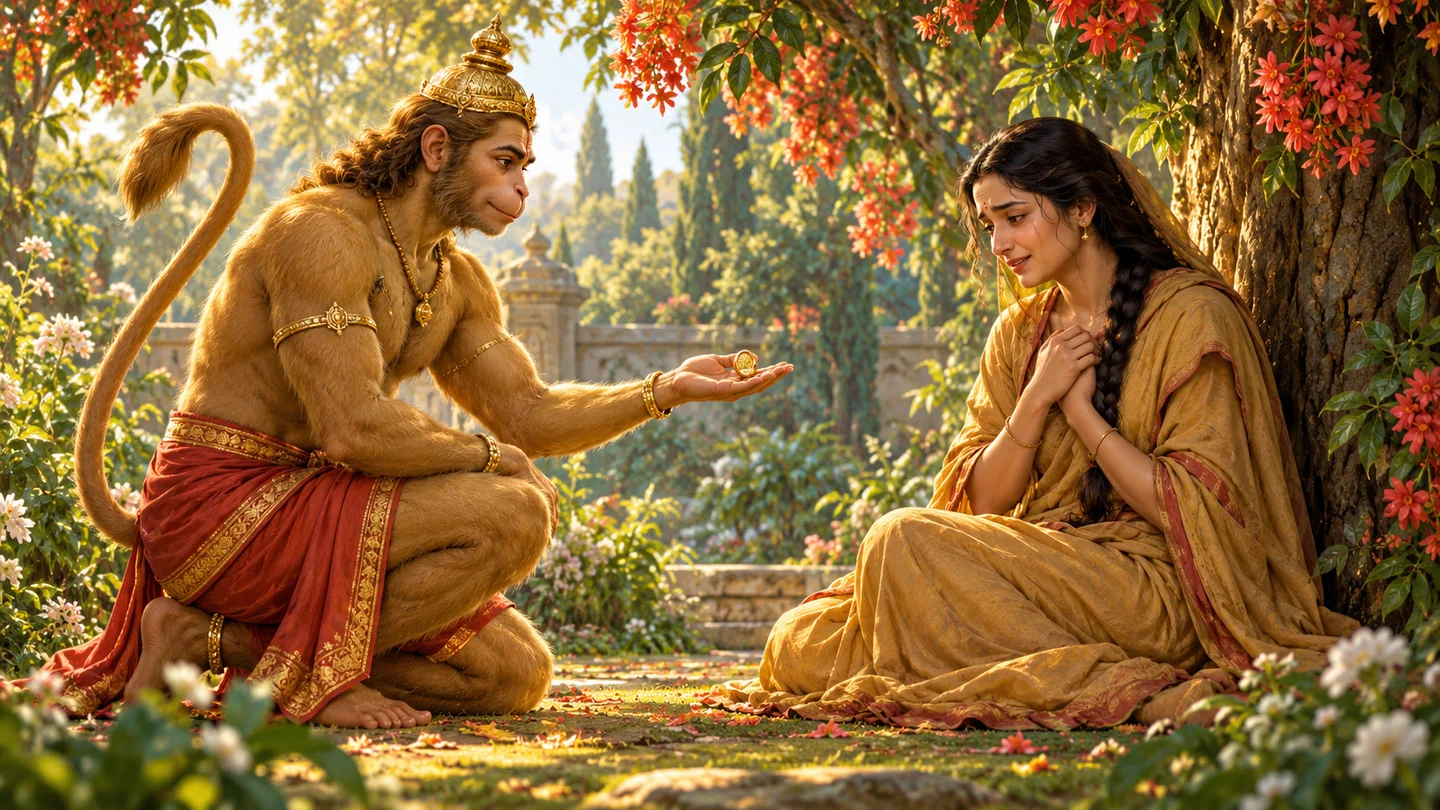
Hanuman respectfully presents Rama’s small ring to Sita in the garden.
Original DHIH illustration · artistic interpretation

Verse 1 · 5.38.1

#

ततः स कपिशार्दूलस्तेन वाक्येन तोषितः ।

Pleased by Sita’s words, that foremost vanara,

सीतामुवाच तच्छ्रुत्वा वाक्यं वाक्यविशारदः ॥

skilled in speech, answered her after listening.

Verse 2 · 5.38.2

#

युक्तरूपं त्वया देवि भाषितं शुभदर्शने ।

“Beautiful lady, what you have said is fitting,

सदृशं स्त्रीस्वभावस्य साध्वीनां विनयस्य च ॥

in keeping with a virtuous woman’s nature and modesty.

Verse 3 · 5.38.3

#

स्त्रीत्वान्न त्वं समर्थासि सागरं व्यतिवर्तितुम् ।

As a woman, you may not be able to cross

मामधिष्ठाय विस्तीर्णं शतयोजनमायतम् ॥

the broad, hundred-yojana ocean mounted upon me.

Verse 4 · 5.38.4

#

द्वितीयं कारणं यच्च ब्रवीषि विनयान्विते ।

And your second reason, modest Janaki,

रामादन्यस्य नार्हामि संसर्गमिति जानकि ॥

is that you should not willingly touch anyone but Rama.

Verse 5 · 5.38.5

#

एतत् ते देवि सदृशं पत्न्यास्तस्य महात्मनः ।

That is worthy of you, lady, the wife of that great soul.

का ह्यन्या त्वामृते देवि ब्रूयाद् वचनमीदृशम् ॥

Who but you would speak such words?

Verse 6 · 5.38.6

#

श्रोष्यते चैव काकुत्स्थः सर्वं निरवशेषतः ।

Kakutstha shall hear everything without omission:

चेष्टितं यत् त्वया देवि भाषितं च ममाग्रतः ॥

your conduct and all that you have said before me.

Verse 7 · 5.38.7

#

कारणैर्बहुभिर्देवि रामप्रियचिकीर्षया ।

For many reasons, lady, wishing to please Rama,

स्नेहप्रस्कन्नमनसा मयैतत् समुदीरितम् ॥

with a heart moved by affection, I made this offer.

Verse 8 · 5.38.8

#

लङ्काया दुष्प्रवेशत्वाद् दुस्तरत्वान्महोदधेः ।

Because Lanka is hard to enter, the ocean hard to cross,

सामर्थ्यादात्मनश्चैव मयैतत् समुदीरितम् ॥

and because I know my own strength, I spoke thus.

Verse 9 · 5.38.9

#

इच्छामि त्वां समानेतुमद्यैव रघुनन्दिना ।

I wished to reunite you with Raghu’s descendant this very day.

गुरुस्नेहेन भक्त्या च नान्यथा तदुदाहृतम् ॥

I spoke from deep affection and devotion, for no other reason.

Verse 10 · 5.38.10

#

यदि नोत्सहसे यातुं मया सार्धमनिन्दिते ।

If you do not wish to go with me, blameless lady,

अभिज्ञानं प्रयच्छ त्वं जानीयाद् राघवो हि यत् ॥

give me a token that Raghava will recognize.”

Verse 11 · 5.38.11

#

एवमुक्ता हनुमता सीता सुरसुतोपमा ।

Thus addressed by Hanuman, Sita, like a heavenly maiden,

उवाच वचनं मन्दं बाष्पप्रग्रथिताक्षरम् ॥

spoke softly, her words caught in tears.

Verse 12 · 5.38.12

#

इदं श्रेष्ठमभिज्ञानं ब्रूयास्त्वं तु मम प्रियम् ।

“Tell my beloved this finest token of recognition:

शैलस्य चित्रकूटस्य पादे पूर्वोत्तरे पदे ॥

at Chitrakuta mountain’s north-eastern foot,

Verse 13 · 5.38.13

#

तापसाश्रमवासिन्याः प्राज्यमूलफलोदके ।

where I lived in an ascetics’ hermitage, rich in roots, fruits and water,

तस्मिन् सिद्धाश्रिते देशे मन्दाकिन्यविदूरतः ॥

in that region inhabited by perfected beings, near the Mandakini,

Verse 14 · 5.38.14

#

तस्योपवनखण्डेषु नानापुष्पसुगन्धिषु ।

after roaming its groves fragrant with many flowers,

विहृत्य सलिले क्लिन्नो ममाङ्के समुपाविशः ॥

wet from bathing, you sat upon my lap.

Verse 15 · 5.38.15

#

ततो मांससमायुक्तो वायसः पर्यतुण्डयत् ।

Then a crow, intent on flesh, pecked at me.

तमहं लोष्टमुद्यम्य वारयामि स्म वायसम् ॥

Taking up a clod, I tried to drive the crow away.

Verse 16 · 5.38.16

#

दारयन् स च मां काकस्तत्रैव परिलीयते ।

Scratching me, the crow remained nearby;

न चाप्युपारमन्मांसाद् भक्षार्थी बलिभोजनः ॥

the bird, accustomed to offerings, would not abandon its desire for flesh.

Verse 17 · 5.38.17

#

उत्कर्षन्त्यां च रशनां क्रुद्धायां मयि पक्षिणे ।

As I angrily pulled up my girdle because of the bird,

स्रंसमाने च वसने ततो दृष्टा त्वया ह्यहम् ॥

my garment slipped, and you saw me.

Verse 18 · 5.38.18

#

त्वया विहसिता चाहं क्रुद्धा संलज्जिता तदा ।

You laughed, and I was angry and ashamed.

भक्ष्यगृद्धेन काकेन दारिता त्वामुपागता ॥

Wounded by the crow greedy for food, I came to you.

Verse 19 · 5.38.19

#

ततः श्रान्ताहमुत्सङ्गमासीनस्य तवाविशम् ।

Tired, I entered your lap as you sat there;

क्रुध्यन्तीव प्रहृष्टेन त्वयाहं परिसान्त्विता ॥

you cheerfully comforted me when I seemed angry.

Verse 20 · 5.38.20

#

बाष्पपूर्णमुखी मन्दं चक्षुषी परिमार्जती ।

With tears upon my face, gently wiping my eyes,

लक्षिताहं त्वया नाथ वायसेन प्रकोपिता ॥

you saw me, lord, angered by the crow.

Verse 21 · 5.38.21

#

परिश्रमाच्च सुप्ता हे राघवाङ्केऽस्म्यहं चिरम् ।

From weariness I slept a long time in Raghava’s lap;

पर्यायेण प्रसुप्तश्च ममाङ्के भरताग्रजः ॥

in turn Bharata’s elder brother slept upon mine.

Verse 22 · 5.38.22

#

स तत्र पुनरेवाथ वायसः समुपागमत् ।

Then that crow came there again.

ततः सुप्तप्रबुद्धां मां राघवाङ्कात् समुत्थिताम् ।

After I woke and rose from Raghava’s lap,

वायसः सहसागम्य विददार स्तनान्तरे ॥

the crow suddenly came and wounded me between the breasts.

Verse 23 · 5.38.23

#

पुनः पुनरथोत्पत्य विददार स मां भृशम् ।

Again and again it flew up and wounded me severely;

ततः समुत्थितो रामो मुक्तैः शोणितबिन्दुभिः ॥

then Rama awoke when drops of blood fell upon him.

Verse 24 · 5.38.24

#

स मां दृष्ट्वा महाबाहुर्वितुन्नां स्तनयोस्तदा ।

Seeing my wounded breast, the long-armed hero

आशीविष इव क्रुद्धः श्वसन् वाक्यमभाषत ॥

breathed in anger like a venomous serpent and spoke:

Verse 25 · 5.38.25

#

केन ते नागनासोरु विक्षतं वै स्तनान्तरम् ।

‘Graceful-thighed lady, who has wounded your breast?

कः क्रीडति सरोषेण पञ्चवक्त्रेण भोगिना ॥

Who plays with an enraged five-hooded serpent?’

Verse 26 · 5.38.26

#

वीक्षमाणस्ततस्तं वै वायसं समवैक्षत ।

Looking around, he saw the crow facing me,

नखैः सरुधिरैस्तीक्ष्णैर्मामेवाभिमुखं स्थितम् ॥

its sharp claws stained with blood.

Verse 27 · 5.38.27

#

पुत्रः किल स शक्रस्य वायसः पततां वरः ।

That foremost bird, they say, was Indra’s son in crow form,

धरान्तरं गतः शीघ्रं पवनस्य गतौ समः ॥

swift as the wind, moving between regions of the earth.

Verse 28 · 5.38.28

#

ततस्तस्मिन् महाबाहुः कोपसंवर्तितेक्षणः ।

Then the long-armed one, his eyes turning with anger,

वायसे कृतवान् क्रूरां मतिं मतिमतां वरः ॥

foremost of the wise, formed a severe resolve against the crow.

Verse 29 · 5.38.29

#

स दर्भसंस्तराद् गृह्य ब्रह्मणोऽस्त्रेण योजयत् ।

Taking a blade from the darbha grass-seat, he empowered it with Brahma’s weapon;

स दीप्त इव कालाग्निर्जज्वालाभिमुखो द्विजम् ॥

it blazed towards the bird like the fire of destruction.

Verse 30 · 5.38.30

#

स तं प्रदीप्तं चिक्षेप दर्भं तं वायसं प्रति ।

He hurled that blazing darbha blade at the crow;

ततस्तु वायसं दर्भः सोऽम्बरेऽनुजगाम ह ॥

then the blade pursued the crow through the sky.

Verse 31 · 5.38.31

#

अनुसृष्टस्तदा काको जगाम विविधां गतिम् ।

Pursued, the crow travelled in many directions;

त्राणकाम इमं लोकं सर्वं वै विचचार ह ॥

seeking protection, it wandered through the whole world.

Verse 32 · 5.38.32

#

स पित्रा च परित्यक्तः सर्वैश्च परमर्षिभिः ।

Rejected by its father and all the great sages,

त्रीँल्लोकान् सम्परिक्रम्य तमेव शरणं गतः ॥

it circled the three worlds and sought refuge in Rama himself.

Verse 33 · 5.38.33

#

स तं निपतितं भूमौ शरण्यः शरणागतम् ।

Kakutstha, a refuge for those who seek him, compassionately protected

वधार्हमपि काकुत्स्थः कृपया पर्यपालयत् ॥

the bird fallen upon the ground in surrender, though it deserved death.

Verse 34 · 5.38.34

#

परिद्यूनं विवर्णं च पतमानं तमब्रवीत् ।

He told the exhausted, pale bird lying before him,

मोघमस्त्रं न शक्यं तु ब्राह्मं कर्तुं तदुच्यताम् ॥

‘Brahma’s weapon cannot be made fruitless; say what shall be done.’

Verse 35 · 5.38.35

#

ततस्तस्याक्षि काकस्य हिनस्ति स्म स दक्षिणम् ।

Then he destroyed the crow’s right eye;

दत्त्वा तु दक्षिणं नेत्रं प्राणेभ्यः परिरक्षितः ॥

giving up that eye, the bird was spared its life.

Verse 36 · 5.38.36

#

स रामाय नमस्कृत्वा राज्ञे दशरथाय च ।

Bowing to Rama and King Dasharatha,

विसृष्टस्तेन वीरेण प्रतिपेदे स्वमालयम् ॥

and released by the hero, it returned to its own home.

Verse 37 · 5.38.37

#

मत्कृते काकमात्रेऽपि ब्रह्मास्त्रं समुदीरितम् ।

For my sake you unleashed Brahma’s weapon against a mere crow.

कस्माद् यो माहरत् त्वत्तः क्षमसे तं महीपते ॥

Why, king, do you tolerate the one who abducted me from you?

Verse 38 · 5.38.38

#

स कुरुष्व महोत्साहां कृपां मयि नरर्षभ ।

Foremost man, show me compassion joined with great energy.

त्वया नाथवती नाथ ह्यनाथा इव दृश्यते ॥

Though I have you as my protector, lord, I appear unprotected.

Verse 39 · 5.38.39

#

आनृशंस्यं परो धर्मस्त्वत्त एव मया श्रुतम् ।

From you I heard that compassion is the highest dharma.

जानामि त्वां महावीर्यं महोत्साहं महाबलम् ॥

I know your great courage, energy and strength,

Verse 40 · 5.38.40

#

अपारवारमक्षोभ्यं गाम्भीर्यात् सागरोपमम् ।

boundless, unshakable, deep as the ocean,

भर्तारं ससमुद्राया धरण्या वासवोपमम् ॥

Indra-like lord of the earth and its seas.

Verse 41 · 5.38.41

#

एवमस्त्रविदां श्रेष्ठो बलवान् सत्त्ववानपि ।

Thus foremost in weapons, strong and courageous,

किमर्थमस्त्रं रक्षःसु न योजयसि राघव ॥

why do you not direct a weapon against the rakshasas, Raghava?

Verse 42 · 5.38.42

#

न नागा नापि गन्धर्वा न सुरा न मरुद‍्गणाः ।

Neither Nagas, Gandharvas, gods, nor hosts of Maruts

रामस्य समरे वेगं शक्ताः प्रतिसमीहितुम् ॥

can withstand Rama’s force in battle.

Verse 43 · 5.38.43

#

तस्य वीर्यवतः कच्चिद् यद्यस्ति मयि सम्भ्रमः ।

If that mighty hero has concern for me,

किमर्थं न शरैस्तीक्ष्णैः क्षयं नयति राक्षसान् ॥

why does he not destroy the rakshasas with sharp arrows?

Verse 44 · 5.38.44

#

भ्रातुरादेशमादाय लक्ष्मणो वा परंतपः ।

Or why does brave, mighty Lakshmana, conqueror of foes,

कस्य हेतोर्न मां वीरः परित्राति महाबलः ॥

not rescue me at his brother’s command?

Verse 45 · 5.38.45

#

यदि तौ पुरुषव्याघ्रौ वाय्विन्द्रसमतेजसौ ।

Those foremost men equal Wind and Indra in brilliance

सुराणामपि दुर्धर्षौ किमर्थं मामुपेक्षतः ॥

and are invincible even to gods; why do they neglect me?

Verse 46 · 5.38.46

#

ममैव दुष्कृतं किंचिन्महदस्ति न संशयः ।

Surely some great wrongdoing must belong to me,

समर्थावपि तौ यन्मां नावेक्षेते परंतपौ ॥

since those capable conquerors of foes do not look after me.”

Verse 47 · 5.38.47

#

वैदेह्या वचनं श्रुत्वा करुणं साश्रु भाषितम् ।

Hearing Vaidehi’s piteous, tearful words,

अथाब्रवीन्महातेजा हनूमान् हरियूथपः ॥

glorious Hanuman, leader of vanaras, replied:

Verse 48 · 5.38.48

#

त्वच्छोकविमुखो रामो देवि सत्येन ते शपे ।

“Lady, I swear truthfully: Rama is overwhelmed by grief for you;

रामे दुःखाभिपन्ने तु लक्ष्मणः परितप्यते ॥

and Lakshmana suffers because Rama is stricken with sorrow.

Verse 49 · 5.38.49

#

कथंचिद् भवती दृष्टा न कालः परिशोचितुम् ।

At last you have been found; this is no time to despair.

इमं मुहूर्तं दुःखानामन्तं द्रक्ष्यसि शोभने ॥

Beautiful lady, you shall now see the end of your suffering draw near.

Verse 50 · 5.38.50

#

तावुभौ पुरुषव्याघ्रौ राजपुत्रौ महाबलौ ।

Those two mighty princes, foremost among men,

त्वद्दर्शनकृतोत्साहौ लोकान् भस्मीकरिष्यतः ॥

roused by the news of finding you, could reduce worlds to ashes.

Verse 51 · 5.38.51

#

हत्वा च समरक्रूरं रावणं सहबान्धवम् ।

After killing Ravana, terrible in battle, together with his kin,

राघवस्त्वां विशालाक्षि स्वां पुरीं प्रति नेष्यति ॥

Raghava will take you, wide-eyed lady, back to his own city.

Verse 52 · 5.38.52

#

ब्रूहि यद् राघवो वाच्यो लक्ष्मणश्च महाबलः ।

Tell me what should be said to Raghava, mighty Lakshmana,

सुग्रीवो वापि तेजस्वी हरयो वा समागताः ॥

glorious Sugriva, or the assembled vanaras.”

Verse 53 · 5.38.53

#

इत्युक्तवति तस्मिंश्च सीता पुनरथाब्रवीत् ।

When he had spoken, Sita said again,

कौसल्या लोकभर्तारं सुषुवे यं मनस्विनी ॥

“The one whom noble Kausalya bore to sustain the world—

Verse 54 · 5.38.54

#

तं ममार्थे सुखं पृच्छ शिरसा चाभिवादय ।

ask after his welfare for me and bow your head to him.

स्रजश्च सर्वरत्नानि प्रियायाश्च वराङ्गनाः ॥

Garlands, every jewel, and beloved noble women,

Verse 55 · 5.38.55

#

ऐश्वर्यं च विशालायां पृथिव्यामपि दुर्लभम् ।

and sovereignty over the vast earth, hard to obtain—

पितरं मातरं चैव सम्मान्याभिप्रसाद्य च ॥

having honoured and pleased his father and mother,

Verse 56 · 5.38.56

#

अनुप्रव्रजितो रामं सुमित्रा येन सुप्रजाः ।

he followed Rama, making Sumitra blessed with a worthy son.

आनुकूल्येन धर्मात्मा त्यक्त्वा सुखमनुत्तमम् ॥

That righteous one, obediently abandoning unsurpassed comfort,

Verse 57 · 5.38.57

#

अनुगच्छति काकुत्स्थं भ्रातरं पालयन् वने ।

follows Kakutstha, protecting his brother in the forest;

सिंहस्कन्धो महाबाहुर्मनस्वी प्रियदर्शनः ॥

lion-shouldered, long-armed, steadfast and pleasant to see,

Verse 58 · 5.38.58

#

पितृवद् वर्तते रामे मातृवन्मां समाचरत् ।

he treats Rama as a father and behaved towards me as a mother.

ह्रियमाणां तदा वीरो न तु मां वेद लक्ष्मणः ॥

Brave Lakshmana did not know when I was being abducted.

Verse 59 · 5.38.59

#

वृद्धोपसेवी लक्ष्मीवान् शक्तो न बहुभाषिता ।

Attentive to elders, splendid, capable and sparing in speech,

राजपुत्रप्रियश्रेष्ठः सदृशः श्वशुरस्य मे ॥

dearest among princes, he resembles my father-in-law.

Verse 60 · 5.38.60

#

मत्तः प्रियतरो नित्यं भ्राता रामस्य लक्ष्मणः ।

Rama’s brother Lakshmana is always dearer to him even than I;

नियुक्तो धुरि यस्यां तु तामुद्वहति वीर्यवान् ॥

whatever burden he is assigned, that hero bears it.

Verse 61 · 5.38.61

#

यं दृष्ट्वा राघवो नैव वृत्तमार्यमनुस्मरत् ।

Seeing him, Raghava did not dwell on the loss of his noble father.

स ममार्थाय कुशलं वक्तव्यो वचनान्मम ॥

Convey my words asking after his welfare.

Verse 62 · 5.38.62

#

मृदुर्नित्यं शुचिर्दक्षः प्रियो रामस्य लक्ष्मणः ।

Gentle, always pure and capable, Lakshmana is dear to Rama.

यथा हि वानरश्रेष्ठ दुःखक्षयकरो भवेत् ॥

Foremost vanara, act so that he may bring an end to sorrow.

Verse 63 · 5.38.63

#

त्वमस्मिन् कार्यनिर्वाहे प्रमाणं हरियूथप ।

Leader of vanaras, you are the trusted means of completing this task;

राघवस्त्वत्समारम्भान्मयि यत्नपरो भवेत् ॥

through your initiative Raghava may devote himself to rescuing me.

Verse 64 · 5.38.64

#

इदं ब्रूयाश्च मे नाथं शूरं रामं पुनः पुनः ।

Again and again tell my lord, heroic Rama:

जीवितं धारयिष्यामि मासं दशरथात्मज ॥

‘Son of Dasharatha, I shall sustain my life for one month.

Verse 65 · 5.38.65

#

ऊर्ध्वं मासान्न जीवेयं सत्येनाहं ब्रवीमि ते ।

Beyond one month I shall not live; I speak truthfully to you.

रावणेनोपरुद्धां मां निकृत्या पापकर्मणा ।

Wicked Ravana has treacherously confined me;

त्रातुमर्हसि वीर त्वं पातालादिव कौशिकीम् ॥

hero, you must rescue me, as Kaushiki was rescued from the netherworld.’”

Verse 66 · 5.38.66

#

ततो वस्त्रगतं मुक्त्वा दिव्यं चूडामणिं शुभम् ।

Then, untying a beautiful divine crest-jewel from her garment,

प्रदेयो राघवायेति सीता हनुमते ददौ ॥

Sita gave it to Hanuman, saying, “Give this to Raghava.”

Verse 67 · 5.38.67

#

प्रतिगृह्य ततो वीरो मणिरत्नमनुत्तमम् ।

Receiving that incomparable jewel, the hero

अङ्गुल्या योजयामास नह्यस्य प्राभवद् भुजः ॥

placed it on a finger, for his arm would not fit through it.

Verse 68 · 5.38.68

#

मणिरत्नं कपिवरः प्रतिगृह्याभिवाद्य च ।

Receiving the jewel, the foremost vanara bowed,

सीतां प्रदक्षिणं कृत्वा प्रणतः पार्श्वतः स्थितः ॥

circled Sita respectfully, and stood humbly at her side.

Verse 69 · 5.38.69

#

हर्षेण महता युक्तः सीतादर्शनजेन सः ।

Filled with great joy at having found Sita,

हृदयेन गतो रामं लक्ष्मणं च सलक्षणम् ॥

in his heart he had already reached Rama and auspicious Lakshmana.

Verse 70 · 5.38.70

#

मणिवरमुपगृह्य तं महार्हं

Taking that precious, excellent jewel

जनकनृपात्मजया धृतं प्रभावात् ।

which King Janaka’s daughter had carefully preserved,

गिरिवरपवनावधूतमुक्तः

like one freed from a buffeting mountain wind,

सुखितमनाः प्रतिसंक्रमं प्रपेदे ॥

he gladly prepared for the return.

CHAPTER 38 COMPLETE

The journey continues.

Hanuman receives the jewel and prepares to carry Sita’s words back to Rama.

NEXT CHAPTER

Continue Hanuman’s journey in the next chapter.

About this reading

Vālmīki Rāmāyaṇa, Sundara Kanda, chapter 38. This reading follows Sanskrit Wikisource revision 354795, with all 70 numbered verses. Verse divisions and wording vary between editions.

The Sanskrit is preserved with normalized display spacing and line breaks. Some sentences continue across verse boundaries; the English follows that continuity. A yojana is a traditional distance unit, retained without assigning a modern measurement. Shape-changing and celestial beings belong to the epic’s sacred narrative.

English line senses and short meanings are original AI-assisted DHIH renderings checked against this Sanskrit reading; they are not a word-for-word grammatical commentary or a claim of human scholarly certification. Roman transliteration is generated mechanically in IAST. Names may also appear in familiar English spellings.

Sanskrit transcription credit: Wikisource contributors, revision history. The adapted reading text and DHIH English on this chapter page are offered under CC BY-SA 4.0. The ancient Sanskrit work is in the public domain. Illustrations are separately commissioned AI-generated DHIH artwork.

Historical comparison: M. N. Dutt’s Ramayana, volume II, a public-domain translation, was consulted for narrative context. The English displayed here is a fresh rendering of the pinned Sanskrit, not a reproduction of that translation.

The crow episode contains injury and punishment, and Sita speaks of how little longer she can endure captivity. These details belong to the full epic text. Audio will be added only when suitable recording permissions are available.