Search DHIH library

VĀLMĪKI RĀMĀYAṆA · CHAPTER 37

सर्गः ३७

Sita considers an escape

Hanuman offers to carry Sita across the sea. She considers the dangers and explains why she wants Rama himself to overcome Ravana and rescue her.

68 versesSanskrit + English1 illustration
Begin reading ↓

An edition-specific reading with original English meanings. Source & reading notes

SCENE 01 · VERSES 1–68

Courage, caution, and the way home

Hanuman offers to carry Sita across the sea. She considers the dangers and explains why she wants Rama himself to overcome Ravana and rescue her.

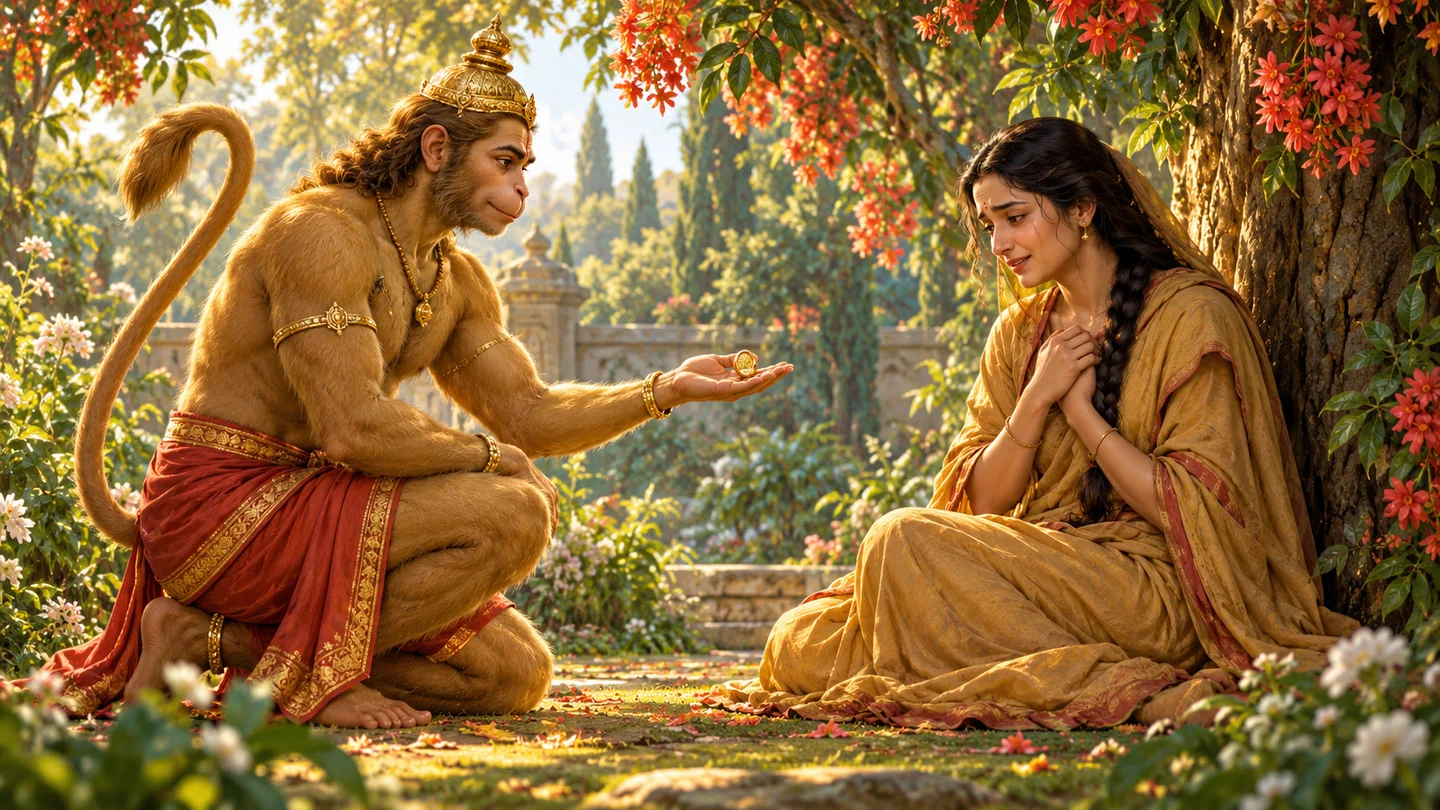
Hanuman respectfully presents Rama’s small ring to Sita in the garden.
Original DHIH illustration · artistic interpretation

Verse 1 · 5.37.1

#

सा सीता वचनं श्रुत्वा पूर्णचन्द्रनिभानना ।

Hearing those words, moon-faced Sita

हनूमन्तमुवाचेदं धर्मार्थसहितं वचः ॥

addressed Hanuman with words grounded in duty and purpose.

Verse 2 · 5.37.2

#

अमृतं विषसम्पृक्तं त्वया वानर भाषितम् ।

“Vanara, your words are nectar mixed with poison:

यच्च नान्यमना रामो यच्च शोकपरायणः ॥

Rama thinks of no other, yet he is consumed by grief.

Verse 3 · 5.37.3

#

ऐश्वर्ये वा सुविस्तीर्णे व्यसने वा सुदारुणे ।

Whether in vast prosperity or terrible calamity,

रज्ज्वेव पुरुषं बद्‍ध्वा कृतान्तः परिकर्षति ॥

fate binds a person as with a rope and drags them along.

Verse 4 · 5.37.4

#

विधिर्नूनमसंहार्यः प्राणिनां प्लवगोत्तम ।

Foremost vanara, destiny seems irresistible for living beings.

सौमित्रं मां च रामं च व्यसनैः पश्य मोहितान् ॥

See how Saumitri, Rama and I are overwhelmed by troubles.

Verse 5 · 5.37.5

#

शोकस्यास्य कथं पारं राघवोऽधिगमिष्यति ।

How will Raghava reach the far shore of this sorrow,

प्लवमानः परिक्रान्तो हतनौः सागरे यथा ॥

struggling to swim like someone whose ship is wrecked at sea?

Verse 6 · 5.37.6

#

राक्षसानां वधं कृत्वा सूदयित्वा च रावणम् ।

When will my husband see me, after killing the rakshasas,

लङ्कामुन्मथितां कृत्वा कदा द्रक्ष्यति मां पतिः ॥

destroying Ravana and overthrowing Lanka?

Verse 7 · 5.37.7

#

स वाच्यः संत्वरस्वेति यावदेव न पूर्यते ।

Tell him, ‘Make haste before this year’s allotted time

अयं संवत्सरः कालस्तावद्धि मम जीवितम् ॥

has run its course; only until then will I live.’

Verse 8 · 5.37.8

#

वर्तते दशमो मासो द्वौ तु शेषौ प्लवङ्गम ।

The tenth month is passing; only two remain, vanara,

रावणेन नृशंसेन समयो यः कृतो मम ॥

of the time cruel Ravana has fixed for me.

Verse 9 · 5.37.9

#

विभीषणेन च भ्रात्रा मम निर्यातनं प्रति ।

His brother Vibhishana has earnestly urged him

अनुनीतः प्रयत्नेन न च तत् कुरुते मतिम् ॥

to return me, but he will not decide to do so.

Verse 10 · 5.37.10

#

मम प्रतिप्रदानं हि रावणस्य न रोचते ।

My return does not please Ravana;

रावणं मार्गते संख्ये मृत्युः कालवशंगतम् ॥

Death seeks him in battle, now that time has him in its power.

Verse 11 · 5.37.11

#

ज्येष्ठा कन्या कला नाम विभीषणसुता कपे ।

Vibhishana’s eldest daughter, named Kala, vanara,

तया ममैतदाख्यातं मात्रा प्रहितया स्वयम् ॥

told me this when her mother herself sent her.

Verse 12 · 5.37.12

#

अविन्ध्यो नाम मेधावी विद्वान् राक्षसपुङ्गवः ।

A wise and learned foremost rakshasa named Avindhya,

धृतिमाञ्छीलवान् वृद्धो रावणस्य सुसम्मतः ॥

resolute, well-conducted, elderly and respected by Ravana,

Verse 13 · 5.37.13

#

रामात् क्षयमनुप्राप्तं रक्षसां प्रत्यचोदयत् ।

warned him that destruction would come upon the rakshasas through Rama;

न च तस्य स दुष्टात्मा शृणोति वचनं हितम् ॥

but that wicked soul will not hear his beneficial words.

Verse 14 · 5.37.14

#

आशंसेयं हरिश्रेष्ठ क्षिप्रं मां प्राप्स्यते पतिः ।

I hope, foremost vanara, that my husband will soon reach me;

अन्तरात्मा हि मे शुद्धस्तस्मिंश्च बहवो गुणाः ॥

my heart is clear, and he possesses many virtues.

Verse 15 · 5.37.15

#

उत्साहः पौरुषं सत्त्वमानृशंस्यं कृतज्ञता ।

Energy, manliness, courage, compassion, gratitude,

विक्रमश्च प्रभावश्च सन्ति वानर राघवे ॥

valour and commanding power belong to Raghava, vanara.

Verse 16 · 5.37.16

#

चतुर्दश सहस्राणि राक्षसानां जघान यः ।

He killed fourteen thousand rakshasas in Janasthana without his brother;

जनस्थाने विना भ्रात्रा शत्रुः कस्तस्य नोद्विजेत् ॥

what enemy would not fear him?

Verse 17 · 5.37.17

#

न स शक्यस्तुलयितुं व्यसनैः पुरुषर्षभः ।

That foremost man cannot be overcome by misfortune.

अहं तस्यानुभावज्ञा शक्रस्येव पुलोमजा ॥

I know his power as Puloma’s daughter knows Indra’s.

Verse 18 · 5.37.18

#

शरजालांशुमान् शूरः कपे रामदिवाकरः ।

Brave Rama is a sun whose rays are showers of arrows;

शत्रुरक्षोमयं तोयमुपशोषं नयिष्यति ॥

he will dry up the waters made of hostile rakshasas.”

Verse 19 · 5.37.19

#

इति संजल्पमानां तां रामार्थे शोककर्शिताम् ।

To her, speaking thus of Rama, wasted with sorrow

अश्रुसम्पूर्णवदनामुवाच हनुमान् कपिः ॥

and with tears covering her face, Hanuman the vanara replied:

Verse 20 · 5.37.20

#

श्रुत्वैव च वचो मह्यं क्षिप्रमेष्यति राघवः ।

“Hearing my report, Raghava will come quickly,

चमूं प्रकर्षन् महतीं हर्यृक्षगणसंकुलाम् ॥

leading a great army filled with vanaras and bears.

Verse 21 · 5.37.21

#

अथवा मोचयिष्यामि त्वामद्यैव सराक्षसात् ।

Or I shall free you today from this suffering and the rakshasa.

अस्माद् दुःखादुपारोह मम पृष्ठमनिन्दिते ॥

Blameless lady, climb upon my back.

Verse 22 · 5.37.22

#

त्वां तु पृष्ठगतां कृत्वा संतरिष्यामि सागरम् ।

With you upon my back, I shall cross the ocean.

शक्तिरस्ति हि मे वोढुं लङ्कामपि सरावणाम् ॥

I have strength to carry even Lanka together with Ravana.

Verse 23 · 5.37.23

#

अहं प्रस्रवणस्थाय राघवायाद्य मैथिलि ।

Princess of Mithila, today I shall bring you to Raghava at Prasravana,

प्रापयिष्यामि शक्राय हव्यं हुतमिवानलः ॥

as Fire carries an offered oblation to Indra.

Verse 24 · 5.37.24

#

द्रक्ष्यस्यद्यैव वैदेहि राघवं सहलक्ष्मणम् ।

Today you shall see Raghava with Lakshmana,

व्यवसायसमायुक्तं विष्णुं दैत्यवधे यथा ॥

resolute like Vishnu preparing to destroy the daityas.

Verse 25 · 5.37.25

#

त्वद्दर्शनकृतोत्साहमाश्रमस्थं महाबलम् ।

Mighty and eager to see you, he stays in his hermitage,

पुरंदरमिवासीनं नगराजस्य मूर्धनि ॥

seated like Indra on a mountain summit.

Verse 26 · 5.37.26

#

पृष्ठमारोह मे देवि मा विकाङ्क्षस्व शोभने ।

Climb upon my back, beautiful lady; do not hesitate.

योगमन्विच्छ रामेण शशाङ्केनेव रोहिणी ॥

Seek reunion with Rama, as Rohini with the moon.

Verse 27 · 5.37.27

#

कथयन्तीव शशिना संगमिष्यसि रोहिणी ।

You will meet him as Rohini meets the moon, conversing with him.

मत्पृष्ठमधिरोह त्वं तराकाशं महार्णवम् ॥

Mount my back and cross the sky and great ocean.

Verse 28 · 5.37.28

#

नहि मे सम्प्रयातस्य त्वामितो नयतोऽङ्गने ।

Lady, when I depart carrying you from here,

अनुगन्तुं गतिं शक्ताः सर्वे लङ्कानिवासिनः ॥

all Lanka’s inhabitants together cannot keep pace with me.

Verse 29 · 5.37.29

#

यथैवाहमिह प्राप्तस्तथैवाहमसंशयम् ।

Just as I came here, so undoubtedly shall I return.

यास्यामि पश्य वैदेहि त्वामुद्यम्य विहायसम् ॥

See, Vaidehi, I shall lift you into the sky.”

Verse 30 · 5.37.30

#

मैथिली तु हरिश्रेष्ठाच्छ्रुत्वा वचनमद्भुतम् ।

Hearing this astonishing offer from the foremost vanara,

हर्षविस्मितसर्वाङ्गी हनूमन्तमथाब्रवीत् ॥

the princess of Mithila, thrilled with joy and wonder, addressed Hanuman.

Verse 31 · 5.37.31

#

हनूमन् दूरमध्वानं कथं मां नेतुमिच्छसि ।

“Hanuman, how do you intend to carry me so far?

तदेव खलु ते मन्ये कपित्वं हरियूथप ॥

Leader of vanaras, I think this is your monkey nature showing itself.

Verse 32 · 5.37.32

#

कथं चाल्पशरीरस्त्वं मामितो नेतुमिच्छसि ।

How can you, so small-bodied, intend to carry me from here

सकाशं मानवेन्द्रस्य भर्तुर्मे प्लवगर्षभ ॥

to my husband, lord of men, foremost vanara?”

Verse 33 · 5.37.33

#

सीतायास्तु वचः श्रुत्वा हनूमान् मारुतात्मजः ।

Hearing Sita’s words, glorious Hanuman, the Wind’s son,

चिन्तयामास लक्ष्मीवान् नवं परिभवं कृतम् ॥

considered this a fresh slight.

Verse 34 · 5.37.34

#

न मे जानाति सत्त्वं वा प्रभावं वासितेक्षणा ।

“The dark-eyed lady does not know my strength or power.

तस्मात् पश्यतु वैदेही यद् रूपं मम कामतः ॥

Let Vaidehi see the form I can assume at will.”

Verse 35 · 5.37.35

#

इति संचिन्त्य हनुमांस्तदा प्लवगसत्तमः ।

Reflecting thus, Hanuman, foremost vanara and crusher of foes,

दर्शयामास सीतायाः स्वरूपमरिमर्दनः ॥

displayed his own great form before Sita.

Verse 36 · 5.37.36

#

स तस्मात् पादपाद् धीमानाप्लुत्य प्लवगर्षभः ।

Leaping down from that tree, the wise foremost vanara

ततो वर्धितुमारेभे सीताप्रत्ययकारणात् ॥

began to grow to establish Sita’s confidence.

Verse 37 · 5.37.37

#

मेरुमन्दरसंकाशो बभौ दीप्तानलप्रभः ।

Like Meru or Mandara, bright as blazing fire,

अग्रतो व्यवतस्थे च सीताया वानरर्षभः ॥

the foremost vanara stood before Sita.

Verse 38 · 5.37.38

#

हरिः पर्वतसंकाशस्ताम्रवक्त्रो महाबलः ।

Mountain-like, coral-faced, immensely strong,

वज्रदंष्ट्रनखो भीमो वैदेहीमिदमब्रवीत् ॥

with diamond-hard fangs and nails, the formidable vanara said to Vaidehi:

Verse 39 · 5.37.39

#

सपर्वतवनोद्देशां साट्टप्राकारतोरणाम् ।

“I can carry this Lanka with its mountains and forests,

लङ्कामिमां सनाथां वा नयितुं शक्तिरस्ति मे ॥

watchtowers, walls and gateways—even with its ruler.

Verse 40 · 5.37.40

#

तदवस्थाप्यतां बुद्धिरलं देवि विकाङ्क्षया ।

Settle your mind, lady; enough hesitation.

विशोकं कुरु वैदेहि राघवं सहलक्ष्मणम् ॥

Free Raghava and Lakshmana from grief, Vaidehi.”

Verse 41 · 5.37.41

#

तं दृष्ट्वाचलसंकाशमुवाच जनकात्मजा ।

Seeing him mountain-like, Janaka’s daughter,

पद्मपत्रविशालाक्षी मारुतस्यौरसं सुतम् ॥

whose wide eyes resembled lotus petals, addressed the Wind’s own son:

Verse 42 · 5.37.42

#

तव सत्त्वं बलं चैव विजानामि महाकपे ।

“Great vanara, I know your courage and strength,

वायोरिव गतिश्चापि तेजश्चाग्नेरिवाद्भुतम् ॥

your speed like the wind’s and your wondrous brilliance like fire’s.

Verse 43 · 5.37.43

#

प्राकृतोऽन्यः कथं चेमां भूमिमागन्तुमर्हति ।

How could any ordinary being reach this land

उदधेरप्रमेयस्य पारं वानरयूथप ॥

beyond the immeasurable ocean, vanara leader?

Verse 44 · 5.37.44

#

जानामि गमने शक्तिं नयने चापि ते मम ।

I know you can travel and carry me.

अवश्यं सम्प्रधार्याशु कार्यसिद्धिरिवात्मनः ॥

Yet the undertaking’s success must first be carefully considered.

Verse 45 · 5.37.45

#

अयुक्तं तु कपिश्रेष्ठ मया गन्तुं त्वया सह ।

It would be unsuitable for me to go with you, foremost vanara;

वायुवेगसवेगस्य वेगो मां मोहयेत् तव ॥

your wind-like speed might make me faint.

Verse 46 · 5.37.46

#

अहमाकाशमासक्ता उपर्युपरि सागरम् ।

Suspended in the sky high above the ocean,

प्रपतेयं हि ते पृष्ठाद् भूयो वेगेन गच्छतः ॥

I might fall from your back as you sped onward.

Verse 47 · 5.37.47

#

पतिता सागरे चाहं तिमिनक्रझषाकुले ।

Falling into an ocean filled with great fish and crocodiles,

भवेयमाशु विवशा यादसामन्नमुत्तमम् ॥

helpless, I would quickly become food for its creatures.

Verse 48 · 5.37.48

#

न च शक्ष्ये त्वया सार्धं गन्तुं शत्रुविनाशन ।

Destroyer of foes, I cannot go with you;

कलत्रवति संदेहस्त्वयि स्यादप्यसंशयम् ॥

with a woman to protect, even you would surely face danger.

Verse 49 · 5.37.49

#

ह्रियमाणां तु मां दृष्ट्वा राक्षसा भीमविक्रमाः ।

Seeing me carried away, rakshasas of formidable prowess

अनुगच्छेयुरादिष्टा रावणेन दुरात्मना ॥

might follow at wicked Ravana’s command.

Verse 50 · 5.37.50

#

तैस्त्वं परिवृतः शूरैः शूलमुद‍्गरपाणिभिः ।

Surrounded by those heroes bearing spears and clubs,

भवेस्त्वं संशयं प्राप्तो मया वीर कलत्रवान् ॥

you would face uncertainty, hero, while burdened with protecting me.

Verse 51 · 5.37.51

#

सायुधा बहवो व्योम्नि राक्षसास्त्वं निरायुधः ।

Many armed rakshasas would be in the sky, while you were unarmed;

कथं शक्ष्यसि संयातुं मां चैव परिरक्षितुम् ॥

how could you fight and also keep me safe?

Verse 52 · 5.37.52

#

युध्यमानस्य रक्षोभिस्ततस्तैः क्रूरकर्मभिः ।

While you fought those cruel rakshasas,

प्रपतेयं हि ते पृष्ठाद् भयार्ता कपिसत्तम ॥

I might fall from your back in terror, foremost vanara.

Verse 53 · 5.37.53

#

अथ रक्षांसि भीमानि महान्ति बलवन्ति च ।

Or those terrifying rakshasas, large and strong,

कथंचित् साम्पराये त्वां जयेयुः कपिसत्तम ॥

might somehow defeat you in combat, foremost vanara.

Verse 54 · 5.37.54

#

अथवा युध्यमानस्य पतेयं विमुखस्य ते ।

Or I might fall while you fought, turned away from me;

पतितां च गृहीत्वा मां नयेयुः पापराक्षसाः ॥

then the wicked rakshasas could seize me and take me back.

Verse 55 · 5.37.55

#

मां वा हरेयुस्त्वद्धस्ताद् विशसेयुरथापि वा ।

They might snatch me from you, or kill me;

अनवस्थौ हि दृश्येते युद्धे जयपराजयौ ॥

victory and defeat in battle are visibly unstable.

Verse 56 · 5.37.56

#

अहं वापि विपद्येयं रक्षोभिरभितर्जिता ।

Or I might perish when threatened by the rakshasas,

त्वत्प्रयत्नो हरिश्रेष्ठ भवेन्निष्फल एव तु ॥

and your effort, foremost vanara, would become fruitless.

Verse 57 · 5.37.57

#

कामं त्वमपि पर्याप्तो निहन्तुं सर्वराक्षसान् ।

You are indeed sufficient to kill every rakshasa;

राघवस्य यशो हीयेत् त्वया शस्तैस्तु राक्षसैः ॥

but if you killed them, Raghava’s glory would be diminished.

Verse 58 · 5.37.58

#

अथवाऽऽदाय रक्षांसि न्यसेयुः संवृते हि माम् ।

Or the rakshasas might take me and hide me

यत्र ते नाभिजानीयुर्हरयो नापि राघवः ॥

where neither the vanaras nor Raghava could find me.

Verse 59 · 5.37.59

#

आरम्भस्तु मदर्थोऽयं ततस्तव निरर्थकः ।

Then this undertaking for my sake would be wasted;

त्वया हि सह रामस्य महानागमने गुणः ॥

Rama’s coming with you would instead bring great benefit.

Verse 60 · 5.37.60

#

मयि जीवितमायत्तं राघवस्यामितौजसः ।

My life sustains boundlessly powerful Raghava,

भ्रातॄणां च महाबाहो तव राजकुलस्य च ॥

his brothers, long-armed one, and your royal household.

Verse 61 · 5.37.61

#

तौ निराशौ मदर्थं च शोकसंतापकर्शितौ ।

Those two, despairing over me and wasted by grief,

सह सर्वर्क्षहरिभिस्त्यक्ष्यतः प्राणसंग्रहम् ॥

would abandon their lives with all the bears and vanaras.

Verse 62 · 5.37.62

#

भर्तुर्भक्तिं पुरस्कृत्य रामादन्यस्य वानर ।

Putting devotion to my husband first, foremost vanara,

नाहं स्प्रष्टुं स्वतो गात्रमिच्छेयं वानरोत्तम ॥

I would not willingly touch the body of anyone other than Rama.

Verse 63 · 5.37.63

#

यदहं गात्रसंस्पर्शं रावणस्य गता बलात् ।

When I was forced into contact with Ravana’s body,

अनीशा किं करिष्यामि विनाथा विवशा सती ॥

I was powerless, without my protector; what could I do?

Verse 64 · 5.37.64

#

यदि रामो दशग्रीवमिह हत्वा सराक्षसम् ।

If Rama kills the ten-headed one and his rakshasas here,

मामितो गृह्य गच्छेत तत् तस्य सदृशं भवेत् ॥

then takes me away, that would be worthy of him.

Verse 65 · 5.37.65

#

श्रुताश्च दृष्टा हि मया पराक्रमा

I have heard and seen the heroic deeds

महात्मनस्तस्य रणावमर्दिनः ।

of that great-souled destroyer in battle.

न देवगन्धर्वभुजङ्गराक्षसा

Neither gods, Gandharvas, serpents nor rakshasas

भवन्ति रामेण समा हि संयुगे ॥

are Rama’s equal in combat.

Verse 66 · 5.37.66

#

समीक्ष्य तं संयति चित्रकार्मुकं

Seeing him in battle with his splendid bow,

महाबलं वासवतुल्यविक्रमम् ।

immensely strong and equal to Indra in prowess,

सलक्ष्मणं को विषहेत राघवं

who could withstand Raghava together with Lakshmana,

हुताशनं दीप्तमिवानिलेरितम् ॥

like blazing fire driven by the wind?

Verse 67 · 5.37.67

#

सलक्ष्मणं राघवमाजिमर्दनं

Who, foremost vanara, could endure battle

दिशागजं मत्तमिव व्यवस्थितम् ।

with Raghava and Lakshmana, destroyers of armies,

सहेत को वानरमुख्य संयुगे

standing like a rutting elephant of the quarters,

युगान्तसूर्यप्रतिमं शरार्चिषम् ॥

sun-like at the world’s end, with arrows for flames?

Verse 68 · 5.37.68

#

स मे कपिश्रेष्ठ सलक्ष्मणं प्रियं

Foremost vanara, bring my beloved, together with Lakshmana,

सयूथपं क्षिप्रमिहोपपादय ।

and the army’s commanders quickly to this place.

चिराय रामं प्रति शोककर्शितां

I have long been wasted with sorrow for Rama;

कुरुष्व मां वानरवीर हर्षिताम् ॥

make me happy, heroic vanara.

CHAPTER 37 COMPLETE

The journey continues.

Sita declines the immediate escape and asks Hanuman to help bring Rama to Lanka.

NEXT CHAPTER

Continue Hanuman’s journey in the next chapter.

About this reading

Vālmīki Rāmāyaṇa, Sundara Kanda, chapter 37. This reading follows Sanskrit Wikisource revision 354793, with all 68 numbered verses. Verse divisions and wording vary between editions.

The Sanskrit is preserved with normalized display spacing and line breaks. Some sentences continue across verse boundaries; the English follows that continuity. A yojana is a traditional distance unit, retained without assigning a modern measurement. Shape-changing and celestial beings belong to the epic’s sacred narrative.

English line senses and short meanings are original AI-assisted DHIH renderings checked against this Sanskrit reading; they are not a word-for-word grammatical commentary or a claim of human scholarly certification. Roman transliteration is generated mechanically in IAST. Names may also appear in familiar English spellings.

Sanskrit transcription credit: Wikisource contributors, revision history. The adapted reading text and DHIH English on this chapter page are offered under CC BY-SA 4.0. The ancient Sanskrit work is in the public domain. Illustrations are separately commissioned AI-generated DHIH artwork.

Historical comparison: M. N. Dutt’s Ramayana, volume II, a public-domain translation, was consulted for narrative context. The English displayed here is a fresh rendering of the pinned Sanskrit, not a reproduction of that translation.

The chapter includes Sita’s own reasoning about safety, loyalty, and honour. Her unwillingness to consent to another man’s touch is explicitly distinguished from Ravana’s forced abduction. Audio will be added only when suitable recording permissions are available.