Search DHIH library

VĀLMĪKI RĀMĀYAṆA · CHAPTER 56

सुन्दरकाण्डम् · सर्गः 56

Farewell to Sita

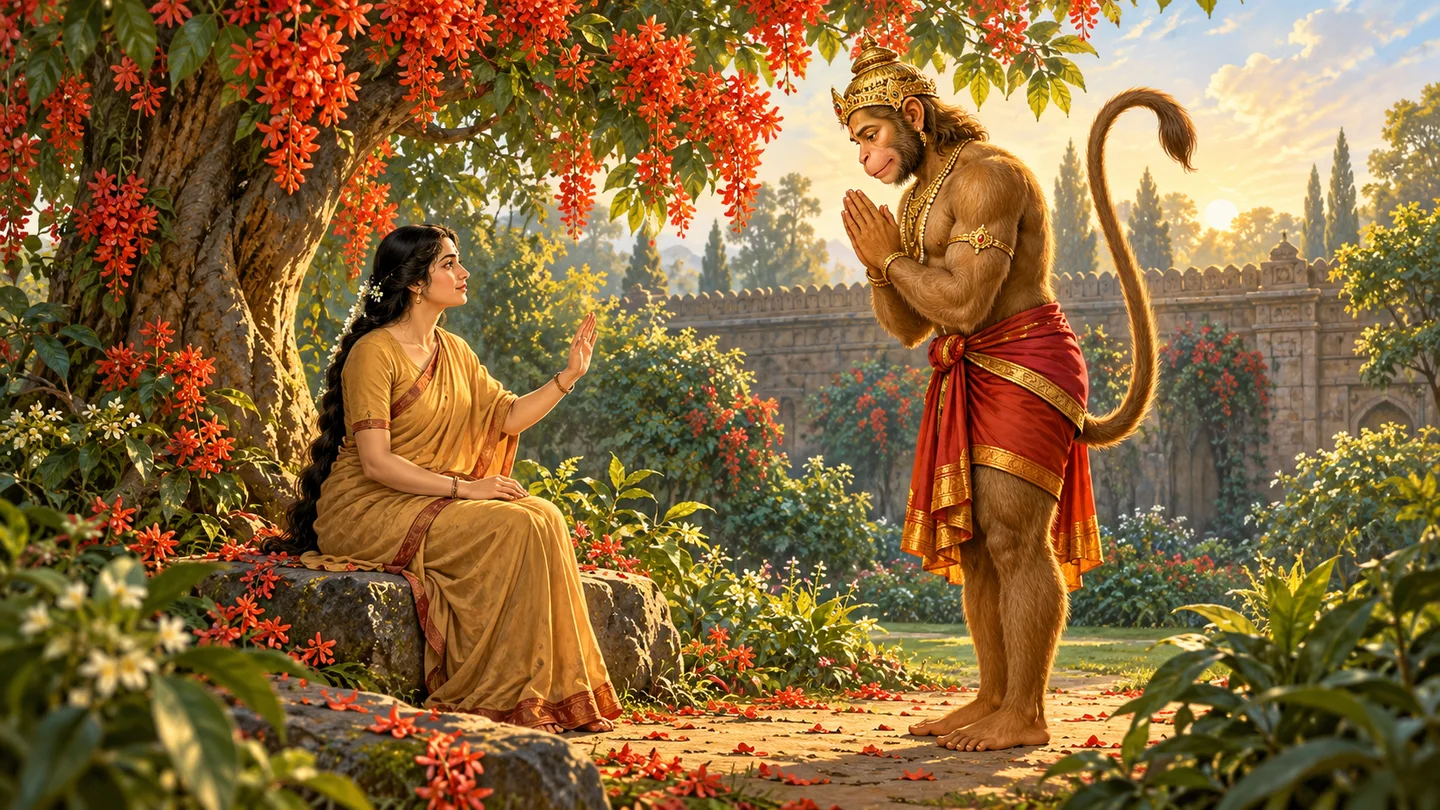
Hanuman returns to Sita before leaving Lanka. He reassures her about Rama’s arrival, then climbs Mount Arishta to begin the return crossing.

51 versesSanskrit + English1 illustration
Begin reading ↓

An edition-specific reading with original English meanings. Source & reading notes

SCENE 01 · VERSES 1–51

Hope before departure

Sita voices her fears about rescue; Hanuman answers before preparing to carry her news to Rama.

Hanuman folds his hands to Sita before returning with her message.
Original DHIH illustration · artistic interpretation

Verse 1 · 5.56.1

#

ततस्तु शिंशपामूले जानकीं पर्यवस्थिताम् ।

Bowing to Janaki, who remained beneath the shimshapa tree,

अभिवाद्याब्रवीद् दिष्ट्या पश्यामि त्वामिहाक्षताम् ॥

he said, 'By good fortune I see you here unharmed.'

Verse 2 · 5.56.2

#

ततस्तं प्रस्थितं सीता वीक्षमाणा पुनः पुनः ।

Watching Hanuman repeatedly as he prepared to depart,

भर्तुः स्नेहान्विता वाक्यं हनूमन्तमभाषत ॥

Sita, filled with affection for her husband, spoke to him.

Verse 3 · 5.56.3

#

यदि त्वं मन्यसे तात वसैकाहमिहानघ ।

'Dear, blameless one, if you think it right, stay here for a day.

क्वचित् सुसंवृते देशे विश्रान्तः श्वो गमिष्यसि ॥

Rest in some well-hidden place and depart tomorrow.

Verse 4 · 5.56.4

#

मम चैवाल्पभाग्यायाः सांनिध्यात् तव वानर ।

Through your presence, vanara, even unfortunate I

शोकस्यास्याप्रमेयस्य मुहूर्तं स्यादपि क्षयः ॥

might find a moment's relief from this immeasurable sorrow.

Verse 5 · 5.56.5

#

गते हि हरिशार्दूल पुनः सम्प्राप्तये त्वयि ।

Once you have gone, foremost vanara,

प्राणेष्वपि न विश्वासो मम वानरपुङ्गव ॥

I have no certainty that I will remain alive until your return.

Verse 6 · 5.56.6

#

अदर्शनं च ते वीर भूयो मां दारयिष्यति ।

Not seeing you will wound me anew, hero,

दुःखाद् दुःखतरं प्राप्तां दुर्मनःशोककर्शिताम् ॥

already passing from sorrow into deeper sorrow, worn by distress.

Verse 7 · 5.56.7

#

अयं च वीर संदेहस्तिष्ठतीव ममाग्रतः ।

Hero, another doubt stands before me,

सुमहत्सु सहायेषु हर्यृक्षेषु महाबलः ॥

concerning those mighty allies, the vanaras and bears.

Verse 8 · 5.56.8

#

कथं नु खलु दुष्पारं संतरिष्यति सागरम् ।

How will those armies of vanaras and bears,

तानि हर्यृक्षसैन्यानि तौ वा नरवरात्मजौ ॥

and those two noble princes, cross the difficult ocean?

Verse 9 · 5.56.9

#

त्रयाणामेव भूतानां सागरस्यापि लङ्घने ।

Only three beings seem capable of crossing the sea:

शक्तिः स्याद् वैनतेयस्य तव वा मारुतस्य वा ॥

Garuda, you, and the Wind.

Verse 10 · 5.56.10

#

तदत्र कार्यनिर्बन्धे समुत्पन्ने दुरासदे ।

When this formidable obstacle confronts the undertaking,

किं पश्यसि समाधानं त्वं हि कार्यविशारदः ॥

what solution do you see, skilled as you are in action?

Verse 11 · 5.56.11

#

काममस्य त्वमेवैकः कार्यस्य परिसाधने ।

You alone are certainly sufficient to accomplish the task,

पर्याप्तः परवीरघ्न यशस्यस्ते फलोदयः ॥

destroyer of enemies; its success would bring you honour.

Verse 12 · 5.56.12

#

बलैस्तु संकुलां कृत्वा लङ्कां परबलार्दनः ।

But if Kakutstha filled Lanka with his forces, defeated the enemy

मां नयेद् यदि काकुत्स्थस्तत् तस्य सदृशं भवेत् ॥

and took me away, that would be worthy of him.

Verse 13 · 5.56.13

#

तद् यथा तस्य विक्रान्तमनुरूपं महात्मनः ।

Arrange matters so that the deed is worthy

भवत्याहवशूरस्य तथा त्वमुपपादय ॥

of that noble one's prowess and courage in battle.'

Verse 14 · 5.56.14

#

तदर्थोपहितं वाक्यं प्रश्रितं हेतुसंहितम् ।

Hearing those thoughtful, modest and well-reasoned words,

निशम्य हनुमान् वीरो वाक्यमुत्तरमब्रवीत् ॥

the hero Hanuman gave his answer.

Verse 15 · 5.56.15

#

देवि हर्यृक्षसैन्यानामीश्वरः प्लवतां वरः ।

'Lady, Sugriva, foremost leaper and lord of the vanara and bear armies,

सुग्रीवः सत्त्वसम्पन्नस्तवार्थे कृतनिश्चयः ॥

is resolute and has firmly decided to act for your sake.

Verse 16 · 5.56.16

#

स वानरसहस्राणां कोटीभिरभिसंवृतः ।

Surrounded by millions upon millions of vanaras,

क्षिप्रमेष्यति वैदेहि सुग्रीवः प्लवगाधिपः ॥

Sugriva, their lord, will soon come, Vaidehi.

Verse 17 · 5.56.17

#

तौ च वीरौ नरवरौ सहितौ रामलक्ष्मणौ ।

Those two excellent heroes, Rama and Lakshmana together,

आगम्य नगरीं लङ्कां सायकैर्विधमिष्यतः ॥

will reach Lanka and shatter the city with their arrows.

Verse 18 · 5.56.18

#

सगणं राक्षसं हत्वा नचिराद् रघुनन्दनः ।

Soon Raghu's descendant will kill the rakshasa with his followers

त्वामादाय वरारोहे स्वां पुरीं प्रति यास्यति ॥

and take you back to his own city, graceful lady.

Verse 19 · 5.56.19

#

समाश्वसिहि भद्रं ते भव त्वं कालकाङ्क्षिणी ।

Take courage; may good be yours. Await the proper time.

क्षिप्रं द्रक्ष्यसि रामेण निहतं रावणं रणे ॥

Soon you will see Ravana slain by Rama in battle.

Verse 20 · 5.56.20

#

निहते राक्षसेन्द्रे च सपुत्रामात्यबान्धवे ।

When the rakshasa king, his sons, ministers and kinsmen are defeated,

त्वं समेष्यसि रामेण शशाङ्केनेव रोहिणी ॥

you will be reunited with Rama as Rohini is joined with the Moon.

Verse 21 · 5.56.21

#

क्षिप्रमेष्यति काकुत्स्थो हर्यृक्षप्रवरैर्युतः ।

Kakutstha will soon come with the foremost vanaras and bears;

यस्ते युधि विजित्यारीञ्छोकं व्यपनयिष्यति ॥

by defeating your enemies, he will remove your grief.'

Verse 22 · 5.56.22

#

एवमाश्वास्य वैदेहीं हनूमान् मारुतात्मजः ।

Having comforted Vaidehi, Hanuman, the Wind's son,

गमनाय मतिं कृत्वा वैदेहीमभ्यवादयत् ॥

resolved to depart and bowed to her.

Verse 23 · 5.56.23

#

राक्षसान् प्रवरान् हत्वा नाम विश्राव्य चात्मनः ।

Having slain eminent rakshasas and made his name known,

समाश्वास्य च वैदेहीं दर्शयित्वा परं बलम् ॥

comforted Vaidehi and displayed his great strength—

Verse 24 · 5.56.24

#

नगरीमाकुलां कृत्वा वञ्चयित्वा च रावणम् ।

thrown the city into confusion, outwitted Ravana,

दर्शयित्वा बलं घोरं वैदेहीमभिवाद्य च ॥

shown formidable power and bowed to Vaidehi—

Verse 25 · 5.56.25

#

प्रतिगन्तुं मनश्चक्रे पुनर्मध्येन सागरम् ।

he resolved to return again across the ocean.

ततः स कपिशार्दूलः स्वामिसंदर्शनोत्सुकः ॥

Then the foremost vanara, eager to see his lord—

Verse 26 · 5.56.26

#

आरुरोह गिरिश्रेष्ठमरिष्टमरिमर्दनः ।

climbed excellent Mount Arishta, that enemy-subduer,

तुङ्गपद्मकजुष्टाभिर्नीलाभिर्वनराजिभिः ॥

amid dark forest belts filled with tall padmaka trees.

Verse 27 · 5.56.27

#

सोत्तरीयमिवाम्भोदैः शृङ्गान्तरविलम्बिभिः ।

Clouds hanging between its peaks seemed its upper garment;

बोध्यमानमिव प्रीत्या दिवाकरकरैः शुभैः ॥

the sun's lovely rays seemed lovingly to awaken it.

Verse 28 · 5.56.28

#

उन्मिषन्तमिवोद्‍धूतैर्लोचनैरिव धातुभिः ।

Its shining minerals seemed opening eyes;

तोयौघनिःस्वनैर्मन्द्रैः प्राधीतमिव पर्वतम् ॥

the deep sounds of flowing waters seemed its recitation.

Verse 29 · 5.56.29

#

प्रगीतमिव विस्पष्टं नानाप्रस्रवणस्वनैः ।

Its varied springs seemed to sing clearly,

देवदारुभिरुद्‍धूतैरूर्ध्वबाहुमिव स्थितम् ॥

and its tall deodars stood like uplifted arms.

Verse 30 · 5.56.30

#

प्रपातजलनिर्घोषैः प्राक्रुष्टमिव सर्वतः ।

The roar of falling water seemed its cry on every side;

वेपमानमिव श्यामैः कम्पमानैः शरद्वनैः ॥

its dark, trembling reed thickets made it seem to shiver.

Verse 31 · 5.56.31

#

वेणुभिर्मारुतोद्‍धूतैः कूजन्तमिव कीचकैः ।

Wind-stirred hollow bamboos seemed its whistling;

निःश्वसन्तमिवामर्षाद् घोरैराशीविषोत्तमैः ॥

terrible venomous serpents seemed its angry breathing.

Verse 32 · 5.56.32

#

नीहारकृतगम्भीरैर्ध्यायन्तमिव गह्वरैः ।

Its mist-deepened caves seemed absorbed in thought;

मेघपादनिभैः पादैः प्रक्रान्तमिव सर्वतः ॥

its cloudlike foothills seemed to stride in every direction.

Verse 33 · 5.56.33

#

जृम्भमाणमिवाकाशे शिखरैरभ्रमालिभिः ।

With cloud-wreathed summits it seemed to yawn into the sky;

कूटैश्च बहुधा कीर्णं शोभितं बहुकन्दरैः ॥

scattered peaks and many caves adorned it.

Verse 34 · 5.56.34

#

सालतालैश्च कर्णैश्च वंशैश्च बहुभिर्वृतम् ।

Sal trees, palms, karna trees and many bamboos surrounded it,

लतावितानैर्विततैः पुष्पवद्भिरलंकृतम् ॥

while spreading canopies of flowering vines adorned it.

Verse 35 · 5.56.35

#

नानामृगगणैः कीर्णं धातुनिष्यन्दभूषितम् ।

Many kinds of animals occupied it, and mineral streams decorated it;

बहुप्रस्रवणोपेतं शिलासंचयसंकटम् ॥

numerous springs flowed among crowded heaps of stone.

Verse 36 · 5.56.36

#

महर्षियक्षगन्धर्वकिंनरोरगसेवितम् ।

Great sages, yakshas, gandharvas, kinnaras and serpents frequented it;

लतापादपसम्बाधं सिंहाधिष्ठितकन्दरम् ॥

vines and trees crowded its slopes, and lions occupied its caves.

Verse 37 · 5.56.37

#

व्याघ्रादिभिः समाकीर्णं स्वादुमूलफलद्रुमम् ।

Amid tigers and other animals and trees bearing sweet roots and fruits,

आरुरोहानिलसुतः पर्वतं प्लवगोत्तमः ॥

the Wind's son, foremost vanara, ascended the mountain.

Verse 38 · 5.56.38

#

रामदर्शनशीघ्रेण प्रहर्षेणाभिचोदितः ।

Joy and eagerness to see Rama quickly urged him onward.

तेन पादतलक्रान्ता रम्येषु गिरिसानुषु ॥

On the beautiful slopes, beneath the pressure of his feet—

Verse 39 · 5.56.39

#

सघोषाः समशीर्यन्त शिलाश्चूर्णीकृतास्ततः ।

rocks broke with loud sounds and were crushed to powder.

स तमारुह्य शैलेन्द्रं व्यवर्धत महाकपिः ॥

Having climbed the mountain, the great vanara increased his size.

Verse 40 · 5.56.40

#

दक्षिणादुत्तरं पारं प्रार्थयँल्लवणाम्भसः ।

Wishing to cross the salt sea from its southern to its northern shore,

अधिरुह्य ततो वीरः पर्वतं पवनात्मजः ॥

the heroic Wind's son stood upon the mountain—

Verse 41 · 5.56.41

#

ददर्श सागरं भीमं भीमोरगनिषेवितम् ।

and saw the terrible ocean inhabited by fearsome serpents.

स मारुत इवाकाशं मारुतस्यात्मसम्भवः ॥

Then the Wind's own son entered the sky like the wind—

Verse 42 · 5.56.42

#

प्रपेदे हरिशार्दूलो दक्षिणादुत्तरां दिशम् ।

that foremost vanara travelling from south towards north.

स तदा पीडितस्तेन कपिना पर्वतोत्तमः ॥

Pressed by him, the excellent mountain—

Verse 43 · 5.56.43

#

ररास विविधैर्भूतैः प्राविशद् वसुधातलम् ।

roared with its many creatures and sank into the earth,

कम्पमानैश्च शिखरैः पतद्भिरपि च द्रुमैः ॥

its peaks shaking and its trees falling.

Verse 44 · 5.56.44

#

तस्योरुवेगोन्मथिताः पादपाः पुष्पशालिनः ।

Flowering trees uprooted by the force of his thighs

निपेतुर्भूतले भग्नाः शक्रायुधहता इव ॥

fell broken upon the ground as though struck by Indra's weapon.

Verse 45 · 5.56.45

#

कन्दरोदरसंस्थानां पीडितानां महौजसाम् ।

The terrible roaring of powerful lions,

सिंहानां निनदो भीमो नभो भिन्दन् हि शुश्रुवे ॥

pressed within their caves, seemed to split the sky.

Verse 46 · 5.56.46

#

त्रस्तव्याविद्धवसना व्याकुलीकृतभूषणाः ।

Vidyadhara women, terrified, their clothing disordered

विद्याधर्यः समुत्पेतुः सहसा धरणीधरात् ॥

and ornaments displaced, suddenly rose from the mountain.

Verse 47 · 5.56.47

#

अतिप्रमाणा बलिनो दीप्तजिह्वा महाविषाः ।

Huge and powerful venomous serpents, their tongues shining,

निपीडितशिरोग्रीवा व्यवेष्टन्त महाहयः ॥

writhed with their heads and necks compressed.

Verse 48 · 5.56.48

#

किंनरोरगगन्धर्वयक्षविद्याधरास्तथा ।

Kinnaras, serpents, gandharvas, yakshas and vidyadharas

पीडितं तं नगवरं त्यक्त्वा गगनमास्थिताः ॥

abandoned the distressed mountain and took to the sky.

Verse 49 · 5.56.49

#

स च भूमिधरः श्रीमान् बलिना तेन पीडितः ।

Pressed by that mighty one, the splendid mountain,

सवृक्षशिखरोदग्रः प्रविवेश रसातलम् ॥

with its trees and lofty peaks, sank into the depths below.

Verse 50 · 5.56.50

#

दशयोजनविस्तारस्त्रिंशद्योजनमुच्छ्रितः ।

Ten yojanas wide and thirty yojanas high,

धरण्यां समतां यातः स बभूव धराधरः ॥

that mountain became level with the ground.

Verse 51 · 5.56.51

#

स लिलङ्घयिषुर्भीमं सलीलं लवणार्णवम् ।

Wishing easily to cross the dreadful salt ocean,

कल्लोलास्फालवेलान्तमुत्पपात नभो हरिः ॥

whose waves struck the shore, the vanara leapt into the sky.

CHAPTER 56 COMPLETE

The journey continues.

Hanuman has leapt from Arishta and is travelling north across the ocean.

NEXT CHAPTER

Continue Hanuman’s journey in the next chapter.

About this reading

Vālmīki Rāmāyaṇa, Sundara Kanda, chapter 56. This reading follows Sanskrit Wikisource revision 355244, with all 51 numbered verses. Verse divisions and wording vary between editions.

The Sanskrit is preserved with normalized display spacing and line breaks. Some sentences continue across verse boundaries; the English follows that continuity. A yojana is a traditional distance unit, retained without assigning a modern measurement. Shape-changing and celestial beings belong to the epic’s sacred narrative.

English line senses and short meanings are original AI-assisted DHIH renderings checked against this Sanskrit reading; they are not a word-for-word grammatical commentary or a claim of human scholarly certification. Roman transliteration is generated mechanically in IAST. Names may also appear in familiar English spellings.

Sanskrit transcription credit: Wikisource contributors, revision history. The adapted reading text and DHIH English on this chapter page are offered under CC BY-SA 4.0. The ancient Sanskrit work is in the public domain. Illustrations are separately commissioned AI-generated DHIH artwork.

Historical comparison: M. N. Dutt’s Ramayana, volume II, a public-domain translation, was consulted for narrative context. The English displayed here is a fresh rendering of the pinned Sanskrit, not a reproduction of that translation.

The chapter includes Sita’s distress and the epic’s extraordinary description of a mountain sinking under Hanuman’s leap. The imagery is part of the sacred narrative, not a geographical claim. Audio will be added only when suitable recording permissions are available.