Search DHIH library

VĀLMĪKI RĀMĀYAṆA · CHAPTER 57

सुन्दरकाण्डम् · सर्गः 57

The return to Mahendra

Hanuman crosses the ocean again and rejoins the waiting search party. His brief announcement that Sita has been seen transforms their anxiety into joy.

53 versesSanskrit + English1 illustration
Begin reading ↓

An edition-specific reading with original English meanings. Source & reading notes

SCENE 01 · VERSES 1–53

The news they hoped to hear

The companions recognize success in Hanuman’s voice and gather around him to listen.

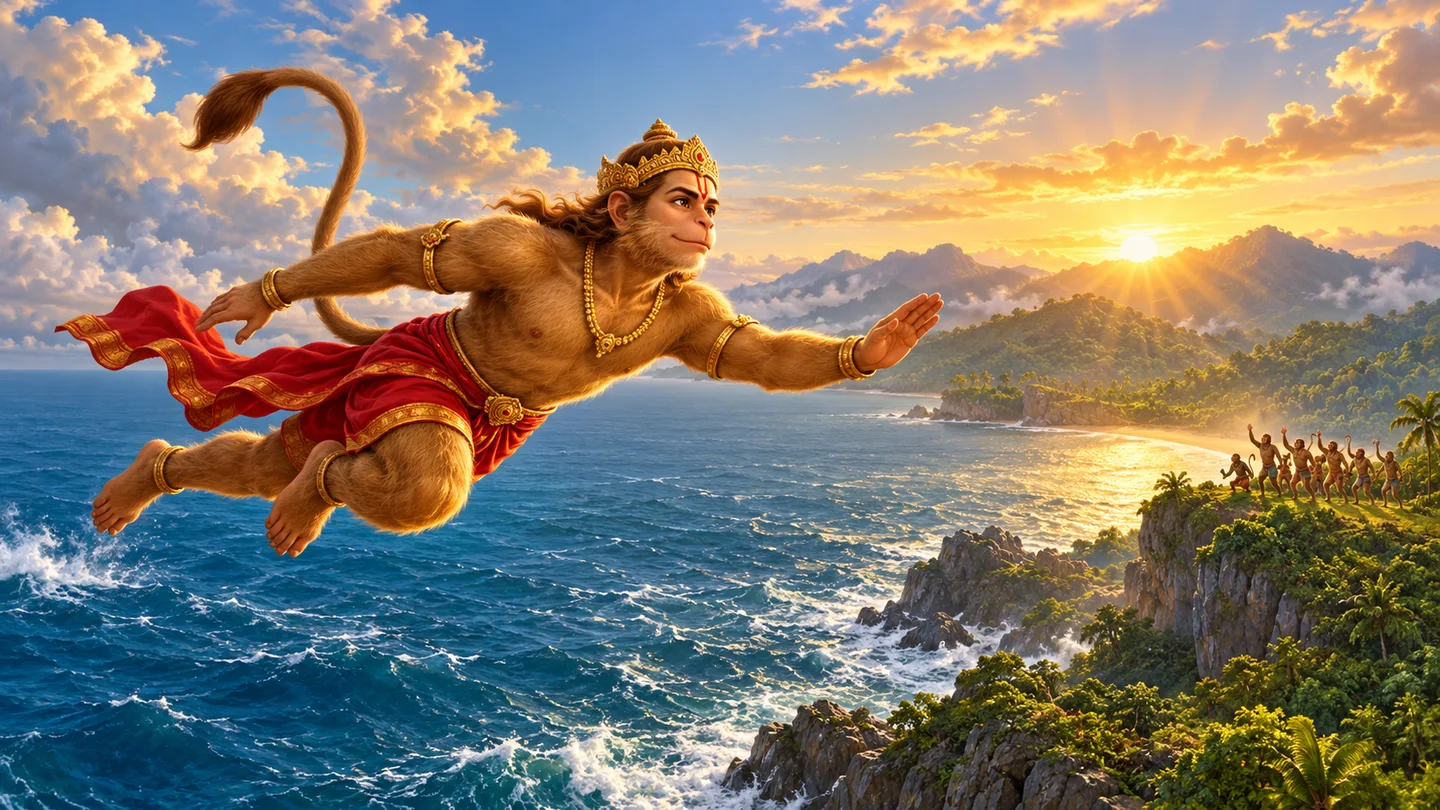
Hanuman returns across the ocean toward waiting vanara companions.
Original DHIH illustration · artistic interpretation

Verse 1 · 5.57.1

#

आप्लुत्य च महावेगः पक्षवानिव पर्वतः ।

Leaping with tremendous speed like a winged mountain,

भुजङ्गयक्षगन्धर्वप्रबुद्धकमलोत्पलम् ॥

Hanuman entered the sky-ocean whose open lotuses were serpents, yakshas and gandharvas—

Verse 2 · 5.57.2

#

स चन्द्रकुमुदं रम्यं सार्ककारण्डवं शुभम् ।

whose lovely water-lily was the Moon and whose waterbird was the Sun,

तिष्यश्रवणकादम्बमभ्रशैवलशाद्वलम् ॥

whose kadamba birds were Tishya and Shravana, and whose weed-covered meadows were clouds—

Verse 3 · 5.57.3

#

पुनर्वसुमहामीनं लोहिताङ्गमहाग्रहम् ।

whose great fish was Punarvasu and whose mighty sea-creature was red Mars,

ऐरावतमहाद्वीपं स्वातीहंसविलासितम् ॥

whose great island was Airavata and whose graceful swan was Svati—

Verse 4 · 5.57.4

#

वातसंघातजालोर्मिचन्द्रांशुशिशिराम्बुमत् ।

whose waves were masses of wind and whose cool water was moonlight.

हनूमानपरिश्रान्तः पुप्लुवे गगनार्णवम् ॥

Unwearied, Hanuman crossed this ocean of the sky.

Verse 5 · 5.57.5

#

ग्रसमान इवाकाशं ताराधिपमिवोल्लिखन् ।

He seemed to swallow the sky and brush the lord of stars,

हरन्निव सनक्षत्रं गगनं सार्कमण्डलम् ॥

carrying away the heavens with their stars and the Sun's disk.

Verse 6 · 5.57.6

#

अपारमपरिश्रान्तश्चाम्बुधिं समगाहत ।

Unwearied, he entered the boundless ocean-space;

हनूमान् मेघजालानि विकर्षन्निव गच्छति ॥

as Hanuman travelled, he seemed to drag the clouds apart.

Verse 7 · 5.57.7

#

पाण्डुरारुणवर्णानि नीलमाञ्जिष्ठकानि च ।

Great clouds shone white and red, blue and madder-coloured,

हरितारुणवर्णानि महाभ्राणि चकाशिरे ॥

and in shades of green and crimson.

Verse 8 · 5.57.8

#

प्रविशन्नभ्रजालानि निष्क्रमंश्च पुनः पुनः ।

Entering banks of clouds and emerging again and again,

प्रकाशश्चाप्रकाशश्च चन्द्रमा इव दृश्यते ॥

he appeared and disappeared like the Moon.

Verse 9 · 5.57.9

#

विविधाभ्रघनापन्नगोचरो धवलाम्बरः ।

Moving among varied dense clouds beneath a pale sky,

दृश्यादृश्यतनुर्वीरस्तथा चन्द्रायतेऽम्बरे ॥

his form visible and invisible by turns, the hero seemed like the Moon.

Verse 10 · 5.57.10

#

तार्क्ष््यायमाणो गगने स बभौ वायुनन्दनः ।

The Wind's son shone like Garuda in the sky,

दारयन् मेघवृन्दानि निष्पतंश्च पुनः पुनः ॥

tearing through masses of clouds and emerging repeatedly.

Verse 11 · 5.57.11

#

नदन् नादेन महता मेघस्वनमहास्वनः ।

Roaring with a mighty, thunderous sound,

प्रवरान् राक्षसान् हत्वा नाम विश्राव्य चात्मनः ॥

having slain foremost rakshasas and made his name known—

Verse 12 · 5.57.12

#

आकुलां नगरीं कृत्वा व्यथयित्वा च रावणम् ।

thrown the city into confusion, distressed Ravana,

अर्दयित्वा महावीरान् वैदेहीमभिवाद्य च ॥

overcome great warriors and saluted Vaidehi—

Verse 13 · 5.57.13

#

आजगाम महातेजाः पुनर्मध्येन सागरम् ।

the radiant hero returned across the ocean,

पर्वतेन्द्रं सुनाभं च समुपस्पृश्य वीर्यवान् ॥

gently touching the excellent golden-peaked mountain on his way.

Verse 14 · 5.57.14

#

ज्यामुक्त इव नाराचो महावेगोऽभ्युपागमत् ।

He came with great speed like an arrow released from a bowstring.

स किंचिदारात् सम्प्राप्तः समालोक्य महागिरिम् ॥

When still some distance away, he saw the great mountain—

Verse 15 · 5.57.15

#

महेन्द्रं मेघसंकाशं ननाद स महाकपिः ।

cloudlike Mahendra, and the great vanara roared.

स पूरयामास कपिर्दिशो दश समन्ततः ॥

His cry filled all ten directions around him.

Verse 16 · 5.57.16

#

नदन् नादेन महता मेघस्वनमहास्वनः ।

Roaring mightily with a sound like thunder,

स तं देशमनुप्राप्तः सुहृद्दर्शनलालसः ॥

he neared that place, longing to see his friends.

Verse 17 · 5.57.17

#

ननाद सुमहानादं लाङ्गूलं चाप्यकम्पयत् ।

He gave a tremendous roar and shook his tail.

तस्य नानद्यमानस्य सुपर्णाचरिते पथि ॥

As his call rang along the path travelled by Garuda—

Verse 18 · 5.57.18

#

फलतीवास्य घोषेण गगनं सार्कमण्डलम् ।

the sky and the Sun's disk seemed to split with the sound.

ये तु तत्रोत्तरे कूले समुद्रस्य महाबलाः ॥

On the northern shore of the ocean were the mighty ones—

Verse 19 · 5.57.19

#

पूर्वं संविष्ठिताः शूरा वायुपुत्रदिदृक्षवः ।

the heroes who had gathered earlier, longing to see the Wind's son.

महतो वायुनुन्नस्य तोयदस्येव निःस्वनम् ।

Like the rumble of a great cloud driven by wind,

शुश्रुवुस्ते तदा घोषमूरुवेगं हनूमतः ॥

they heard Hanuman's cry and the rush of his powerful flight.

Verse 20 · 5.57.20

#

ते दीनमनसः सर्वे शुश्रुवुः काननौकसः ।

All those forest-dwellers, whose hearts had been downcast,

वानरेन्द्रस्य निर्घोषं पर्जन्यनिनदोपमम् ॥

heard the vanara leader's roar like the sound of a rain cloud.

Verse 21 · 5.57.21

#

निशम्य नदतो नादं वानरास्ते समन्ततः ।

Hearing his roar all around, the vanaras

बभूवुरुत्सुकाः सर्वे सुहृद्दर्शनकाङ्क्षिणः ॥

became eager and longed to see their friend.

Verse 22 · 5.57.22

#

जाम्बवान् स हरिश्रेष्ठः प्रीतिसंहृष्टमानसः ।

Jambavan, that excellent leader, his heart thrilled with delight,

उपामन्त्र्य हरीन् सर्वानिदं वचनमब्रवीत् ॥

addressed all the vanaras in these words.

Verse 23 · 5.57.23

#

सर्वथा कृतकार्योऽसौ हनूमान् नात्र संशयः ।

'Hanuman has certainly completed his task; there is no doubt.

न ह्यस्याकृतकार्यस्य नाद एवंविधो भवेत् ॥

His roar would not sound like this if he had failed.'

Verse 24 · 5.57.24

#

तस्य बाहूरुवेगं च निनादं च महात्मनः ।

Hearing the rush of his arms and thighs and his mighty roar,

निशम्य हरयो हृष्टाः समुत्पेतुर्यतस्ततः ॥

the vanaras joyfully sprang up here and there.

Verse 25 · 5.57.25

#

ते नगाग्रान्नगाग्राणि शिखराच्छिखराणि च ।

From tree-top to tree-top and peak to peak

प्रहृष्टाः समपद्यन्त हनूमन्तं दिदृक्षवः ॥

they moved in delight, eager to see Hanuman.

Verse 26 · 5.57.26

#

ते प्रीताः पादपाग्रेषु गृह्य शाखामवस्थिताः ।

Joyful vanaras stood upon trees, holding their branches,

वासांसि च प्रकाशानि समाविध्यन्त वानराः ॥

and waved bright garments.

Verse 27 · 5.57.27

#

गिरिगह्वरसंलीनो यथा गर्जति मारुतः ।

Like wind roaring within mountain caves,

एवं जगर्ज बलवान् हनूमान् मारुतात्मजः ॥

mighty Hanuman, the Wind's son, roared.

Verse 28 · 5.57.28

#

तमभ्रघनसंकाशमापतन्तं महाकपिम् ।

Seeing the great vanara approaching like a dense cloud,

दृष्ट्वा ते वानराः सर्वे तस्थुः प्राञ्जलयस्तदा ॥

all the vanaras stood with folded hands.

Verse 29 · 5.57.29

#

ततस्तु वेगवान् वीरो गिरेर्गिरिनिभः कपिः ।

Then the swift mountainlike hero

निपपात गिरेस्तस्य शिखरे पादपाकुले ॥

descended upon that mountain's tree-covered summit.

Verse 30 · 5.57.30

#

हर्षेणापूर्यमाणोऽसौ रम्ये पर्वतनिर्झरे ।

Filled with joy, he came down beside a lovely mountain stream,

छिन्नपक्ष इवाकाशात् पपात धरणीधरः ॥

like a mountain falling from the sky after losing its wings.

Verse 31 · 5.57.31

#

ततस्ते प्रीतमनसः सर्वे वानरपुङ्गवाः ।

All the foremost vanaras, delighted at heart,

हनूमन्तं महात्मानं परिवार्योपतस्थिरे ॥

gathered around the great Hanuman.

Verse 32 · 5.57.32

#

परिवार्य च ते सर्वे परां प्रीतिमुपागताः ।

Encircling him with the greatest joy,

प्रहृष्टवदनाः सर्वे तमागतमुपागमन् ॥

they approached his arrival with beaming faces.

Verse 33 · 5.57.33

#

उपायनानि चादाय मूलानि च फलानि च ।

Bringing gifts of roots and fruits,

प्रत्यर्चयन् हरिश्रेष्ठं हरयो मारुतात्मजम् ॥

the vanaras honoured the Wind's son, foremost among them.

Verse 34 · 5.57.34

#

विनेदुर्मुदिताः केचित् केचित् किलकिलां तथा ।

Some cried out joyfully, others chattered with delight;

हृष्टाः पादपशाखाश्च आनिन्युर्वानरर्षभाः ॥

the happy vanara chiefs brought branches of trees.

Verse 35 · 5.57.35

#

हनूमांस्तु गुरून् वृद्धाञ्जाम्बवत्प्रमुखांस्तदा ।

The great Hanuman bowed to the honoured elders,

कुमारमङ्गदं चैव सोऽवन्दत महाकपिः ॥

beginning with Jambavan, and to Prince Angada.

Verse 36 · 5.57.36

#

स ताभ्यां पूजितः पूज्यः कपिभिश्च प्रसादितः ।

Honoured by those two and welcomed by the vanaras,

दृष्टा देवीति विक्रान्तः संक्षेपेण न्यवेदयत् ॥

the valiant one briefly announced, 'The lady has been seen.'

Verse 37 · 5.57.37

#

निषसाद च हस्तेन गृहीत्वा वालिनः सुतम् ।

Taking Vali's son by the hand, he sat down

रमणीये वनोद्देशे महेन्द्रस्य गिरेस्तदा ॥

in a lovely wooded place upon Mount Mahendra.

Verse 38 · 5.57.38

#

हनूमानब्रवीत् पृष्टस्तदा तान् वानरर्षभान् ।

When questioned, Hanuman told the foremost vanaras,

अशोकवनिकासंस्था दृष्टा सा जनकात्मजा ॥

'I saw Janaka's daughter in the Ashoka grove.

Verse 39 · 5.57.39

#

रक्ष्यमाणा सुघोराभी राक्षसीभिरनिन्दिता ।

The blameless young lady is guarded by terrible rakshasis;

एकवेणीधरा बाला रामदर्शनलालसा ॥

wearing her hair in a single braid, she longs to see Rama.

Verse 40 · 5.57.40

#

उपवासपरिश्रान्ता मलिना जटिला कृशा ।

Fasting has exhausted her; she is soiled, dishevelled and thin.'

ततो दृष्टेति वचनं महार्थममृतोपमम् ॥

Those weighty, nectar-like words, 'She has been seen'—

Verse 41 · 5.57.41

#

निशम्य मारुतेः सर्वे मुदिता वानराभवन् ।

filled all the vanaras with joy when they heard them from the Wind's son.

क्ष्वेडन्त्यन्ये नदन्त्यन्ये गर्जन्त्यन्ये महाबलाः ॥

Some whistled, some shouted, and other mighty ones roared.

Verse 42 · 5.57.42

#

चक्रुः किलकिलामन्ये प्रतिगर्जन्ति चापरे ।

Some chattered in joy while others answered with roars;

केचिदुच्छ्रितलाङ्गूलाः प्रहृष्टाः कपिकुञ्जराः ॥

some happy foremost vanaras raised their tails—

Verse 43 · 5.57.43

#

आयताञ्चितदीर्घाणि लाङ्गूलानि प्रविव्यधुः ।

and waved their long, curved, uplifted tails.

अपरे तु हनूमन्तं श्रीमन्तं वानरोत्तमम् ॥

Others approached the glorious foremost vanara Hanuman—

Verse 44 · 5.57.44

#

आप्लुत्य गिरिशृङ्गेषु संस्पृशन्ति स्म हर्षिताः ।

leaping upon mountain peaks and touching him with delight.

उक्तवाक्यं हनूमन्तमङ्गदस्तु तदाब्रवीत् ॥

Then Angada spoke to Hanuman after his report—

Verse 45 · 5.57.45

#

सर्वेषां हरिवीराणां मध्ये वाचमनुत्तमाम् ।

with excellent words before all the vanara heroes:

सत्त्वे वीर्ये न ते कश्चित् समो वानर विद्यते ॥

'No vanara equals you in resolve and prowess.

Verse 46 · 5.57.46

#

यदवप्लुत्य विस्तीर्णं सागरं पुनरागतः ।

You crossed the wide ocean and returned;

जीवितस्य प्रदाता नस्त्वमेको वानरोत्तम ॥

foremost vanara, you alone have restored our lives.

Verse 47 · 5.57.47

#

त्वत्प्रसादात् समेष्यामः सिद्धार्था राघवेण ह ।

Through your favour we shall meet Raghava with our task fulfilled.

अहो स्वामिनि ते भक्तिरहो वीर्यमहो धृतिः ॥

What devotion to your lord, what courage, what steadfastness!

Verse 48 · 5.57.48

#

दिष्ट्या दृष्टा त्वया देवी रामपत्नी यशस्विनी ।

By good fortune you have seen the glorious lady, Rama's wife.

दिष्ट्या त्यक्ष्यति काकुत्स्थः शोकं सीतावियोगजम् ॥

By good fortune Kakutstha will cast off the grief of separation from Sita.'

Verse 49 · 5.57.49

#

ततोऽङ्गदं हनूमन्तं जाम्बवन्तं च वानराः ।

Then the delighted vanaras gathered around Angada,

परिवार्य प्रमुदिता भेजिरे विपुलाः शिलाः ॥

Hanuman and Jambavan and settled upon broad rocks.

Verse 50 · 5.57.50

#

उपविष्टा गिरेस्तस्य शिलासु विपुलासु ते ।

Sitting upon the mountain's wide rocks, those foremost vanaras

श्रोतुकामाः समुद्रस्य लङ्घनं वानरोत्तमाः ॥

wished to hear about the crossing of the ocean—

Verse 51 · 5.57.51

#

दर्शनं चापि लङ्कायाः सीताया रावणस्य च ।

and the sight of Lanka, Sita and Ravana;

तस्थुः प्राञ्जलयः सर्वे हनूमद्वदनोन्मुखाः ॥

all faced Hanuman with folded hands.

Verse 52 · 5.57.52

#

तस्थौ तत्राङ्गदः श्रीमान् वानरैर्बहुभिर्वृतः ।

Glorious Angada sat there surrounded by many vanaras,

उपास्यमानो विबुधैर्दिवि देवपतिर्यथा ॥

like the king of gods attended by the wise in heaven.

Verse 53 · 5.57.53

#

हनूमता कीर्तिमता यशस्विना

With famous, renowned Hanuman

तथाङ्गदेनाङ्गदनद्धबाहुना ।

and Angada, whose arms were bound with armlets,

मुदा तदाध्यासितमुन्नतं मह-

joyfully seated upon it,

न्महीधराग्रं ज्वलितं श्रियाभवत् ॥

the great mountain summit blazed with splendour.

CHAPTER 57 COMPLETE

The journey continues.

Hanuman is reunited with Angada, Jambavan and the searchers, who are ready to hear his full account.

NEXT CHAPTER

Continue Hanuman’s journey in the next chapter.

About this reading

Vālmīki Rāmāyaṇa, Sundara Kanda, chapter 57. This reading follows Sanskrit Wikisource revision 355265, with all 53 numbered verses. Verse divisions and wording vary between editions.

The Sanskrit is preserved with normalized display spacing and line breaks. Some sentences continue across verse boundaries; the English follows that continuity. A yojana is a traditional distance unit, retained without assigning a modern measurement. Shape-changing and celestial beings belong to the epic’s sacred narrative.

English line senses and short meanings are original AI-assisted DHIH renderings checked against this Sanskrit reading; they are not a word-for-word grammatical commentary or a claim of human scholarly certification. Roman transliteration is generated mechanically in IAST. Names may also appear in familiar English spellings.

Sanskrit transcription credit: Wikisource contributors, revision history. The adapted reading text and DHIH English on this chapter page are offered under CC BY-SA 4.0. The ancient Sanskrit work is in the public domain. Illustrations are separately commissioned AI-generated DHIH artwork.

Historical comparison: M. N. Dutt’s Ramayana, volume II, a public-domain translation, was consulted for narrative context. The English displayed here is a fresh rendering of the pinned Sanskrit, not a reproduction of that translation.

The sky-as-ocean imagery and extraordinary flight belong to the epic’s poetic world. The chapter also recalls Sita’s suffering in captivity. Audio will be added only when suitable recording permissions are available.