Search DHIH library

VĀLMĪKI RĀMĀYAṆA · CHAPTER 68

सुन्दरकाण्डम् · सर्गः 68

The promise of reunion

Hanuman concludes by recounting Sita’s concern about crossing the ocean and the reassurance he gave her about Rama, Lakshmana and their allies.

29 versesSanskrit + English1 illustration
Begin reading ↓

An edition-specific reading with original English meanings. Source & reading notes

SCENE 01 · VERSES 1–29

Hope carried back to Rama

Hanuman explains how he reassured Sita that capable allies would reach Lanka and restore her to Rama.

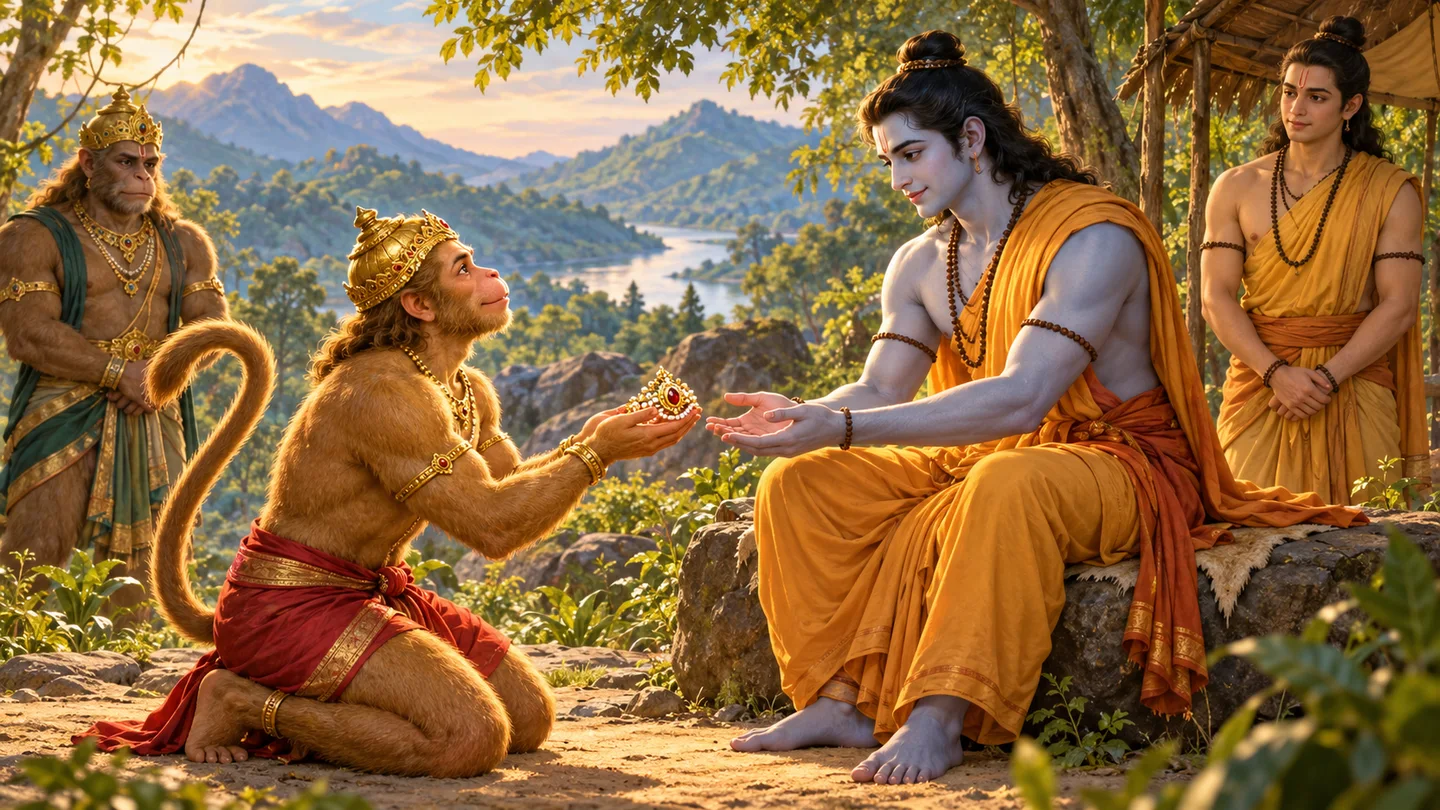
Hanuman respectfully brings Sita’s jewel and message to Rama, with Lakshmana nearby.
Original DHIH illustration · artistic interpretation

Verse 1 · 5.68.1

#

अथाहमुत्तरं देव्या पुनरुक्तः ससम्भ्रमम् ।

'Then the lady addressed me again with urgency,

तव स्नेहान्नरव्याघ्र सौहार्दादनुमान्य च ॥

respectfully, out of affection and love for you, lion among men.

Verse 2 · 5.68.2

#

एवं बहुविधं वाच्यो रामो दाशरथिस्त्वया ।

"You must speak to Rama, Dasharatha's son, in many such ways,

यथा मां प्राप्नुयाच्छीघ्रं हत्वा रावणमाहवे ॥

so that he quickly reaches me after killing Ravana in battle.

Verse 3 · 5.68.3

#

यदि वा मन्यसे वीर वसैकाहमरिंदम ।

Or, hero and enemy-subduer, if you think it right, remain here for one day

कस्मिंश्चित् संवृते देशे विश्रान्तः श्वो गमिष्यसि ॥

in a secluded place; after resting, you may leave tomorrow.

Verse 4 · 5.68.4

#

मम चाप्यल्पभाग्यायाः सांनिध्यात् तव वानर ।

Through your company, vanara, even unfortunate I

अस्य शोकविपाकस्य मुहूर्तं स्याद् विमोक्षणम् ॥

might find a brief release from this ripened burden of grief.

Verse 5 · 5.68.5

#

गते हि त्वयि विक्रान्ते पुनरागमनाय वै ।

When you have departed, brave one, until you return,

प्राणानामपि संदेहो मम स्यान्नात्र संशयः ॥

even my hold upon life will be uncertain; of this there is no doubt.

Verse 6 · 5.68.6

#

तवादर्शनजः शोको भूयो मां परितापयेत् ।

Grief at not seeing you will trouble me further,

दुखाद् दुःखपराभूतां दुर्गतां दुःखभागिनीम् ॥

already overcome by sorrow upon sorrow and trapped in misfortune.

Verse 7 · 5.68.7

#

अयं च वीर संदेहस्तिष्ठतीव ममाग्रतः ।

Hero and vanara lord, a very great doubt stands before me

सुमहांस्त्वत्सहायेषु हर्यृक्षेषु हरीश्वर ॥

concerning your companions, the vanaras and bears.

Verse 8 · 5.68.8

#

कथं नु खलु दुष्पारं तरिष्यन्ति महोदधिम् ।

How will those armies of vanaras and bears,

तानि हर्यृक्षसैन्यानि तौ वा नरवरात्मजौ ॥

or the two noble princes, cross this difficult great ocean?

Verse 9 · 5.68.9

#

त्रयाणामेव भूतानां सागरस्यास्य लङ्घने ।

Only three beings seem capable of crossing this ocean:

शक्तिः स्याद् वैनतेयस्य वायोर्वा तव चानघ ॥

Garuda, the Wind and you, blameless one.

Verse 10 · 5.68.10

#

तदस्मिन् कार्यनिर्योगे वीरैवं दुरतिक्रमे ।

Hero, when the undertaking presents such an impassable difficulty,

किं पश्यसि समाधानं ब्रूहि कार्यविदां वर ॥

what solution do you see? Tell me, foremost expert in action.

Verse 11 · 5.68.11

#

काममस्य त्वमेवैकः कार्यस्य परिसाधने ।

You alone are certainly sufficient to accomplish this task,

पर्याप्तः परवीरघ्न यशस्यस्ते बलोदयः ॥

destroyer of enemy heroes, and your display of strength would win honour.

Verse 12 · 5.68.12

#

बलैः समग्रैर्यदि मां हत्वा रावणमाहवे ।

But if victorious Rama came with his full forces, killed Ravana in battle

विजयी स्वपुरीं रामो नयेत् तत् स्याद् यशस्करम् ॥

and took me to his own city, that would bring lasting glory.

Verse 13 · 5.68.13

#

यथाहं तस्य वीरस्य वनादुपधिना हृता ।

As the rakshasa stole me from the forest by deception

रक्षसा तद्भयादेव तथा नार्हति राघवः ॥

because he feared that hero, Raghava should not act in the same way.

Verse 14 · 5.68.14

#

बलैस्तु संकुलां कृत्वा लङ्कां परबलार्दनः ।

If Kakutstha overwhelmed Lanka with his forces, defeated the enemy

मां नयेद् यदि काकुत्स्थस्तत् तस्य सदृशं भवेत् ॥

and took me away, that would be worthy of him.

Verse 15 · 5.68.15

#

तद् यथा तस्य विक्रान्तमनुरूपं महात्मनः ।

Arrange matters so that the achievement fits

भवत्याहवशूरस्य तथा त्वमुपपादय ॥

that noble warrior's prowess and courage in battle."

Verse 16 · 5.68.16

#

तदर्थोपहितं वाक्यं प्रश्रितं हेतुसंहितम् ।

Hearing those purposeful, modest and well-reasoned words,

निशम्याहं ततः शेषं वाक्यमुत्तरमब्रवम् ॥

I answered with these further words.

Verse 17 · 5.68.17

#

देवि हर्यृक्षसैन्यानामीश्वरः प्लवतां वरः ।

"Lady, Sugriva, foremost leaper and lord of the vanara and bear armies,

सुग्रीवः सत्त्वसम्पन्नस्त्वदर्थे कृतनिश्चयः ॥

is resolute and has firmly committed himself to your cause.

Verse 18 · 5.68.18

#

तस्य विक्रमसम्पन्नाः सत्त्ववन्तो महाबलाः ।

Valiant, steadfast and immensely strong vanaras,

मनःसंकल्पसदृशा निदेशे हरयः स्थिताः ॥

swift as the mind's resolve, stand ready at his command.

Verse 19 · 5.68.19

#

येषां नोपरि नाधस्तान्न तिर्यक् सज्जते गतिः ।

Their movement is obstructed neither above, below nor across;

न च कर्मसु सीदन्ति महत्स्वमिततेजसः ॥

these boundlessly radiant ones do not falter in mighty undertakings.

Verse 20 · 5.68.20

#

असकृत् तैर्महाभागैर्वानरैर्बलसंयुतैः ।

Those noble and powerful vanaras

प्रदक्षिणीकृता भूमिर्वायुमार्गानुसारिभिः ॥

have repeatedly circled the earth along the pathways of the wind.

Verse 21 · 5.68.21

#

मद्विशिष्टाश्च तुल्याश्च सन्ति तत्र वनौकसः ।

Among them are forest-dwellers greater than me and equal to me;

मत्तः प्रत्यवरः कश्चिन्नास्ति सुग्रीवसंनिधौ ॥

in Sugriva's company there is no one inferior to me.

Verse 22 · 5.68.22

#

अहं तावदिह प्राप्तः किं पुनस्ते महाबलाः ।

If I have reached this place, how much more can those mighty ones?

नहि प्रकृष्टाः प्रेष्यन्ते प्रेष्यन्ते हीतरे जनाः ॥

The very greatest are not sent as messengers; others are sent.

Verse 23 · 5.68.23

#

तदलं परितापेन देवि मन्युरपैतु ते ।

Enough of anguish, lady; let your grief depart.

एकोत्पातेन ते लङ्कामेष्यन्ति हरियूथपाः ॥

Those vanara leaders will reach Lanka in a single leap.

Verse 24 · 5.68.24

#

मम पृष्ठगतौ तौ च चन्द्रसूर्याविवोदितौ ।

With both brothers upon my back, like the rising Moon and Sun,

त्वत्सकाशं महाभागे नृसिंहावागमिष्यतः ॥

those two lions among men will come to you, fortunate lady.

Verse 25 · 5.68.25

#

अरिघ्नं सिंहसंकाशं क्षिप्रं द्रक्ष्यसि राघवम् ।

Soon you will see lionlike Raghava, destroyer of enemies,

लक्ष्मणं च धनुष्मन्तं लङ्काद्वारमुपागतम् ॥

and bow-bearing Lakshmana approaching Lanka's gateway.

Verse 26 · 5.68.26

#

नखदंष्ट्रायुधान् वीरान् सिंहशार्दूलविक्रमान् ।

Heroes armed with claws and teeth, as valiant as lions and tigers—

वानरान् वारणेन्द्राभान् क्षिप्रं द्रक्ष्यसि संगतान् ॥

soon you will see those vanaras assembled, mighty as great elephants.

Verse 27 · 5.68.27

#

शैलाम्बुदनिकाशानां लङ्कामलयसानुषु ।

Before long you will hear the roars of foremost vanaras,

नर्दतां कपिमुख्यानां नचिराच्छ्रोष्यसे स्वनम् ॥

like mountains and clouds, upon Lanka's Malaya slopes.

Verse 28 · 5.68.28

#

निवृत्तवनवासं च त्वया सार्धमरिंदमम् ।

With his forest exile ended and together with you, that conqueror of enemies—

अभिषिक्तमयोध्यायां क्षिप्रं द्रक्ष्यसि राघवम् ॥

Raghava—you will soon see crowned in Ayodhya.

Verse 29 · 5.68.29

#

ततो मया वाग्भिरदीनभाषिणी

Then with auspicious and welcome words

शिवाभिरिष्टाभिरभिप्रसादिता ।

I comforted that lady whose speech remained courageous.

उवाह शान्तिं मम मैथिलात्मजा

Janaka's daughter found peace through my words,

तवातिशोकेन तथातिपीडिता ॥

though still deeply afflicted by sorrow for you.'

CHAPTER 68 COMPLETE

Sundara Kanda complete.

Sundara Kanda closes with Sita located, her message delivered and hope of reunion renewed. The rescue campaign continues in the next book of the Ramayana.

About this reading

Vālmīki Rāmāyaṇa, Sundara Kanda, chapter 68. This reading follows Sanskrit Wikisource revision 355630, with all 29 numbered verses. Verse divisions and wording vary between editions.

The Sanskrit is preserved with normalized display spacing and line breaks. Some sentences continue across verse boundaries; the English follows that continuity. A yojana is a traditional distance unit, retained without assigning a modern measurement. Shape-changing and celestial beings belong to the epic’s sacred narrative.

English line senses and short meanings are original AI-assisted DHIH renderings checked against this Sanskrit reading; they are not a word-for-word grammatical commentary or a claim of human scholarly certification. Roman transliteration is generated mechanically in IAST. Names may also appear in familiar English spellings.

Sanskrit transcription credit: Wikisource contributors, revision history. The adapted reading text and DHIH English on this chapter page are offered under CC BY-SA 4.0. The ancient Sanskrit work is in the public domain. Illustrations are separately commissioned AI-generated DHIH artwork.

Historical comparison: M. N. Dutt’s Ramayana, volume II, a public-domain translation, was consulted for narrative context. The English displayed here is a fresh rendering of the pinned Sanskrit, not a reproduction of that translation.

This is the final chapter of the selected 68-chapter Sundara Kanda. Sita’s actual rescue and the war are later events in the Ramayana; they are not claimed to have occurred within this closing chapter. Audio will be added only when suitable recording permissions are available.