Search DHIH library

VĀLMĪKI RĀMĀYAṆA · CHAPTER 67

सुन्दरकाण्डम् · सर्गः 67

The remembered crow and Sita’s appeal

Hanuman recounts Sita’s private memory of the crow at Chitrakuta, her questions about rescue, and the farewell message entrusted to him.

44 versesSanskrit + English1 illustration
Begin reading ↓

An edition-specific reading with original English meanings. Source & reading notes

SCENE 01 · VERSES 1–44

A shared memory confirms the message

A private event known to Rama and Sita gives weight to the messenger’s account and her urgent appeal.

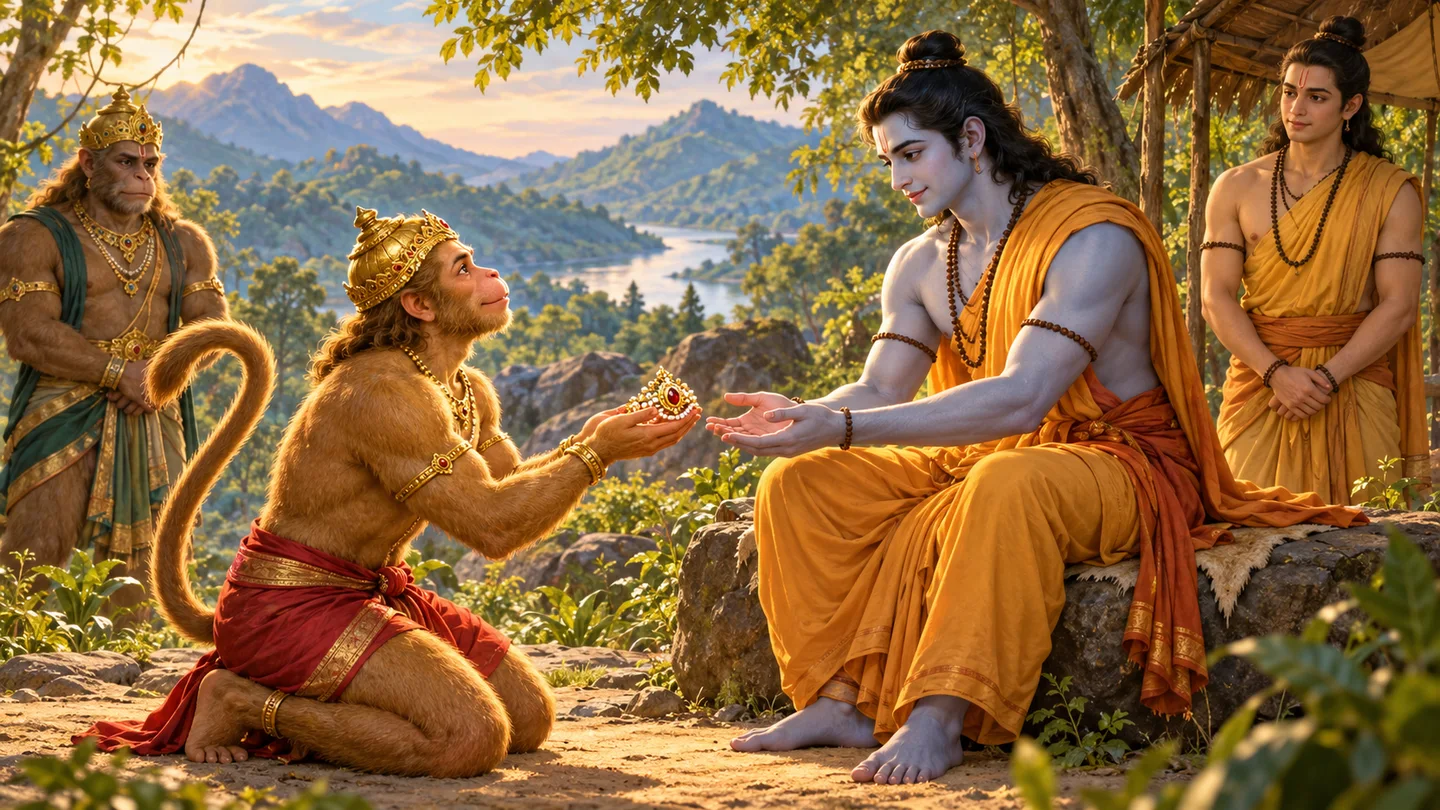
Hanuman respectfully brings Sita’s jewel and message to Rama, with Lakshmana nearby.
Original DHIH illustration · artistic interpretation

Verse 1 · 5.67.1

#

एवमुक्तस्तु हनुमान् राघवेण महात्मना ।

Addressed thus by noble Raghava, Hanuman

सीताया भाषितं सर्वं न्यवेदयत राघवे ॥

related to him everything Sita had said.

Verse 2 · 5.67.2

#

इदमुक्तवती देवी जानकी पुरुषर्षभ ।

'Foremost man, the lady Janaki told this

पूर्ववृत्तमभिज्ञानं चित्रकूटे यथातथम् ॥

past event at Chitrakuta exactly as a private sign.

Verse 3 · 5.67.3

#

सुखसुप्ता त्वया सार्धं जानकी पूर्वमुत्थिता ।

Janaki had slept happily beside you and risen first;

वायसः सहसोत्पत्य विददार स्तनान्तरम् ॥

suddenly a crow flew up and wounded the space between her breasts.

Verse 4 · 5.67.4

#

पर्यायेण च सुप्तस्त्वं देव्यङ्के भरताग्रज ।

Later, elder brother of Bharata, you slept in the lady's lap;

पुनश्च किल पक्षी स देव्या जनयति व्यथा ॥

that bird again caused her pain.

Verse 5 · 5.67.5

#

ततः पुनरुपागम्य विददार भृशं किल ।

Coming again, it wounded her severely;

ततस्त्वं बोधितस्तस्याः शोणितेन समुक्षितः ॥

then she awakened you, and her blood had fallen upon you.

Verse 6 · 5.67.6

#

वायसेन च तेनैवं सततं बाध्यमानया ।

Constantly troubled in this way by the crow,

बोधितः किल देव्या त्वं सुखसुप्तः परंतप ॥

the lady woke you from pleasant sleep, enemy-subduer.

Verse 7 · 5.67.7

#

तां च दृष्ट्वा महाबाहो दारितां च स्तनान्तरे ।

Seeing her wounded between the breasts, strong-armed one,

आशीविष इव क्रुद्धस्ततो वाक्यं त्वमूचिवान् ॥

you grew angry like a venomous serpent and spoke.

Verse 8 · 5.67.8

#

नखाग्रैः केन ते भीरु दारितं वै स्तनान्तरम् ।

"Gentle lady, who has torn your breast with sharp claws?

कः क्रीडति सरोषेण पञ्चवक्त्रेण भोगिना ॥

Who is playing with an angry five-headed serpent?"

Verse 9 · 5.67.9

#

निरीक्षमाणः सहसा वायसं समुदैक्षथाः ।

Looking around, you suddenly saw the crow

नखैः सरुधिरैस्तीक्ष्णैस्तामेवाभिमुखं स्थितम् ॥

standing towards her with sharp, blood-stained claws.

Verse 10 · 5.67.10

#

सुतः किल स शक्रस्य वायसः पततां वरः ।

That crow, foremost flyer, was said to be Indra's son,

धरान्तरगतः शीघ्रं पवनस्य गतौ समः ॥

moving swiftly over the earth with speed equal to the wind.

Verse 11 · 5.67.11

#

ततस्तस्मिन् महाबाहो कोपसंवर्तितेक्षणः ।

Then, strong-armed and foremost wise one, your eyes turning with anger,

वायसे त्वं व्यधाः क्रूरां मतिं मतिमतां वर ॥

you formed a stern resolve against that crow.

Verse 12 · 5.67.12

#

स दर्भसंस्तराद् गृह्य ब्रह्मास्त्रेण न्ययोजयः ।

Taking a blade from the darbha-grass bed, you empowered it with Brahma's weapon;

स दीप्त इव कालाग्निर्जज्वालाभिमुखं खगम् ॥

it blazed like the fire of Time towards the bird.

Verse 13 · 5.67.13

#

स त्वं प्रदीप्तं चिक्षेप दर्भं तं वायसं प्रति ।

You cast that blazing grass at the crow;

ततस्तु वायसं दीप्तः स दर्भोऽनुजगाम ह ॥

the burning blade then pursued it.

Verse 14 · 5.67.14

#

भीतैश्च सम्परित्यक्तः सुरैः सर्वैश्च वायसः ।

The frightened gods all abandoned the crow;

त्रीँल्लोकान् सम्परिक्रम्य त्रातारं नाधिगच्छति ॥

after travelling through the three worlds, it found no protector.

Verse 15 · 5.67.15

#

पुनरप्यागतस्तत्र त्वत्सकाशमरिंदम ।

It came back into your presence, enemy-subduer.

त्वं तं निपतितं भूमौ शरण्यः शरणागतम् ॥

You, refuge of those seeking shelter, saw it fallen upon the ground in surrender—

Verse 16 · 5.67.16

#

वधार्हमपि काकुत्स्थ कृपया परिपालयः ।

and, though it deserved death, Kakutstha, compassion made you protect it.

मोघमस्त्रं न शक्यं तु कर्तुमित्येव राघव ॥

Yet, Raghava, the divine weapon could not be made fruitless—

Verse 17 · 5.67.17

#

भवांस्तस्याक्षि काकस्य हिनस्ति स्म स दक्षिणम् ।

so you destroyed the crow's right eye.

राम त्वां स नमस्कृत्य राज्ञो दशरथस्य च ॥

Rama, it bowed to you and to King Dasharatha—

Verse 18 · 5.67.18

#

विसृष्टस्तु तदा काकः प्रतिपेदे स्वमालयम् ।

and, released, returned to its own dwelling.

एवमस्त्रविदां श्रेष्ठः सत्त्ववाञ्छीलवानपि ॥

Thus you are foremost knower of weapons, resolute and virtuous—

Verse 19 · 5.67.19

#

किमर्थमस्त्रं रक्षःसु न योजयसि राघव ।

'Why then, Raghava, do you not use a weapon against the rakshasas?

न दानवा न गन्धर्वा नासुरा न मरुद‍्गणाः ॥

Neither danavas nor gandharvas, neither asuras nor hosts of Maruts—

Verse 20 · 5.67.20

#

तव राम रणे शक्तास्तथा प्रतिसमासितुम् ।

can stand against you in battle, Rama.

तव वीर्यवतः कश्चिन्मयि यद्यस्ति सम्भ्रमः ॥

Mighty hero, if you feel any concern for me—

Verse 21 · 5.67.21

#

क्षिप्रं सुनिशितैर्बाणैर्हन्यतां युधि रावणः ।

let Ravana quickly be killed in battle by sharp arrows.

भ्रातुरादेशमाज्ञाय लक्ष्मणो वा परंतपः ॥

Or let Lakshmana, the enemy-subduer, receive his brother's command—

Verse 22 · 5.67.22

#

स किमर्थं नरवरो न मां रक्षति राघवः ।

why does that excellent Raghava not protect me?

शक्तौ तौ पुरुषव्याघ्रौ वाय्वग्निसमतेजसौ ॥

Those two lions among men are powerful, radiant as wind and fire—

Verse 23 · 5.67.23

#

सुराणामपि दुर्धर्षौ किमर्थं मामुपेक्षतः ।

difficult even for the gods to assail; why do they overlook me?

ममैव दुष्कृतं किंचिन्महदस्ति न संशयः ॥

Surely some great misdeed of my own must exist—

Verse 24 · 5.67.24

#

समर्थौ सहितौ यन्मां न रक्षेते परंतपौ ।

since those two capable enemy-subduers together do not rescue me.'

वैदेह्या वचनं श्रुत्वा करुणं साधुभाषितम् ॥

Hearing Vaidehi's sorrowful yet gentle words—

Verse 25 · 5.67.25

#

पुनरप्यहमार्यां तामिदं वचनमब्रुवम् ।

I again said to that noble lady,

त्वच्छोकविमुखो रामो देवि सत्येन ते शपे ॥

'Lady, I swear truthfully: Rama is overwhelmed by grief for you.

Verse 26 · 5.67.26

#

रामे दुःखाभिभूते च लक्ष्मणः परितप्यते ।

And while Rama is overcome by sorrow, Lakshmana also suffers.

कथंचिद् भवती दृष्टा न कालः परिशोचितुम् ॥

At last you have been found; this is no time to remain in despair.

Verse 27 · 5.67.27

#

अस्मिन् मुहूर्ते दुःखानामन्तं द्रक्ष्यसि भामिनि ।

Soon, beautiful lady, you will see the end of your sorrows.

तावुभौ नरशार्दूलौ राजपुत्रौ परंतपौ ॥

Those two princely lions among men, subduers of enemies—

Verse 28 · 5.67.28

#

त्वद्दर्शनकृतोत्साहौ लङ्कां भस्मीकरिष्यतः ।

eager to see you, will reduce Lanka to ashes.

हत्वा च समरे रौद्रं रावणं सहबान्धवम् ॥

Having killed fierce Ravana in battle together with his kinsmen—

Verse 29 · 5.67.29

#

राघवस्त्वां वरारोहे स्वपुरीं नयिता ध्रुवम् ।

Raghava will certainly take you to his own city, graceful lady.

यत् तु रामो विजानीयादभिज्ञानमनिन्दिते ॥

Blameless one, you should give a sign that Rama will recognize—

Verse 30 · 5.67.30

#

प्रीतिसंजननं तस्य प्रदातुं तत् त्वमर्हसि ।

something that will bring him joy.'

साभिवीक्ष्य दिशः सर्वा वेण्युद्‍ग्रथनमुत्तमम् ॥

Looking in every direction, she took the excellent ornament of her braid—

Verse 31 · 5.67.31

#

मुक्त्वा वस्त्राद् ददौ मह्यं मणिमेतं महाबल ।

unwrapped it from her garment and gave me this jewel, mighty one.

प्रतिगृह्य मणिं दोर्भ्यां तव हेतो रघुप्रिय ॥

For your sake, beloved of Raghu's house, I received it with both hands—

Verse 32 · 5.67.32

#

शिरसा सम्प्रणम्यैनामहमागमने त्वरे ।

bowed my head to her, and hastened to return.

गमने च कृतोत्साहमवेक्ष्य वरवर्णिनी ॥

Seeing me eager to depart, that beautiful lady—

Verse 33 · 5.67.33

#

विवर्धमानं च हि मामुवाच जनकात्मजा ।

Janaka's daughter spoke as I increased my size,

अश्रुपूर्णमुखी दीना बाष्पगद‍्गदभाषिणी ॥

her face wet with tears and her words choked with weeping.

Verse 34 · 5.67.34

#

ममोत्पतनसम्भ्रान्ता शोकवेगसमाहता ।

Disturbed at my imminent leap and struck by a surge of sorrow,

मामुवाच ततः सीता सभाग्योऽसि महाकपे ॥

Sita said, 'Great vanara, you are fortunate—

Verse 35 · 5.67.35

#

यद् द्रक्ष्यसि महाबाहुं रामं कमललोचनम् ।

for you will see strong-armed, lotus-eyed Rama,

लक्ष्मणं च महाबाहुं देवरं मे यशस्विनम् ॥

and mighty, illustrious Lakshmana, my husband's brother.'

Verse 36 · 5.67.36

#

सीतयाप्येवमुक्तोऽहमब्रुवं मैथिलीं तथा ।

Addressed in this way by Sita, I told Maithili,

पृष्ठमारोह मे देवि क्षिप्रं जनकनन्दनि ॥

'Lady, daughter of Janaka, climb upon my back at once—

Verse 37 · 5.67.37

#

यावत्ते दर्शयाम्यद्य ससुग्रीवं सलक्ष्मणम् ।

so that today I may show you your husband Raghava,

राघवं च महाभागे भर्तारमसितेक्षणे ॥

together with Sugriva and Lakshmana, fortunate dark-eyed lady.'

Verse 38 · 5.67.38

#

साब्रवीन्मां ततो देवी नैष धर्मो महाकपे ।

Then the lady told me, 'Great vanara, this is not fitting for me:

यत्ते पृष्ठं सिषेवेऽहं स्ववशा हरिपुङ्गव ॥

I should not willingly place myself upon your back, foremost vanara.

Verse 39 · 5.67.39

#

पुरा च यदहं वीर स्पृष्टा गात्रेषु रक्षसा ।

Earlier, hero, when the rakshasa touched my body,

तत्राहं किं करिष्यामि कालेनोपनिपीडिता ॥

what could I do, oppressed by circumstance?

Verse 40 · 5.67.40

#

गच्छ त्वं कपिशार्दूल यत्र तौ नृपतेः सुतौ ।

Go, foremost vanara, to where the two princes are.'

इत्येवं सा समाभाष्य भूयः संदेष्टुमास्थिता ॥

Having said this, she began once more to give her message.

Verse 41 · 5.67.41

#

हनूमन् सिंहसंकाशौ तावुभौ रामलक्ष्मणौ ।

Hanuman, convey my greetings to those lion-like brothers Rama and Lakshmana,

सुग्रीवं च सहामात्यं सर्वान् ब्रूया अनामयम् ॥

to Sugriva with his ministers, and to them all.

Verse 42 · 5.67.42

#

यथा च स महाबाहुर्मां तारयति राघवः ।

Explain how strong-armed Raghava may rescue me

अस्माद्दुःखाम्बुसंरोधात् तत् त्वमाख्यातुमर्हसि ॥

from this enclosing ocean of sorrow.

Verse 43 · 5.67.43

#

इदं च तीव्रं मम शोकवेगं

And this fierce surge of grief within me,

रक्षोभिरेभिः परिभर्त्सनं च ।

and the threats of these rakshasas—

ब्रूयास्तु रामस्य गतः समीपं

tell Rama of them when you reach his presence.

शिवश्च तेऽध्वास्तु हरिप्रवीर ॥

May your journey be auspicious, foremost vanara.

Verse 44 · 5.67.44

#

एतत् तवार्या नृप संयता सा

King, your noble, self-controlled Sita

सीता वचः प्राह विषादपूर्वम् ।

spoke these words in sadness.

एतच्च बुद्‍ध्वा गदितं यथा त्वं

Knowing her message as I have related it,

श्रद्धत्स्व सीतां कुशलां समग्राम् ॥

be assured that Sita is alive, safe and whole.'

CHAPTER 67 COMPLETE

The journey continues.

Rama has heard Sita’s words and the identifying memory in full. Hanuman confirms that she remains alive and unharmed.

NEXT CHAPTER

Continue Hanuman’s journey in the next chapter.

About this reading

Vālmīki Rāmāyaṇa, Sundara Kanda, chapter 67. This reading follows Sanskrit Wikisource revision 355622, with all 44 numbered verses. Verse divisions and wording vary between editions.

The Sanskrit is preserved with normalized display spacing and line breaks. Some sentences continue across verse boundaries; the English follows that continuity. A yojana is a traditional distance unit, retained without assigning a modern measurement. Shape-changing and celestial beings belong to the epic’s sacred narrative.

English line senses and short meanings are original AI-assisted DHIH renderings checked against this Sanskrit reading; they are not a word-for-word grammatical commentary or a claim of human scholarly certification. Roman transliteration is generated mechanically in IAST. Names may also appear in familiar English spellings.

Sanskrit transcription credit: Wikisource contributors, revision history. The adapted reading text and DHIH English on this chapter page are offered under CC BY-SA 4.0. The ancient Sanskrit work is in the public domain. Illustrations are separately commissioned AI-generated DHIH artwork.

Historical comparison: M. N. Dutt’s Ramayana, volume II, a public-domain translation, was consulted for narrative context. The English displayed here is a fresh rendering of the pinned Sanskrit, not a reproduction of that translation.

The crow episode includes injury and punishment; the later dialogue includes captivity and distress. Sita’s explanation of her choices reflects the character’s understanding within the epic’s setting. Audio will be added only when suitable recording permissions are available.