Search DHIH library

VĀLMĪKI RĀMĀYAṆA · CHAPTER 16

सुन्दरकाण्डम् · सर्गः १६

Compassion for Sita

Certain of her identity, Hanuman reflects upon Sita’s courage, her shared life with Rama, and the pain of their separation.

32 versesSanskrit + English1 illustration
Begin reading ↓

An edition-specific reading with original English meanings. Source & reading notes

SCENE 01 · VERSES 1–32

Worth beyond kingdoms

Certain of her identity, Hanuman reflects upon Sita’s courage, her shared life with Rama, and the pain of their separation.

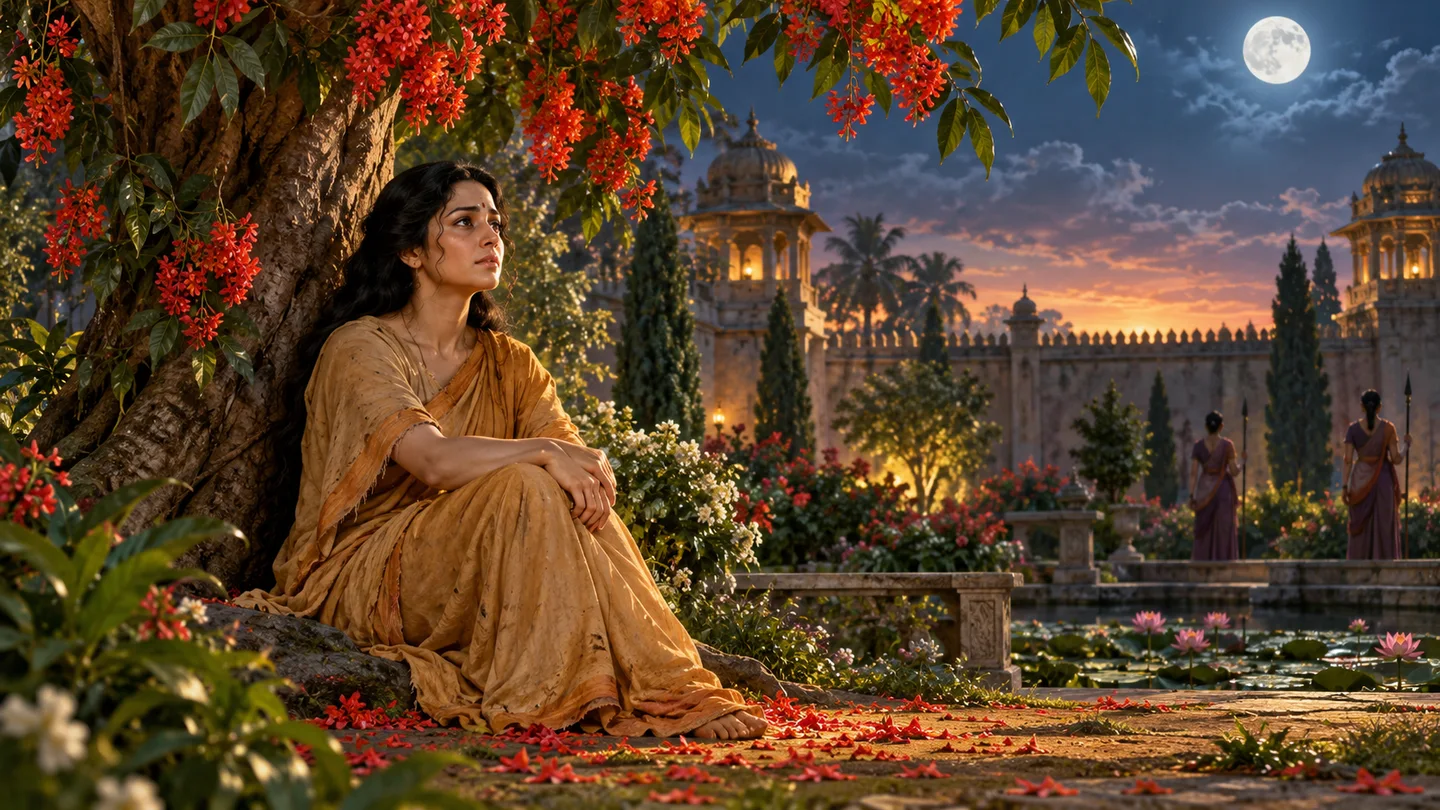
Sita sits beneath a flowering tree in the Ashoka grove, holding to hope.
Original DHIH illustration · artistic interpretation

Verse 1 · 5.16.1

#

प्रशस्य तु प्रशस्तव्यां सीतां तां हरिपुंगवः ।

After praising worthy Sita and Rama, delightful in his virtues,

गुणाभिरामं रामं च पुनश्चिन्तापरोऽभवत् ॥

the foremost vanara again became absorbed in thought.

Verse 2 · 5.16.2

#

स मुहूर्तमिव ध्यात्वा बाष्पपर्याकुलेक्षणः ।

After pondering briefly, his eyes filled with tears,

सीतामाश्रित्य तेजस्वी हनूमान् विललाप ह ॥

radiant Hanuman lamented on Sita's behalf.

Verse 3 · 5.16.3

#

मान्या गुरुविनीतस्य लक्ष्मणस्य गुरुप्रिया ।

'If Sita, honored by disciplined Lakshmana as his elder's beloved,

यदि सीता हि दुःखार्ता कालो हि दुरतिक्रमः ॥

is afflicted by sorrow, then indeed fate is difficult to overcome.'

Verse 4 · 5.16.4

#

रामस्य व्यवसायज्ञा लक्ष्मणस्य च धीमतः ।

'Knowing the determination of Rama and wise Lakshmana,

नात्यर्थं क्षुभ्यते देवी गंगेव जलदागमे ॥

the lady is not shaken beyond measure, like the Ganga at the rains' arrival.'

Verse 5 · 5.16.5

#

तुल्यशीलवयोवृत्तां तुल्याभिजनलक्षणाम् ।

'Matched in character, age, conduct, noble birth, and signs,

राघवोऽर्हति वैदेहीं तं चेयमसितेक्षणा ॥

Raghava deserves Sita, and this dark-eyed woman deserves him.'

Verse 6 · 5.16.6

#

तां दृष्ट्वा नवहेमाभां लोककान्तामिव श्रियम् ।

Seeing her bright as new gold, like prosperity beloved by the world,

जगाम मनसा रामं वचनं चेदमब्रवीत् ॥

he thought of Rama and spoke these words.

Verse 7 · 5.16.7

#

अस्या हेतोर्विशालाक्ष्या हतो वाली महाबलः ।

'For this wide-eyed woman's sake, powerful Vali was killed,

रावणप्रतिमो वीर्ये कबन्धश्च निपातितः ॥

and Kabandha, equal to Ravana in strength, was brought down.'

Verse 8 · 5.16.8

#

विराधश्च हतः संख्ये राक्षसो भीमविक्रमः ।

'The fiercely powerful rakshasa Viradha too was slain in combat,

वने रामेण विक्रम्य महेन्द्रेणेव शम्बरः ॥

Rama displaying valor in the forest as Indra did against Shambara.'

Verse 9 · 5.16.9

#

चतुर्दश सहस्राणि रक्षसां भीमकर्मणाम् ।

'Fourteen thousand rakshasas of terrible deeds

निहतानि जनस्थाने शरैरग्निशिखोपमैः ॥

were slain at Janasthana with arrows like flames.'

Verse 10 · 5.16.10

#

खरश्च निहतः संख्ये त्रिशिराश्च निपातितः ।

'Khara was killed in battle, Trishiras was struck down,

दूषणश्च महातेजा रामेण विदितात्मना ॥

and mighty Dushana was slain by self-possessed Rama.'

Verse 11 · 5.16.11

#

ऐश्वर्यं वानराणां च दुर्लभं वालिपालितम् ।

'For her sake renowned Sugriva obtained the hard-to-win

अस्या निमित्ते सुग्रीवः प्राप्तवाँल्लोकविश्रुतः ॥

sovereignty of the vanaras that Vali had held.'

Verse 12 · 5.16.12

#

सागरश्च मयाऽऽक्रान्तः श्रीमान् नदनदीपतिः ।

'For this wide-eyed woman's sake I crossed the glorious ocean,

अस्या हेतोर्विशालाक्ष्याः पुरी चेयं निरीक्षिता ॥

lord of streams and rivers, and inspected this city.'

Verse 13 · 5.16.13

#

यदि रामः समुद्रान्तां मेदिनीं परिवर्तयेत् ।

'If Rama overturned the earth up to its oceans, or even the world,

अस्याः कृते जगच्चापि युक्तमित्येव मे मतिः ॥

for her sake, I would consider it fitting.'

Verse 14 · 5.16.14

#

राज्यं वा त्रिषु लोकेषु सीता वा जनकात्मजा ।

'Whether one compares Janaka's daughter with sovereignty over all three worlds,

त्रैलोक्यराज्यं सकलं सीताया नाप्नुयात् कलाम् ॥

that entire sovereignty would not equal a fraction of Sita's value.'

Verse 15 · 5.16.15

#

इयं सा धर्मशीलस्य जनकस्य महात्मनः ।

'This is Sita, steadfast toward her husband,

सुता मैथिलराजस्य सीता भर्तृदृढव्रता ॥

daughter of noble, righteous Janaka, king of Mithila.'

Verse 16 · 5.16.16

#

उत्थिता मेदिनीं भित्त्वा क्षेत्रे हलमुखक्षते ।

'She arose from the earth, opened by the plough's blade in a field,

पद्मरेणुनिभैः कीर्णा शुभैः केदारपांसुभिः ॥

covered with auspicious soil like lotus pollen.'

Verse 17 · 5.16.17

#

विक्रान्तस्यार्यशीलस्य संयुगेष्वनिवर्तिनः ।

'She is the renowned eldest daughter-in-law of King Dasharatha,

स्नुषा दशरथस्यैषा ज्येष्ठा राज्ञो यशस्विनी ॥

valiant, noble in conduct, and never retreating in battle.'

Verse 18 · 5.16.18

#

धर्मज्ञस्य कृतज्ञस्य रामस्य विदितात्मनः ।

'This beloved wife of Rama, knower of duty, grateful and self-possessed,

इयं सा दयिता भार्या राक्षसीवशमागता ॥

has fallen into the power of rakshasis.'

Verse 19 · 5.16.19

#

सर्वान् भोगान् परित्यज्य भर्तृस्नेहबलात् कृता ।

'Abandoning every pleasure through the strength of love for her husband,

अचिन्तयित्वा कष्टानि प्रविष्टा निर्जनं वनम् ॥

she entered the lonely forest without dwelling upon its hardships.'

Verse 20 · 5.16.20

#

संतुष्टा फलमूलेन भर्तृशुश्रूषणापरा ।

'Content with roots and fruit and devoted to caring for her husband,

या परां भजते प्रीतिं वनेऽपि भवने यथा ॥

she found the highest happiness in the forest as in a palace.'

Verse 21 · 5.16.21

#

सेयं कनकवर्णांगी नित्यं सुस्मितभाषिणी ।

'That golden-limbed woman, always speaking with a gentle smile,

सहते यातनामेतामनर्थानामभागिनी ॥

now endures this torment though she deserves no such misfortune.'

Verse 22 · 5.16.22

#

इमां तु शीलसम्पन्नां द्रष्टुमिच्छति राघवः ।

'Raghava longs to see this virtuous woman whom Ravana has oppressed,

रावणेन प्रमथितां प्रपामिव पिपासितः ॥

as a thirsty person longs for a place of water.'

Verse 23 · 5.16.23

#

अस्या नूनं पुनर्लाभाद् राघवः प्रीतिमेष्यति ।

'Surely Raghava will rejoice upon recovering her,

राजा राज्यपरिभ्रष्टः पुनः प्राप्येव मेदिनीम् ॥

like a king regaining the land from which he was driven.'

Verse 24 · 5.16.24

#

कामभोगैः परित्यक्ता हीना बन्धुजनेन च ।

'Deprived of pleasures and separated from her relatives,

धारयत्यात्मनो देहं तत्समागमकाङ्क्षिणी ॥

she sustains her body through the hope of meeting him.'

Verse 25 · 5.16.25

#

नैषा पश्यति राक्षस्यो नेमान् पुष्पफलद्रुमान् ।

'She does not truly notice the rakshasis or these flowering, fruitful trees;

एकस्थहृदया नूनं राममेवानुपश्यति ॥

with her heart fixed in one place, she sees only Rama.'

Verse 26 · 5.16.26

#

भर्ता नाम परं नार्याः शोभनं भूषणादपि ।

'In this view, a husband is a woman's highest adornment, beyond ornaments;

एषा हि रहिता तेन शोभनार्हा न शोभते ॥

deprived of him, this woman worthy of splendor does not shine.'

Verse 27 · 5.16.27

#

दुष्करं कुरुते रामो हीनो यदनया प्रभुः ।

'Rama does something difficult: separated from her,

धारयत्यात्मनो देहं न दुःखेनावसीदति ॥

he maintains his life rather than collapsing beneath his pain.'

Verse 28 · 5.16.28

#

इमामसितकेशान्तां शतपत्रनिभेक्षणाम् ।

'Knowing that this dark-haired, lotus-eyed woman, worthy of happiness,

सुखार्हां दुःखितां ज्ञात्वा ममापि व्यथितं मनः ॥

is suffering, even my own mind is wounded.'

Verse 29 · 5.16.29

#

क्षितिक्षमा पुष्करसंनिभेक्षणा

'Patient as the earth and lotus-eyed,

या रक्षिता राघवलक्ष्मणाभ्याम् ।

she was protected by Raghava and Lakshmana.

सा राक्षसीभिर्विकृतेक्षणाभिः

Now she is guarded beneath a tree

संरक्ष्यते सम्प्रति वृक्षमूले ॥

by rakshasis with distorted eyes.'

Verse 30 · 5.16.30

#

हिमहतनलिनीव नष्टशोभा

'Like a lotus struck by frost, its beauty lost,

व्यसनपरम्परया निपीड्यमाना ।

oppressed by a succession of calamities,

सहचररहितेव चक्रवाकी

like a chakravaka separated from its mate,

जनकसुता कृपणां दशां प्रपन्ना ॥

Janaka's daughter has fallen into a pitiable state.'

Verse 31 · 5.16.31

#

अस्या हि पुष्पावनताग्रशाखाः

'These ashoka trees, their upper branches bowed by flowers,

शोकं दृढं वै जनयन्त्यशोकाः ।

surely produce deep sorrow for her;

हिमव्यपायेन च शीतरश्मि-

so does the cool-rayed moon, risen clear of mist

रभ्युत्थितो नैकसहस्ररश्मिः ॥

with its many thousands of beams.'

Verse 32 · 5.16.32

#

इत्येवमर्थं कपिरन्ववेक्ष्य

Considering the matter in this way,

सीतेयमित्येव तु जातबुद्धिः ।

now convinced, 'This is Sita,'

संश्रित्य तस्मिन् निषसाद वृक्षे

the strong, swift, foremost vanara

बली हरीणामृषभस्तरस्वी ॥

remained concealed within that tree.

CHAPTER 16 COMPLETE

The journey continues.

He remains hidden, moved by compassion and determined to help.

NEXT CHAPTER

Continue Hanuman’s journey in the next chapter.

About this reading

Vālmīki Rāmāyaṇa, Sundara Kanda, chapter 16. This reading follows Sanskrit Wikisource revision 354231, with all 32 numbered verses. Verse divisions and wording vary between editions.

The Sanskrit is preserved with normalized display spacing and line breaks. Some sentences continue across verse boundaries; the English follows that continuity. A yojana is a traditional distance unit, retained without assigning a modern measurement. Shape-changing and celestial beings belong to the epic’s sacred narrative.

English line senses and short meanings are original AI-assisted DHIH renderings checked against this Sanskrit reading; they are not a word-for-word grammatical commentary or a claim of human scholarly certification. Roman transliteration is generated mechanically in IAST. Names may also appear in familiar English spellings.

Sanskrit transcription credit: Wikisource contributors, revision history. The adapted reading text and DHIH English on this chapter page are offered under CC BY-SA 4.0. The ancient Sanskrit work is in the public domain. Illustrations are separately commissioned AI-generated DHIH artwork.

Historical comparison: M. N. Dutt’s Ramayana, volume II, a public-domain translation, was consulted for narrative context. The English displayed here is a fresh rendering of the pinned Sanskrit, not a reproduction of that translation.

Some verses express the social and marital ideals of the epic’s setting. They are presented as the text’s perspective rather than rules for every modern family. Audio will be added only when suitable recording permissions are available.