Search DHIH library

VĀLMĪKI RĀMĀYAṆA · CHAPTER 18

सुन्दरकाण्डम् · सर्गः १८

Ravana approaches the grove

Near dawn, Ravana wakes and comes to the ashoka grove with lamps, attendants, and royal ornaments.

32 versesSanskrit + English1 illustration
Begin reading ↓

An edition-specific reading with original English meanings. Source & reading notes

SCENE 01 · VERSES 1–32

The king’s procession

Near dawn, Ravana wakes and comes to the ashoka grove with lamps, attendants, and royal ornaments.

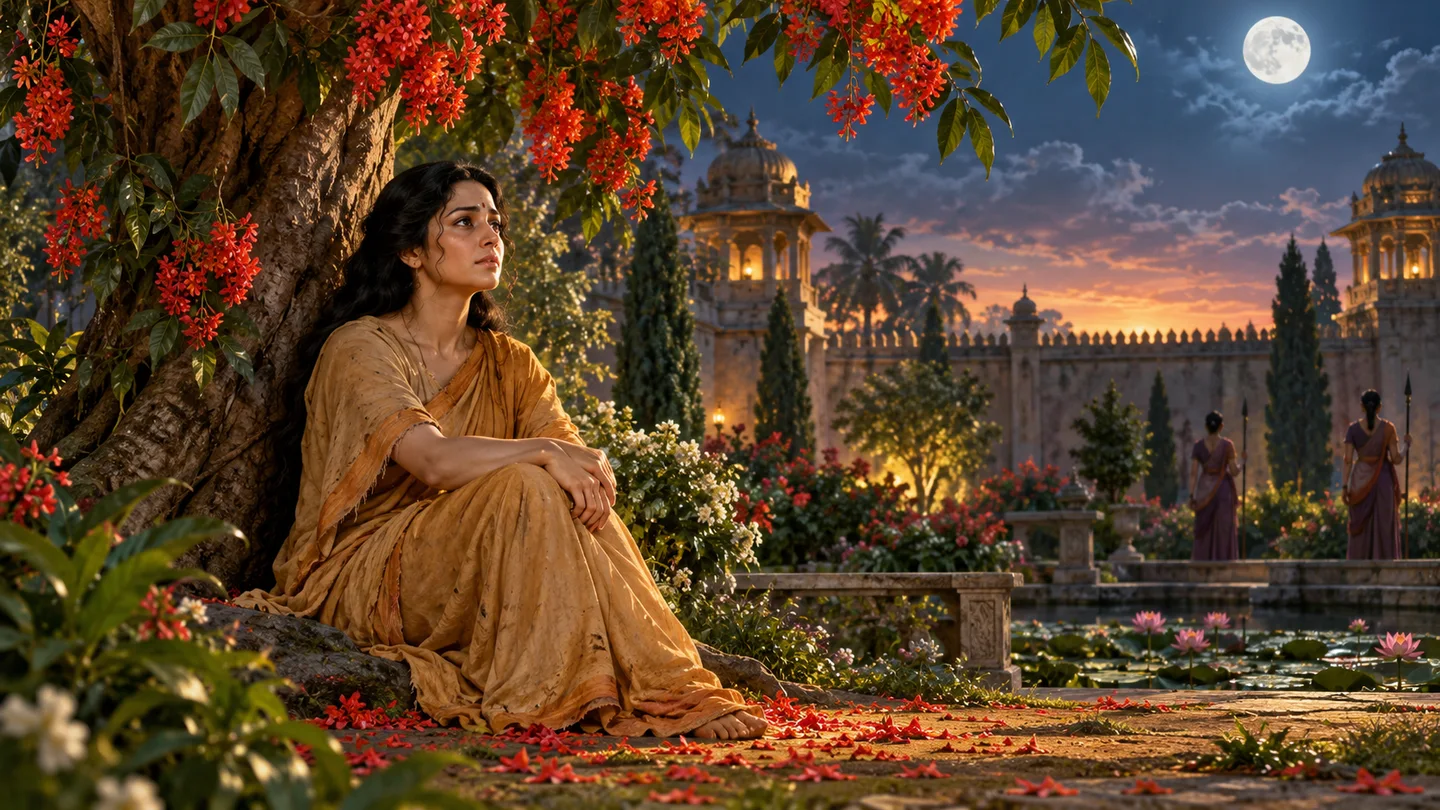
Sita sits beneath a flowering tree in the Ashoka grove, holding to hope.
Original DHIH illustration · artistic interpretation

Verse 1 · 5.18.1

#

तथा विप्रेक्षमाणस्य वनं पुष्पितपादपम् ।

While he watched the grove of flowering trees

विचिन्वतश्च वैदेहीं किञ्चिच्छेषा निशाभवत् ॥

and looked closely at Sita, only a little of the night remained.

Verse 2 · 5.18.2

#

षडंगवेदविदुषां क्रतुप्रवरयाजिनाम् ।

Late in the night he heard sacred recitations from brahma-rakshasas,

शुश्राव ब्रह्मघोषान् स विरात्रे ब्रह्मरक्षसाम् ॥

versed in the Veda and its six disciplines and performers of great sacrifices.

Verse 3 · 5.18.3

#

अथ मंगलवादित्रैः शब्दैः श्रोत्रमनोहरैः ।

Then mighty-armed, powerful ten-headed Ravana

प्राबोध्यत महाबाहुर्दशग्रीवो महाबलः ॥

was awakened by auspicious music pleasing to the ear.

Verse 4 · 5.18.4

#

विबुध्य तु महाभागो राक्षसेन्द्रः प्रतापवान् ।

Awakening with garlands and garments disarranged,

स्रस्तमाल्याम्बरधरो वैदेहीमन्वचिन्तयत् ॥

the powerful rakshasa lord began thinking of Sita.

Verse 5 · 5.18.5

#

भृशं नियुक्तस्तस्यां च मदनेन मदोत्कटः ।

Intensely attached to her and excited by desire,

न तु तं राक्षसः कामं शशाकात्मनि गूहितुम् ॥

the rakshasa could not conceal that passion within himself.

Verse 6 · 5.18.6

#

स सर्वाभरणैर्युक्तो बिभ्रच्छ्रियमनुत्तमाम् ।

Wearing all his ornaments and displaying incomparable splendor,

तां नगैर्विविधैर्जुष्टां सर्वपुष्पफलोपगैः ॥

he approached the grove filled with many kinds of flowering and fruit-bearing trees—

Verse 7 · 5.18.7

#

वृतां पुष्करिणीभिश्च नानापुष्पोपशोभिताम् ।

surrounded by lotus pools and adorned with many blossoms,

सदा मत्तैश्च विहगैर्विचित्रां परमाद्भुतैः ॥

made wonderful by varied, continually delighted birds—

Verse 8 · 5.18.8

#

ईहामृगैश्च विविधैर्वृतां दृष्टिमनोहरैः ।

filled with many marvelous animals delightful to look upon;

वीथीः सम्प्रेक्षमाणश्च मणिकाञ्चनतोरणाम् ॥

he examined the paths and jeweled golden archways—

Verse 9 · 5.18.9

#

नानामृगगणाकीर्णां फलैः प्रपतितैर्वृताम् ।

and entered the densely wooded ashoka grove,

अशोकवनिकामेव प्राविशत् संततद्रुमाम् ॥

scattered with fallen fruits and many herds of animals.

Verse 10 · 5.18.10

#

अंगनाः शतमात्रं तु तं व्रजन्तमनुव्रजन् ।

About a hundred women followed the descendant of Pulastya,

महेन्द्रमिव पौलस्त्यं देवगन्धर्वयोषितः ॥

as celestial and gandharva women follow Indra.

Verse 11 · 5.18.11

#

दीपिकाः काञ्चनीः काश्चिज्जगृहुस्तत्र योषितः ।

Some women carried golden lamps,

वालव्यजनहस्ताश्च तालवृन्तानि चापराः ॥

others held yak-tail whisks or palm-leaf fans.

Verse 12 · 5.18.12

#

काञ्चनैश्चैव भृंगारैर्जह्रुः सलिलमग्रतः ।

Some carried water before him in golden pitchers;

मण्डलाग्रा बृसीश्चैव गृह्यान्याः पृष्ठतो ययुः ॥

others followed with swords and cushions.

Verse 13 · 5.18.13

#

काचिद् रत्नमयीं पात्रीं पूर्णां पानस्य भ्राजतीम् ।

One skillful woman held in her right hand

दक्षिणा दक्षिणेनैव तदा जग्राह पाणिना ॥

a shining jeweled vessel filled with drink.

Verse 14 · 5.18.14

#

राजहंसप्रतीकाशं छत्रं पूर्णशशिप्रभम् ।

Another followed carrying a golden-shafted parasol,

सौवर्णदण्डमपरा गृहीत्वा पृष्ठतो ययौ ॥

white as a royal swan and bright as the full moon.

Verse 15 · 5.18.15

#

निद्रामदपरीताक्ष्यो रावणस्योत्तमस्त्रियः ।

With eyes still affected by sleep and intoxication, Ravana's fine women

अनुजग्मुः पतिं वीरं घनं विद्युल्लता इव ॥

followed their heroic husband like streaks of lightning around a cloud.

Verse 16 · 5.18.16

#

व्याविद्धहारकेयूराः समामृदितवर्णकाः ।

Their necklaces and armlets were displaced, their cosmetics rubbed away,

समागलितकेशान्ताः सस्वेदवदनास्तथा ॥

their hair loosened, and their faces damp with perspiration.

Verse 17 · 5.18.17

#

घूर्णन्त्यो मदशेषेण निद्रया च शुभाननाः ।

The lovely-faced women swayed from lingering drink and sleep;

स्वेदक्लिष्टांगकुसुमाः समाल्याकुलमूर्धजाः ॥

flowers upon their bodies were wilted by sweat, and garlands tangled in their hair.

Verse 18 · 5.18.18

#

प्रयान्तं नैर्ऋतपतिं नार्यो मदिरलोचनाः ।

The dreamy-eyed women, his cherished wives, followed

बहुमानाच्च कामाच्च प्रियभार्यास्तमन्वयुः ॥

the lord of rakshasas out of esteem and affection.

Verse 19 · 5.18.19

#

स च कामपराधीनः पतिस्तासां महाबलः ।

Their powerful husband, however, was ruled by desire;

सीतासक्तमना मन्दो मन्दाञ्चितगतिर्बभौ ॥

his mind fixed on Sita, he moved slowly with a languid gait.

Verse 20 · 5.18.20

#

ततः काञ्चीनिनादं च नूपुराणां च निःस्वनम् ।

Then the vanara, son of the Wind, heard

शुश्राव परमस्त्रीणां कपिर्मारुतनन्दनः ॥

the tinkling of the noble women's girdles and anklets.

Verse 21 · 5.18.21

#

तं चाप्रतिमकर्माणमचिन्त्यबलपौरुषम् ।

Hanuman saw that doer of extraordinary deeds, of unimaginable strength,

द्वारदेशमनुप्राप्तं ददर्श हनुमान् कपिः ॥

arriving at the garden entrance.

Verse 22 · 5.18.22

#

दीपिकाभिरनेकाभिः समन्तादवभासितम् ।

Many lamps filled with fragrant oil, carried before him,

गन्धतैलावसिक्ताभिर्ध्रियमाणाभिरग्रतः ॥

illuminated him on every side.

Verse 23 · 5.18.23

#

कामदर्पमदैर्युक्तं जिह्मताम्रायतेक्षणम् ।

Filled with desire, pride, and intoxication, with long, sidelong, coppery eyes,

समक्षमिव कंदर्पमपविद्धशरासनम् ॥

he resembled the god of Love himself with his bow laid aside.

Verse 24 · 5.18.24

#

मथितामृतफेनाभमरजोवस्त्रमुत्तमम् ।

He drew down his fine, unstained garment, white as churned nectar's foam,

सपुष्पमवकर्षन्तं विमुक्तं सक्तमंगदे ॥

which had slipped and caught upon his armlet together with flowers.

Verse 25 · 5.18.25

#

तं पत्रविटपे लीनः पत्रपुष्पशतावृतः ।

Hidden in the leafy branches beneath hundreds of leaves and flowers,

समीपमुपसंक्रान्तं विज्ञातुमुपचक्रमे ॥

Hanuman began to study the approaching figure.

Verse 26 · 5.18.26

#

अवेक्षमाणस्तु तदा ददर्श कपिकुञ्जरः ।

As he watched, the foremost vanara also saw

रूपयौवनसम्पन्ना रावणस्य वरस्त्रियः ॥

Ravana's lovely wives, endowed with beauty and youth.

Verse 27 · 5.18.27

#

ताभिः परिवृतो राजा सुरूपाभिर्महायशाः ।

Surrounded by those beautiful women, the renowned king

तन्मृगद्विजसंघुष्टं प्रविष्टः प्रमदावनम् ॥

entered the pleasure grove resounding with animals and birds.

Verse 28 · 5.18.28

#

क्षीबो विचित्राभरणः शङ्कुकर्णो महाबलः ।

Hanuman saw Vishravas's son, the rakshasa lord,

तेन विश्रवसः पुत्रः स दृष्टो राक्षसाधिपः ॥

intoxicated, strongly built, pointed-eared, and wearing varied ornaments.

Verse 29 · 5.18.29

#

वृतः परमनारीभिस्ताराभिरिव चन्द्रमाः ।

The radiant great vanara saw the radiant ruler

तं ददर्श महातेजास्तेजोवन्तं महाकपिः ॥

surrounded by lovely women like the moon by stars.

Verse 30 · 5.18.30

#

रावणोऽयं महाबाहुरिति संचिन्त्य वानरः ।

'This is mighty-armed Ravana,' the vanara reflected;

सोऽयमेव पुरा शेते पुरमध्ये गृहोत्तमे ।

'this is the very man who slept earlier in the great house within the city.'

अवप्लुतो महातेजा हनूमान् मारुतात्मजः ॥

Radiant Hanuman, son of the Wind, shifted his position.

Verse 31 · 5.18.31

#

स तथाप्युग्रतेजाः स निर्धूतस्तस्य तेजसा ।

Though himself fiercely radiant, he was struck by Ravana's brilliance;

पत्रे गुह्यान्तरे सक्तो मतिमान् संवृतोऽभवत् ॥

the thoughtful one drew deeper into the leaves and remained hidden.

Verse 32 · 5.18.32

#

स तामसितकेशान्तां सुश्रोणीं संहतस्तनीम् ।

Ravana approached, wishing to see the dark-eyed woman

दिदृक्षुरसितापांगीमुपावर्तत रावणः ॥

with beautiful dark hair and a graceful figure.

CHAPTER 18 COMPLETE

The journey continues.

Hanuman stays concealed as Ravana approaches Sita.

NEXT CHAPTER

Continue Hanuman’s journey in the next chapter.

About this reading

Vālmīki Rāmāyaṇa, Sundara Kanda, chapter 18. This reading follows Sanskrit Wikisource revision 354236, with all 32 numbered verses. Verse divisions and wording vary between editions.

The Sanskrit is preserved with normalized display spacing and line breaks. Some sentences continue across verse boundaries; the English follows that continuity. A yojana is a traditional distance unit, retained without assigning a modern measurement. Shape-changing and celestial beings belong to the epic’s sacred narrative.

English line senses and short meanings are original AI-assisted DHIH renderings checked against this Sanskrit reading; they are not a word-for-word grammatical commentary or a claim of human scholarly certification. Roman transliteration is generated mechanically in IAST. Names may also appear in familiar English spellings.

Sanskrit transcription credit: Wikisource contributors, revision history. The adapted reading text and DHIH English on this chapter page are offered under CC BY-SA 4.0. The ancient Sanskrit work is in the public domain. Illustrations are separately commissioned AI-generated DHIH artwork.

Historical comparison: M. N. Dutt’s Ramayana, volume II, a public-domain translation, was consulted for narrative context. The English displayed here is a fresh rendering of the pinned Sanskrit, not a reproduction of that translation.

The chapter portrays possessive desire and intoxication. Ravana’s luxury and power do not justify his treatment of Sita. Audio will be added only when suitable recording permissions are available.