Search DHIH library

VĀLMĪKI RĀMĀYAṆA · CHAPTER 20

सुन्दरकाण्डम् · सर्गः २०

Ravana’s tempting promises

Ravana offers wealth, power, and pleasure while trying to weaken Sita’s loyalty and confidence in Rama.

36 versesSanskrit + English1 illustration
Begin reading ↓

An edition-specific reading with original English meanings. Source & reading notes

SCENE 01 · VERSES 1–36

Promises without freedom

Ravana offers wealth, power, and pleasure while trying to weaken Sita’s loyalty and confidence in Rama.

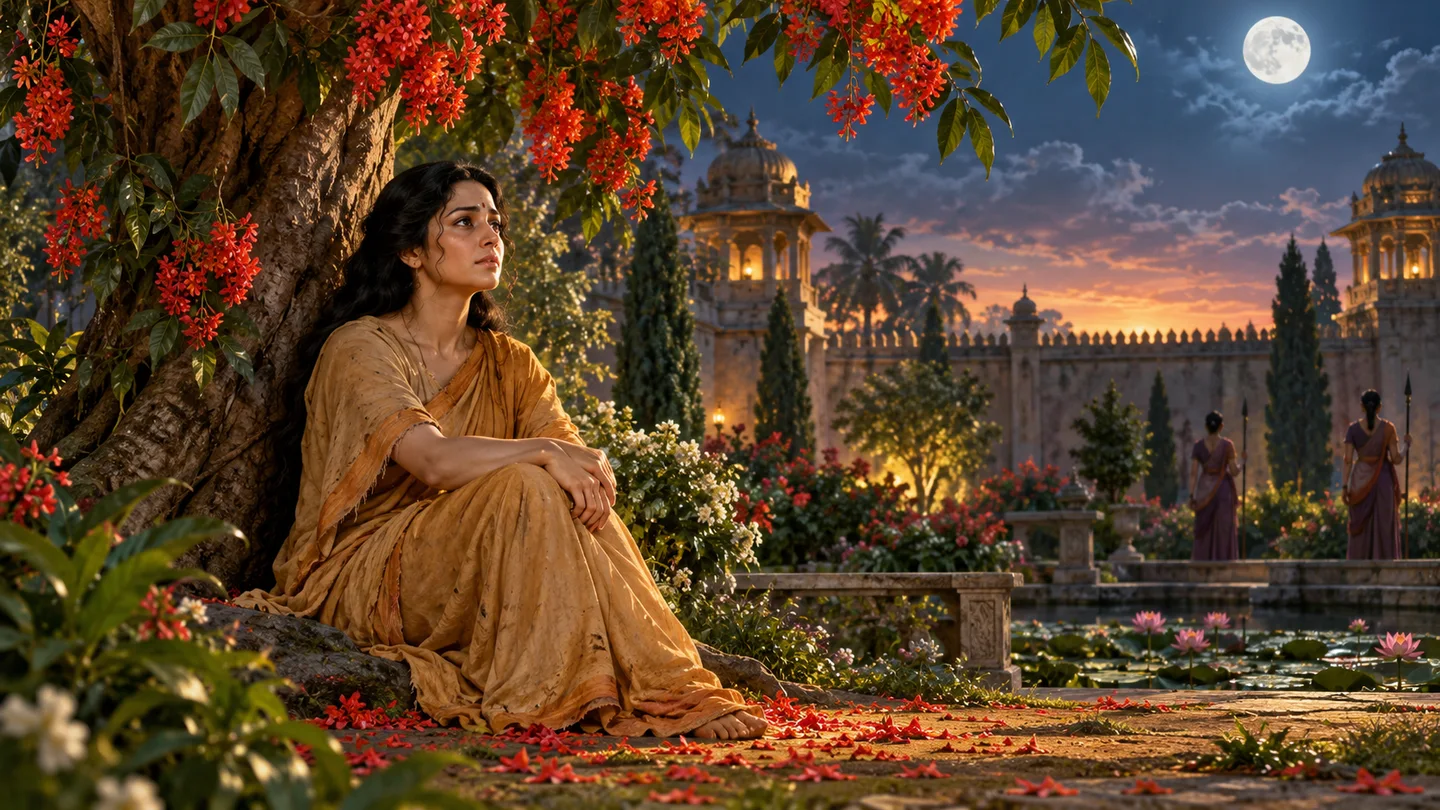
Sita sits beneath a flowering tree in the Ashoka grove, holding to hope.
Original DHIH illustration · artistic interpretation

Verse 1 · 5.20.1

#

स तां परिवृतां दीनां निरानन्दां तपस्विनीम् ।

Ravana addressed that guarded, unhappy, joyless, suffering woman

साकारैर्मधुरैर्वाक्यैर्न्यदर्शयत रावणः ॥

with apparently courteous and sweet words.

Verse 2 · 5.20.2

#

मां दृष्ट्वा नागनासोरु गूहमाना स्तनोदरम् ।

'Seeing me, you cover your breasts and abdomen, graceful-thighed one;

अदर्शनमिवात्मानं भयान्नेतुं त्वमिच्छसि ॥

in fear you seem to wish to make yourself invisible.'

Verse 3 · 5.20.3

#

कामये त्वां विशालाक्षि बहु मन्यस्व मां प्रिये ।

'I desire you, wide-eyed one; think highly of me, beloved,

सर्वांगगुणसम्पन्ने सर्वलोकमनोहरे ॥

you whose every limb is excellent and who enchant the whole world.'

Verse 4 · 5.20.4

#

नेह किञ्चिन्मनुष्या वा राक्षसाः कामरूपिणः ।

'There are no humans here, nor other shape-changing rakshasas;

व्यपसर्पतु ते सीते भयं मत्तः समुत्थितम् ॥

let the fear of me that has arisen in you depart, Sita.'

Verse 5 · 5.20.5

#

स्वधर्मो रक्षसां भीरु सर्वदैव न संशयः ।

'Timid one, it is always the rakshasas' own custom, without doubt,

गमनं वा परस्त्रीणां हरणं सम्प्रमथ्य वा ॥

to approach others' wives or seize them by force.'

Verse 6 · 5.20.6

#

एवं चैवमकामां त्वां न च स्प्रक्ष्यामि मैथिलि ।

'Even so, princess of Mithila, I will not touch you against your wish,

कामं कामः शरीरे मे यथाकामं प्रवर्तताम् ॥

however freely desire may rage through my body.'

Verse 7 · 5.20.7

#

देवि नेह भयं कार्यं मयि विश्वसिहि प्रिये ।

'Lady, you need not fear here; trust me, beloved.

प्रणयस्व च तत्त्वेन मैवं भूः शोकलालसा ॥

Give me true affection and do not remain immersed in grief.'

Verse 8 · 5.20.8

#

एकवेणी अधःशय्या ध्यानं मलिनमम्बरम् ।

'A single braid, sleeping on the ground, brooding, dirty clothing,

अस्थानेऽप्युपवासश्च नैतान्यौपयिकानि ते ॥

and fasting without purpose are not suitable for you.'

Verse 9 · 5.20.9

#

विचित्राणि च माल्यानि चन्दनान्यगुरूणि च ।

'Beautiful garlands, sandalwood and agaru perfumes,

विविधानि च वासांसि दिव्यान्याभरणानि च ॥

varied garments and divine ornaments—'

Verse 10 · 5.20.10

#

महार्हाणि च पानानि शयनान्यासनानि च ।

'costly drinks, beds and seats,

गीतं नृत्यं च वाद्यं च लभ मां प्राप्य मैथिलि ॥

song, dance, and music: obtain all these by accepting me, princess of Mithila.'

Verse 11 · 5.20.11

#

स्त्रीरत्नमसि मैवं भूः कुरु गात्रेषु भूषणम् ।

'You are a jewel among women; do not remain like this, but adorn your body.

मां प्राप्य हि कथं वा स्यास्त्वमनर्हा सुविग्रहे ॥

With me, beautiful one, how could you lack what you deserve?'

Verse 12 · 5.20.12

#

इदं ते चारु संजातं यौवनं ह्यतिवर्तते ।

'This lovely youth that has come to you is passing;

यदतीतं पुनर्नैति स्रोतः स्रोतस्विनामिव ॥

what has gone does not return, like a river's flowing water.'

Verse 13 · 5.20.13

#

त्वां कृत्वोपरतो मन्ये रूपकर्ता स विश्वकृत् ।

'I think the world's maker ceased his work after creating you,

नहि रूपोपमा ह्यन्या तवास्ति शुभदर्शने ॥

for no other beauty equals yours, lovely woman.'

Verse 14 · 5.20.14

#

त्वां समासाद्य वैदेहि रूपयौवनशालिनीम् ।

'Who, even the Grandfather himself, could remain unmoved

कः पुनर्नातिवर्तेत साक्षादपि पितामहः ॥

upon meeting you, Sita, endowed with beauty and youth?'

Verse 15 · 5.20.15

#

यद् यत् पश्यामि ते गात्रं शीतांशुसदृशानने ।

'Whichever part of your body I behold, moon-faced one,

तस्मिंस्तस्मिन् पृथुश्रोणि चक्षुर्मम निबध्यते ॥

there my eyes become fixed, graceful woman.'

Verse 16 · 5.20.16

#

भव मैथिलि भार्या मे मोहमेतं विसर्जय ।

'Become my wife, princess of Mithila; abandon this delusion.

बह्वीनामुत्तमस्त्रीणां ममाग्रमहिषी भव ॥

Be my chief queen among my many excellent women.'

Verse 17 · 5.20.17

#

लोकेभ्यो यानि रत्नानि सम्प्रमथ्याहृतानि मे ।

'All the treasures I have seized from the worlds are yours,

तानि ते भीरु सर्वाणि राज्यं चैव ददामि ते ॥

timid one, and I give you my kingdom as well.'

Verse 18 · 5.20.18

#

विजित्य पृथिवीं सर्वां नानानगरमालिनीम् ।

'For your sake I shall conquer the whole earth, adorned with many cities,

जनकाय प्रदास्यामि तव हेतोर्विलासिनि ॥

and give it to Janaka, lovely woman.'

Verse 19 · 5.20.19

#

नेह पश्यामि लोकेऽन्यं यो मे प्रतिबलो भवेत् ।

'I see no one else in the world who can match my strength.

पश्य मे सुमहद्वीर्यमप्रतिद्वन्द्वमाहवे ॥

Behold my immense prowess, unequaled in battle.'

Verse 20 · 5.20.20

#

असकृत् संयुगे भग्ना मया विमृदितध्वजाः ।

'Again and again I have broken gods and asuras in combat and shattered their banners;

अशक्ताः प्रत्यनीकेषु स्थातुं मम सुरासुराः ॥

they could not stand against my opposing forces.'

Verse 21 · 5.20.21

#

इच्छ मां क्रियतामद्य प्रतिकर्म तवोत्तमम् ।

'Choose me; let your finest adornment be prepared today.

सुप्रभाण्यवसज्जन्तां तवांगे भूषणानि हि ॥

Let brilliantly shining ornaments be placed upon your limbs.'

Verse 22 · 5.20.22

#

साधु पश्यामि ते रूपं सुयुक्तं प्रतिकर्मणा ।

'Let me see your beauty enhanced by careful adornment;

प्रतिकर्माभिसंयुक्ता दाक्षिण्येन वरानने ॥

adorned in this way, beautiful-faced one, show me graciousness.'

Verse 23 · 5.20.23

#

भुङ्क्ष्व भोगान् यथाकामं पिब भीरु रमस्व च ।

'Enjoy pleasures as you wish, drink and rejoice, timid one;

यथेष्टं च प्रयच्छ त्वं पृथिवीं वा धनानि च ॥

give away wealth or even the earth according to your desire.'

Verse 24 · 5.20.24

#

ललस्व मयि विस्रब्धा धृष्टमाज्ञापयस्व च ।

'Be at ease with me and command me boldly.

मत्प्रासादाल्ललन्त्याश्च ललतां बान्धवस्तव ॥

Through my favor, may your relatives also share your enjoyment.'

Verse 25 · 5.20.25

#

ऋद्धिं ममानुपश्य त्वं श्रियं भद्रे यशस्विनि ।

'Consider my prosperity and splendor, fortunate, renowned lady.

किं करिष्यसि रामेण सुभगे चीरवासिना ॥

What will you do with Rama, who wears bark-cloth?'

Verse 26 · 5.20.26

#

निक्षिप्तविजयो रामो गतश्रीर्वनगोचरः ।

'Rama has laid aside victory, lost prosperity, and wanders in the forest;

व्रती स्थण्डिलशायी च शंके जीवति वा न वा ॥

he keeps vows and sleeps on bare ground. I doubt whether he is even alive.'

Verse 27 · 5.20.27

#

नहि वैदेहि रामस्त्वां द्रष्टुं वाप्युपलभ्यते ।

'Rama cannot even gain sight of you, Sita,

पुरोबलाकैरसितैर्मेघैर्ज्योत्स्नामिवावृताम् ॥

as moonlight is hidden by dark clouds with cranes before them.'

Verse 28 · 5.20.28

#

न चापि मम हस्तात् त्वां प्राप्तुमर्हति राघवः ।

'Raghava cannot recover you from my hand,

हिरण्यकशिपुः कीर्तिमिन्द्रहस्तगतामिव ॥

as Hiranyakashipu could not recover his glory once it lay in Indra's power.'

Verse 29 · 5.20.29

#

चारुस्मिते चारुदति चारुनेत्रे विलासिनि ।

'With lovely smile, teeth, and eyes, charming and timid one,

मनो हरसि मे भीरु सुपर्णः पन्नगं यथा ॥

you carry off my mind as Garuda carries away a serpent.'

Verse 30 · 5.20.30

#

क्लिष्टकौशेयवसनां तन्वीमप्यनलंकृताम् ।

'Seeing you slender, unadorned, and dressed in worn silk,

त्वां दृष्ट्वा स्वेषु दारेषु रतिं नोपलभाम्यहम् ॥

I can find no pleasure in my own wives.'

Verse 31 · 5.20.31

#

अन्तःपुरनिवासिन्यः स्त्रियः सर्वगुणान्विताः ।

'Rule over all the women who live in my inner apartments,

यावत्यो मम सर्वासामैश्वर्यं कुरु जानकि ॥

endowed though they are with every excellence, Janaki.'

Verse 32 · 5.20.32

#

मम ह्यसितकेशान्ते त्रैलोक्यप्रवरस्त्रियः ।

'My women, the finest in the three worlds, dark-haired one,

तास्त्वां परिचरिष्यन्ति श्रियमप्सरसो यथा ॥

will attend upon you as apsarases attend upon Lakshmi.'

Verse 33 · 5.20.33

#

यानि वैश्रवणे सुभ्रु रत्नानि च धनानि च ।

'Enjoy with me, as you please, the treasures and wealth of Kubera,

तानि लोकांश्च सुश्रोणि मया भुङ्क्ष्व यथासुखम् ॥

and the worlds themselves, lovely-browed, graceful woman.'

Verse 34 · 5.20.34

#

न रामस्तपसा देवि न बलेन च विक्रमैः ।

'Rama does not equal me in austerity, strength, or feats of valor,

न धनेन मया तुल्यस्तेजसा यशसापि वा ॥

nor in wealth, radiance, or fame, lady.'

Verse 35 · 5.20.35

#

पिब विहर रमस्व भुङ्क्ष्व भोगान्

'Drink, wander, rejoice, and enjoy pleasures;

धननिचयं प्रदिशामि मेदिनीं च ।

I offer you heaps of wealth and the earth.

मयि लल ललने यथासुखं त्वं

Be happy with me according to your desire,

त्वयि च समेत्य ललन्तु बान्धवास्ते ॥

and let your relatives gather to share your happiness.'

Verse 36 · 5.20.36

#

कुसुमिततरुजालसंततानि

'Through coastal woods dense with flowering trees,

भ्रमरयुतानि समुद्रतीरजानि ।

alive with bees and growing beside the sea,

कनकविमलहारभूषितांगी

your body adorned with pure golden necklaces,

विहर मया सह भीरु काननानि ॥

wander with me, timid one.'

CHAPTER 20 COMPLETE

The journey continues.

His promises await Sita’s answer.

NEXT CHAPTER

Continue Hanuman’s journey in the next chapter.

About this reading

Vālmīki Rāmāyaṇa, Sundara Kanda, chapter 20. This reading follows Sanskrit Wikisource revision 354251, with all 36 numbered verses. Verse divisions and wording vary between editions.

The Sanskrit is preserved with normalized display spacing and line breaks. Some sentences continue across verse boundaries; the English follows that continuity. A yojana is a traditional distance unit, retained without assigning a modern measurement. Shape-changing and celestial beings belong to the epic’s sacred narrative.

English line senses and short meanings are original AI-assisted DHIH renderings checked against this Sanskrit reading; they are not a word-for-word grammatical commentary or a claim of human scholarly certification. Roman transliteration is generated mechanically in IAST. Names may also appear in familiar English spellings.

Sanskrit transcription credit: Wikisource contributors, revision history. The adapted reading text and DHIH English on this chapter page are offered under CC BY-SA 4.0. The ancient Sanskrit work is in the public domain. Illustrations are separately commissioned AI-generated DHIH artwork.

Historical comparison: M. N. Dutt’s Ramayana, volume II, a public-domain translation, was consulted for narrative context. The English displayed here is a fresh rendering of the pinned Sanskrit, not a reproduction of that translation.

The chapter is Ravana’s coercive speech. His excuses for abduction, claims about women, and boasts are a character’s arguments, not the site’s endorsement. Audio will be added only when suitable recording permissions are available.