Search DHIH library

VĀLMĪKI RĀMĀYAṆA · CHAPTER 21

सुन्दरकाण्डम् · सर्गः २१

Sita’s steadfast answer

Sita rejects Ravana’s offers, calls him back to righteousness, and urges him to return her to Rama.

34 versesSanskrit + English1 illustration
Begin reading ↓

An edition-specific reading with original English meanings. Source & reading notes

SCENE 01 · VERSES 1–34

A firm refusal and a better choice

Sita rejects Ravana’s offers, calls him back to righteousness, and urges him to return her to Rama.

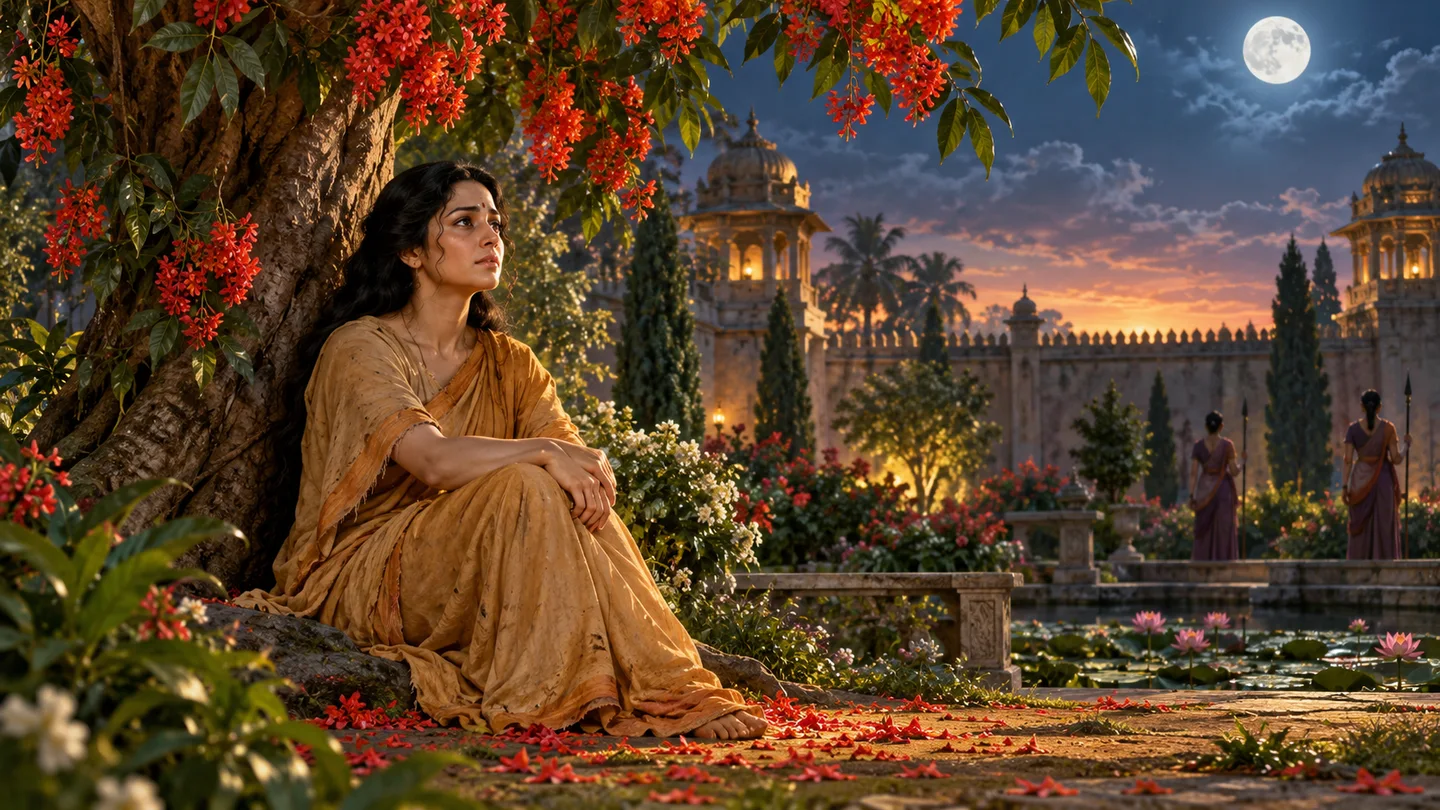
Sita sits beneath a flowering tree in the Ashoka grove, holding to hope.
Original DHIH illustration · artistic interpretation

Verse 1 · 5.21.1

#

तस्य तद् वचनं श्रुत्वा सीता रौद्रस्य रक्षसः ।

Hearing those words of the fierce rakshasa, Sita, distressed,

आर्ता दीनस्वरा दीनं प्रत्युवाच ततः शनैः ॥

answered slowly in a sorrowful, subdued voice.

Verse 2 · 5.21.2

#

दुःखार्ता रुदती सीता वेपमाना तपस्विनी ।

Afflicted by grief, weeping and trembling, the faithful woman

चिन्तयन्ती वरारोहा पतिमेव पतिव्रता ॥

thought only of her husband.

Verse 3 · 5.21.3

#

तृणमन्तरतः कृत्वा प्रत्युवाच शुचिस्मिता ।

Placing a blade of grass between them, the pure-smiling woman replied:

निवर्तय मनो मत्तः स्वजने प्रीयतां मनः ॥

'Turn your mind away from me; let it find pleasure among your own people.'

Verse 4 · 5.21.4

#

न मां प्रार्थयितुं युक्तस्त्वं सिद्धिमिव पापकृत् ।

'You should not seek me, just as a wrongdoer cannot seek spiritual perfection.

अकार्यं न मया कार्यमेकपत्न्या विगर्हितम् ॥

As a wife devoted to one husband, I will not perform a condemned act—'

Verse 5 · 5.21.5

#

कुलं सम्प्राप्तया पुण्यं कुले महति जातया ।

'I was born into a great family and married into a virtuous one.'

एवमुक्त्वा तु वैदेही रावणं तं यशस्विनी ॥

Having spoken thus to Ravana, renowned Sita of Videha—

Verse 6 · 5.21.6

#

रावणं पृष्ठतः कृत्वा भूयो वचनमब्रवीत् ।

turned her back upon Ravana and spoke again:

नाहमौपयिकी भार्या परभार्या सती तव ॥

'I am not a suitable wife for you, for I am already another man's wife.'

Verse 7 · 5.21.7

#

साधु धर्ममवेक्षस्व साधु साधुव्रतं चर ।

'Attend properly to righteousness and practice the conduct of the good.

यथा तव तथान्येषां रक्ष्या दारा निशाचर ॥

As your wives deserve protection, so do the wives of others, night-roamer.'

Verse 8 · 5.21.8

#

आत्मानमुपमां कृत्वा स्वेषु दारेषु रम्यताम् ।

'Judge by your own feelings and find pleasure with your own wives.

अतुष्टं स्वेषु दारेषु चपलं चपलेन्द्रियम् ।

A restless man, unsatisfied with them and unable to govern his senses,

नयन्ति निकृतिप्रज्ञं परदाराः पराभवम् ॥

is brought to ruin by pursuing others' wives with deceitful intent.'

Verse 9 · 5.21.9

#

इह सन्तो न वा सन्ति सतो वा नानुवर्तसे ।

'Are there no good people here, or do you refuse to follow them?

यथा हि विपरीता ते बुद्धिराचारवर्जिता ॥

Your judgment is so perverse and separated from proper conduct.'

Verse 10 · 5.21.10

#

वचो मिथ्याप्रणीतात्मा पथ्यमुक्तं विचक्षणैः ।

'Or, having set yourself upon a false path, you reject

राक्षसानामभावाय त्वं वा न प्रतिपद्यसे ॥

the beneficial words of discerning people, to the destruction of the rakshasas.'

Verse 11 · 5.21.11

#

अकृतात्मानमासाद्य राजानमनये रतम् ।

'Prosperous kingdoms and cities are ruined

समृद्धानि विनश्यन्ति राष्ट्राणि नगराणि च ॥

when they fall under an undisciplined king devoted to wrongdoing.'

Verse 12 · 5.21.12

#

तथैव त्वां समासाद्य लंका रत्नौघसंकुला ।

'In just that way, jeweled Lanka, having you as ruler,

अपराधात् तवैकस्य नचिराद् विनशिष्यति ॥

will soon be destroyed through your single offense.'

Verse 13 · 5.21.13

#

स्वकृतैर्हन्यमानस्य रावणादीर्घदर्शिनः ।

'When a short-sighted wrongdoer is destroyed by his own deeds, Ravana,

अभिनन्दन्ति भूतानि विनाशे पापकर्मणः ॥

all beings rejoice at his downfall.'

Verse 14 · 5.21.14

#

एवं त्वां पापकर्माणं वक्ष्यन्ति निकृता जनाः ।

'People injured by you will say with joy,

दिष्ट्यैतद् व्यसनं प्राप्तो रौद्र इत्येव हर्षिताः ॥

“Fortunately this cruel sinner has met his disaster.”'

Verse 15 · 5.21.15

#

शक्या लोभयितुं नाहमैश्वर्येण धनेन वा ।

'You cannot tempt me with power or wealth.

अनन्या राघवेणाहं भास्करेण यथा प्रभा ॥

I am inseparable from Raghava, as sunlight is from the sun.'

Verse 16 · 5.21.16

#

उपधाय भुजं तस्य लोकनाथस्य सत्कृतम् ।

'Having rested upon the honored arm of that protector of the world,

कथं नामोपधास्यामि भुजमन्यस्य कस्यचित् ॥

how could I ever rest upon the arm of someone else?'

Verse 17 · 5.21.17

#

अहमौपयिकी भार्या तस्यैव च धरापतेः ।

'I belong as wife to that king alone,

व्रतस्नातस्य विद्येव विप्रस्य विदितात्मनः ॥

as sacred learning belongs to a self-disciplined brahmin who has completed his vows.'

Verse 18 · 5.21.18

#

साधु रावण रामेण मां समानय दुःखिताम् ।

'Do well, Ravana: reunite sorrowing me with Rama,

वने वासितया सार्धं करेण्वेव गजाधिपम् ॥

as one reunites a forest elephant with his captive mate.'

Verse 19 · 5.21.19

#

मित्रमौपयिकं कर्तुं रामः स्थानं परीप्सता ।

'If you wish to preserve your position and avoid terrible bondage,

बन्धं चानिच्छता घोरं त्वयासौ पुरुषर्षभः ॥

it is fitting that you make that foremost man, Rama, your friend.'

Verse 20 · 5.21.20

#

विदितः सर्वधर्मज्ञः शरणागतवत्सलः ।

'He is known as a knower of every duty and a protector of those who seek refuge.

तेन मैत्री भवतु ते यदि जीवितुमिच्छसि ॥

Become his friend if you wish to live.'

Verse 21 · 5.21.21

#

प्रसादयस्व त्वं चैनं शरणागतवत्सलम् ।

'Win the favor of that protector of those who seek refuge;

मां चास्मै प्रयतो भूत्वा निर्यातयितुमर्हसि ॥

with a disciplined purpose, return me to him.'

Verse 22 · 5.21.22

#

एवं हि ते भवेत् स्वस्ति सम्प्रदाय रघूत्तमे ।

'By restoring me to the finest of Raghu's line, you may find safety;

अन्यथा त्वं हि कुर्वाणः परां प्राप्स्यसि चापदम् ॥

acting otherwise, you will meet the greatest calamity.'

Verse 23 · 5.21.23

#

वर्जयेद् वज्रमुत्सृष्टं वर्जयेदन्तकश्चिरम् ।

'A hurled thunderbolt might spare you; death might delay its coming;

त्वद्विधं न तु संक्रुद्धो लोकनाथः स राघवः ॥

but angry Raghava, protector of the world, will not spare one like you.'

Verse 24 · 5.21.24

#

रामस्य धनुषः शब्दं श्रोष्यसि त्वं महास्वनम् ।

'You will hear the mighty sound of Rama's bow,

शतक्रतुविसृष्टस्य निर्घोषमशनेरिव ॥

like the crash of a thunderbolt released by Indra.'

Verse 25 · 5.21.25

#

इह शीघ्रं सुपर्वाणो ज्वलितास्या इवोरगाः ।

'Soon well-feathered arrows marked with Rama's and Lakshmana's names

इषवो निपतिष्यन्ति रामलक्ष्मणलक्षिताः ॥

will fall here like serpents with blazing mouths.'

Verse 26 · 5.21.26

#

रक्षांसि निहनिष्यन्तः पुर्यामस्यां न संशयः ।

'Slaying rakshasas within this city, without doubt,

असम्पातं करिष्यन्ति पतन्तः कङ्कवाससः ॥

those feathered shafts will fall so densely that passage becomes impossible.'

Verse 27 · 5.21.27

#

राक्षसेन्द्रमहासर्पान् स रामगरुडो महान् ।

'Great Rama, like Garuda, will swiftly carry away

उद्धरिष्यति वेगेन वैनतेय इवोरगान् ॥

the serpentlike rakshasa chiefs, as Garuda seizes serpents.'

Verse 28 · 5.21.28

#

अपनेष्यति मां भर्ता त्वत्तः शीघ्रमरिंदमः ।

'My husband, destroyer of foes, will quickly take me from you,

असुरेभ्यः श्रियं दीप्तां विष्णुस्त्रिभिरिव क्रमैः ॥

as Vishnu recovered radiant sovereignty from the asuras with three strides.'

Verse 29 · 5.21.29

#

जनस्थाने हतस्थाने निहते रक्षसां बले ।

'When Janasthana was laid waste and the rakshasa force destroyed,

अशक्तेन त्वया रक्षः कृतमेतदसाधु वै ॥

you, incapable of facing him, committed this wicked deed.'

Verse 30 · 5.21.30

#

आश्रमं तत्तयोः शून्यं प्रविश्य नरसिंहयोः ।

'You entered the empty hermitage of those two lionlike men

गोचरं गतयोर्भ्रात्रोरपनीता त्वयाधम ॥

while the brothers were away and carried me off, base one.'

Verse 31 · 5.21.31

#

नहि गन्धमुपाघ्राय रामलक्ष्मणयोस्त्वया ।

'You could no more remain before Rama and Lakshmana, once aware of their presence,

शक्यं संदर्शने स्थातुं शुना शार्दूलयोरिव ॥

than a dog could stand before two tigers.'

Verse 32 · 5.21.32

#

तस्य ते विग्रहे ताभ्यां युगग्रहणमस्थिरम् ।

'Your joining battle with them would not endure,

वृत्रस्येवेन्द्रबाहुभ्यां बाहोरेकस्य विग्रहे ॥

as one-armed Vritra could not withstand the arms of Indra.

Verse 33 · 5.21.33

#

क्षिप्रं तव स नाथो मे रामः सौमित्रिणा सह ।

'My lord Rama, together with Sumitra's son, will soon

तोयमल्पमिवादित्यः प्राणानादास्यते शरैः ॥

take your life with arrows as the sun dries up a little water.'

Verse 34 · 5.21.34

#

गिरिं कुबेरस्य गतोऽथवाऽऽलयं

'Though you go to Kubera's mountain or dwelling,

सभां गतो वा वरुणस्य राज्ञः ।

or enter King Varuna's assembly,

असंशयं दाशरथेर्विमोक्ष्यसे

you will find no escape from Dasharatha's son,

महाद्रुमः कालहतोऽशनेरिव ॥

like a great tree overtaken by a fatal thunderbolt.'

CHAPTER 21 COMPLETE

The journey continues.

She leaves him a path toward reconciliation and warns of the danger of refusing it.

NEXT CHAPTER

Continue Hanuman’s journey in the next chapter.

About this reading

Vālmīki Rāmāyaṇa, Sundara Kanda, chapter 21. This reading follows Sanskrit Wikisource revision 354250, with all 34 numbered verses. Verse divisions and wording vary between editions.

The Sanskrit is preserved with normalized display spacing and line breaks. Some sentences continue across verse boundaries; the English follows that continuity. A yojana is a traditional distance unit, retained without assigning a modern measurement. Shape-changing and celestial beings belong to the epic’s sacred narrative.

English line senses and short meanings are original AI-assisted DHIH renderings checked against this Sanskrit reading; they are not a word-for-word grammatical commentary or a claim of human scholarly certification. Roman transliteration is generated mechanically in IAST. Names may also appear in familiar English spellings.

Sanskrit transcription credit: Wikisource contributors, revision history. The adapted reading text and DHIH English on this chapter page are offered under CC BY-SA 4.0. The ancient Sanskrit work is in the public domain. Illustrations are separately commissioned AI-generated DHIH artwork.

Historical comparison: M. N. Dutt’s Ramayana, volume II, a public-domain translation, was consulted for narrative context. The English displayed here is a fresh rendering of the pinned Sanskrit, not a reproduction of that translation.

The chapter contains predictions of battle and death. It also includes a witness wording issue in verse34, described in the editorial record; the Sanskrit has not been silently corrected. Audio will be added only when suitable recording permissions are available.