Search DHIH library

VĀLMĪKI RĀMĀYAṆA · CHAPTER 22

सुन्दरकाण्डम् · सर्गः २२

Ravana’s threats

Angered by Sita’s refusal, Ravana threatens her, orders the guards to pressure her, and returns to his palace.

46 versesSanskrit + English1 illustration
Begin reading ↓

An edition-specific reading with original English meanings. Source & reading notes

SCENE 01 · VERSES 1–46

Power turned into intimidation

Angered by Sita’s refusal, Ravana threatens her, orders the guards to pressure her, and returns to his palace.

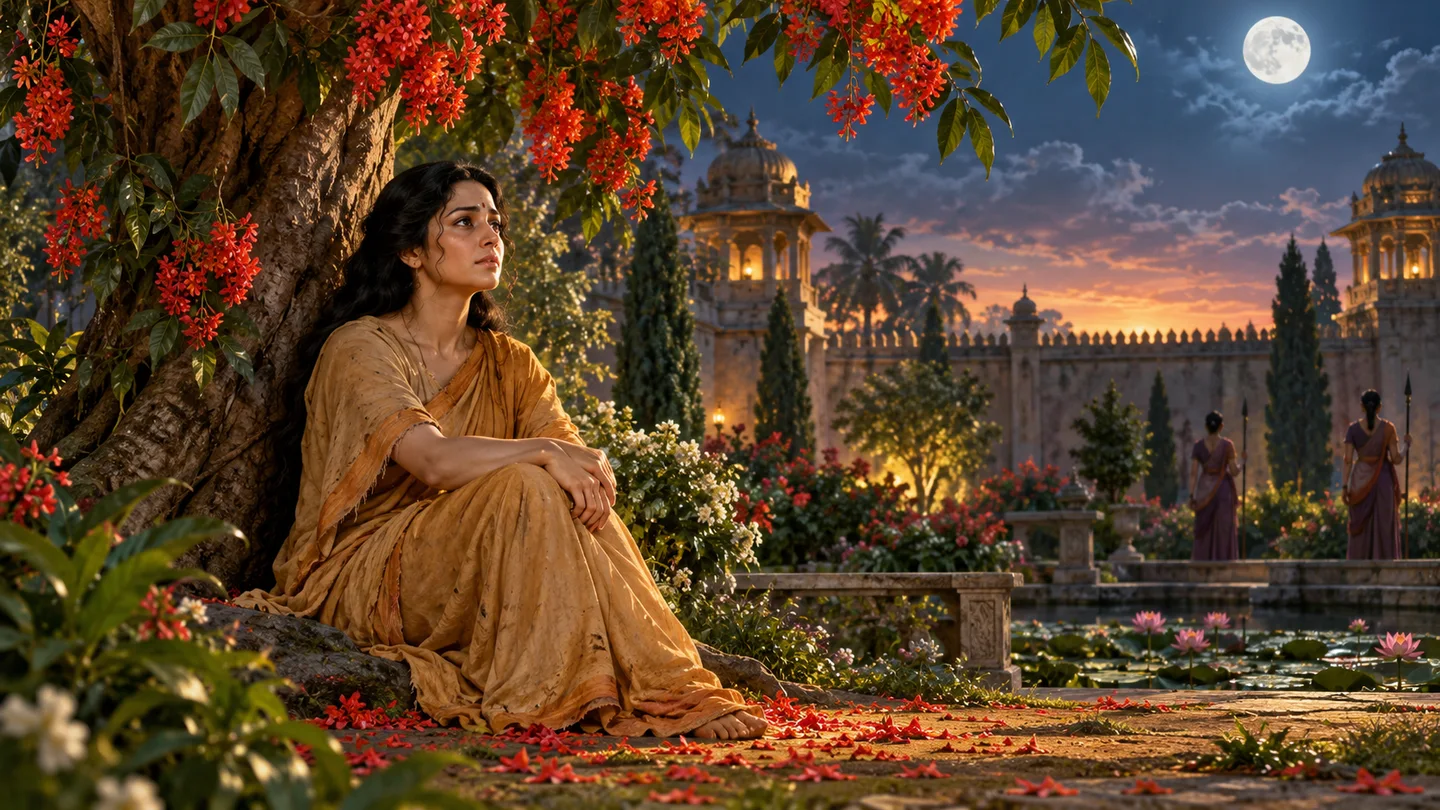
Sita sits beneath a flowering tree in the Ashoka grove, holding to hope.
Original DHIH illustration · artistic interpretation

Verse 1 · 5.22.1

#

सीताया वचनं श्रुत्वा परुषं राक्षसेश्वरः ।

Hearing Sita's harsh words, the rakshasa lord

प्रत्युवाच ततः सीतां विप्रियं प्रियदर्शनाम् ॥

answered the lovely woman with an unwelcome reply.

Verse 2 · 5.22.2

#

यथा यथा सान्त्वयिता वश्यः स्त्रीणां तथा तथा ।

'The more a man comforts women, the more he falls under their control;

यथा यथा प्रियं वक्ता परिभूतस्तथा तथा ॥

the more kindly he speaks, the more he is despised.'

Verse 3 · 5.22.3

#

संनियच्छति मे क्रोधं त्वयि कामः समुत्थितः ।

'The desire that has arisen in me for you restrains my anger,

द्रवतो मार्गमासाद्य हयानिव सुसारथिः ॥

as a good charioteer reins in horses running along a road.'

Verse 4 · 5.22.4

#

वामः कामो मनुष्याणां यस्मिन् किल निबध्यते ।

'Desire acts strangely in people: toward the one upon whom it fastens,

जने तस्मिंस्त्वनुक्रोशः स्नेहश्च किल जायते ॥

compassion and affection arise.'

Verse 5 · 5.22.5

#

एतस्मात् कारणान्न त्वां घातयामि वरानने ।

'For that reason I do not kill you, beautiful-faced one,

वधार्हामवमानार्हां मिथ्या प्रव्रजने रताम् ॥

though you deserve death and humiliation for your false attachment to the ascetic life.'

Verse 6 · 5.22.6

#

परुषाणि हि वाक्यानि यानि यानि ब्रवीषि माम् ।

'Every harsh word you speak to me

तेषु तेषु वधो युक्तस्तव मैथिलि दारुणः ॥

would justify a terrible death for you, princess of Mithila.'

Verse 7 · 5.22.7

#

एवमुक्त्वा तु वैदेहीं रावणो राक्षसाधिपः ।

Having spoken thus to Sita, the rakshasa king Ravana,

क्रोधसंरम्भसंयुक्तः सीतामुत्तरमब्रवीत् ॥

filled with furious agitation, continued.

Verse 8 · 5.22.8

#

द्वौ मासौ रक्षितव्यौ मे योऽवधिस्ते मया कृतः ।

'I shall preserve the two months that I have fixed as your limit.

ततः शयनमारोह मम त्वं वरवर्णिनि ॥

After that, beautiful woman, you must come to my bed.'

Verse 9 · 5.22.9

#

द्वाभ्यामूर्ध्वं तु मासाभ्यां भर्तारं मामनिच्छतीम् ।

'After those two months, if you still refuse me as husband,

मम त्वां प्रातराशार्थे सूदाश्छेत्स्यन्ति खण्डशः ॥

my cooks will cut you into pieces for my morning meal.'

Verse 10 · 5.22.10

#

तां भर्त्स्यमानां सम्प्रेक्ष्य राक्षसेन्द्रेण जानकीम् ।

Seeing Janaki threatened by the rakshasa king,

देवगन्धर्वकन्यास्ता विषेदुर्विकृतेक्षणाः ॥

the daughters of gods and gandharvas became distressed, their eyes troubled.

Verse 11 · 5.22.11

#

ओष्ठप्रकारैरपरा नेत्रैर्वक्त्रैस्तथापराः ।

Some reassured Sita with movements of their lips,

सीतामाश्वासयामासुस्तर्जितां तेन रक्षसा ॥

others with their eyes and faces, while the rakshasa threatened her.

Verse 12 · 5.22.12

#

ताभिराश्वासिता सीता रावणं राक्षसाधिपम् ।

Comforted by them, Sita addressed Ravana

उवाचात्महितं वाक्यं वृत्तशौटीर्यगर्वितम् ॥

with words defending her welfare and proud of her upright conduct.

Verse 13 · 5.22.13

#

नूनं न ते जनः कश्चिदस्मिन्निःश्रेयसि स्थितः ।

'Surely there is no one here devoted to your highest good,

निवारयति यो न त्वां कर्मणोऽस्माद् विगर्हितात् ॥

since no one restrains you from this condemned deed.'

Verse 14 · 5.22.14

#

मां हि धर्मात्मनः पत्नीं शचीमिव शचीपतेः ।

'Who but you in the three worlds would even mentally desire

त्वदन्यस्त्रिषु लोकेषु प्रार्थयेन्मनसापि कः ॥

the wife of righteous Rama, as though seeking Indra's Shachi?'

Verse 15 · 5.22.15

#

राक्षसाधम रामस्य भार्याममिततेजसः ।

'Lowest of rakshasas, you have spoken wickedly to the wife of immeasurably radiant Rama.

उक्तवानसि यत् पापं क्व गतस्तस्य मोक्ष्यसे ॥

Where could you go to escape its consequence?'

Verse 16 · 5.22.16

#

यथा दृप्तश्च मातंगः शशश्च सहितौ वने ।

'As a proud elephant and a hare meet in the forest,

तथा द्विरदवद् रामस्त्वं नीच शशवत् स्मृतः ॥

so Rama is the elephant, while you, base one, are the hare.'

Verse 17 · 5.22.17

#

स त्वमिक्ष्वाकुनाथं वै क्षिपन्निह न लज्जसे ।

'You feel no shame insulting the lord of Ikshvaku's line here,

चक्षुषो विषये तस्य न यावदुपगच्छसि ॥

only because you have not yet come within his sight.'

Verse 18 · 5.22.18

#

इमे ते नयने क्रूरे विकृते कृष्णपिंगले ।

'Why do those cruel, distorted, dark-tawny eyes of yours

क्षितौ न पतिते कस्मान्मामनार्य निरीक्षतः ॥

not fall to the ground as you stare at me, ignoble one?'

Verse 19 · 5.22.19

#

तस्य धर्मात्मनः पत्नी स्नुषा दशरथस्य च ।

'I am that righteous man's wife and Dasharatha's daughter-in-law.

कथं व्याहरतो मां ते न जिह्वा पाप शीर्यति ॥

How does your tongue not split as you address me so, sinner?'

Verse 20 · 5.22.20

#

असंदेशात्तु रामस्य तपसश्चानुपालनात् ।

'Because Rama has not instructed me, and because I preserve my austerity,

न त्वां कुर्मि दशग्रीव भस्म भस्मार्हतेजसा ॥

I do not reduce you to ashes with the power that could burn you, ten-headed one.'

Verse 21 · 5.22.21

#

नापहर्तुमहं शक्या तस्य रामस्य धीमतः ।

'I could not truly be taken from wise Rama;

विधिस्तव वधार्थाय विहितो नात्र संशयः ॥

fate has arranged this for your destruction, without doubt.'

Verse 22 · 5.22.22

#

शूरेण धनदभ्रात्रा बलैः समुदितेन च ।

'You, the heroic brother of the lord of wealth, supported by armies,

अपोह्य रामं कस्माच्चिद् दारचौर्यं त्वया कृतम् ॥

stole another's wife only after contriving to remove Rama.'

Verse 23 · 5.22.23

#

सीताया वचनं श्रुत्वा रावणो राक्षसाधिपः ।

Hearing Sita's words, Ravana, lord of rakshasas,

विवृत्य नयने क्रूरे जानकीमन्ववैक्षत ॥

opened his cruel eyes wide and stared at Janaki.

Verse 24 · 5.22.24

#

नीलजीमूतसंकाशो महाभुजशिरोधरः ।

Dark as a rain cloud, with mighty arms and neck,

सिंहसत्त्वगतिः श्रीमान् दीप्तजिह्वोग्रलोचनः ॥

he had a lion's strength and gait, blazing tongue and fierce eyes.

Verse 25 · 5.22.25

#

चलाग्रमुकुटप्रांशुश्चित्रमाल्यानुलेपनः ।

Tall beneath a swaying crown, with varied garlands and perfumes,

रक्तमाल्याम्बरधरस्तप्तांगदविभूषणः ॥

he wore red flowers and garments and gleaming armlets.

Verse 26 · 5.22.26

#

श्रोणीसूत्रेण महता मेचकेन सुसंवृतः ।

A broad, dark waist-cord encircled him,

अमृतोत्पादने नद्धो भुजंगेनेव मन्दरः ॥

like the serpent bound around Mandara when nectar was churned.

Verse 27 · 5.22.27

#

ताभ्यां स परिपूर्णाभ्यां भुजाभ्यां राक्षसेश्वरः ।

With his two full and powerful arms, the rakshasa lord

शुशुभेऽचलसंकाशः शृंगाभ्यामिव मन्दरः ॥

shone like the mountain Mandara with its twin peaks.

Verse 28 · 5.22.28

#

तरुणादित्यवर्णाभ्यां कुण्डलाभ्यां विभूषितः ।

Adorned with earrings the color of the young sun,

रक्तपल्लवपुष्पाभ्यामशोकाभ्यामिवाचलः ॥

he resembled a mountain with two ashoka trees bearing red leaves and flowers.

Verse 29 · 5.22.29

#

स कल्पवृक्षप्रतिमो वसन्त इव मूर्तिमान् ।

He resembled a wish-fulfilling tree and spring embodied,

श्मशानचैत्यप्रतिमो भूषितोऽपि भयंकरः ॥

yet even adorned he was frightening, like a monument in a cremation ground.

Verse 30 · 5.22.30

#

अवेक्षमाणो वैदेहीं कोपसंरक्तलोचनः ।

Looking at Sita with eyes reddened by anger,

उवाच रावणः सीतां भुजंग इव निःश्वसन् ॥

Ravana spoke while breathing like a serpent.

Verse 31 · 5.22.31

#

अनयेनाभिसम्पन्नमर्थहीनमनुव्रते ।

'You follow a course of folly without benefit;

नाशयाम्यहमद्य त्वां सूर्यः संध्यामिवौजसा ॥

today I shall destroy you with my power as the sun dispels twilight.'

Verse 32 · 5.22.32

#

इत्युक्त्वा मैथिलीं राजा रावणः शत्रुरावणः ।

Having spoken to the princess of Mithila, King Ravana, terror of foes,

संददर्श ततः सर्वा राक्षसीर्घोरदर्शनाः ॥

looked at all the dreadful rakshasis.

Verse 33 · 5.22.33

#

एकाक्षीमेककर्णां च कर्णप्रावरणां तथा ।

There were women with one eye, one ear, ears like a covering,

गोकर्णीं हस्तिकर्णीं च लम्बकर्णीमकर्णिकाम् ॥

cow ears, elephant ears, hanging ears, or no ears.

Verse 34 · 5.22.34

#

हस्तिपद्यश्वपद्यौ च गोपदीं पादचूलिकाम् ।

Some had elephant, horse, or cow feet, or tufts upon their feet;

एकाक्षीमेकपादीं च पृथुपादीमपादिकाम् ॥

some had one eye or foot, broad feet, or no feet.

Verse 35 · 5.22.35

#

अतिमात्रशिरोग्रीवामतिमात्रकुचोदरीम् ।

Some had enormous heads and necks, breasts and bellies,

अतिमात्रास्यनेत्रां च दीर्घजिह्वानखामपि ॥

huge mouths and eyes, long tongues and nails.

Verse 36 · 5.22.36

#

अनासिकां सिंहमुखीं गोमुखीं सूकरीमुखीम् ।

Some had no noses, or lion, cow, and pig faces.

यथा मद्वशगा सीता क्षिप्रं भवति जानकी ॥

'Make Sita, Janaka's daughter, submit to me quickly—'

Verse 37 · 5.22.37

#

तथा कुरुत राक्षस्यः सर्वाः क्षिप्रं समेत्य वा ।

'all of you rakshasis gather at once and act,

प्रतिलोमानुलोमैश्च सामदानादिभेदनैः ॥

using contrary and agreeable methods, conciliation, gifts, and division—'

Verse 38 · 5.22.38

#

आवर्जयत वैदेहीं दण्डस्योद्यमनेन च ।

'and win over Sita with threats of punishment as well.'

इति प्रतिसमादिश्य राक्षसेन्द्रः पुनः पुनः ॥

The rakshasa king repeated these instructions again and again.

Verse 39 · 5.22.39

#

काममन्युपरीतात्मा जानकीं प्रति गर्जत ।

Overwhelmed by desire and anger, he roared at Janaki.

उपगम्य ततः क्षिप्रं राक्षसी धान्यमालिनी ॥

Then the rakshasi Dhanyamalini quickly approached—

Verse 40 · 5.22.40

#

परिष्वज्य दशग्रीवमिदं वचनमब्रवीत् ।

embraced ten-headed Ravana, and said:

मया क्रीड महाराज सीतया किं तवानया ॥

'Play with me, great king; what need have you of this Sita—'

Verse 41 · 5.22.41

#

विवर्णया कृपणया मानुष्या राक्षसेश्वर ।

'this pale, pitiable human woman, lord of rakshasas?

नूनमस्यां महाराज न देवा भोगसत्तमान् ॥

Surely, great king, the foremost gods do not allot to her—'

Verse 42 · 5.22.42

#

विदधत्यमरश्रेष्ठास्तव बाहुबलार्जितान् ।

'the finest pleasures that your arm's strength has won.

अकामां कामयानस्य शरीरमुपतप्यते ॥

Desiring someone who does not desire you torments the body.'

Verse 43 · 5.22.43

#

इच्छतीं कामयानस्य प्रीतिर्भवति शोभना ।

'Desiring one who desires you brings lovely happiness.'

एवमुक्तस्तु राक्षस्या समुत्क्षिप्तस्ततो बली ।

Thus addressed and drawn away by the rakshasi,

प्रहसन् मेघसंकाशो राक्षसः स न्यवर्तत ॥

the strong, cloudlike rakshasa laughed and turned back.

Verse 44 · 5.22.44

#

प्रस्थितः स दशग्रीवः कम्पयन्निव मेदिनीम् ।

Ten-headed Ravana departed as though shaking the earth

ज्वलद्भास्करसंकाशं प्रविवेश निवेशनम् ॥

and entered his residence, bright as the blazing sun.

Verse 45 · 5.22.45

#

देवगन्धर्वकन्याश्च नागकन्याश्च तास्ततः ।

The daughters of gods, gandharvas, and nagas

परिवार्य दशग्रीवं प्रविशुस्ता गृहोत्तमम् ॥

surrounded him and entered that magnificent house.

Verse 46 · 5.22.46

#

स मैथिलीं धर्मपरामवस्थितां

After threatening the trembling princess of Mithila,

प्रवेपमानां परिभर्त्स्य रावणः ।

who remained firmly devoted to righteousness,

विहाय सीतां मदनेन मोहितः

Ravana, deluded by desire, left Sita

स्वमेव वेश्म प्रविवेश रावणः ॥

and entered his own dwelling.

CHAPTER 22 COMPLETE

The journey continues.

Sita remains steadfast, but the guards now carry his threatening orders.

NEXT CHAPTER

Continue Hanuman’s journey in the next chapter.

About this reading

Vālmīki Rāmāyaṇa, Sundara Kanda, chapter 22. This reading follows Sanskrit Wikisource revision 354263, with all 46 numbered verses. Verse divisions and wording vary between editions.

The Sanskrit is preserved with normalized display spacing and line breaks. Some sentences continue across verse boundaries; the English follows that continuity. A yojana is a traditional distance unit, retained without assigning a modern measurement. Shape-changing and celestial beings belong to the epic’s sacred narrative.

English line senses and short meanings are original AI-assisted DHIH renderings checked against this Sanskrit reading; they are not a word-for-word grammatical commentary or a claim of human scholarly certification. Roman transliteration is generated mechanically in IAST. Names may also appear in familiar English spellings.

Sanskrit transcription credit: Wikisource contributors, revision history. The adapted reading text and DHIH English on this chapter page are offered under CC BY-SA 4.0. The ancient Sanskrit work is in the public domain. Illustrations are separately commissioned AI-generated DHIH artwork.

Historical comparison: M. N. Dutt’s Ramayana, volume II, a public-domain translation, was consulted for narrative context. The English displayed here is a fresh rendering of the pinned Sanskrit, not a reproduction of that translation.

This chapter includes coercion, explicit death threats, and threatened cannibalism. It is suitable for mature or carefully guided reading rather than an unguided young-child story. Audio will be added only when suitable recording permissions are available.