Search DHIH library

VĀLMĪKI RĀMĀYAṆA · CHAPTER 24

सुन्दरकाण्डम् · सर्गः २४

Sita refuses the guards

Sita answers with examples of steadfast devotion. The guards respond with increasingly cruel threats while Hanuman listens unseen.

47 versesSanskrit + English1 illustration
Begin reading ↓

An edition-specific reading with original English meanings. Source & reading notes

SCENE 01 · VERSES 1–47

Steadfastness under threat

Sita answers with examples of steadfast devotion. The guards respond with increasingly cruel threats while Hanuman listens unseen.

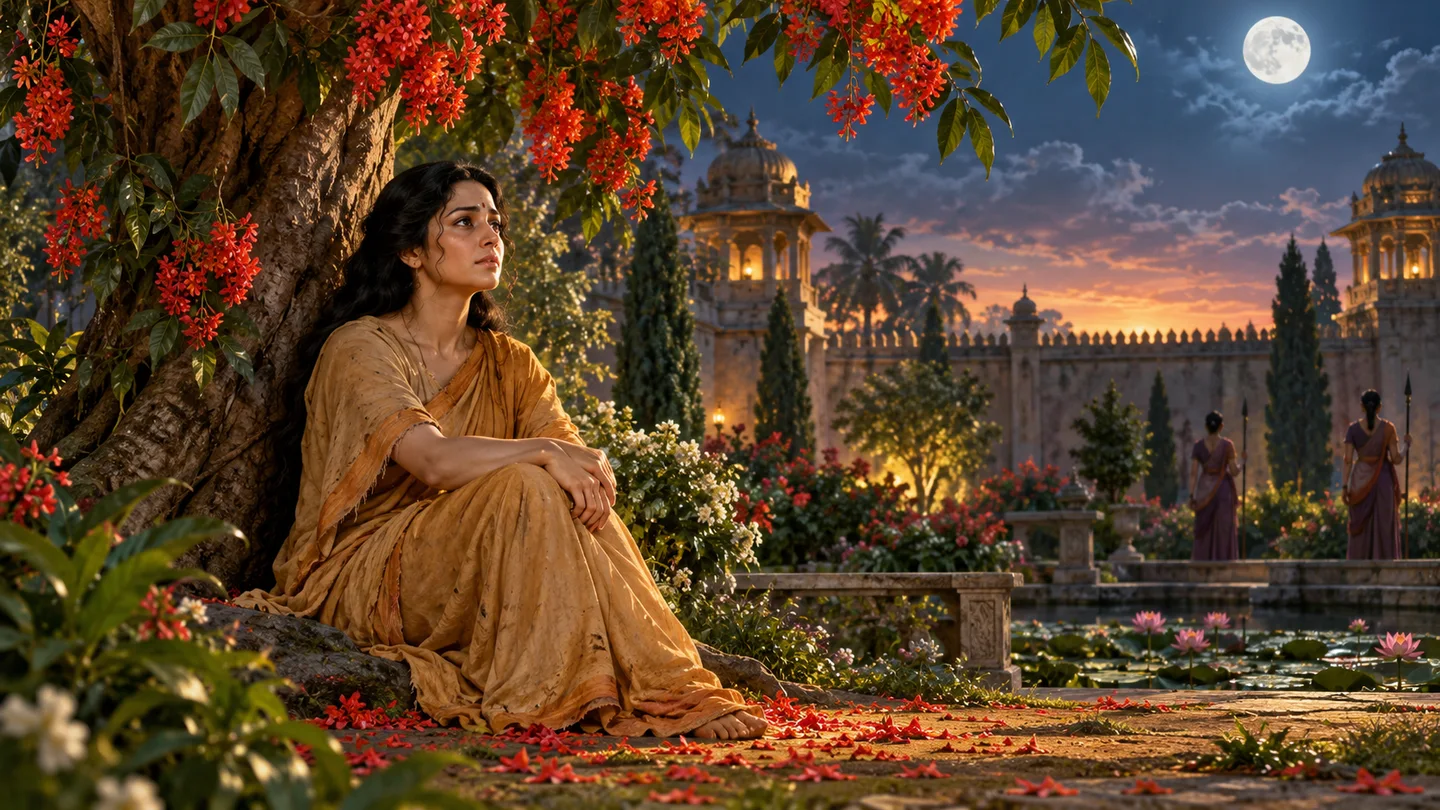
Sita sits beneath a flowering tree in the Ashoka grove, holding to hope.
Original DHIH illustration · artistic interpretation

Verse 1 · 5.24.1

#

ततः सीतां समस्तास्ता राक्षस्यो विकृताननाः ।

Then all those distorted-faced rakshasis spoke harsh, unwelcome words

परुषं परुषानर्हामूचुस्तद्वाक्यमप्रियम् ॥

to Sita, who did not deserve harsh treatment.

Verse 2 · 5.24.2

#

किं त्वमन्तःपुरे सीते सर्वभूतमनोरमे ।

'Why, Sita, will you not agree to live in the inner palace,

महार्हशयनोपेते न वासमनुमन्यसे ॥

delightful to every creature and furnished with costly beds?'

Verse 3 · 5.24.3

#

मानुषी मानुषस्यैव भार्यात्वं बहु मन्यसे ।

'Being human, you value being a human man's wife.

प्रत्याहर मनो रामान्नैवं जातु भविष्यति ॥

Withdraw your mind from Rama; that union will never happen again.'

Verse 4 · 5.24.4

#

त्रैलोक्यवसुभोक्तारं रावणं राक्षसेश्वरम् ।

'Accept Ravana, lord of rakshasas and enjoyer of the three worlds' wealth,

भर्तारमुपसंगम्य विहरस्व यथासुखम् ॥

as your husband, and live as happily as you wish.'

Verse 5 · 5.24.5

#

मानुषी मानुषं तं तु राममिच्छसि शोभने ।

'Beautiful, faultless woman, you still desire that human Rama,

राज्याद् भ्रष्टमसिद्धार्थं विक्लवन्तमनिन्दिते ॥

driven from his kingdom, unsuccessful, and distressed.'

Verse 6 · 5.24.6

#

राक्षसीनां वचः श्रुत्वा सीता पद्मनिभेक्षणा ।

Hearing the rakshasis' words, lotus-eyed Sita

नेत्राभ्यामश्रुपूर्णाभ्यामिदं वचनमब्रवीत् ॥

spoke with both eyes full of tears.

Verse 7 · 5.24.7

#

यदिदं लोकविद्विष्टमुदाहरत संगताः ।

'The sinful words you utter together are condemned by the world;

नैतन्मनसि वाक्यं मे किल्बिषं प्रतितिष्ठति ॥

they find no resting place in my mind.'

Verse 8 · 5.24.8

#

न मानुषी राक्षसस्य भार्या भवितुमर्हति ।

'A human woman should not become a rakshasa's wife.

कामं खादत मां सर्वा न करिष्यामि वो वचः ॥

You may all devour me, but I will not do as you say.'

Verse 9 · 5.24.9

#

दीनो वा राज्यहीनो वा यो मे भर्ता स मे गुरुः ।

'Whether distressed or deprived of his kingdom, my husband remains worthy of my reverence.

तं नित्यमनुरक्तास्मि यथा सूर्यं सुवर्चला ॥

I am always devoted to him, as Suvarchala is to the Sun.'

Verse 10 · 5.24.10

#

यथा शची महाभागा शक्रं समुपतिष्ठति ।

'As fortunate Shachi attends Indra,

अरुन्धती वसिष्ठं च रोहिणी शशिनं यथा ॥

Arundhati attends Vasishtha, and Rohini the Moon—'

Verse 11 · 5.24.11

#

लोपामुद्रा यथागस्त्यं सुकन्या च्यवनं यथा ।

'as Lopamudra attends Agastya, Sukanya Chyavana,

सावित्री सत्यवन्तं च कपिलं श्रीमती यथा ॥

Savitri Satyavan, and Shrimati Kapila—'

Verse 12 · 5.24.12

#

सौदासं मदयन्तीव केशिनी सगरं यथा ।

'as Madayanti attends Saudasa, Keshini Sagara,

नैषधं दमयन्तीव भैमी पतिमनुव्रता ॥

and Bhima's daughter Damayanti faithfully follows Nala of Nishadha—'

Verse 13 · 5.24.13

#

तथाहमिक्ष्वाकुवरं रामं पतिमनुव्रता ।

'so I am devoted to my husband Rama, foremost of Ikshvaku's line.'

सीताया वचनं श्रुत्वा राक्षस्यः क्रोधमूर्च्छिताः ।

Hearing Sita's words, the rakshasis, overwhelmed by anger

भर्त्सयन्ति स्म परुषैर्वाक्यै रावणचोदिताः ॥

and driven by Ravana's command, threatened her harshly.

Verse 14 · 5.24.14

#

अवलीनः स निर्वाक्यो हनुमान् शिंशपाद्रुमे ।

Hidden silently in the shimshapa tree, Hanuman

सीतां संतर्जयन्तीस्ता राक्षसीरशृणोत् कपिः ॥

heard the rakshasis threatening Sita.

Verse 15 · 5.24.15

#

तामभिक्रम्य संरब्धा वेपमानां समन्ततः ।

They rushed angrily around the trembling woman

भृशं संलिलिहुर्दीप्तान् प्रलम्बान् दशनच्छदान् ॥

and repeatedly licked their bright, long, hanging lips.

Verse 16 · 5.24.16

#

ऊचुश्च परमक्रुद्धाः प्रगृह्याशु परश्वधान् ।

Extremely angry, they quickly raised axes and cried:

नेयमर्हति भर्तारं रावणं राक्षसाधिपम् ॥

'This woman does not deserve Ravana, king of rakshasas, as husband!'

Verse 17 · 5.24.17

#

सा भर्त्स्यमाना भीमाभी राक्षसीभिर्वरांगना ।

Threatened by the terrible rakshasis, the lovely woman

सा बाष्पमपमार्जन्ती शिंशपां तामुपागमत् ॥

wiped away her tears and approached that shimshapa tree.

Verse 18 · 5.24.18

#

ततस्तां शिंशपां सीता राक्षसीभिः समावृता ।

Reaching the shimshapa, wide-eyed Sita stood

अभिगम्य विशालाक्षी तस्थौ शोकपरिप्लुता ॥

surrounded by rakshasis and overwhelmed by sorrow.

Verse 19 · 5.24.19

#

तां कृशां दीनवदनां मलिनाम्बरवासिनीम् ।

The terrible rakshasis threatened her from every side,

भर्त्सयाञ्चक्रिरे भीमा राक्षस्यस्ताः समन्ततः ॥

thin and sorrowful-faced as she was, wearing dirty clothes.

Verse 20 · 5.24.20

#

ततस्तु विनता नाम राक्षसी भीमदर्शना ।

Then a frightening rakshasi named Vinata,

अब्रवीत् कुपिताकारा कराला निर्णतोदरी ॥

fierce-faced and hollow-bellied, spoke with an angry appearance.

Verse 21 · 5.24.21

#

सीते पर्याप्तमेतावद् भर्तुः स्नेहः प्रदर्शितः ।

'Sita, you have shown enough affection for your husband.

सर्वत्रातिकृतं भद्रे व्यसनायोपकल्पते ॥

Excess in anything, good woman, brings misfortune.'

Verse 22 · 5.24.22

#

परितुष्टास्मि भद्रं ते मानुषस्ते कृतो विधिः ।

'I am satisfied; you have performed your human duty.

ममापि तु वचः पथ्यं ब्रुवन्त्याः कुरु मैथिलि ॥

Now, princess of Mithila, follow the beneficial words I speak.'

Verse 23 · 5.24.23

#

रावणं भज भर्तारं भर्तारं सर्वरक्षसाम् ।

'Accept Ravana as husband, the lord of all rakshasas,

विक्रान्तमापतन्तं च सुरेशमिव वासवम् ॥

valiant in attack like Vasava, ruler of the gods.'

Verse 24 · 5.24.24

#

दक्षिणं त्यागशीलं च सर्वस्य प्रियवादिनम् ।

'He is generous, gracious, and pleasant-spoken to everyone.

मानुषं कृपणं रामं त्यक्त्वा रावणमाश्रय ॥

Abandon pitiable human Rama and take refuge in Ravana.'

Verse 25 · 5.24.25

#

दिव्यांगरागा वैदेहि दिव्याभरणभूषिता ।

'Anointed with divine perfumes and adorned with divine ornaments,

अद्यप्रभृति लोकानां सर्वेषामीश्वरी भव ॥

from this day become mistress of all the worlds, Sita.'

Verse 26 · 5.24.26

#

अग्नेः स्वाहा यथा देवी शची वेन्द्रस्य शोभने ।

'Be like the goddess Svaha to Fire or Shachi to Indra, beautiful one.

किं ते रामेण वैदेहि कृपणेन गतायुषा ॥

What use is Rama to you, Sita, wretched and as good as dead?'

Verse 27 · 5.24.27

#

एतदुक्तं च मे वाक्यं यदि त्वं न करिष्यसि ।

'If you do not do as I have said,

अस्मिन् मुहूर्ते सर्वास्त्वां भक्षयिष्यामहे वयम् ॥

all of us will devour you this very moment.'

Verse 28 · 5.24.28

#

अन्या तु विकटा नाम लम्बमानपयोधरा ।

Another rakshasi, Vikata, with hanging breasts,

अब्रवीत् कुपिता सीतां मुष्टिमुद्यम्य तर्जती ॥

angrily threatened Sita with her fist raised.

Verse 29 · 5.24.29

#

बहून्यप्रतिरूपाणि वचनानि सुदुर्मते ।

'Many unsuitable words of yours, foolish princess of Mithila,

अनुक्रोशान्मृदुत्वाच्च सोढानि तव मैथिलि ॥

we have endured through pity and gentleness.'

Verse 30 · 5.24.30

#

न च नः कुरुषे वाक्यं हितं कालपुरस्कृतम् ।

'You do not obey our timely, beneficial advice.

आनीतासि समुद्रस्य पारमन्यैर्दुरासदम् ॥

You have been brought across the ocean, where others can scarcely come.'

Verse 31 · 5.24.31

#

रावणान्तःपुरे घोरे प्रविष्टा चासि मैथिलि ।

'You have entered Ravana's dreadful inner domain, princess of Mithila;

रावणस्य गृहे रुद्धा अस्माभिस्त्वभिरक्षिता ॥

confined in his house, you are guarded by us.'

Verse 32 · 5.24.32

#

न त्वां शक्तः परित्रातुमपि साक्षात् पुरंदरः ।

'Not even Indra himself could rescue you.

कुरुष्व हितवादिन्या वचनं मम मैथिलि ॥

Follow my advice, which is for your good, princess of Mithila.'

Verse 33 · 5.24.33

#

अलमश्रुनिपातेन त्यज शोकमनर्थकम् ।

'Enough of falling tears; abandon useless sorrow.

भज प्रीतिं प्रहर्षं च त्यजन्ती नित्यदैन्यताम् ॥

Give up constant misery and embrace affection and joy.'

Verse 34 · 5.24.34

#

सीते राक्षसराजेन परिक्रीड यथासुखम् ।

'Sita, enjoy yourself as you wish with the rakshasa king.

जानीमहे यथा भीरु स्त्रीणां यौवनमध्रुवम् ॥

We know, timid one, that a woman's youth does not last.'

Verse 35 · 5.24.35

#

यावन्न ते व्यतिक्रामेत् तावत् सुखमवाप्नुहि ।

'Enjoy happiness before it passes away;

उद्यानानि च रम्याणि पर्वतोपवनानि च ॥

through delightful gardens and groves upon the mountains—'

Verse 36 · 5.24.36

#

सह राक्षसराजेन चर त्वं मदिरेक्षणे ।

'wander with the rakshasa king, lovely-eyed one.

स्त्रीसहस्राणि ते देवि वशे स्थास्यन्ति सुन्दरि ॥

Thousands of women will stand under your command, beautiful lady.'

Verse 37 · 5.24.37

#

रावणं भज भर्तारं भर्तारं सर्वरक्षसाम् ।

'Accept Ravana, lord of all rakshasas, as husband;

उत्पाट्य वा ते हृदयं भक्षयिष्यामि मैथिलि ॥

otherwise I shall tear out and eat your heart, princess of Mithila—'

Verse 38 · 5.24.38

#

यदि मे व्याहृतं वाक्यं न यथावत् करिष्यसि ।

'if you do not carry out the words I have spoken.'

ततश्चण्डोदरी नाम राक्षसी क्रूरदर्शना ॥

Then the cruel-looking rakshasi named Chandodari—

Verse 39 · 5.24.39

#

भ्रामयन्ती महच्छूलमिदं वचनमब्रवीत् ।

whirled a great trident and spoke these words:

इमां हरिणशावाक्षीं त्रासोत्कम्पपयोधराम् ॥

'This doe-eyed woman, her body trembling with fear—'

Verse 40 · 5.24.40

#

रावणेन हृतां दृष्ट्वा दौर्हृदो मे महानयम् ।

'when I saw her brought away by Ravana, a terrible craving arose in me:

यकृत्प्लीहं महत् क्रोडं हृदयं च सबन्धनम् ॥

her liver, spleen, chest, and heart with its vessels—'

Verse 41 · 5.24.41

#

गात्राण्यपि तथा शीर्षं खादेयमिति मे मतिः ।

'and her limbs and head as well, I long to eat.'

ततस्तु प्रघसा नाम राक्षसी वाक्यमब्रवीत् ॥

Then a rakshasi named Praghasa spoke.

Verse 42 · 5.24.42

#

कण्ठमस्या नृशंसायाः पीडयामः किमास्यते ।

'Let us crush this cruel woman's throat; why wait?

निवेद्यतां ततो राज्ञे मानुषी सा मृतेति ह ॥

Then tell the king that the human woman has died.'

Verse 43 · 5.24.43

#

नात्र कश्चन संदेहः खादतेति स वक्ष्यति ।

'There is no doubt that he will say, “Eat her.”'

ततस्त्वजामुखी नाम राक्षसी वाक्यमब्रवीत् ॥

Then a rakshasi named Ajamukhi spoke.

Verse 44 · 5.24.44

#

विशस्येमां ततः सर्वान् समान् कुरुत पिण्डकान् ।

'Kill her and divide the portions equally;

विभजाम ततः सर्वा विवादो मे न रोचते ॥

let us share them all, for I dislike quarrels.'

Verse 45 · 5.24.45

#

पेयमानीयतां क्षिप्रं माल्यं च विविधं बहु ।

'Bring drink quickly and many different garlands.'

ततः शूर्पणखा नाम राक्षसी वाक्यमब्रवीत् ॥

Then the rakshasi named Shurpanakha spoke.

Verse 46 · 5.24.46

#

अजामुख्या यदुक्तं वै तदेव मम रोचते ।

'What Ajamukhi has said pleases me too.

सुरा चानीयतां क्षिप्रं सर्वशोकविनाशिनी ॥

Bring liquor quickly, the drink that drives away every sorrow.'

Verse 47 · 5.24.47

#

मानुषं मांसमास्वाद्य नृत्यामोऽथ निकुम्भिलाम् ।

'After tasting human flesh, let us dance at Nikumbhila.'

एवं निर्भर्त्स्यमाना सा सीता सुरसुतोपमा ।

Thus threatened by those distorted rakshasis,

राक्षसीभिर्विरूपाभिर्धैर्यमुत्सृज्य रोदिति ॥

Sita, lovely as a daughter of the gods, lost her composure and wept.

CHAPTER 24 COMPLETE

The journey continues.

Overwhelmed by their cruelty, Sita weeps; Hanuman has witnessed her refusal.

NEXT CHAPTER

Continue Hanuman’s journey in the next chapter.

About this reading

Vālmīki Rāmāyaṇa, Sundara Kanda, chapter 24. This reading follows Sanskrit Wikisource revision 354271, with all 47 numbered verses. Verse divisions and wording vary between editions.

The Sanskrit is preserved with normalized display spacing and line breaks. Some sentences continue across verse boundaries; the English follows that continuity. A yojana is a traditional distance unit, retained without assigning a modern measurement. Shape-changing and celestial beings belong to the epic’s sacred narrative.

English line senses and short meanings are original AI-assisted DHIH renderings checked against this Sanskrit reading; they are not a word-for-word grammatical commentary or a claim of human scholarly certification. Roman transliteration is generated mechanically in IAST. Names may also appear in familiar English spellings.

Sanskrit transcription credit: Wikisource contributors, revision history. The adapted reading text and DHIH English on this chapter page are offered under CC BY-SA 4.0. The ancient Sanskrit work is in the public domain. Illustrations are separately commissioned AI-generated DHIH artwork.

Historical comparison: M. N. Dutt’s Ramayana, volume II, a public-domain translation, was consulted for narrative context. The English displayed here is a fresh rendering of the pinned Sanskrit, not a reproduction of that translation.

The full text contains explicit threats of murder and cannibalism. It is not a children’s adaptation. Sita’s refusal is clear throughout; threats and captivity cannot establish consent. Audio will be added only when suitable recording permissions are available.