Search DHIH library

VĀLMĪKI RĀMĀYAṆA · CHAPTER 26

सर्गः २६

Sita longs for rescue

Alone among hostile guards, Sita remembers Rama, grieves over her captivity, and wonders why news of her has not reached him.

49 versesSanskrit + English1 illustration
Begin reading ↓

An edition-specific reading with original English meanings. Source & reading notes

SCENE 01 · VERSES 1–49

A voice from captivity

Alone among hostile guards, Sita remembers Rama, grieves over her captivity, and wonders why news of her has not reached him.

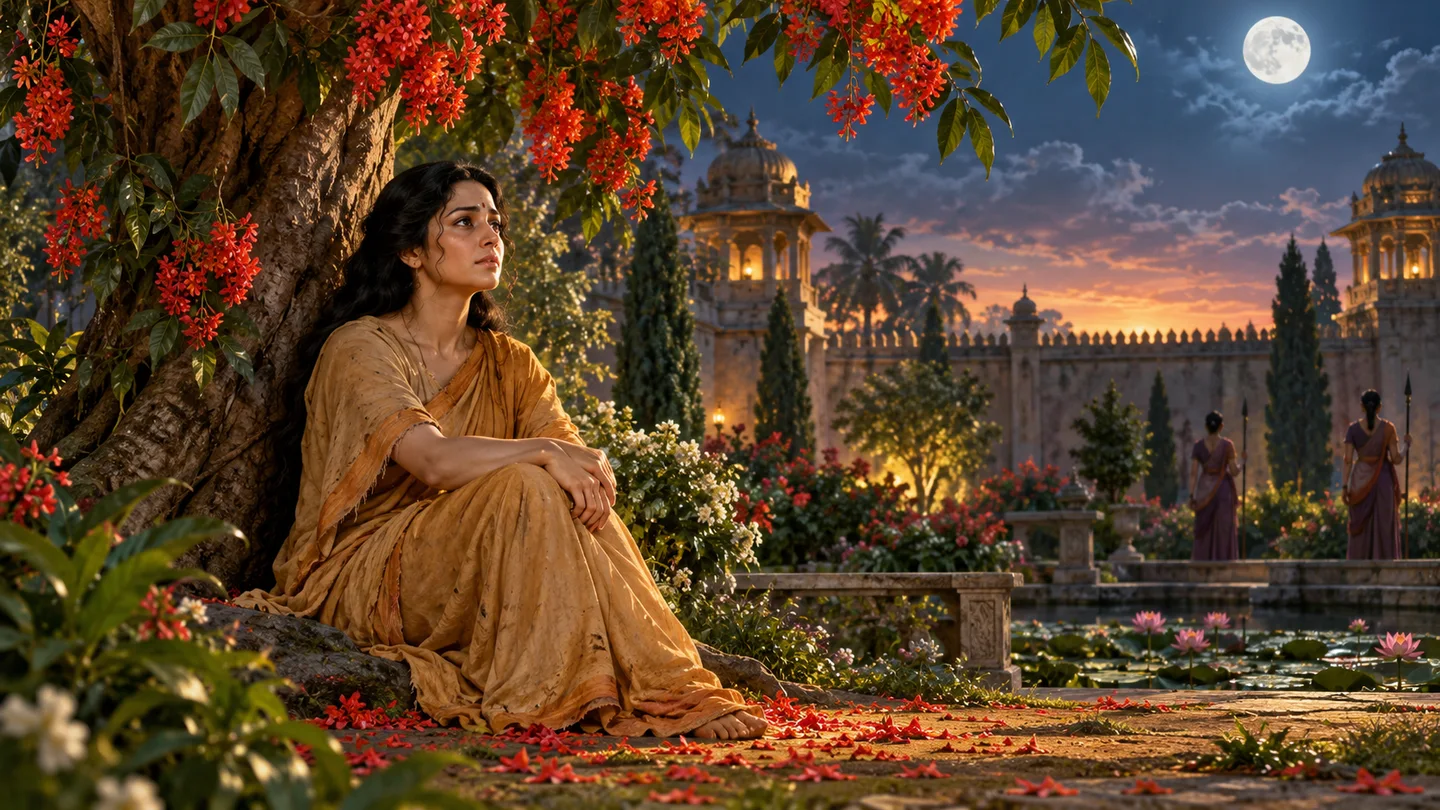
Sita sits beneath a flowering tree in the Ashoka grove, holding to hope.
Original DHIH illustration · artistic interpretation

Verse 1 · 5.26.1

#

प्रसक्ताश्रुमुखी त्वेवं ब्रुवती जनकात्मजा ।

Speaking thus, Janaka’s young daughter, her face wet with ceaseless tears,

अधोगतमुखी बाला विलप्तुमुपचक्रमे ॥

lowered her head and began to lament.

Verse 2 · 5.26.2

#

उन्मत्तेव प्रमत्तेव भ्रान्तचित्तेव शोचती ।

She grieved like one distraught, bewildered, or confused in mind,

उपावृत्ता किशोरीव विचेष्टन्ती महीतले ॥

struggling on the ground like a young mare fallen down.

Verse 3 · 5.26.3

#

राघवस्य प्रमत्तस्य रक्षसा कामरूपिणा ।

“When Raghava was off his guard, the shape-changing rakshasa

रावणेन प्रमथ्याहमानीता क्रोशती बलात् ॥

Ravana seized me and brought me here by force, while I cried out.

Verse 4 · 5.26.4

#

राक्षसीवशमापन्ना भर्त्स्यमाना च दारुणम् ।

Subject to the rakshasis and threatened cruelly,

चिन्तयन्ती सुदुःखार्ता नाहं जीवितुमुत्सहे ॥

I brood in bitter sorrow and cannot bear to live.

Verse 5 · 5.26.5

#

नहि मे जीवितेनार्थो नैवार्थैर्न च भूषणैः ।

Life holds no purpose for me, nor wealth, nor ornaments,

वसन्त्या राक्षसीमध्ये विना रामं महारथम् ॥

while I live among rakshasis without Rama, the great warrior.

Verse 6 · 5.26.6

#

अश्मसारमिदं नूनमथवाप्यजरामरम् ।

Surely my heart is made of stone, or is ageless and immortal,

हृदयं मम येनेदं न दुःखेन विशीर्यते ॥

since it does not break apart under this suffering.

Verse 7 · 5.26.7

#

धिङ्मामनार्यामसतीं याहं तेन विना कृता ।

Shame on me, unworthy and faithless as I am,

मुहूर्तमपि जीवामि जीवितं पापजीविका ॥

that I live even a moment apart from him, sustaining this miserable life!

Verse 8 · 5.26.8

#

चरणेनापि सव्येन न स्पृशेयं निशाचरम् ।

I would not touch the night-roaming Ravana even with my left foot;

रावणं किं पुनरहं कामयेयं विगर्हितम् ॥

how then could I desire that contemptible man?

Verse 9 · 5.26.9

#

प्रत्याख्यानं न जानाति नात्मानं नात्मनः कुलम् ।

He understands neither rejection, nor his own position, nor his family’s dignity,

यो नृशंसस्वभावेन मां प्रार्थयितुमिच्छति ॥

when, with such cruelty, he seeks to win me.

Verse 10 · 5.26.10

#

छिन्ना भिन्ना प्रभिन्ना वा दीप्ता वाग्नौ प्रदीपिता ।

Though cut, wounded, mutilated, or set ablaze in fire,

रावणं नोपतिष्ठेयं किं प्रलापेन वश्चिरम् ॥

I would never submit to Ravana. Why prolong your speeches?

Verse 11 · 5.26.11

#

ख्यातः प्राज्ञः कृतज्ञश्च सानुक्रोशश्च राघवः ।

Raghava is renowned as wise, grateful, compassionate,

सद‍्वृत्तो निरनुक्रोशः शङ्के मद्भाग्यसंक्षयात् ॥

and upright; through my failing fortune, I fear even he has become unmerciful.

Verse 12 · 5.26.12

#

राक्षसानां जनस्थाने सहस्राणि चतुर्दश ।

He alone destroyed fourteen thousand rakshasas

एकेनैव निरस्तानि स मां किं नाभिपद्यते ॥

in Janasthana; why does he not come to me?

Verse 13 · 5.26.13

#

निरुद्धा रावणेनाहमल्पवीर्येण रक्षसा ।

I am confined by Ravana, a rakshasa of little prowess;

समर्थः खलु मे भर्ता रावणं हन्तुमाहवे ॥

surely my husband is capable of killing Ravana in battle.

Verse 14 · 5.26.14

#

विराधो दण्डकारण्ये येन राक्षसपुंगवः ।

Rama killed the mighty rakshasa Viradha

रणे रामेण निहतः स मां किं नाभिपद्यते ॥

in battle in Dandaka forest; why does he not come to me?

Verse 15 · 5.26.15

#

कामं मध्ये समुद्रस्य लङ्केयं दुष्प्रधर्षणा ।

Granted, Lanka lies in the ocean and is difficult to assail;

न तु राघवबाणानां गतिरोधो भविष्यति ॥

yet that will not obstruct the flight of Raghava’s arrows.

Verse 16 · 5.26.16

#

किं नु तत् कारणं येन रामो दृढपराक्रमः ।

What reason can there be that Rama, so resolute in valour,

रक्षसापहृतां भार्यामिष्टां यो नाभिपद्यते ॥

does not come to his beloved wife, abducted by a rakshasa?

Verse 17 · 5.26.17

#

इहस्थां मां न जानीते शङ्के लक्ष्मणपूर्वजः ।

I suspect Lakshmana’s elder brother does not know I am here;

जानन्नपि स तेजस्वी धर्षणां मर्षयिष्यति ॥

if he knew, would that glorious hero endure this outrage?

Verse 18 · 5.26.18

#

हृतेति मां योऽधिगत्य राघवाय निवेदयेत् ।

The king of vultures, who could have learned of my abduction

गृध्रराजोऽपि स रणे रावणेन निपातितः ॥

and reported it to Raghava, was himself struck down by Ravana in battle.

Verse 19 · 5.26.19

#

कृतं कर्म महत् तेन मां तथाभ्यवपद्यता ।

The aged Jatayu performed a great deed in trying to help me,

तिष्ठता रावणवधे वृद्धेनापि जटायुषा ॥

standing against Ravana and striving to kill him.

Verse 20 · 5.26.20

#

यदि मामिह जानीयाद् वर्तमानां हि राघवः ।

If Raghava knew that I was living here,

अद्य बाणैरभिक्रुद्धः कुर्याल्लोकमराक्षसम् ॥

in anger he would today rid the world of rakshasas with his arrows.

Verse 21 · 5.26.21

#

निर्दहेच्च पुरीं लङ्कां निर्दहेच्च महोदधिम् ।

He would burn Lanka, burn even the great ocean,

रावणस्य च नीचस्य कीर्तिं नाम च नाशयेत् ॥

and destroy the name and fame of vile Ravana.

Verse 22 · 5.26.22

#

ततो निहतनाथानां राक्षसीनां गृहे गृहे ।

Then in every house the rakshasis, their husbands slain,

यथाहमेवं रुदती तथा भूयो न संशयः ॥

would surely weep still more, just as I weep now.

Verse 23 · 5.26.23

#

अन्विष्य रक्षसां लङ्कां कुर्याद् रामः सलक्ष्मणः ।

Searching Lanka, Rama together with Lakshmana would bring this about;

नहि ताभ्यां रिपुर्दृष्टो मुहूर्तमपि जीवति ॥

an enemy seen by those two does not live even a moment.

Verse 24 · 5.26.24

#

चिताधूमाकुलपथा गृध्रमण्डलमण्डिता ।

Its roads obscured by smoke from funeral pyres and circled by vultures,

अचिरेणैव कालेन श्मशानसदृशी भवेत् ॥

Lanka would soon resemble a cremation ground.

Verse 25 · 5.26.25

#

अचिरेणैव कालेन प्राप्स्याम्येनं मनोरथम् ।

Before long this wish of mine shall be fulfilled;

दुष्प्रस्थानोऽयमाभाति सर्वेषां वो विपर्ययः ॥

this dreadful course seems to foretell disaster for you all.

Verse 26 · 5.26.26

#

यादृशानि तु दृश्यन्ते लङ्कायामशुभानि तु ।

The inauspicious signs appearing in Lanka

अचिरेणैव कालेन भविष्यति हतप्रभा ॥

show that before long the city will lose its splendour.

Verse 27 · 5.26.27

#

नूनं लङ्का हते पापे रावणे राक्षसाधिपे ।

Surely, when wicked Ravana, king of the rakshasas, is killed,

शोषमेष्यति दुर्धर्षा प्रमदा विधवा यथा ॥

impregnable Lanka will wither like a woman bereft of her husband.

Verse 28 · 5.26.28

#

पुण्योत्सवसमृद्धा च नष्टभर्त्री सराक्षसा ।

Though rich in sacred festivities, Lanka and its rakshasas,

भविष्यति पुरी लङ्का नष्टभर्त्री यथांगना ॥

deprived of their lord, will be like a woman who has lost her husband.

Verse 29 · 5.26.29

#

नूनं राक्षसकन्यानां रुदतीनां गृहे गृहे ।

Surely, before long, I shall hear here the cries

श्रोष्यामि नचिरादेव दुःखार्तानामिह ध्वनिम् ॥

of rakshasa women weeping in anguish in every home.

Verse 30 · 5.26.30

#

सान्धकारा हतद्योता हतराक्षसपुंगवा ।

Darkened, its brilliance gone and its foremost rakshasas slain,

भविष्यति पुरी लङ्का निर्दग्धा रामसायकैः ॥

Lanka will be burnt by Rama’s arrows.

Verse 31 · 5.26.31

#

यदि नाम स शूरो मां रामो रक्तान्तलोचनः ।

If only brave Rama, whose eyes have reddish corners,

जानीयाद् वर्तमानां यां राक्षसस्य निवेशने ॥

knew that I was living in this rakshasa’s dwelling!

Verse 32 · 5.26.32

#

अनेन तु नृशंसेन रावणेनाधमेन मे ।

The time fixed for me by this cruel,

समयो यस्तु निर्दिष्टस्तस्य कालोऽयमागतः ॥

despicable Ravana is now drawing near.

Verse 33 · 5.26.33

#

स च मे विहितो मृत्युरस्मिन् दुष्टेन वर्तते ।

The death that this wicked one has decreed for me hangs over me;

अकार्यं ये न जानन्ति नैर्ऋताः पापकारिणः ॥

these sinful rakshasas do not understand what must not be done.

Verse 34 · 5.26.34

#

अधर्मात् तु महोत्पातो भविष्यति हि साम्प्रतम् ।

A great catastrophe will now arise from their unrighteousness;

नैते धर्मं विजानन्ति राक्षसाः पिशिताशनाः ॥

these flesh-eating rakshasas do not understand dharma.

Verse 35 · 5.26.35

#

ध्रुवं मां प्रातराशार्थं राक्षसः कल्पयिष्यति ।

Surely the rakshasa will make me his morning meal.

साहं कथं करिष्यामि तं विना प्रियदर्शनम् ॥

What shall I do without my beloved, whose sight brings joy?

Verse 36 · 5.26.36

#

रामं रक्तान्तनयनमपश्यन्ती सुदुःखिता ।

Unable to see Rama, whose eyes have reddish corners, and deeply distressed,

क्षिप्रं वैवस्वतं देवं पश्येयं पतिना विना ॥

I shall soon see Yama, son of Vivasvat, instead of my husband.

Verse 37 · 5.26.37

#

नाजानाज्जीवतीं रामः स मां भरतपूर्वजः ।

Rama, Bharata’s elder brother, surely does not know I am alive;

जानन्तौ तु न कुर्यातां नोर्व्यां हि परिमार्गणम् ॥

if the brothers knew, would they fail to search the earth?

Verse 38 · 5.26.38

#

नूनं ममैव शोकेन स वीरो लक्ष्मणाग्रजः ।

Perhaps that hero, Lakshmana’s elder brother, grieving for me,

देवलोकमितो यातस्त्यक्त्वा देहं महीतले ॥

has left his earthly body and gone to the world of the gods.

Verse 39 · 5.26.39

#

धन्या देवाः सगन्धर्वाः सिद्धाश्च परमर्षयः ।

Blessed are the gods, Gandharvas, perfected beings, and great sages

मम पश्यन्ति ये वीरं रामं राजीवलोचनम् ॥

who behold my lotus-eyed hero Rama.

Verse 40 · 5.26.40

#

अथवा नहि तस्यार्थो धर्मकामस्य धीमतः ।

Or perhaps wise Rama, the royal sage devoted to righteousness,

मया रामस्य राजर्षेर्भार्यया परमात्मनः ॥

that noble soul, has no further need of me as his wife.

Verse 41 · 5.26.41

#

दृश्यमाने भवेत् प्रीतिः सौहृदं नास्त्यदृश्यतः ।

Affection may grow through seeing; friendship may fade in absence.

नाशयन्ति कृतघ्नास्तु न रामो नाशयिष्यति ॥

The ungrateful forget, but Rama will not forget.

Verse 42 · 5.26.42

#

किं वा मय्यगुणाः केचित् किं वा भाग्यक्षयो हि मे ।

Is there some fault in me, or has my good fortune run out,

या हि सीता वरार्हेण हीना रामेण भामिनी ॥

that I, Sita, am separated from Rama, worthy of the highest honour?

Verse 43 · 5.26.43

#

श्रेयो मे जीवितान्मर्तुं विहीनाया महात्मना ।

Death seems better than life apart from the great-souled Rama,

रामादक्लिष्टचारित्राच्छूराच्छत्रुनिबर्हणात् ॥

whose conduct is blameless, the brave destroyer of enemies.

Verse 44 · 5.26.44

#

अथवा न्यस्तशस्त्रौ तौ वने मूलफलाशनौ ।

Or perhaps those two noble brothers have laid aside their weapons

भ्रातरौ हि नरश्रेष्ठौ चरन्तौ वनगोचरौ ॥

and wander in the forest, living on roots and fruits.

Verse 45 · 5.26.45

#

अथवा राक्षसेन्द्रेण रावणेन दुरात्मना ।

Or perhaps the wicked rakshasa king Ravana

छद्मना घातितौ शूरौ भ्रातरौ रामलक्ष्मणौ ॥

has treacherously killed the heroic brothers Rama and Lakshmana.

Verse 46 · 5.26.46

#

साहमेवंविधे काले मर्तुमिच्छामि सर्वतः ।

In such a time I wish for death in every way,

न च मे विहितो मृत्युरस्मिन् दुःखेऽतिवर्तति ॥

yet the death allotted to me does not come through this sorrow.

Verse 47 · 5.26.47

#

धन्याः खलु महात्मानो मुनयः सत्यसम्मताः ।

Blessed indeed are the great, truthful sages,

जितात्मानो महाभागा येषां न स्तः प्रियाप्रिये ॥

self-controlled and fortunate, to whom nothing is dear or hateful.

Verse 48 · 5.26.48

#

प्रियान्न सम्भवेद् दुःखमप्रियादधिकं भवेत् ।

Pain does not arise from what is dear; from what is hateful it grows greater.

ताभ्यां हि ते वियुज्यन्ते नमस्तेषां महात्मनाम् ॥

Those sages are free from both. I bow to those great souls.

Verse 49 · 5.26.49

#

साहं त्यक्ता प्रियेणैव रामेण विदितात्मना ।

Separated from my beloved, self-possessed Rama,

प्राणांस्त्यक्ष्यामि पापस्य रावणस्य गता वशम् ॥

and fallen under wicked Ravana’s power, I shall give up my life.”

CHAPTER 26 COMPLETE

The journey continues.

Her uncertainty deepens, while her thoughts remain fixed on Rama and rescue.

NEXT CHAPTER

Continue Hanuman’s journey in the next chapter.

About this reading

Vālmīki Rāmāyaṇa, Sundara Kanda, chapter 26. This reading follows Sanskrit Wikisource revision 354540, with all 49 numbered verses. Verse divisions and wording vary between editions.

The Sanskrit is preserved with normalized display spacing and line breaks. Some sentences continue across verse boundaries; the English follows that continuity. A yojana is a traditional distance unit, retained without assigning a modern measurement. Shape-changing and celestial beings belong to the epic’s sacred narrative.

English line senses and short meanings are original AI-assisted DHIH renderings checked against this Sanskrit reading; they are not a word-for-word grammatical commentary or a claim of human scholarly certification. Roman transliteration is generated mechanically in IAST. Names may also appear in familiar English spellings.

Sanskrit transcription credit: Wikisource contributors, revision history. The adapted reading text and DHIH English on this chapter page are offered under CC BY-SA 4.0. The ancient Sanskrit work is in the public domain. Illustrations are separately commissioned AI-generated DHIH artwork.

Historical comparison: M. N. Dutt’s Ramayana, volume II, a public-domain translation, was consulted for narrative context. The English displayed here is a fresh rendering of the pinned Sanskrit, not a reproduction of that translation.

Sita’s despair includes thoughts of death. These are the emotions of a captive character in the original epic; this chapter is not the simplified children’s retelling. Audio will be added only when suitable recording permissions are available.