Search DHIH library

VĀLMĪKI RĀMĀYAṆA · CHAPTER 27

सर्गः २७

Trijata’s dream of hope

Trijata interrupts the threatening guards and describes a dream of Rama’s victory, Sita’s reunion with him, and Ravana’s downfall.

54 versesSanskrit + English1 illustration
Begin reading ↓

An edition-specific reading with original English meanings. Source & reading notes

SCENE 01 · VERSES 1–54

A dream changes the mood

Trijata interrupts the threatening guards and describes a dream of Rama’s victory, Sita’s reunion with him, and Ravana’s downfall.

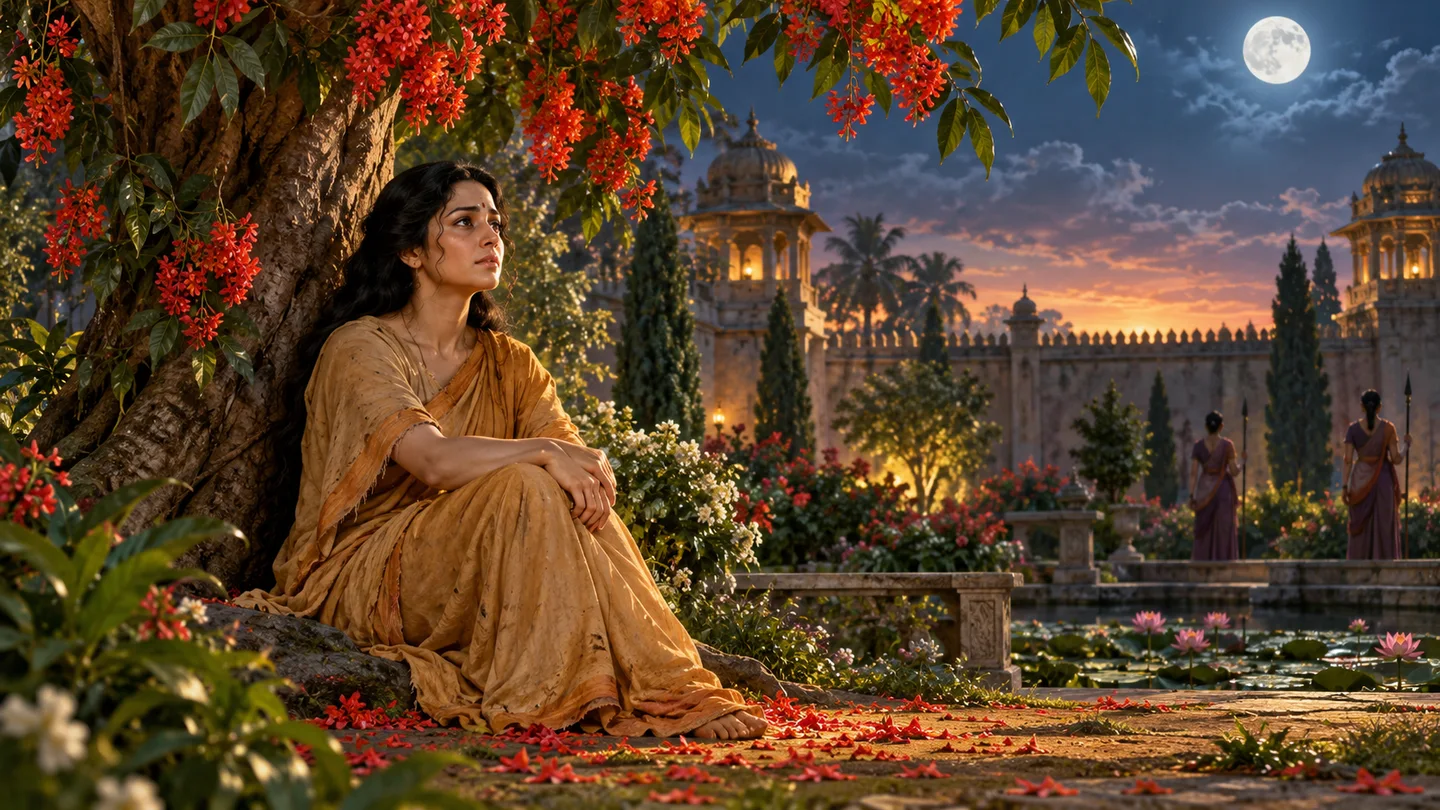
Sita sits beneath a flowering tree in the Ashoka grove, holding to hope.
Original DHIH illustration · artistic interpretation

Verse 1 · 5.27.1

#

इत्युक्ताः सीतया घोरं राक्षस्यः क्रोधमूर्च्छिताः ।

Thus sternly answered by Sita, the rakshasis were overcome with anger;

काश्चिज्जग्मुस्तदाख्यातुं रावणस्य दुरात्मनः ॥

some went to report her words to wicked Ravana.

Verse 2 · 5.27.2

#

ततः सीतामुपागम्य राक्षस्यो भीमदर्शनाः ।

Then the terrifying rakshasis approached Sita

पुनः परुषमेकार्थमनर्थार्थमथाब्रुवन् ॥

and again spoke harshly, with one intent: to bring her harm.

Verse 3 · 5.27.3

#

अद्येदानीं तवानार्ये सीते पापविनिश्चये ।

“This very day, Sita, you wicked woman with your evil resolve,

राक्षस्यो भक्षयिष्यन्ति मांसमेतद् यथासुखम् ॥

the rakshasis will eat this flesh of yours as they please.”

Verse 4 · 5.27.4

#

सीतां ताभिरनार्याभिर्दृष्ट्वा संतर्जितां तदा ।

Seeing Sita threatened by those ignoble women,

राक्षसी त्रिजटा वृद्धा प्रबुद्धा वाक्यमब्रवीत् ॥

the elderly rakshasi Trijata awoke and spoke.

Verse 5 · 5.27.5

#

आत्मानं खादतानार्या न सीतां भक्षयिष्यथ ।

“Eat yourselves, wicked women; you shall not eat Sita,

जनकस्य सुतामिष्टां स्नुषां दशरथस्य च ॥

Janaka’s beloved daughter and Dasharatha’s daughter-in-law.

Verse 6 · 5.27.6

#

स्वप्नो ह्यद्य मया दृष्टो दारुणो रोमहर्षणः ।

Today I have seen a dreadful, hair-raising dream,

राक्षसानामभावाय भर्तुरस्या भवाय च ॥

foretelling the destruction of the rakshasas and the success of her husband.”

Verse 7 · 5.27.7

#

एवमुक्तास्त्रिजटया राक्षस्यः क्रोधमूर्च्छिताः ।

Thus addressed by Trijata, the rakshasis, previously maddened by anger,

सर्वा एवाब्रुवन् भीतास्त्रिजटां तामिदं वचः ॥

all became afraid and spoke these words to her.

Verse 8 · 5.27.8

#

कथयस्व त्वया दृष्टः स्वप्नोऽयं कीदृशो निशि ।

“Tell us what sort of dream you saw in the night.”

तासां श्रुत्वा तु वचनं राक्षसीनां मुखोद‍्गतम् ॥

Hearing these words from the rakshasis’ mouths,

Verse 9 · 5.27.9

#

उवाच वचनं काले त्रिजटा स्वप्नसंश्रितम् ।

Trijata spoke at the proper moment about her dream:

गजदन्तमयीं दिव्यां शिबिकामन्तरिक्षगाम् ॥

“In a heavenly ivory palanquin, travelling through the sky,

Verse 10 · 5.27.10

#

युक्तां वाजिसहस्रेण स्वयमास्थाय राघवः ।

drawn by a thousand horses, Raghava himself rode,

शुक्लमाल्याम्बरधरो लक्ष्मणेन समागतः ॥

wearing white garlands and garments, accompanied by Lakshmana.

Verse 11 · 5.27.11

#

स्वप्ने चाद्य मया दृष्टा सीता शुक्लाम्बरावृता ।

In today’s dream I also saw Sita clothed in white,

सागरेण परिक्षिप्तं श्वेतपर्वतमास्थिता ॥

standing on a white mountain surrounded by the ocean.

Verse 12 · 5.27.12

#

रामेण संगता सीता भास्करेण प्रभा यथा ।

Sita was reunited with Rama as radiance is united with the sun.

राघवश्च पुनर्दृष्टश्चतुर्दन्तं महागजम् ॥

Again I saw Raghava upon a great four-tusked elephant;

Verse 13 · 5.27.13

#

आरूढः शैलसंकाशं चकास सहलक्ष्मणः ।

mounted on that mountain-like elephant, he shone beside Lakshmana.

ततस्तु सूर्यसंकाशौ दीप्यमानौ स्वतेजसा ॥

Then the two, like suns, shining with their own splendour,

Verse 14 · 5.27.14

#

शुक्लमाल्याम्बरधरौ जानकीं पर्युपस्थितौ ।

wearing white garlands and garments, drew near Janaki.

ततस्तस्य नगस्याग्रे ह्याकाशस्थस्य दन्तिनः ॥

Then, at the summit of that mountain, upon the sky-standing elephant

Verse 15 · 5.27.15

#

भर्त्रा परिगृहीतस्य जानकी स्कन्धमाश्रिता ।

ridden by her husband, Janaki took her seat on its shoulder.

भर्तुरङ्कात् समुत्पत्य ततः कमललोचना ॥

Then the lotus-eyed lady rose from her husband’s lap;

Verse 16 · 5.27.16

#

चन्द्रसूर्यौ मया दृष्टा पाणिभ्यां परिमार्जती ।

I saw her touch the moon and sun with her hands.

ततस्ताभ्यां कुमाराभ्यामास्थितः स गजोत्तमः ।

Then that foremost elephant, carrying the two princes

सीतया च विशालाक्ष्या लङ्काया उपरि स्थितः ॥

and wide-eyed Sita, stood above Lanka.

Verse 17 · 5.27.17

#

पाण्डुरर्षभयुक्तेन रथेनाष्टयुजा स्वयम् ।

Kakutstha himself arrived here in a chariot drawn by eight white bulls,

इहोपयातः काकुत्स्थः सीतया सह भार्यया ॥

together with his wife Sita.

Verse 18 · 5.27.18

#

शुक्लमाल्याम्बरधरो लक्ष्मणेन सहागतः ।

He wore white garlands and garments and came with Lakshmana.

ततोऽन्यत्र मया दृष्टो रामः सत्यपराक्रमः ॥

Then, in another vision, I saw Rama, whose valour is unfailing,

Verse 19 · 5.27.19

#

लक्ष्मणेन सह भ्रात्रा सीतया सह वीर्यवान् ।

that mighty hero, with his brother Lakshmana and Sita,

आरुह्य पुष्पकं दिव्यं विमानं सूर्यसंनिभम् ॥

mount the divine Pushpaka aerial car, bright as the sun.

Verse 20 · 5.27.20

#

उत्तरां दिशमालोच्य प्रस्थितः पुरुषोत्तमः ।

Looking towards the north, that foremost man departed.

एवं स्वप्ने मया दृष्टो रामो विष्णुपराक्रमः ॥

Thus I saw Rama in my dream, with prowess like Vishnu’s,

Verse 21 · 5.27.21

#

लक्ष्मणेन सह भ्रात्रा सीतया सह भार्यया ।

together with his brother Lakshmana and his wife Sita.

न हि रामो महातेजाः शक्यो जेतुं सुरासुरैः ॥

Rama of great splendour cannot be defeated by gods or asuras,

Verse 22 · 5.27.22

#

राक्षसैर्वापि चान्यैर्वा स्वर्गः पापजनैरिव ।

nor by rakshasas or anyone else, as heaven cannot be won by the sinful.

रावणश्च मया दृष्टो मुण्डस्तैलसमुक्षितः ॥

But Ravana I saw shaven-headed and drenched in oil,

Verse 23 · 5.27.23

#

रक्तवासाः पिबन्मत्तः करवीरकृतस्रजः ।

wearing red garments, intoxicated with drink and crowned with oleander.

विमानात् पुष्पकादद्य रावणः पतितः क्षितौ ॥

Today I saw Ravana fallen from Pushpaka to the ground.

Verse 24 · 5.27.24

#

कृष्यमाणः स्त्रिया मुण्डो दृष्टः कृष्णाम्बरः पुनः ।

Again I saw him shaven, dressed in black, dragged by a woman;

रथेन खरयुक्तेन रक्तमाल्यानुलेपनः ॥

on a donkey-drawn chariot he wore red garlands and red ointment.

Verse 25 · 5.27.25

#

पिबंस्तैलं हसन्नृत्यन् भ्रान्तचित्ताकुलेन्द्रियः ।

Drinking oil, laughing and dancing, bewildered and with senses disturbed,

गर्दभेन ययौ शीघ्रं दक्षिणां दिशमास्थितः ॥

he rode swiftly south upon a donkey.

Verse 26 · 5.27.26

#

पुनरेव मया दृष्टो रावणो राक्षसेश्वरः ।

Again I saw Ravana, lord of rakshasas,

पतितोऽवाक्शिरा भूमौ गर्दभाद् भयमोहितः ॥

fallen headfirst from the donkey to the ground, overcome with fear.

Verse 27 · 5.27.27

#

सहसोत्थाय सम्भ्रान्तो भयार्तो मदविह्वलः ।

Suddenly rising, confused, terrified, and unsteady with intoxication,

उन्मत्तरूपो दिग्वासा दुर्वाक्यं प्रलपन् बहु ॥

looking mad and naked, he babbled many foul words.

Verse 28 · 5.27.28

#

दुर्गन्धं दुःसहं घोरं तिमिरं नरकोपमम् ।

He quickly entered a foul-smelling, dreadful, unbearable darkness like hell,

मलपङ्कं प्रविश्याशु मग्नस्तत्र स रावणः ॥

a mire of filth, and Ravana sank there.

Verse 29 · 5.27.29

#

प्रस्थितो दक्षिणामाशां प्रविष्टोऽकर्दमं ह्रदम् ।

Travelling south, he entered a pool without mud;

कण्ठे बद्‍ध्वा दशग्रीवं प्रमदा रक्तवासिनी ॥

a woman clothed in red bound the ten-headed one by the neck.

Verse 30 · 5.27.30

#

काली कर्दमलिप्तांगी दिशं याम्यां प्रकर्षति ।

Dark, with mud smeared upon her limbs, she dragged him towards Yama’s direction.

एवं तत्र मया दृष्टः कुम्भकर्णो महाबलः ॥

In the same way I saw mighty Kumbhakarna there.

Verse 31 · 5.27.31

#

रावणस्य सुताः सर्वे मुण्डास्तैलसमुक्षिताः ।

All Ravana’s sons were shaven-headed and drenched in oil.

वराहेण दशग्रीवः शिशुमारेण चेन्द्रजित् ॥

The ten-headed one rode a boar, and Indrajit a crocodile;

Verse 32 · 5.27.32

#

उष्ट्रेण कुम्भकर्णश्च प्रयातो दक्षिणां दिशम् ।

Kumbhakarna rode a camel, travelling towards the south.

एकस्तत्र मया दृष्टः श्वेतच्छत्रो विभीषणः ॥

There I saw Vibhishana alone beneath a white parasol,

Verse 33 · 5.27.33

#

शुक्लमाल्याम्बरधरः शुक्लगन्धानुलेपनः ।

wearing white garlands and garments and anointed with white sandal paste,

शङ्खदुन्दुभिनिर्घोषैर्नृत्तगीतैरलंकृतः ॥

honoured by the sounds of conches and drums, dancing and singing.

Verse 34 · 5.27.34

#

आरुह्य शैलसंकाशं मेघस्तनितनिःस्वनम् ।

Mounted upon an elephant as huge as a mountain and resounding like thunder,

चतुर्दन्तं गजं दिव्यमास्ते तत्र विभीषणः ॥

Vibhishana sat there upon that divine, four-tusked beast,

Verse 35 · 5.27.35

#

चतुर्भिः सचिवैः सार्धं वैहायसमुपस्थितः ॥

with four ministers, raised into the sky.

Verse 36 · 5.27.36

#

समाजश्च महान् वृत्तो गीतवादित्रनिःस्वनः ।

A great assembly gathered with sounds of song and instruments,

पिबतां रक्तमाल्यानां रक्षसां रक्तवाससाम् ॥

where rakshasas in red garlands and garments were drinking.

Verse 37 · 5.27.37

#

लङ्का चेयं पुरी रम्या सवाजिरथकुञ्जरा ।

I saw this beautiful city of Lanka, with horses, chariots and elephants,

सागरे पतिता दृष्टा भग्नगोपुरतोरणा ॥

fallen into the ocean, its gateways and arches broken.

Verse 38 · 5.27.38

#

लङ्का दृष्टा मया स्वप्ने रावणेनाभिरक्षिता ।

In my dream I saw Lanka, guarded by Ravana,

दग्धा रामस्य दूतेन वानरेण तरस्विना ॥

burnt by a swift vanara, Rama’s messenger.

Verse 39 · 5.27.39

#

पीत्वा तैलं प्रमत्ताश्च प्रहसन्त्यो महास्वनाः ।

Drinking oil, intoxicated, laughing loudly,

लङ्कायां भस्मरूक्षायां सर्वा राक्षसयोषितः ॥

were all the rakshasa women in Lanka, now rough with ash.

Verse 40 · 5.27.40

#

कुम्भकर्णादयश्चेमे सर्वे राक्षसपुंगवाः ।

Kumbhakarna and all these foremost rakshasas,

रक्तं निवसनं गृह्य प्रविष्टा गोमयह्रदम् ॥

clothed in red, entered a pool of cow dung.

Verse 41 · 5.27.41

#

अपगच्छत पश्यध्वं सीतामाप्नोति राघवः ।

Go away and see: Raghava will recover Sita.

घातयेत् परमामर्षी युष्मान् सार्धं हि राक्षसैः ॥

In his great wrath he may kill you along with the rakshasas.

Verse 42 · 5.27.42

#

प्रियां बहुमतां भार्यां वनवासमनुव्रताम् ।

His beloved, highly honoured wife, who followed him into forest exile—

भर्त्सितां तर्जितां वापि नानुमंस्यति राघवः ॥

Raghava will not tolerate her being abused or threatened.

Verse 43 · 5.27.43

#

तदलं क्रूरवाक्यैश्च सान्त्वमेवाभिधीयताम् ।

Enough of cruel words; speak only to comfort her.

अभियाचाम वैदेहीमेतद्धि मम रोचते ॥

Let us seek Vaidehi’s forgiveness: that is what I advise.

Verse 44 · 5.27.44

#

यस्या ह्येवंविधः स्वप्नो दुःखितायाः प्रदृश्यते ।

When such a dream is seen concerning a suffering woman,

सा दुःखैर्बहुभिर्मुक्ता प्रियं प्राप्नोत्यनुत्तमम् ॥

she is freed from many sorrows and gains unsurpassed happiness.

Verse 45 · 5.27.45

#

भर्त्सितामपि याचध्वं राक्षस्यः किं विवक्षया ।

Though you have threatened her, ask her pardon, rakshasis. Why speak further?

राघवाद्धि भयं घोरं राक्षसानामुपस्थितम् ॥

A terrible danger from Raghava has come upon the rakshasas.

Verse 46 · 5.27.46

#

प्रणिपातप्रसन्ना हि मैथिली जनकात्मजा ।

Janaka’s daughter, the princess of Mithila, is pleased by humble submission;

अलमेषा परित्रातुं राक्षस्यो महतो भयात् ॥

she can save you, rakshasis, from great danger.

Verse 47 · 5.27.47

#

अपि चास्या विशालाक्ष्या न किंचिदुपलक्षये ।

Moreover, on this wide-eyed lady’s limbs I perceive

विरूपमपि चांगेषु सुसूक्ष्ममपि लक्षणम् ॥

no unfavourable sign, not even the slightest.

Verse 48 · 5.27.48

#

छायावैगुण्यमात्रं तु शङ्के दुःखमुपस्थितम् ।

Only the fading of her complexion, I think, shows the sorrow that has come;

अदुःखार्हामिमां देवीं वैहायसमुपस्थिताम् ॥

this noble lady deserves no suffering, and I saw her rise into the sky.

Verse 49 · 5.27.49

#

अर्थसिद्धिं तु वैदेह्याः पश्याम्यहमुपस्थिताम् ।

I see Vaidehi’s purpose approaching fulfilment,

राक्षसेन्द्रविनाशं च विजयं राघवस्य च ॥

the destruction of the rakshasa king, and Raghava’s victory.

Verse 50 · 5.27.50

#

निमित्तभूतमेतत् तु श्रोतुमस्या महत् प्रियम् ।

As a sign that she will hear very joyful news,

दृश्यते च स्फुरच्चक्षुः पद्मपत्रमिवायतम् ॥

her long, lotus-petal eye is seen to tremble.

Verse 51 · 5.27.51

#

ईषद्धि हृषितो वास्या दक्षिणाया ह्यदक्षिणः ।

The left arm of this gracious Vaidehi,

अकस्मादेव वैदेह्या बाहुरेकः प्रकम्पते ॥

slightly thrilled with joy, suddenly trembles.

Verse 52 · 5.27.52

#

करेणुहस्तप्रतिमः सव्यश्चोरुरनुत्तमः ।

Her beautiful left thigh, resembling an elephant’s trunk,

वेपन् कथयतीवास्या राघवं पुरतः स्थितम् ॥

trembles as though announcing that Raghava stands before her.

Verse 53 · 5.27.53

#

पक्षी च शाखानिलयं प्रविष्टः

A bird has entered its dwelling among the branches,

पुनः पुनश्चोत्तमसान्त्ववादी ।

again and again uttering excellent words of comfort;

सुस्वागतां वाचमुदीरयाणः

sending forth a welcoming call,

पुनः पुनश्चोदयतीव हृष्टः ॥

it seems joyfully to encourage her again and again.”

Verse 54 · 5.27.54

#

ततः सा ह्रीमती बाला भर्तुर्विजयहर्षिता ।

Then that modest young lady, gladdened by her husband’s victory,

अवोचद् यदि तत् तथ्यं भवेयं शरणं हि वः ॥

said, “If this proves true, I shall indeed be your refuge.”

CHAPTER 27 COMPLETE

The journey continues.

Trijata urges the guards to stop threatening Sita, and hopeful signs begin to appear.

NEXT CHAPTER

Continue Hanuman’s journey in the next chapter.

About this reading

Vālmīki Rāmāyaṇa, Sundara Kanda, chapter 27. This reading follows Sanskrit Wikisource revision 354677, with all 54 numbered verses. Verse divisions and wording vary between editions.

The Sanskrit is preserved with normalized display spacing and line breaks. Some sentences continue across verse boundaries; the English follows that continuity. A yojana is a traditional distance unit, retained without assigning a modern measurement. Shape-changing and celestial beings belong to the epic’s sacred narrative.

English line senses and short meanings are original AI-assisted DHIH renderings checked against this Sanskrit reading; they are not a word-for-word grammatical commentary or a claim of human scholarly certification. Roman transliteration is generated mechanically in IAST. Names may also appear in familiar English spellings.

Sanskrit transcription credit: Wikisource contributors, revision history. The adapted reading text and DHIH English on this chapter page are offered under CC BY-SA 4.0. The ancient Sanskrit work is in the public domain. Illustrations are separately commissioned AI-generated DHIH artwork.

Historical comparison: M. N. Dutt’s Ramayana, volume II, a public-domain translation, was consulted for narrative context. The English displayed here is a fresh rendering of the pinned Sanskrit, not a reproduction of that translation.

The events described in the dream are presented as Trijata’s dream and interpretation, not as events already happening. The full chapter contains frightening imagery and violent predictions. Audio will be added only when suitable recording permissions are available.