Search DHIH library

VĀLMĪKI RĀMĀYAṆA · CHAPTER 30

सर्गः ३०

Hanuman chooses his words

Hidden among the branches, Hanuman considers how to reassure Sita without frightening her or exposing the rescue mission. He decides to begin with Rama’s story.

44 versesSanskrit + English1 illustration
Begin reading ↓

An edition-specific reading with original English meanings. Source & reading notes

SCENE 01 · VERSES 1–44

Speaking so that trust can grow

Hidden among the branches, Hanuman considers how to reassure Sita without frightening her or exposing the rescue mission. He decides to begin with Rama’s story.

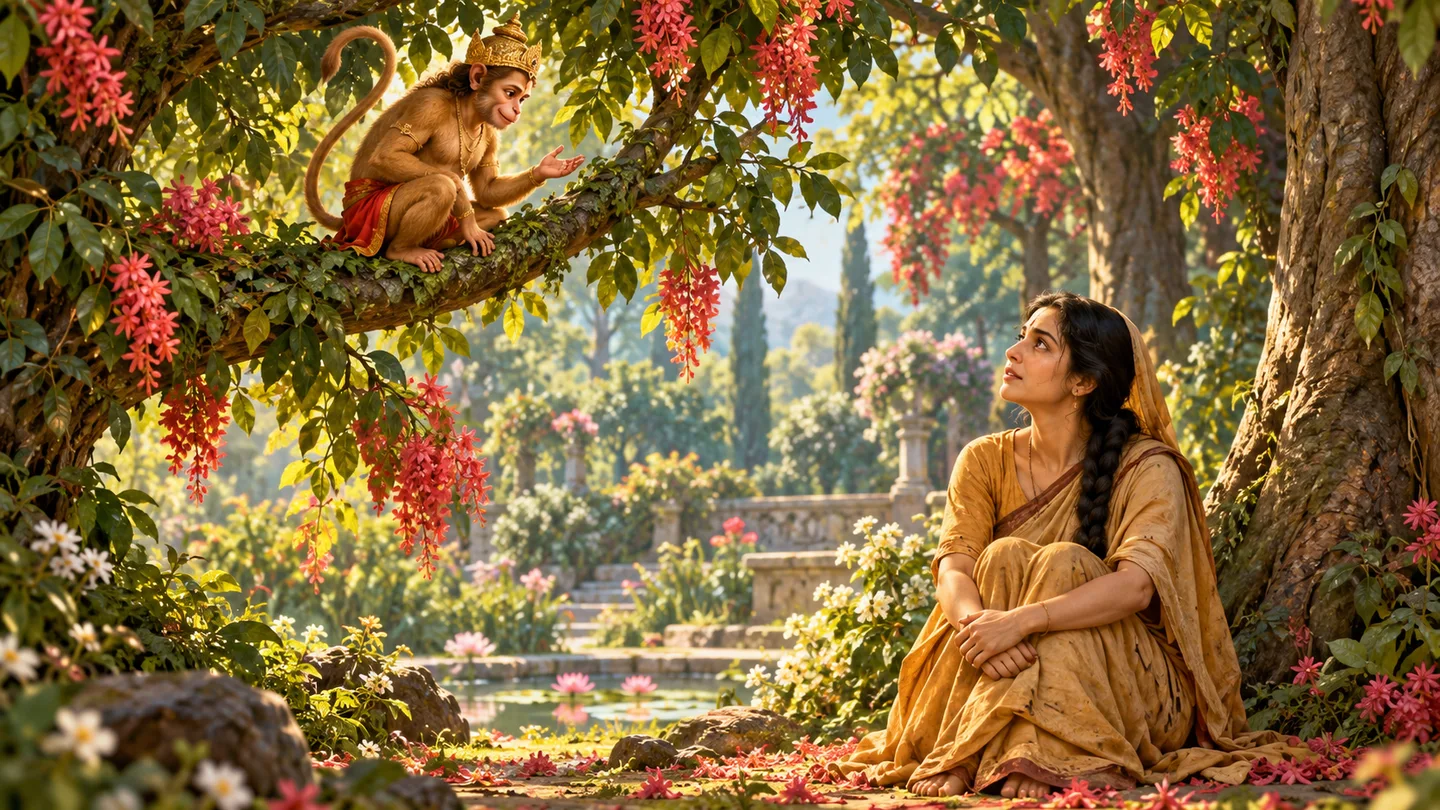
A small Hanuman speaks gently from a leafy branch above Sita.
Original DHIH illustration · artistic interpretation

Verse 1 · 5.30.1

#

हनुमानपि विश्रान्तः सर्वं शुश्राव तत्त्वतः ।

Hanuman, now rested, heard everything clearly:

सीतायास्त्रिजटायाश्च राक्षसीनां च तर्जनम् ॥

Sita’s words, Trijata’s words, and the rakshasis’ threats.

Verse 2 · 5.30.2

#

अवेक्षमाणस्तां देवीं देवतामिव नन्दने ।

Watching that noble lady, like a goddess in Nandana garden,

ततो बहुविधां चिन्तां चिन्तयामास वानरः ॥

the vanara began to ponder many possibilities.

Verse 3 · 5.30.3

#

यां कपीनां सहस्राणि सुबहून्ययुतानि च ।

“She whom thousands and tens of thousands of vanaras

दिक्षु सर्वासु मार्गन्ते सेयमासादिता मया ॥

seek in every direction has now been found by me.

Verse 4 · 5.30.4

#

चारेण तु सुयुक्तेन शत्रोः शक्तिमवेक्षता ।

Moving secretly as a well-prepared scout

गूढेन चरता तावदवेक्षितमिदं मया ॥

and observing the enemy’s strength, I have examined this place.

Verse 5 · 5.30.5

#

राक्षसानां विशेषश्च पुरी चेयमवेक्षिता ।

I have observed the rakshasas’ particular strengths, this city,

राक्षसाधिपतेरस्य प्रभावो रावणस्य च ॥

and the power of Ravana, their ruler.

Verse 6 · 5.30.6

#

युक्तं तस्याप्रमेयस्य सर्वसत्त्वदयावतः ।

It is right to reassure the wife of that immeasurable hero,

समाश्वासयितुं भार्यां पतिदर्शनकांक्षिणीम् ॥

compassionate towards all beings, while she longs to see her husband.

Verse 7 · 5.30.7

#

अहमाश्वासयाम्येनां पूर्णचन्द्रनिभाननाम् ।

I shall reassure her, whose face resembles the full moon,

अदृष्टदुःखां दुःखार्तां दुःखस्यान्तमगच्छतीम् ॥

unaccustomed to suffering, now distressed and finding no end to sorrow.

Verse 8 · 5.30.8

#

यद्यप्यहमिमां देवीं शोकोपहतचेतनाम् ।

If I leave this noble lady, her mind overwhelmed by grief,

अनाश्वास्य गमिष्यामि दोषवद् गमनं भवेत् ॥

without reassuring her, my departure would be a fault.

Verse 9 · 5.30.9

#

गते हि मयि तत्रेयं राजपुत्री यशस्विनी ।

Once I have gone, this renowned princess Janaki,

परित्राणमविन्दन्ती जानकी जीवितं त्यजेत् ॥

seeing no rescue, might give up her life.

Verse 10 · 5.30.10

#

मया च स महाबाहुः पूर्णचन्द्रनिभाननः ।

And I must also reassure that long-armed, moon-faced hero,

समाश्वासयितुं न्याय्यः सीतादर्शनलालसः ॥

who longs to see Sita.

Verse 11 · 5.30.11

#

निशाचरीणां प्रत्यक्षमनर्हं चापि भाषणम् ।

Yet speaking in the night-roaming guards’ presence is improper.

कथं तु खलु कर्तव्यमिदं कृच्छ्रगतो ह्यहम् ॥

How should this be done? I am in a difficult position.

Verse 12 · 5.30.12

#

अनेन रात्रिशेषेण यदि नाश्वास्यते मया ।

Unless I comfort her in the remainder of this night,

सर्वथा नास्ति सन्देहः परित्यक्ष्यति जीवितम् ॥

there is no doubt that she may abandon her life.

Verse 13 · 5.30.13

#

रामश्च यदि पृच्छेन्मां किं मां सीता अब्रवीद्वचः ।

If Rama asks me, “What words did Sita say to me?”

किमहं दं प्रतिब्रूयामसम्भाष्य सुमध्यमाम् ॥

what could I answer without having spoken to this graceful lady?

Verse 14 · 5.30.14

#

सीतासन्देशरहितं मामितस्त्वरया गतम् ।

If I hasten back from here without a message from Sita,

निर्दहेदपि काकुत्स्थः क्रुद्धस्तीव्रेण चक्षुषा ॥

angry Kakutstha might burn me with his fierce gaze.

Verse 15 · 5.30.15

#

यदि चोद्योजयिष्यामि भर्तारं रामकारणात् ।

And if I urge my master to act for Rama’s sake,

व्यर्थमागमनं तस्य ससैन्यस्य भविष्यति ॥

his coming with an army could be in vain.

Verse 16 · 5.30.16

#

अन्तरं त्वहमासाद्य राक्षसीनामिह स्थितः ।

I shall remain here and find an opening among the rakshasis;

शनैराश्वासयिष्यामि सन्तापबहुलामिमाम् ॥

then gently reassure this lady burdened with sorrow.

Verse 17 · 5.30.17

#

अहं त्वति तनुश्चैव वानरश्च विशेषतः ।

But I am very small, and moreover a vanara;

वाचं चोदाहरिष्यामि मानुषीमिह संस्कृताम् ॥

yet I would speak here in cultivated human speech.

Verse 18 · 5.30.18

#

यदि वाचं प्रदास्यामि द्विजातिरिव संस्कृताम् ।

If I speak polished Sanskrit like a twice-born scholar,

रावणं मन्यमाना मां सीता भीता भविष्यति ।

Sita may think I am Ravana and become afraid;

वानरस्य विशेषेण कथं स्यादभिभाषणम् ॥

how especially could a vanara be speaking so?

Verse 19 · 5.30.19

#

अवश्यमेव वक्तव्यं मानुषं वाक्यमर्थवत् ।

I must certainly speak meaningful human words;

मया सान्त्वयितुं शक्या नान्यथेयमनिन्दिता ॥

only so can I comfort this blameless lady.

Verse 20 · 5.30.20

#

सेयमालोक्य मे रूपं जानकी भाषितं तथा ।

Seeing my form and hearing my speech, Janaki,

रक्षोभिस्त्रासिता पूर्वं भूयस्त्रासं गमिष्यति ॥

already frightened by the rakshasas, may become frightened again.

Verse 21 · 5.30.21

#

ततो जातपरित्रासा शब्दं कुर्यान्मनस्विनी ।

Then, terrified, the steadfast, wide-eyed lady might cry out,

जानमाना विशालाक्षी रावणं कामरूपिणम् ॥

believing me to be shape-changing Ravana.

Verse 22 · 5.30.22

#

सीतया च कृते शब्दे सहसा राक्षसीगणः ।

At Sita’s cry, a dreadful troop of rakshasis,

नानाप्रहरणो घोरः समेयादन्तकोपमः ॥

bearing many weapons and resembling Death, would suddenly gather.

Verse 23 · 5.30.23

#

ततो मां संपरिक्षिप्य सर्वतो विकृताननाः ।

Then those distorted-faced women would surround me on every side

वधे च ग्रहणे चैव कुर्युर्यत्नं यथाबलम् ॥

and try with all their strength to capture or kill me.

Verse 24 · 5.30.24

#

गृह्य शाखाः प्रशाखाश्च स्कन्धांश्चोत्तमशाखिनाम् ।

Seeing me run about, grasping branches, smaller branches

दृष्ट्वा विपरिधावन्तं भवेयुर्भयशङ्किताः ॥

and trunks of splendid trees, they would become fearful.

Verse 25 · 5.30.25

#

मम रूपं च सम्प्रेक्ष्य वने विचरतो महत् ।

Seeing my great form as I ranged through the grove,

राक्षस्यो भयवित्रस्ता भवेयुर्विकृताननाः ॥

the distorted-faced rakshasis would be terrified.

Verse 26 · 5.30.26

#

ततः कुर्युः समाह्वानं राक्षस्यो रक्षसामपि ।

Then the rakshasis would summon the rakshasas

राक्षसेन्द्रनियुक्तानां राक्षसेन्द्रनिवेशने ॥

appointed by their king within his palace.

Verse 27 · 5.30.27

#

ते शूलशक्तिनिस्त्रिंशविविधायुधपाणयः ।

Holding tridents, spears, swords and many other weapons,

आपतेयुर्विमर्दे ऽस्मिन् वेगेनोद्विग्नकारिणः ॥

they would rush violently into this disturbance, causing terror.

Verse 28 · 5.30.28

#

संरुद्धस्तैस्तु परितो विधमन् रक्षसां बलम् ।

Surrounded by them, though I scattered the rakshasa force,

शक्नुयां न तु संप्राप्तुं परं पारं महोदधेः ॥

I might no longer be able to reach the ocean’s far shore.

Verse 29 · 5.30.29

#

मां वा गृह्णीयुराप्लुत्य बहवः शीघ्रकारिणः ।

Or many swift attackers might leap upon and capture me;

स्यादियं चागृहीतार्था मम च ग्रहणं भवेत् ॥

Sita would remain uninformed, and I would be a prisoner.

Verse 30 · 5.30.30

#

हिंसाभिरुचयो हिंस्युरिमां वा जनकात्मजाम् ।

Fond of violence, they might even kill Janaka’s daughter;

विपन्नं स्यात्ततः कार्यं रामसुग्रीवयोरिदम् ॥

then this undertaking of Rama and Sugriva would fail.

Verse 31 · 5.30.31

#

उद्देशे नष्टमार्गे ऽस्मिन् राक्षसैः परिवारिते ।

Janaki lives hidden in this place where the path is lost,

सागरेण परिक्षिप्ते गुप्त वसति जानकी ॥

surrounded by rakshasas and enclosed by the sea.

Verse 32 · 5.30.32

#

विशस्ते वा गृहीते वा रक्षोभिर्मयि संयुगे ।

If the rakshasas kill or capture me in battle,

नान्यं पश्यामि रामस्य साहाय्यं कार्यसाधने ॥

I see no other helper to accomplish Rama’s purpose.

Verse 33 · 5.30.33

#

विमृशंश्च न पश्यामि यो हते मयि वानरः ।

Thinking it through, I see no other vanara who, if I were killed,

शतयोजनविस्तीर्णं लङ्गयेत महोदधिम् ॥

would cross this great ocean a hundred yojanas wide.

Verse 34 · 5.30.34

#

कामं हन्तुं समर्थो ऽस्मि सहस्राण्यपि रक्षसाम् ।

I am indeed capable of killing thousands of rakshasas,

नतु शक्ष्यामि संप्राप्तुं परं पारं महोदधेः ॥

but afterwards I might not reach the ocean’s far shore.

Verse 35 · 5.30.35

#

असत्यानि च युद्धानि संशयो मे न रोचते ।

Battles are uncertain, and I do not welcome that uncertainty.

कश्च निस्संशयं कार्यं कुर्यात् प्राज्ञः ससंशयम् ॥

What wise person would make an assured undertaking doubtful?

Verse 36 · 5.30.36

#

प्राणत्यागश्च वैदेह्या भवेदनभिभाषणे ।

If I do not speak, Vaidehi may abandon her life;

एष दोषो महान् हि स्यान्मम सीताभिभाषणे ॥

yet this great danger might arise if I speak to Sita.

Verse 37 · 5.30.37

#

भूताश्चार्था विनश्यन्ति देशकालविरोधिताः ।

Even achieved purposes perish when opposed to place and time,

विक्लवं दूतमासाद्य तमः सूर्योदये यथा ॥

through a bewildered messenger, as darkness vanishes at sunrise.

Verse 38 · 5.30.38

#

अर्थानर्थान्तरे बुद्धिर्निश्चिता ऽपि न शोभते ।

Even a settled plan may fail between gain and loss;

घातयन्ति हि कार्याणि दूताः पण्डितमानिनः ॥

messengers who imagine themselves wise can ruin undertakings.

Verse 39 · 5.30.39

#

न विनश्येत् कथं कार्यं वैक्लव्यं न कथं भवेत् ।

How can the undertaking avoid destruction and confusion?

लङ्घनं च समुद्रस्य कथं नु न वृथा भवेत् ॥

How can my crossing of the ocean avoid becoming fruitless?

Verse 40 · 5.30.40

#

कथं नु खलु वाक्यं मे श्रुणुयान्नोद्विजेत वा ।

How can she hear my words without becoming alarmed?”

इति संचिन्त्य हनुमांश्चकार मतिमान् मतिम् ॥

Reflecting thus, wise Hanuman formed a plan.

Verse 41 · 5.30.41

#

राममक्लिष्टकर्माणं स्वबन्धुमनुकीर्तयन् ।

“By speaking of Rama, her own beloved, whose deeds never fail,

नैनामुद्वेजयिष्यामि तद्बन्धुगतमानसाम् ॥

I shall not alarm her, whose thoughts rest on him.

Verse 42 · 5.30.42

#

इक्ष्वाकूणां वरिष्ठस्य रामस्य विदितात्मनः ।

Presenting auspicious words grounded in righteousness

शुभानि धर्मयुक्तानि वचनानि समर्पयन् ॥

about self-possessed Rama, foremost of the Ikshvakus,

Verse 43 · 5.30.43

#

श्रावयिष्यामि सर्वाणि मधुरां प्रब्रुवन् गिरम् ।

I shall let her hear everything in a gentle voice.

श्रद्धास्यति यथा हीयं तथा सर्वं समादधे ॥

I shall arrange it all so that she may believe.”

Verse 44 · 5.30.44

#

इति स बहुविधं महानुभावो जगतिपतेः प्रमदामवेक्षमाणः ।

Thus, after considering many things while watching the king’s wife, great-hearted Hanuman,

मधुरमवितथं जगाद वाक्यं द्रुमविटपान्तरमास्थितो हनूमान् ॥

remaining among the tree’s branches, spoke words that were sweet and true.

CHAPTER 30 COMPLETE

The journey continues.

Hanuman chooses a careful, familiar introduction before revealing himself.

NEXT CHAPTER

Continue Hanuman’s journey in the next chapter.

About this reading

Vālmīki Rāmāyaṇa, Sundara Kanda, chapter 30. This reading follows Sanskrit Wikisource revision 315421, with all 44 numbered verses. Verse divisions and wording vary between editions.

The Sanskrit is preserved with normalized display spacing and line breaks. Some sentences continue across verse boundaries; the English follows that continuity. A yojana is a traditional distance unit, retained without assigning a modern measurement. Shape-changing and celestial beings belong to the epic’s sacred narrative.

English line senses and short meanings are original AI-assisted DHIH renderings checked against this Sanskrit reading; they are not a word-for-word grammatical commentary or a claim of human scholarly certification. Roman transliteration is generated mechanically in IAST. Names may also appear in familiar English spellings.

Sanskrit transcription credit: Wikisource contributors, revision history. The adapted reading text and DHIH English on this chapter page are offered under CC BY-SA 4.0. The ancient Sanskrit work is in the public domain. Illustrations are separately commissioned AI-generated DHIH artwork.

Historical comparison: M. N. Dutt’s Ramayana, volume II, a public-domain translation, was consulted for narrative context. The English displayed here is a fresh rendering of the pinned Sanskrit, not a reproduction of that translation.

Source note: this chapter uses Wikisource revision 315421 with 44 continuously numbered verses. A later revision repeats verse 34 and omits verse 35; the earlier complete revision is retained rather than silently repairing the later text.

This chapter follows Hanuman’s own reasoning about language, trust, and the dangers of discovery. His thoughts about different ways of speaking belong to this specific encounter. Audio will be added only when suitable recording permissions are available.