Search DHIH library

VĀLMĪKI RĀMĀYAṆA · CHAPTER 34

सर्गः ३४

The messenger and a fragile trust

Hanuman brings greetings from Rama and Lakshmana. Sita’s joy gives way to fear that the visitor might be Ravana in disguise, and she tests his account.

40 versesSanskrit + English1 illustration
Begin reading ↓

An edition-specific reading with original English meanings. Source & reading notes

SCENE 01 · VERSES 1–40

Hope tested by caution

Hanuman brings greetings from Rama and Lakshmana. Sita’s joy gives way to fear that the visitor might be Ravana in disguise, and she tests his account.

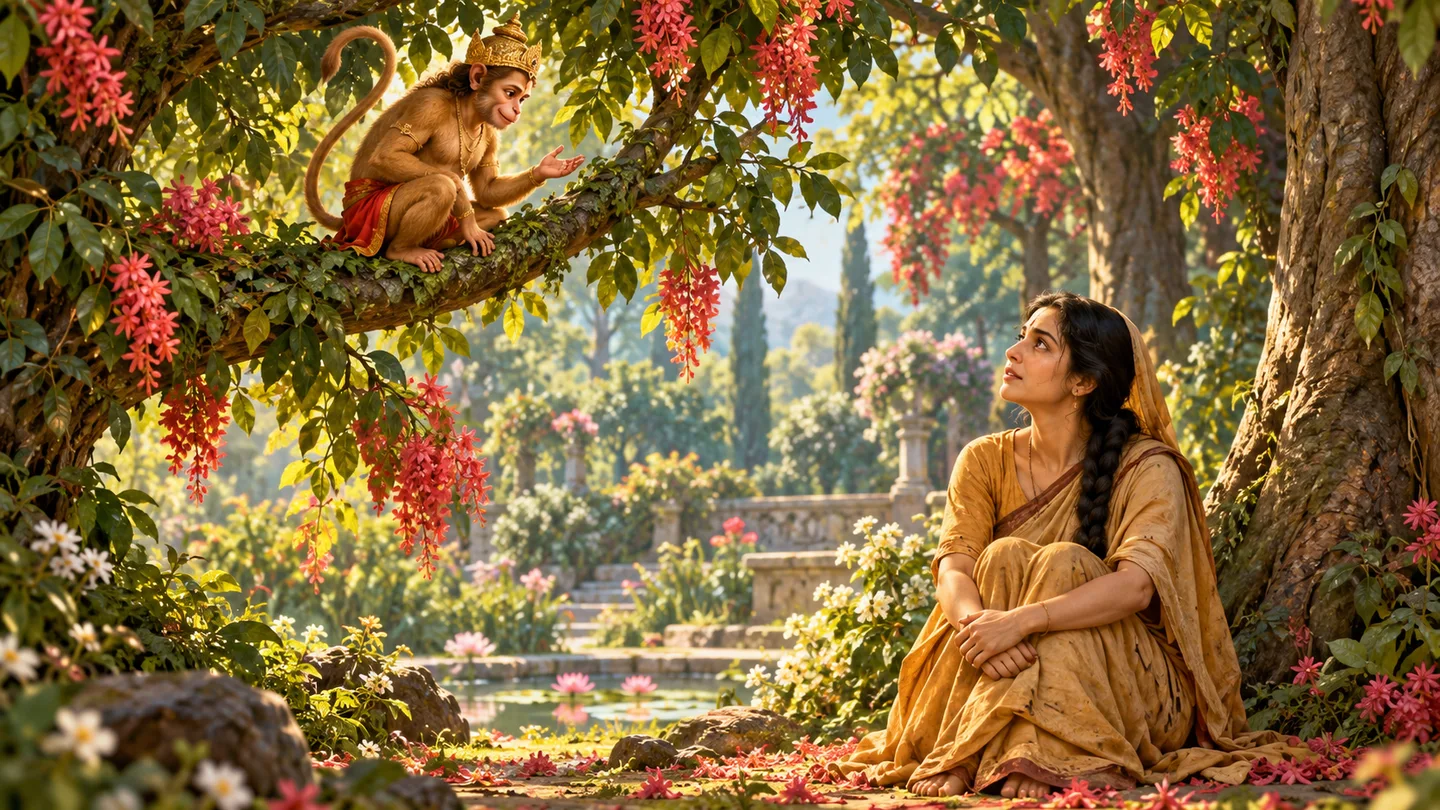
A small Hanuman speaks gently from a leafy branch above Sita.
Original DHIH illustration · artistic interpretation

Verse 1 · 5.34.1

#

तस्यास्तद् वचनं श्रुत्वा हनूमान् हरिपुंगवः ।

Hearing the words of one overwhelmed by sorrow upon sorrow,

दुःखाद् दुःखाभिभूतायाः सान्त्वमुत्तरमब्रवीत् ॥

Hanuman, foremost vanara, gave a comforting reply.

Verse 2 · 5.34.2

#

अहं रामस्य संदेशाद् देवि दूतस्तवागतः ।

“Lady, I have come to you as Rama’s messenger, at his command.

वैदेहि कुशली रामः स त्वां कौशलमब्रवीत् ॥

Vaidehi, Rama is well, and he asks about your welfare.

Verse 3 · 5.34.3

#

यो ब्राह्ममस्त्रं वेदांश्च वेद वेदविदां वरः ।

Rama, Dasharatha’s son, foremost among knowers of the Vedas,

स त्वां दाशरथी रामो देवि कौशलमब्रवीत् ॥

who knows the Brahma weapon and the Vedas, asks about your welfare.

Verse 4 · 5.34.4

#

लक्ष्मणश्च महातेजा भर्तुस्तेऽनुचरः प्रियः ।

Glorious Lakshmana, your husband’s dear companion,

कृतवाञ्छोकसंतप्तः शिरसा तेऽभिवादनम् ॥

tormented by sorrow, bows his head in reverence to you.”

Verse 5 · 5.34.5

#

सा तयोः कुशलं देवी निशम्य नरसिंहयोः ।

Hearing that the two lion-like men were well,

प्रतिसंहृष्टसर्वांगी हनूमन्तमथाब्रवीत् ॥

the lady thrilled with joy throughout her body and addressed Hanuman.

Verse 6 · 5.34.6

#

कल्याणी बत गाथेयं लौकिकी प्रतिभाति मा ।

“How auspicious this familiar saying now seems to me:

एति जीवन्तमानन्दो नरं वर्षशतादपि ॥

joy comes to one who remains alive, even after a hundred years.”

Verse 7 · 5.34.7

#

तयोः समागमे तस्मिन् प्रीतिरुत्पादिताद्भुता ।

Wonderful affection arose in that meeting,

परस्परेण चालापं विश्वस्तौ तौ प्रचक्रतुः ॥

and, trusting one another, they began to converse.

Verse 8 · 5.34.8

#

तस्यास्तद् वचनं श्रुत्वा हनूमान् मारुतात्मजः ।

Hearing her words, Hanuman, the Wind’s son,

सीतायाः शोकतप्तायाः समीपमुपचक्रमे ॥

moved closer to Sita, who was scorched by sorrow.

Verse 9 · 5.34.9

#

यथा यथा समीपं स हनूमानुपसर्पति ।

But the nearer Hanuman came,

तथा तथा रावणं सा तं सीता परिशङ्कते ॥

the more Sita suspected that he was Ravana.

Verse 10 · 5.34.10

#

अहो धिग् धिक्कृतमिदं कथितं हि यदस्य मे ।

“Alas, what have I done, telling him all this!

रूपान्तरमुपागम्य स एवायं हि रावणः ॥

This must be Ravana himself, having assumed another form.”

Verse 11 · 5.34.11

#

तामशोकस्य शाखां तु विमुक्त्वा शोककर्शिता ।

Releasing the ashoka branch, worn thin by sorrow,

तस्यामेवानवद्याङ्गी धरण्यां समुपाविशत् ॥

the blameless lady sat down upon the ground.

Verse 12 · 5.34.12

#

अवन्दत महाबाहुस्ततस्तां जनकात्मजाम् ।

Then the long-armed one bowed to Janaka’s daughter;

सा चैनं भयसंत्रस्ता भूयो नैनमुदैक्षत ॥

but, terrified, she would not look at him again.

Verse 13 · 5.34.13

#

तं दृष्ट्वा वन्दमानं च सीता शशिनिभानना ।

Seeing him bow, moon-faced Sita sighed deeply

अब्रवीद् दीर्घमुच्छ्वस्य वानरं मधुरस्वरा ॥

and spoke to the vanara in her gentle voice.

Verse 14 · 5.34.14

#

मायां प्रविष्टो मायावी यदि त्वं रावणः स्वयम् ।

“If you are Ravana himself, a magician resorting to illusion,

उत्पादयसि मे भूयः संतापं तन्न शोभनम् ॥

it is wrong of you to cause me fresh anguish.

Verse 15 · 5.34.15

#

स्वं परित्यज्य रूपं यः परिव्राजकरूपवान् ।

You are that same Ravana whom I saw in Janasthana,

जनस्थाने मया दृष्टस्त्वं स एव हि रावणः ॥

abandoning your own form and wearing an ascetic’s guise.

Verse 16 · 5.34.16

#

उपवासकृशां दीनां कामरूप निशाचर ।

Shape-changing night-roamer, I am helpless and wasted by fasting;

संतापयसि मां भूयः संतापं तन्न शोभनम् ॥

it is wrong to torment me again in my suffering.

Verse 17 · 5.34.17

#

अथवा नैतदेवं हि यन्मया परिशङ्कितम् ।

Or perhaps what I suspect is not so;

मनसो हि मम प्रीतिरुत्पन्ना तव दर्शनात् ॥

for joy arose in my heart at seeing you.

Verse 18 · 5.34.18

#

यदि रामस्य दूतस्त्वमागतो भद्रमस्तु ते ।

If you have come as Rama’s messenger, may good attend you.

पृच्छामि त्वां हरिश्रेष्ठ प्रिया रामकथा हि मे ॥

I ask you, foremost vanara, for Rama’s story is dear to me.

Verse 19 · 5.34.19

#

गुणान् रामस्य कथय प्रियस्य मम वानर ।

Tell me the virtues of my beloved Rama, vanara.

चित्तं हरसि मे सौम्य नदीकूलं यथा रयः ॥

Gentle one, you draw my heart as a current carries away a riverbank.

Verse 20 · 5.34.20

#

अहो स्वप्नस्य सुखता याहमेव चिराहृता ।

Ah, how pleasant a dream this is, that I, abducted so long ago,

प्रेषितं नाम पश्यामि राघवेण वनौकसम् ॥

should see a forest-dweller supposedly sent by Raghava!

Verse 21 · 5.34.21

#

स्वप्नेऽपि यद्यहं वीरं राघवं सहलक्ष्मणम् ।

If even in a dream I saw heroic Raghava with Lakshmana,

पश्येयं नावसीदेयं स्वप्नोऽपि मम मत्सरी ॥

I would not despair; but even dreams begrudge me that.

Verse 22 · 5.34.22

#

नाहं स्वप्नमिमं मन्ये स्वप्ने दृष्ट्वा हि वानरम् ।

Yet I do not think this a dream: seeing a vanara in dreams

न शक्योऽभ्युदयः प्राप्तुं प्राप्तश्चाभ्युदयो मम ॥

is said not to bring good fortune, while good fortune has come to me.

Verse 23 · 5.34.23

#

किं नु स्याच्चित्तमोहोऽयं भवेद् वातगतिस्त्वियम् ।

Could this be confusion of mind, a disturbance of the bodily wind,

उन्मादजो विकारो वा स्यादयं मृगतृष्णिका ॥

a disorder born of madness, or a mirage?

Verse 24 · 5.34.24

#

अथवा नायमुन्मादो मोहोऽप्युन्मादलक्षणः ।

Yet this is neither madness nor a confusion like madness;

सम्बुध्ये चाहमात्मानमिमं चापि वनौकसम् ॥

I am aware both of myself and of this forest-dweller.”

Verse 25 · 5.34.25

#

इत्येवं बहुधा सीता सम्प्रधार्य बलाबलम् ।

Thus Sita weighed the strengths and weaknesses of many explanations;

रक्षसां कामरूपत्वान्मेने तं राक्षसाधिपम् ॥

because rakshasas can change shape, she still judged him the rakshasa king.

Verse 26 · 5.34.26

#

एतां बुद्धिं तदा कृत्वा सीता सा तनुमध्यमा ।

Having reached that conclusion, slender-waisted Sita,

न प्रतिव्याजहाराथ वानरं जनकात्मजा ॥

Janaka’s daughter, gave the vanara no further answer.

Verse 27 · 5.34.27

#

सीताया निश्चितं बुद्‍ध्वा हनूमान् मारुतात्मजः ।

Understanding Sita’s conclusion, Hanuman, the Wind’s son,

श्रोत्रानुकूलैर्वचनैस्तदा तां सम्प्रहर्षयन् ॥

gladdened her with words agreeable to the ear:

Verse 28 · 5.34.28

#

आदित्य इव तेजस्वी लोककान्तः शशी यथा ।

“Radiant as the sun, beloved of the world like the moon,

राजा सर्वस्य लोकस्य देवो वैश्रवणो यथा ॥

a sovereign over all like the divine Vaishravana,

Verse 29 · 5.34.29

#

विक्रमेणोपपन्नश्च यथा विष्णुर्महायशाः ।

renowned and endowed with prowess like Vishnu,

सत्यवादी मधुरवाग् देवो वाचस्पतिर्यथा ॥

truthful and gentle in speech like the divine lord of eloquence,

Verse 30 · 5.34.30

#

रूपवान् सुभगः श्रीमान् कंदर्प इव मूर्तिमान् ।

handsome, gracious and splendid, like Love embodied,

स्थानक्रोधे प्रहर्ता च श्रेष्ठो लोके महारथः ॥

striking only when anger is justified, he is the world’s foremost great warrior.

Verse 31 · 5.34.31

#

बाहुच्छायामवष्टब्धो यस्य लोको महात्मनः ।

The world rests beneath the protective shade of that great soul’s arms.

अपक्रम्याश्रमपदान्मृगरूपेण राघवम् ॥

The one who drew Raghava away from the hermitage by a deer’s illusion

Verse 32 · 5.34.32

#

शून्ये येनापनीतासि तस्य द्रक्ष्यसि तत्फलम् ।

and carried you away when it stood empty—you will see the consequence for him.

अचिराद् रावणं संख्ये यो वधिष्यति वीर्यवान् ॥

That mighty hero will soon kill Ravana in battle

Verse 33 · 5.34.33

#

क्रोधप्रमुक्तैरिषुभिर्ज्वलद्भिरिव पावकैः ।

with arrows released in anger, blazing like fires.

तेनाहं प्रेषितो दूतस्त्वत्सकाशमिहागतः ॥

Sent by him as messenger, I have come here to you.

Verse 34 · 5.34.34

#

त्वद्वियोगेन दुःखार्तः स त्वां कौशलमब्रवीत् ।

Suffering in separation from you, he asks after your welfare.

लक्ष्मणश्च महातेजाः सुमित्रानन्दवर्धनः ॥

And glorious Lakshmana, who increases Sumitra’s joy,

Verse 35 · 5.34.35

#

अभिवाद्य महाबाहुः स त्वां कौशलमब्रवीत् ।

that long-armed hero bows to you and asks after your welfare.

रामस्य च सखा देवि सुग्रीवो नाम वानरः ॥

And, lady, Rama’s friend, a vanara named Sugriva,

Verse 36 · 5.34.36

#

राजा वानरमुख्यानां स त्वां कौशलमब्रवीत् ।

king of the foremost vanaras, asks after your welfare.

नित्यं स्मरति ते रामः ससुग्रीवः सलक्ष्मणः ॥

Rama, together with Sugriva and Lakshmana, remembers you constantly.

Verse 37 · 5.34.37

#

दिष्ट्या जीवसि वैदेहि राक्षसीवशमागता ।

Fortunately you live, Vaidehi, though under the rakshasis’ power.

नचिराद् द्रक्ष्यसे रामं लक्ष्मणं च महारथम् ॥

Before long you will see Rama and the great warrior Lakshmana,

Verse 38 · 5.34.38

#

मध्ये वानरकोटीनां सुग्रीवं चामितौजसम् ।

and Sugriva of boundless strength amid countless vanaras.

अहं सुग्रीवसचिवो हनूमान् नाम वानरः ॥

I am Sugriva’s minister, a vanara named Hanuman.

Verse 39 · 5.34.39

#

प्रविष्टो नगरीं लङ्कां लङ्घयित्वा महोदधिम् ।

I entered Lanka after crossing the great ocean,

कृत्वा मूर्ध्नि पदन्यासं रावणस्य दुरात्मनः ॥

placing my foot, as it were, upon wicked Ravana’s head.

Verse 40 · 5.34.40

#

त्वां द्रष्टुमुपयातोऽहं समाश्रित्य पराक्रमम् ।

Relying upon my courage, I have come to see you.

नाहमस्मि तथा देवि यथा मामवगच्छसि ।

Lady, I am not what you suspect me to be.

विशङ्का त्यज्यतामेषा श्रद्धत्स्व वदतो मम ॥

Let this doubt go; trust the words I speak.”

CHAPTER 34 COMPLETE

The journey continues.

Sita asks for details that only someone who knows Rama and Lakshmana could give.

NEXT CHAPTER

Continue Hanuman’s journey in the next chapter.

About this reading

Vālmīki Rāmāyaṇa, Sundara Kanda, chapter 34. This reading follows Sanskrit Wikisource revision 354788, with all 40 numbered verses. Verse divisions and wording vary between editions.

The Sanskrit is preserved with normalized display spacing and line breaks. Some sentences continue across verse boundaries; the English follows that continuity. A yojana is a traditional distance unit, retained without assigning a modern measurement. Shape-changing and celestial beings belong to the epic’s sacred narrative.

English line senses and short meanings are original AI-assisted DHIH renderings checked against this Sanskrit reading; they are not a word-for-word grammatical commentary or a claim of human scholarly certification. Roman transliteration is generated mechanically in IAST. Names may also appear in familiar English spellings.

Sanskrit transcription credit: Wikisource contributors, revision history. The adapted reading text and DHIH English on this chapter page are offered under CC BY-SA 4.0. The ancient Sanskrit work is in the public domain. Illustrations are separately commissioned AI-generated DHIH artwork.

Historical comparison: M. N. Dutt’s Ramayana, volume II, a public-domain translation, was consulted for narrative context. The English displayed here is a fresh rendering of the pinned Sanskrit, not a reproduction of that translation.

This chapter includes Sita’s fear of deception and memories of her abduction. Her caution is part of the story’s gradual development of trust. Audio will be added only when suitable recording permissions are available.