Search DHIH library

VĀLMĪKI RĀMĀYAṆA · CHAPTER 42

सर्गः ४२

The Kinkara warriors

The guards report the ruined grove, and Ravana sends the Kinkara force to capture Hanuman. Hanuman declares his service to Rama and defeats the attackers.

44 versesSanskrit + English1 illustration
Begin reading ↓

An edition-specific reading with original English meanings. Source & reading notes

SCENE 01 · VERSES 1–44

Rama’s messenger declares himself

The guards report the ruined grove, and Ravana sends the Kinkara force to capture Hanuman. Hanuman declares his service to Rama and defeats the attackers.

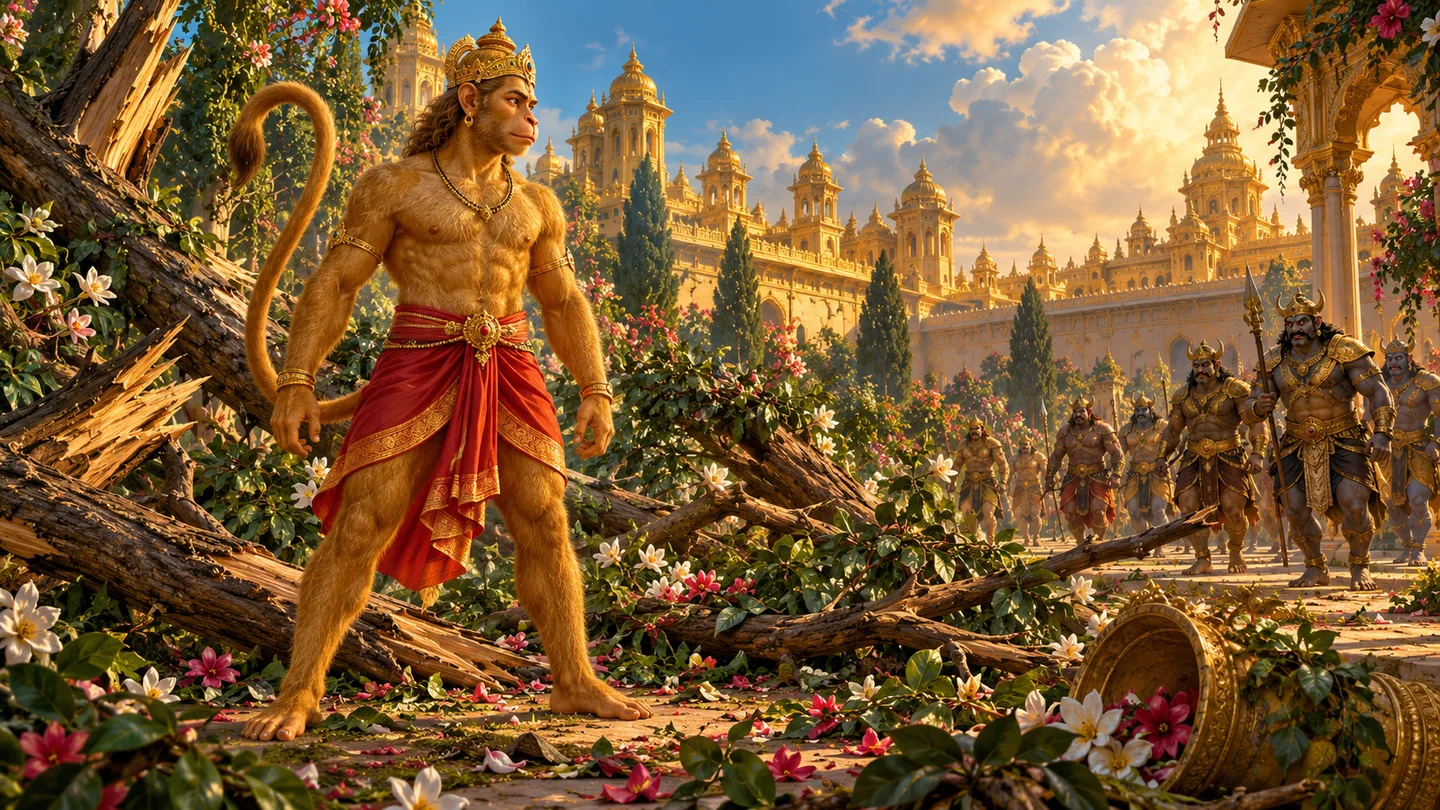
Hanuman stands firm in a disturbed garden while armed guards remain in the distance.
Original DHIH illustration · artistic interpretation

Verse 1 · 5.42.1

#

ततः पक्षिनिनादेन वृक्षभङ्गस्वनेन च ।

Then, at the cries of birds and the sound of breaking trees,

बभूवुस्त्राससम्भ्रान्ताः सर्वे लङ्कानिवासिनः ॥

all the inhabitants of Lanka were thrown into terrified confusion.

Verse 2 · 5.42.2

#

विद्रुताश्च भयत्रस्ता विनेदुर्मृगपक्षिणः ।

Beasts and birds fled in fear, crying out,

रक्षसां च निमित्तानि क्रूराणि प्रतिपेदिरे ॥

and dreadful omens appeared for the rakshasas.

Verse 3 · 5.42.3

#

ततो गतायां निद्रायां राक्षस्यो विकृताननाः ।

The rakshasi guards, with their fearsome faces, awoke

तद् वनं ददृशुर्भग्नं तं च वीरं महाकपिम् ॥

and saw the broken grove and the heroic great vanara.

Verse 4 · 5.42.4

#

स ता दृष्ट्वा महाबाहुर्महासत्त्वो महाबलः ।

Seeing them, the mighty-armed hero, strong in courage and strength,

चकार सुमहद्रूपं राक्षसीनां भयावहम् ॥

assumed an enormous form that terrified the rakshasi guards.

Verse 5 · 5.42.5

#

ततस्तु गिरिसंकाशमतिकायं महाबलम् ।

Seeing that immensely strong vanara, huge as a mountain,

राक्षस्यो वानरं दृष्ट्वा पप्रच्छुर्जनकात्मजाम् ॥

the rakshasi guards questioned Janaka’s daughter.

Verse 6 · 5.42.6

#

कोऽयं कस्य कुतो वायं किंनिमित्तमिहागतः ।

Who is this? Whose follower is he? Where has he come from, and why is he here?

कथं त्वया सहानेन संवादः कृत इत्युत ॥

How did you come to speak with him?

Verse 7 · 5.42.7

#

आचक्ष्व नो विशालाक्षि मा भूत्ते सुभगे भयम् ।

Tell us, wide-eyed, fortunate lady; do not be afraid.

संवादमसितापाङ्गि त्वया किं कृतवानयम् ॥

Dark-eyed one, what conversation did he have with you?

Verse 8 · 5.42.8

#

अथाब्रवीत् तदा साध्वी सीता सर्वाङ्गशोभना ।

Then the virtuous Sita, graceful in every limb, replied:

रक्षसां कामरूपाणां विज्ञाने का गतिर्मम ॥

How could I recognise rakshasas who can take any form they wish?

Verse 9 · 5.42.9

#

यूयमेवास्य जानीत योऽयं यद् वा करिष्यति ।

You yourselves must know who he is and what he will do.

अहिरेव ह्यहेः पादान् विजानाति न संशयः ॥

Only a serpent knows another serpent’s feet: there is no doubt of that.

Verse 10 · 5.42.10

#

अहमप्यतिभीतास्मि नैव जानामि को ह्ययम् ।

I too am very frightened; I do not know who he is.

वेद्मि राक्षसमेवैनं कामरूपिणमागतम् ॥

I take him to be a rakshasa who has come in a form of his choosing.

Verse 11 · 5.42.11

#

वैदेह्या वचनं श्रुत्वा राक्षस्यो विद्रुता द्रुतम् ।

Hearing Vaidehi’s words, the rakshasi guards hurried away;

स्थिताः काश्चिद‍्गताः काश्चिद् रावणाय निवेदितुम् ॥

some remained, while others went to report to Ravana.

Verse 12 · 5.42.12

#

रावणस्य समीपे तु राक्षस्यो विकृताननाः ।

Coming before Ravana, the fearsome-faced guards

विरूपं वानरं भीमं रावणाय न्यवेदिषुः ॥

reported the strange and terrifying vanara to him.

Verse 13 · 5.42.13

#

अशोकवनिकामध्ये राजन् भीमवपुः कपिः ।

O king, in the middle of the ashoka grove stands a vanara of fearful size,

सीतया कृतसंवादस्तिष्ठत्यमितविक्रमः ॥

of boundless prowess, who has spoken with Sita.

Verse 14 · 5.42.14

#

न च तं जानकी सीता हरिं हरिणलोचना ।

Though we questioned Janaka’s deer-eyed daughter Sita in many ways,

अस्माभिर्बहुधा पृष्टा निवेदयितुमिच्छति ॥

she refuses to tell us about that vanara.

Verse 15 · 5.42.15

#

वासवस्य भवेद् दूतो दूतो वैश्रवणस्य वा ।

He might be a messenger of Indra, or a messenger of Kubera,

प्रेषितो वापि रामेण सीतान्वेषणकाङ्क्षया ॥

or someone sent by Rama in his desire to search for Sita.

Verse 16 · 5.42.16

#

तेनैवाद्भुतरूपेण यत्तत्तव मनोहरम् ।

That being of astonishing form has laid waste

नानामृगगणाकीर्णं प्रमृष्टं प्रमदावनम् ॥

your delightful pleasure grove, once filled with many kinds of animals.

Verse 17 · 5.42.17

#

न तत्र कश्चिदुद्देशो यस्तेन न विनाशितः ।

There is no part there that he has not destroyed,

यत्र सा जानकी देवी स तेन न विनाशितः ॥

except the place where Lady Janaki is staying.

Verse 18 · 5.42.18

#

जानकीरक्षणार्थं वा श्रमाद् वा नोपलक्ष्यते ।

We cannot tell whether he left it to protect Janaki or because he was tired.

अथवा कः श्रमस्तस्य सैव तेनाभिरक्षिता ॥

But how could he be tired? Surely he deliberately protected her.

Verse 19 · 5.42.19

#

चारुपल्लवपत्राढ्यं यं सीता स्वयमास्थिता ।

He has also protected the great shimshapa tree,

प्रवृद्धः शिंशपावृक्षः स च तेनाभिरक्षितः ॥

rich in lovely leaves and shoots, beneath which Sita herself has taken shelter.

Verse 20 · 5.42.20

#

तस्योग्ररूपस्योग्रं त्वं दण्डमाज्ञातुमर्हसि ।

You should order a severe punishment for that creature of terrible appearance,

सीता सम्भाषिता येन वनं तेन विनाशितम् ॥

who has spoken with Sita and destroyed the grove.

Verse 21 · 5.42.21

#

मनःपरिगृहीतां तां तव रक्षोगणेश्वर ।

Who would speak to Sita, whom you have taken into your thoughts,

कः सीतामभिभाषेत यो न स्यात् त्यक्तजीवितः ॥

lord of the rakshasa hosts, unless he had abandoned all concern for his life?

Verse 22 · 5.42.22

#

राक्षसीनां वचः श्रुत्वा रावणो राक्षसेश्वरः ।

Hearing the guards’ words, Ravana, lord of the rakshasas,

चिताग्निरिव जज्वाल कोपसंवर्तितेक्षणः ॥

blazed like a funeral fire, his eyes rolling with rage.

Verse 23 · 5.42.23

#

तस्य क्रुद्धस्य नेत्राभ्यां प्रापतन्नश्रुबिन्दवः ।

Drops of tears fell from his enraged eyes,

दीप्ताभ्यामिव दीपाभ्यां सार्चिषः स्नेहबिन्दवः ॥

like burning drops of oil falling from two blazing lamps.

Verse 24 · 5.42.24

#

आत्मनः सदृशान् वीरान् किंकरान्नाम राक्षसान् ।

The powerful king ordered heroic rakshasas called Kinkaras,

व्यादिदेश महातेजा निग्रहार्थं हनूमतः ॥

comparable to himself, to seize Hanuman.

Verse 25 · 5.42.25

#

तेषामशीतिसाहस्रं किंकराणां तरस्विनाम् ।

Eighty thousand of those swift Kinkaras

निर्ययुर्भवनात् तस्मात् कूटमुद‍्गरपाणयः ॥

came out of the palace holding heavy clubs and mallets.

Verse 26 · 5.42.26

#

महोदरा महादंष्ट्रा घोररूपा महाबलाः ।

Huge-bellied, great-fanged, terrible in appearance and mighty in strength,

युद्धाभिमनसः सर्वे हनूमद्‍ग्रहणोन्मुखाः ॥

they all wanted battle and were intent on capturing Hanuman.

Verse 27 · 5.42.27

#

ते कपिं तं समासाद्य तोरणस्थमवस्थितम् ।

Reaching the vanara who stood upon the gateway,

अभिपेतुर्महावेगाः पतंगा इव पावकम् ॥

they rushed at him with great speed, like moths towards a flame.

Verse 28 · 5.42.28

#

ते गदाभिर्विचित्राभिः परिघैः काञ्चनाङ्गदैः ।

They attacked with decorated maces and iron bars banded with gold,

आजग्मुर्वानरश्रेष्ठं शरैरादित्यसंनिभैः ॥

and with arrows bright as the sun they assailed the foremost vanara.

Verse 29 · 5.42.29

#

मुद‍्गरैः पट्टिशैः शूलैः प्रासतोमरपाणयः ।

With mallets, bladed spears, tridents, javelins, and lances in hand,

परिवार्य हनूमन्तं सहसा तस्थुरग्रतः ॥

they surrounded Hanuman and suddenly stood before him.

Verse 30 · 5.42.30

#

हनूमानपि तेजस्वी श्रीमान् पर्वतसंनिभः ।

But the radiant, splendid Hanuman, mountain-like in stature,

क्षितावाविद्ध्य लाङ्गूलं ननाद च महाध्वनिम् ॥

struck his tail against the earth and gave a mighty roar.

Verse 31 · 5.42.31

#

स भूत्वा तु महाकायो हनूमान् मारुतात्मजः ।

Hanuman, son of the Wind, assumed a gigantic body

पुच्छमास्फोटयामास लङ्कां शब्देन पूरयन् ॥

and lashed his tail, filling Lanka with the sound.

Verse 32 · 5.42.32

#

तस्यास्फोटितशब्देन महता चानुनादिना ।

At the tremendous echoing sound of that blow,

पेतुर्विहङ्गा गगनादुच्चैश्चेदमघोषयत् ॥

birds fell from the sky; and he loudly proclaimed these words.

Verse 33 · 5.42.33

#

जयत्यतिबलो रामो लक्ष्मणश्च महाबलः ।

Victory to mighty Rama and to Lakshmana of great strength!

राजा जयति सुग्रीवो राघवेणाभिपालितः ॥

Victory to King Sugriva, protected by the descendant of Raghu!

Verse 34 · 5.42.34

#

दासोऽहं कोसलेन्द्रस्य रामस्याक्लिष्टकर्मणः ।

I am the servant of Rama, lord of Kosala, whose deeds are accomplished without weariness.

हनूमान् शत्रुसैन्यानां निहन्ता मारुतात्मजः ॥

I am Hanuman, son of the Wind, destroyer of enemy armies.

Verse 35 · 5.42.35

#

न रावणसहस्रं मे युद्धे प्रतिबलं भवेत् ।

Not even a thousand Ravanas could match me in battle

शिलाभिश्च प्रहरतः पादपैश्च सहस्रशः ॥

as I strike with rocks and trees by the thousand.

Verse 36 · 5.42.36

#

अर्दयित्वा पुरीं लङ्कामभिवाद्य च मैथिलीम् ।

After devastating Lanka and bowing to Maithili,

समृद्धार्थो गमिष्यामि मिषतां सर्वरक्षसाम् ॥

I shall depart with my purpose achieved, while all the rakshasas look on.

Verse 37 · 5.42.37

#

तस्य संनादशब्देन तेऽभवन् भयशङ्किताः ।

At the sound of his mighty proclamation they became fearful and uneasy,

ददृशुश्च हनूमन्तं संध्यामेघमिवोन्नतम् ॥

and saw Hanuman towering like a cloud at dusk.

Verse 38 · 5.42.38

#

स्वामिसंदेशनिःशङ्कास्ततस्ते राक्षसाः कपिम् ।

Then, emboldened by their master’s command, the rakshasas

चित्रैः प्रहरणैर्भीमैरभिपेतुस्ततस्ततः ॥

rushed upon the vanara from every side with various dreadful weapons.

Verse 39 · 5.42.39

#

स तैः परिवृतः शूरैः सर्वतः स महाबलः ।

Surrounded on all sides by those warriors, the immensely strong Hanuman

आससादायसं भीमं परिघं तोरणाश्रितम् ॥

found a formidable iron bar fixed at the gateway.

Verse 40 · 5.42.40

#

स तं परिघमादाय जघान रजनीचरान् ।

Taking that bar, he struck the night-roaming rakshasas,

सपन्नगमिवादाय स्फुरन्तं विनतासुतः ॥

as the son of Vinata might seize a writhing serpent.

Verse 41 · 5.42.41

#

विचचाराम्बरे वीरः परिगृह्य च मारुतिः ।

Holding it, the heroic son of the Wind ranged through the air

सूदयामास वज्रेण दैत्यानिव सहस्रदृक् ॥

and destroyed them as thousand-eyed Indra destroys the daityas with his thunderbolt.

Verse 42 · 5.42.42

#

स हत्वा राक्षसान् वीरः किंकरान् मारुतात्मजः ।

After slaying the rakshasa Kinkaras, the heroic son of the Wind,

युद्धाकाङ्क्षी महावीरस्तोरणं समवस्थितः ॥

still eager for battle, took his stand again upon the gateway.

Verse 43 · 5.42.43

#

ततस्तस्माद् भयान्मुक्ताः कतिचित्तत्र राक्षसाः ।

A few rakshasas escaped that terror

निहतान् किंकरान् सर्वान् रावणाय न्यवेदयन् ॥

and reported to Ravana that the Kinkara force had been slain.

Verse 44 · 5.42.44

#

स राक्षसानां निहतं महाबलं

Hearing that the great rakshasa force had been destroyed,

निशम्य राजा परिवृत्तलोचनः ।

the king, his eyes rolling in anger,

समादिदेशाप्रतिमं पराक्रमे

commanded one unrivalled in prowess:

प्रहस्तपुत्रं समरे सुदुर्जयम् ॥

Prahasta’s son, exceedingly difficult to defeat in battle.

CHAPTER 42 COMPLETE

The journey continues.

Survivors carry news of the defeat, and Ravana sends another champion.

NEXT CHAPTER

Continue Hanuman’s journey in the next chapter.

About this reading

Vālmīki Rāmāyaṇa, Sundara Kanda, chapter 42. This reading follows Sanskrit Wikisource revision 355128, with all 44 numbered verses. Verse divisions and wording vary between editions.

The Sanskrit is preserved with normalized display spacing and line breaks. Some sentences continue across verse boundaries; the English follows that continuity. A yojana is a traditional distance unit, retained without assigning a modern measurement. Shape-changing and celestial beings belong to the epic’s sacred narrative.

English line senses and short meanings are original AI-assisted DHIH renderings checked against this Sanskrit reading; they are not a word-for-word grammatical commentary or a claim of human scholarly certification. Roman transliteration is generated mechanically in IAST. Names may also appear in familiar English spellings.

Sanskrit transcription credit: Wikisource contributors, revision history. The adapted reading text and DHIH English on this chapter page are offered under CC BY-SA 4.0. The ancient Sanskrit work is in the public domain. Illustrations are separately commissioned AI-generated DHIH artwork.

Historical comparison: M. N. Dutt’s Ramayana, volume II, a public-domain translation, was consulted for narrative context. The English displayed here is a fresh rendering of the pinned Sanskrit, not a reproduction of that translation.

The chapter contains battle, mass death, and the epic’s large numerical scale. Sita conceals the messenger’s identity from her captors; this is part of the rescue plot. Audio will be added only when suitable recording permissions are available.