Search DHIH library

VĀLMĪKI RĀMĀYAṆA · CHAPTER 48

सुन्दरकाण्डम् · सर्गः 48

Indrajit captures Hanuman

Indrajit meets Hanuman with celestial weapons. Hanuman accepts restraint as an opportunity to bring his message directly to Ravana.

61 versesSanskrit + English1 illustration
Begin reading ↓

An edition-specific reading with original English meanings. Source & reading notes

SCENE 01 · VERSES 1–61

Restraint and a deliberate choice

Hanuman considers both Brahma’s authority and the purpose of his mission.

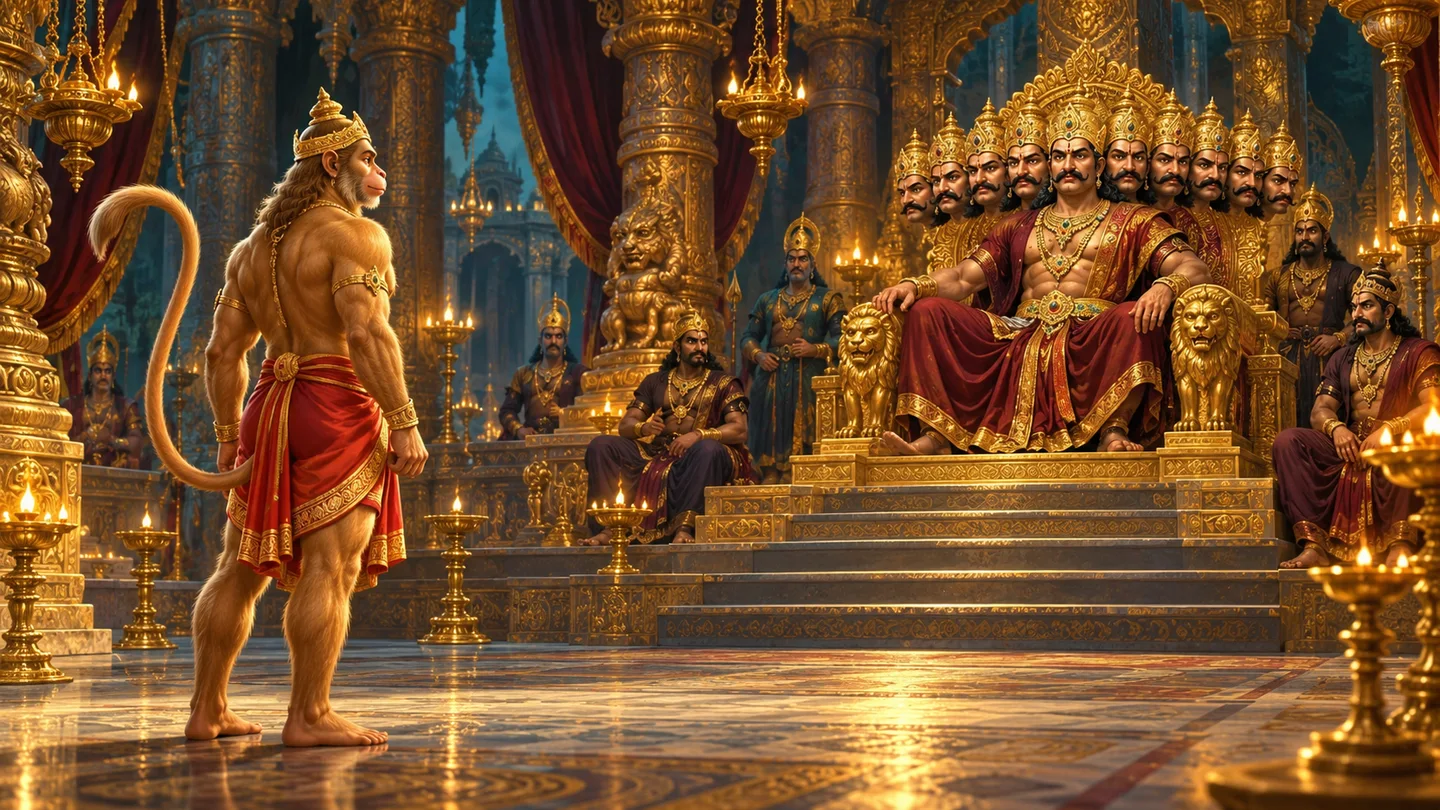
Hanuman stands as Rama’s messenger before Ravana in a grand royal hall.
Original DHIH illustration · artistic interpretation

Verse 1 · 5.48.1

#

ततस्तु रक्षोऽधिपतिर्महात्मा

After Hanuman had killed Prince Aksha,

हनूमताक्षे निहते कुमारे ।

the mighty lord of the rakshasas

मनः समाधाय स देवकल्पं

collected his thoughts and angrily commanded

समादिदेशेन्द्रजितं सरोषः ॥

Indrajit, whose appearance was godlike.

Verse 2 · 5.48.2

#

त्वमस्त्रविच्छस्त्रभृतां वरिष्ठः

'You know divine weapons and excel among armed warriors;

सुरासुराणामपि शोकदाता ।

you bring grief even to gods and asuras.

सुरेषु सेन्द्रेषु च दृष्टकर्मा

The gods and Indra have witnessed your deeds;

पितामहाराधनसंचितास्त्रः ॥

by worshipping Brahma you have acquired celestial weapons.

Verse 3 · 5.48.3

#

त्वदस्त्रबलमासाद्य ससुराः समरुद‍्गणाः ।

Faced with the power of your weapons, the gods and Maruts,

न शेकुः समरे स्थातुं सुरेश्वरसमाश्रिताः ॥

even sheltered by their sovereign, could not stand in battle.

Verse 4 · 5.48.4

#

न कश्चित् त्रिषु लोकेषु संयुगे न गतश्रमः ।

None in the three worlds has escaped weariness in combat with you;

भुजवीर्याभिगुप्तश्च तपसा चाभिरक्षितः ।

your arm's prowess protects you, and austerity guards you.

देशकालप्रधानश्च त्वमेव मतिसत्तमः ॥

Wise beyond others, you give first attention to place and time.

Verse 5 · 5.48.5

#

न तेऽस्त्यशक्यं समरेषु कर्मणां

No feat in battle is impossible for you,

न तेऽस्त्यकार्यं मतिपूर्वमन्त्रणे ।

and nothing defeats your considered planning.

न सोऽस्ति कश्चित् त्रिषु संग्रहेषु

Among the forces of the three worlds,

न वेद यस्तेऽस्त्रबलं बलं च ॥

none is ignorant of your weapons or your power.

Verse 6 · 5.48.6

#

ममानुरूपं तपसो बलं च ते

Your strength through austerity equals mine,

पराक्रमश्चास्त्रबलं च संयुगे ।

as do your courage and mastery of weapons in war.

न त्वां समासाद्य रणावमर्दे

With you engaged in a crushing battle,

मनः श्रमं गच्छति निश्चितार्थम् ॥

my mind remains untroubled and certain of the result.

Verse 7 · 5.48.7

#

निहताः किंकराः सर्वे जम्बुमाली च राक्षसः ।

All the Kinkaras have been killed, and Jambumali,

अमात्यपुत्रा वीराश्च पञ्च सेनाग्रगामिनः ॥

the brave ministers' sons, and the five commanders.

Verse 8 · 5.48.8

#

बलानि सुसमृद्धानि साश्वनागरथानि च ।

Powerful forces with horses, elephants and chariots have fallen;

सहोदरस्ते दयितः कुमारोऽक्षश्च सूदितः ।

your beloved brother, Prince Aksha, has also been slain.

न तु तेष्वेव मे सारो यस्त्वय्यरिनिषूदन ॥

Yet, destroyer of enemies, none gave me the confidence I place in you.

Verse 9 · 5.48.9

#

इदं च दृष्ट्वा निहतं महद् बलं

Seeing this great army destroyed

कपेः प्रभावं च पराक्रमं च ।

and the vanara's might and prowess,

त्वमात्मनश्चापि निरीक्ष्य सारं

also examine your own resources

कुरुष्व वेगं स्वबलानुरूपम् ॥

and exert yourself in proportion to your strength.

Verse 10 · 5.48.10

#

बलावमर्दस्त्वयि संनिकृष्टे

When you enter the conflict, may the destruction

यथा गते शाम्यति शान्तशत्रौ ।

of our forces end, with the enemy subdued.

तथा समीक्ष्यात्मबलं परं च

Weigh your strength and your opponent's,

समारभस्वास्त्रभृतां वरिष्ठ ॥

then begin, foremost wielder of weapons.

Verse 11 · 5.48.11

#

न वीर सेना गणशो च्यवन्ति

Hero, these troops fall in companies;

न वज्रमादाय विशालसारम् ।

even taking a mighty thunderbolt will not suffice.

न मारुतस्यास्ति गतिप्रमाणं

The Wind's speed cannot be measured,

न चाग्निकल्पः करणेन हन्तुम् ॥

nor can ordinary means kill one like fire.

Verse 12 · 5.48.12

#

तमेवमर्थं प्रसमीक्ष्य सम्यक्

Consider this matter properly,

स्वकर्मसाम्याद्धि समाहितात्मा ।

keeping your mind steady and your deeds equal to the task.

स्मरंश्च दिव्यं धनुषोऽस्य वीर्यं

Remember the divine power of your bow;

व्रजाक्षतं कर्म समारभस्व ॥

go and undertake the work without injury.

Verse 13 · 5.48.13

#

न खल्वियं मतिश्रेष्ठ यत्त्वां सम्प्रेषयाम्यहम् ।

Wisest one, sending you is not merely my personal wish;

इयं च राजधर्माणां क्षत्रस्य च मतिर्मता ॥

this is understood as the duty of kings and warriors.

Verse 14 · 5.48.14

#

नानाशस्त्रेषु संग्रामे वैशारद्यमरिंदम ।

Skill with different weapons in battle must be learned,

अवश्यमेव बोद्धव्यं काम्यश्च विजयो रणे ॥

destroyer of enemies, and victory in war is desirable.

Verse 15 · 5.48.15

#

ततः पितुस्तद्वचनं निशम्य

Hearing those words from his father,

प्रदक्षिणं दक्षसुतप्रभावः ।

the hero, splendid like a son of Daksha,

चकार भर्तारमतित्वरेण

quickly walked reverently around his lord,

रणाय वीरः प्रतिपन्नबुद्धिः ॥

his mind resolved upon battle.

Verse 16 · 5.48.16

#

ततस्तैः स्वगणैरिष्टैरिन्द्रजित् प्रतिपूजितः ।

Honoured by his own dear followers, Indrajit,

युद्धोद्धतकृतोत्साहः संग्रामं सम्प्रपद्यत ॥

stirred with martial enthusiasm, advanced to the battlefield.

Verse 17 · 5.48.17

#

श्रीमान् पद्मविशालाक्षो राक्षसाधिपतेः सुतः ।

The glorious, lotus-eyed son of the rakshasa king,

निर्जगाम महातेजाः समुद्र इव पर्वणि ॥

radiant with power, went forth like the ocean at the full moon.

Verse 18 · 5.48.18

#

स पक्षिराजोपमतुल्यवेगै-

Four sharp-fanged tigers,

र्व्याघ्रैश्चतुर्भिः स तु तीक्ष्णदंष्ट्रैः ।

swift as the king of birds,

रथं समायुक्तमसह्यवेगः

drew the chariot mounted by Indrajit,

समारुरोहेन्द्रजिदिन्द्रकल्पः ॥

whose irresistible force resembled Indra's.

Verse 19 · 5.48.19

#

स रथी धन्विनां श्रेष्ठः शस्त्रज्ञोऽस्त्रविदां वरः ।

That foremost archer, master of weapons and their use,

रथेनाभिययौ क्षिप्रं हनूमान् यत्र सोऽभवत् ॥

swiftly drove his chariot to where Hanuman stood.

Verse 20 · 5.48.20

#

स तस्य रथनिर्घोषं ज्यास्वनं कार्मुकस्य च ।

Hearing the rumble of his chariot and the twang of his bowstring,

निशम्य हरिवीरोऽसौ सम्प्रहृष्टतरोऽभवत् ॥

the vanara hero became still more eager.

Verse 21 · 5.48.21

#

इन्द्रजिच्चापमादाय शितशल्यांश्च सायकान् ।

Indrajit took up his bow and sharply pointed arrows,

हनूमन्तमभिप्रेत्य जगाम रणपण्डितः ॥

and that expert in battle advanced upon Hanuman.

Verse 22 · 5.48.22

#

तस्मिंस्ततः संयति जातहर्षे

As he went forth gladly to battle

रणाय निर्गच्छति बाणपाणौ ।

with arrows in his hand,

दिशश्च सर्वाः कलुषा बभूवु-

all directions became troubled,

र्मृगाश्च रौद्रा बहुधा विनेदुः ॥

and fierce beasts cried out in many voices.

Verse 23 · 5.48.23

#

समागतास्तत्र तु नागयक्षा

Nagas, yakshas, great sages,

महर्षयश्चक्रचराश्च सिद्धाः ।

celestial wanderers and perfected beings assembled.

नभः समावृत्य च पक्षिसङ्घा

Flocks of birds filled the sky

विनेदुरुच्चैः परमप्रहृष्टाः ॥

and cried loudly in great excitement.

Verse 24 · 5.48.24

#

आयान्तं स रथं दृष्ट्वा तूर्णमिन्द्रध्वजं कपिः ।

Seeing the swiftly approaching chariot with its Indra-like standard,

ननाद च महानादं व्यवर्धत च वेगवान् ॥

Hanuman roared mightily and increased his size.

Verse 25 · 5.48.25

#

इन्द्रजित् स रथं दिव्यमाश्रितश्चित्रकार्मुकः ।

Indrajit, standing in his divine chariot with a decorated bow,

धनुर्विस्फारयामास तडिदूर्जितनिःस्वनम् ॥

stretched it with a sound like thunder accompanying lightning.

Verse 26 · 5.48.26

#

ततः समेतावतितीक्ष्णवेगौ

Both were exceedingly swift and powerful,

महाबलौ तौ रणनिर्विशङ्कौ ।

fearless in battle.

कपिश्च रक्षोऽधिपतेस्तनूजः

The vanara and the rakshasa king's son met

सुरासुरेन्द्राविव बद्धवैरौ ॥

like hostile sovereigns of gods and asuras.

Verse 27 · 5.48.27

#

स तस्य वीरस्य महारथस्य

Hanuman, now enlarged, thwarted

धनुष्मतः संयति सम्मतस्य ।

the arrows of that renowned great chariot-warrior,

शरप्रवेगं व्यहनत् प्रवृद्ध-

the hero who wielded the bow,

श्चचार मार्गे पितुरप्रमेयः ॥

while moving freely along his father's path through the sky.

Verse 28 · 5.48.28

#

ततः शरानायततीक्ष्णशल्यान्

The enemy-slaying warrior released long,

सुपत्रिणः काञ्चनचित्रपुङ्खान् ।

sharply pointed, well-feathered shafts,

मुमोच वीरः परवीरहन्ता

their flights beautifully worked with gold,

सुसंततान् वज्रसमानवेगान् ॥

in a continuous stream swift as thunderbolts.

Verse 29 · 5.48.29

#

ततः स तत्स्यन्दननिःस्वनं च

Hearing again the chariot's rumble,

मृदङ्गभेरीपटहस्वनं च ।

the sounds of mridangas, kettledrums and war drums,

विकृष्यमाणस्य च कार्मुकस्य

and the resonance of the bow

निशम्य घोषं पुनरुत्पपात ॥

being drawn, Hanuman leapt up once more.

Verse 30 · 5.48.30

#

शराणामन्तरेष्वाशु व्यावर्तत महाकपिः ।

The great vanara moved swiftly between the arrows,

हरिस्तस्याभिलक्ष्यस्य मोक्षयँल्लक्ष्यसंग्रहम् ॥

frustrating the archer's attempts to hold him within his aim.

Verse 31 · 5.48.31

#

शराणामग्रतस्तस्य पुनः समभिवर्तत ।

Again Hanuman, the Wind's son, moved before the arrows

प्रसार्य हस्तौ हनुमानुत्पपातानिलात्मजः ॥

and sprang upwards with both hands spread.

Verse 32 · 5.48.32

#

तावुभौ वेगसम्पन्नौ रणकर्मविशारदौ ।

Both swift and skilled in warfare,

सर्वभूतमनोग्राहि चक्रतुर्युद्धमुत्तमम् ॥

they fought a magnificent battle that held every creature's attention.

Verse 33 · 5.48.33

#

हनूमतो वेद न राक्षसोऽन्तरं

The rakshasa found no opening in Hanuman;

न मारुतिस्तस्य महात्मनोऽन्तरम् ।

the Wind's son found none in his noble opponent.

परस्परं निर्विषहौ बभूवतुः

Meeting with prowess equal to the gods',

समेत्य तौ देवसमानविक्रमौ ॥

neither could overpower the other.

Verse 34 · 5.48.34

#

ततस्तु लक्ष्ये स विहन्यमाने

When his aim was repeatedly frustrated

शरेष्वमोघेषु च सम्पतत्सु ।

even as his unfailing arrows flew,

जगाम चिन्तां महतीं महात्मा

the great-minded warrior entered deep thought,

समाधिसंयोगसमाहितात्मा ॥

concentrating carefully upon his task.

Verse 35 · 5.48.35

#

ततो मतिं राक्षसराजसूनु-

The rakshasa king's son began to think

श्चकार तस्मिन् हरिवीरमुख्ये ।

how to restrain that foremost vanara hero.

अवध्यतां तस्य कपेः समीक्ष्य

Seeing that the vanara could not be slain,

कथं निगच्छेदिति निग्रहार्थम् ॥

he considered how he might capture him.

Verse 36 · 5.48.36

#

ततः पैतामहं वीरः सोऽस्त्रमस्त्रविदां वरः ।

That radiant hero, foremost knower of divine weapons,

संदधे सुमहातेजास्तं हरिप्रवरं प्रति ॥

fitted Brahma's weapon against the excellent vanara.

Verse 37 · 5.48.37

#

अवध्योऽयमिति ज्ञात्वा तमस्त्रेणास्त्रतत्त्ववित् ।

Knowing his opponent could not be killed, Indrajit, skilled in weapons,

निजग्राह महाबाहुं मारुतात्मजमिन्द्रजित् ॥

bound the strong-armed Wind's son with that weapon.

Verse 38 · 5.48.38

#

तेन बद्धस्ततोऽस्त्रेण राक्षसेन स वानरः ।

Bound by the weapon released by the rakshasa,

अभवन्निर्विचेष्टश्च पपात च महीतले ॥

the vanara became motionless and fell to the ground.

Verse 39 · 5.48.39

#

ततोऽथ बुद्‍ध्वा स तदस्त्रबन्धं

Recognizing the weapon's binding,

प्रभोः प्रभावाद् विगताल्पवेगः ।

his ordinary movement checked by the Lord's power,

पितामहानुग्रहमात्मनश्च

the vanara hero reflected

विचिन्तयामास हरिप्रवीरः ॥

on the favour Brahma had granted him.

Verse 40 · 5.48.40

#

ततः स्वायम्भुवैर्मन्त्रैर्ब्रह्मास्त्रं चाभिमन्त्रितम् ।

Hanuman considered that Brahma weapon, empowered by sacred formulas,

हनूमांश्चिन्तयामास वरदानं पितामहात् ॥

and remembered the boon bestowed upon him by Brahma.

Verse 41 · 5.48.41

#

न मेऽस्य बन्धस्य च शक्तिरस्ति

'In the presence of the world-teacher's power,

विमोक्षणे लोकगुरोः प्रभावात् ।

I should not release myself from this bond.

इत्येवमेवं विहितोऽस्त्रबन्धो

Since the weapon's restraint has been so ordained,

मयाऽऽत्मयोनेरनुवर्तितव्यः ॥

I must honour the command of the self-born Lord.'

Verse 42 · 5.48.42

#

स वीर्यमस्त्रस्य कपिर्विचार्य

Considering the weapon's force,

पितामहानुग्रहमात्मनश्च ।

Brahma's favour towards himself,

विमोक्षशक्तिं परिचिन्तयित्वा

and his own capacity to become free,

पितामहाज्ञामनुवर्तते स्म ॥

the vanara obeyed Brahma's command.

Verse 43 · 5.48.43

#

अस्त्रेणापि हि बद्धस्य भयं मम न जायते ।

'Even bound by this weapon I have no fear,

पितामहमहेन्द्राभ्यां रक्षितस्यानिलेन च ॥

protected as I am by Brahma, Indra and the Wind.

Verse 44 · 5.48.44

#

ग्रहणे चापि रक्षोभिर्महन्मे गुणदर्शनम् ।

I see a great advantage in capture by the rakshasas:

राक्षसेन्द्रेण संवादस्तस्माद् गृह्णन्तु मां परे ॥

I can speak with their king. Therefore let my enemies take me.'

Verse 45 · 5.48.45

#

स निश्चितार्थः परवीरहन्ता

Having decided his purpose, that enemy-subduing hero,

समीक्ष्यकारी विनिवृत्तचेष्टः ।

who acted after reflection, stopped resisting.

परैः प्रसह्याभिगतैर्निगृह्य

His opponents seized him forcibly,

ननाद तैस्तैः परिभर्त्स्यमानः ॥

and he roared as they threatened him in various ways.

Verse 46 · 5.48.46

#

ततस्ते राक्षसा दृष्ट्वा विनिश्चेष्टमरिंदमम् ।

Seeing the enemy-subduer motionless, the rakshasas

बबन्धुः शणवल्कैश्च द्रुमचीरैश्च संहतैः ॥

tied him with hemp cords, bark strips and strong tree-fibre ropes.

Verse 47 · 5.48.47

#

स रोचयामास परैश्च बन्धं

He accepted their binding

प्रसह्य वीरैरभिगर्हणं च ।

and the rough insults of those warriors,

कौतूहलान्मां यदि राक्षसेन्द्रो

thinking, 'Perhaps the rakshasa king

द्रष्टुं व्यवस्येदिति निश्चितार्थः ॥

will be curious and decide to see me.'

Verse 48 · 5.48.48

#

स बद्धस्तेन वल्केन विमुक्तोऽस्त्रेण वीर्यवान् ।

Bound with bark ropes, the mighty one was freed from the divine weapon;

अस्त्रबन्धः स चान्यं हि न बन्धमनुवर्तते ॥

that weapon's bond does not remain when another bond is imposed.

Verse 49 · 5.48.49

#

अथेन्द्रजित् तं द्रुमचीरबद्धं

Indrajit examined the great vanara

विचार्य वीरः कपिसत्तमं तम् ।

tied with strips of bark and fell into concern:

विमुक्तमस्त्रेण जगाम चिन्ता-

the divine weapon had released him,

मन्येन बद्धोऽप्यनुवर्ततेऽस्त्रम् ॥

though his captors assumed it continued after their binding.

Verse 50 · 5.48.50

#

अहो महत् कर्म कृतं निरर्थं

'Alas, this great achievement has been made useless!

न राक्षसैर्मन्त्रगतिर्विमृष्टा ।

The rakshasas did not understand the sacred weapon's operation.

पुनश्च नास्त्रे विहतेऽस्त्रमन्यत्

Once one such weapon is thwarted, another cannot be applied;

प्रवर्तते संशयिताः स्म सर्वे ॥

we are all placed in danger.'

Verse 51 · 5.48.51

#

अस्त्रेण हनुमान् मुक्तो नात्मानमवबुध्यते ।

Though released by the weapon, Hanuman gave no sign of awareness,

कृष्यमाणस्तु रक्षोभिस्तैश्च बन्धैर्निपीडितः ॥

as the rakshasas dragged him, pressing him with their bonds.

Verse 52 · 5.48.52

#

हन्यमानस्ततः क्रूरै राक्षसैः कालमुष्टिभिः ।

Struck with fists by those cruel rakshasas,

समीपं राक्षसेन्द्रस्य प्राकृष्यत स वानरः ॥

the vanara was dragged into the presence of their king.

Verse 53 · 5.48.53

#

अथेन्द्रजित् तं प्रसमीक्ष्य मुक्त-

Indrajit saw him freed from the divine weapon

मस्त्रेण बद्धं द्रुमचीरसूत्रैः ।

but tied with bark cords.

व्यदर्शयत् तत्र महाबलं तं

He presented that immensely strong vanara hero

हरिप्रवीरं सगणाय राज्ञे ॥

to the king amid his attendants.

Verse 54 · 5.48.54

#

तं मत्तमिव मातङ्गं बद्धं कपिवरोत्तमम् ।

The rakshasas announced the bound foremost vanara,

राक्षसा राक्षसेन्द्राय रावणाय न्यवेदयन् ॥

like a captured rutting elephant, to their king Ravana.

Verse 55 · 5.48.55

#

कोऽयं कस्य कुतो वापि किं कार्यं कोऽभ्युपाश्रयः ।

'Who is he? Whose servant? Where is he from? What is his purpose and support?'

इति राक्षसवीराणां दृष्ट्वा संजज्ञिरे कथाः ॥

Such questions arose among the rakshasa warriors when they saw him.

Verse 56 · 5.48.56

#

हन्यतां दह्यतां वापि भक्ष्यतामिति चापरे ।

Others, enraged, said to one another,

राक्षसास्तत्र संक्रुद्धाः परस्परमथाब्रुवन् ॥

'Kill him! Burn him! Let him be eaten!'

Verse 57 · 5.48.57

#

अतीत्य मार्गं सहसा महात्मा

Having quickly traversed the route, that great one

स तत्र रक्षोऽधिपपादमूले ।

reached the rakshasa lord's feet.

ददर्श राज्ञः परिचारवृद्धान्

He saw the king's senior attendants

गृहं महारत्नविभूषितं च ॥

and a palace adorned with splendid jewels.

Verse 58 · 5.48.58

#

स ददर्श महातेजा रावणः कपिसत्तमम् ।

The radiant Ravana saw the foremost vanara

रक्षोभिर्विकृताकारैः कृष्यमाणमितस्ततः ॥

being dragged here and there by misshapen rakshasas.

Verse 59 · 5.48.59

#

राक्षसाधिपतिं चापि ददर्श कपिसत्तमः ।

The foremost vanara also saw the rakshasa king,

तेजोबलसमायुक्तं तपन्तमिव भास्करम् ॥

possessed of brilliance and strength, burning like the sun.

Verse 60 · 5.48.60

#

स रोषसंवर्तितताम्रदृष्टि-

Looking at the vanara with angry copper-coloured eyes,

र्दशाननस्तं कपिमन्ववेक्ष्य ।

the ten-headed king

अथोपविष्टान् कुलशीलवृद्धान्

commanded his chief ministers, seated nearby,

समादिशत् तं प्रति मुख्यमन्त्रीन् ॥

men distinguished by ancestry and conduct.

Verse 61 · 5.48.61

#

यथाक्रमं तैः स कपिश्च पृष्टः

They questioned the vanara in due order

कार्यार्थमर्थस्य च मूलमादौ ।

about his task and the origin of his mission.

निवेदयामास हरीश्वरस्य

He declared, 'I have come here

दूतः सकाशादहमागतोऽस्मि ॥

as a messenger from the lord of the vanaras.'

CHAPTER 48 COMPLETE

The journey continues.

Hanuman has reached Ravana’s court and identified himself as a messenger.

NEXT CHAPTER

Continue Hanuman’s journey in the next chapter.

About this reading

Vālmīki Rāmāyaṇa, Sundara Kanda, chapter 48. This reading follows Sanskrit Wikisource revision 355157, with all 61 numbered verses. Verse divisions and wording vary between editions.

The Sanskrit is preserved with normalized display spacing and line breaks. Some sentences continue across verse boundaries; the English follows that continuity. A yojana is a traditional distance unit, retained without assigning a modern measurement. Shape-changing and celestial beings belong to the epic’s sacred narrative.

English line senses and short meanings are original AI-assisted DHIH renderings checked against this Sanskrit reading; they are not a word-for-word grammatical commentary or a claim of human scholarly certification. Roman transliteration is generated mechanically in IAST. Names may also appear in familiar English spellings.

Sanskrit transcription credit: Wikisource contributors, revision history. The adapted reading text and DHIH English on this chapter page are offered under CC BY-SA 4.0. The ancient Sanskrit work is in the public domain. Illustrations are separately commissioned AI-generated DHIH artwork.

Historical comparison: M. N. Dutt’s Ramayana, volume II, a public-domain translation, was consulted for narrative context. The English displayed here is a fresh rendering of the pinned Sanskrit, not a reproduction of that translation.

The reading includes weapons, capture, threats and physical abuse. Its divine weapons and boons belong to the epic’s sacred narrative. Audio will be added only when suitable recording permissions are available.