Search DHIH library

VĀLMĪKI RĀMĀYAṆA · CHAPTER 51

सुन्दरकाण्डम् · सर्गः 51

Hanuman’s warning to Ravana

Hanuman recounts Rama’s alliance with Sugriva and urges Ravana to return Sita. His warning joins practical consequences with a strong appeal to righteousness.

45 versesSanskrit + English1 illustration
Begin reading ↓

An edition-specific reading with original English meanings. Source & reading notes

SCENE 01 · VERSES 1–45

A chance to change course

Hanuman explains the consequences of keeping Sita captive and offers Ravana a way to avoid destruction.

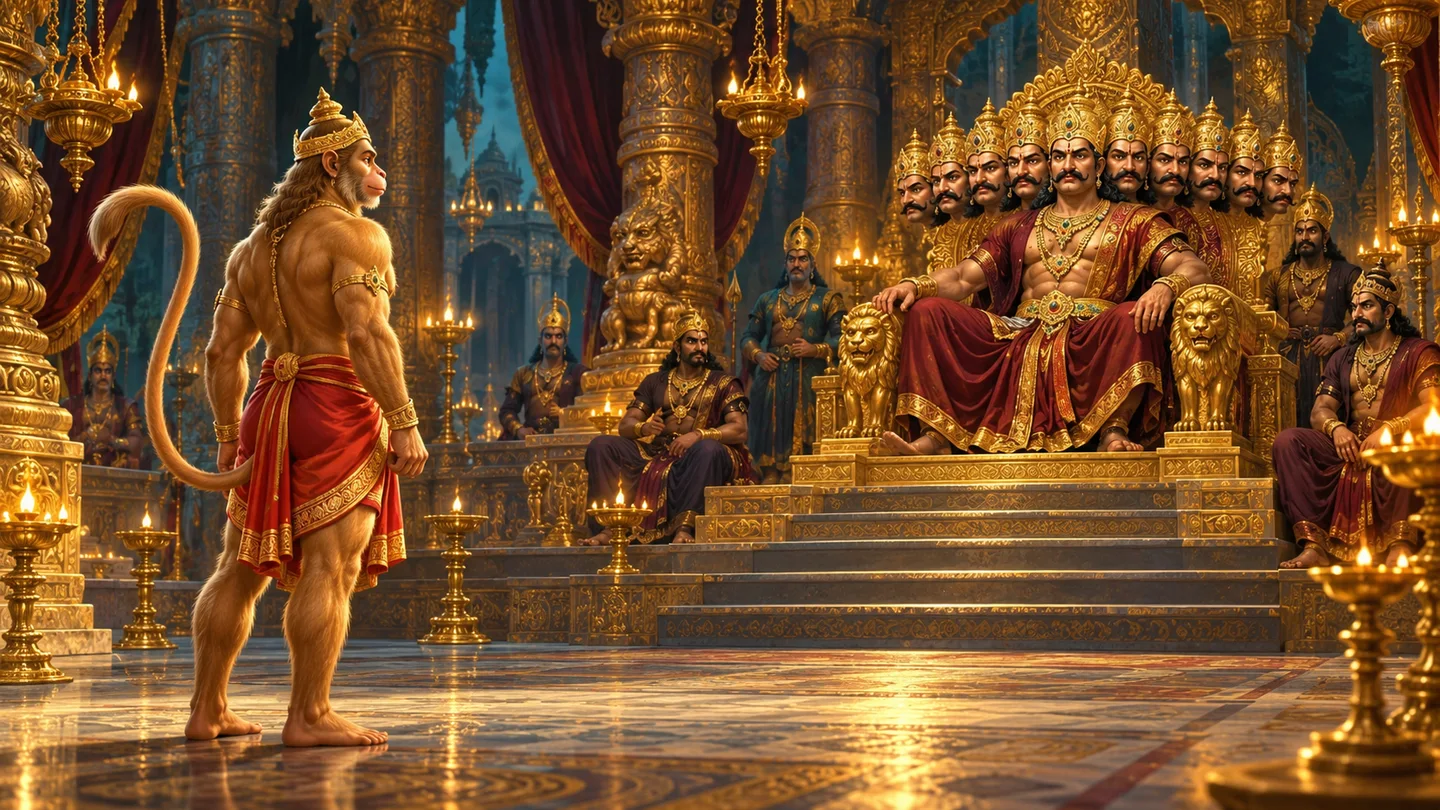
Hanuman stands as Rama’s messenger before Ravana in a grand royal hall.
Original DHIH illustration · artistic interpretation

Verse 1 · 5.51.1

#

तं समीक्ष्य महासत्त्वं सत्त्ववान् हरिसत्तमः ।

Looking upon the powerful ten-headed king, the resolute foremost vanara

वाक्यमर्थवदव्यग्रस्तमुवाच दशाननम् ॥

calmly addressed him in words full of meaning.

Verse 2 · 5.51.2

#

अहं सुग्रीवसंदेशादिह प्राप्तस्तवान्तिके ।

'I have come into your presence with a message from Sugriva.

राक्षसेश हरीशस्त्वां भ्राता कुशलमब्रवीत् ॥

Rakshasa lord, the vanara king, addressing you as a brother, asks after your welfare.

Verse 3 · 5.51.3

#

भ्रातुः श्रृणु समादेशं सुग्रीवस्य महात्मनः ।

Hear the message of your noble brother Sugriva,

धर्मार्थसहितं वाक्यमिह चामुत्र च क्षमम् ॥

words joined with righteousness and practical good, beneficial here and hereafter.

Verse 4 · 5.51.4

#

राजा दशरथो नाम रथकुञ्जरवाजिमान् ।

There was a king named Dasharatha, rich in chariots, elephants and horses,

पितेव बन्धुर्लोकस्य सुरेश्वरसमद्युतिः ॥

a fatherlike friend to the world and radiant as the gods' sovereign.

Verse 5 · 5.51.5

#

ज्येष्ठस्तस्य महाबाहुः पुत्रः प्रियतरः प्रभुः ।

His eldest, strong-armed son, his beloved and capable heir,

पितुर्निदेशान्निष्क्रान्तः प्रविष्टो दण्डकावनम् ॥

left at his father's command and entered Dandaka forest.

Verse 6 · 5.51.6

#

लक्ष्मणेन सह भ्राता सीतया सह भार्यया ।

Together with his brother Lakshmana and his wife Sita,

रामो नाम महातेजा धर्म्यं पन्थानमाश्रितः ॥

the radiant prince named Rama followed the righteous path.

Verse 7 · 5.51.7

#

तस्य भार्या जनस्थाने भ्रष्टा सीतेति विश्रुता ।

His wife, famed as Sita, disappeared from Janasthana;

वैदेहस्य सुता राज्ञो जनकस्य महात्मनः ॥

she is the daughter of the noble Videha king Janaka.

Verse 8 · 5.51.8

#

मार्गमाणस्तु तां देवीं राजपुत्रः सहानुजः ।

Searching for that lady with his younger brother, the prince

ऋष्यमूकमनुप्राप्तः सुग्रीवेण च संगतः ॥

reached Rishyamuka and met Sugriva.

Verse 9 · 5.51.9

#

तस्य तेन प्रतिज्ञातं सीतायाः परिमार्गणम् ।

Sugriva promised to search for Sita,

सुग्रीवस्यापि रामेण हरिराज्यं निवेदितुम् ॥

and Rama promised to secure the vanara kingdom for Sugriva.

Verse 10 · 5.51.10

#

ततस्तेन मृधे हत्वा राजपुत्रेण वालिनम् ।

Then the prince killed Vali in battle

सुग्रीवः स्थापितो राज्ये हर्यृक्षाणां गणेश्वरः ॥

and established Sugriva as king over the vanaras and bears.

Verse 11 · 5.51.11

#

त्वया विज्ञातपूर्वश्च वाली वानरपुङ्गवः ।

You already knew Vali, that foremost vanara;

स तेन निहतः संख्ये शरेणैकेन वानरः ॥

Rama killed him in battle with a single arrow.

Verse 12 · 5.51.12

#

स सीतामार्गणे व्यग्रः सुग्रीवः सत्यसंगरः ।

Sugriva, the vanara lord, true to his pledge and intent upon finding Sita,

हरीन् सम्प्रेषयामास दिशः सर्वा हरीश्वरः ॥

sent vanaras in every direction.

Verse 13 · 5.51.13

#

तां हरीणां सहस्राणि शतानि नियुतानि च ।

Hundreds, thousands and myriads of vanaras

दिक्षु सर्वासु मार्गन्ते ह्यधश्चोपरि चाम्बरे ॥

search for her everywhere, below and above in the sky.

Verse 14 · 5.51.14

#

वैनतेयसमाः केचित् केचित् तत्रानिलोपमाः ।

Some equal Garuda and some resemble the wind;

असङ्गगतयः शीघ्रा हरिवीरा महाबलाः ॥

these mighty vanara heroes move swiftly and without obstruction.

Verse 15 · 5.51.15

#

अहं तु हनुमान्नाम मारुतस्यौरसः सुतः ।

I am named Hanuman, the Wind's own son.

सीतायास्तु कृते तूर्णं शतयोजनमायतम् ॥

For Sita's sake, I swiftly crossed the hundred-yojana-wide—

Verse 16 · 5.51.16

#

समुद्रं लङ्घयित्वैव त्वां दिदृक्षुरिहागतः ।

ocean, and came here wishing to see you.

भ्रमता च मया दृष्टा गृहे ते जनकात्मजा ॥

While searching, I saw Janaka's daughter in your domain.

Verse 17 · 5.51.17

#

तद् भवान् दृष्टधर्मार्थस्तपःकृतपरिग्रहः ।

You understand righteousness and expediency and have accumulated austerity;

परदारान् महाप्राज्ञ नोपरोद‍्धुं त्वमर्हसि ॥

wise one, you ought not to imprison another man's wife.

Verse 18 · 5.51.18

#

नहि धर्मविरुद्धेषु बह्वपायेषु कर्मसु ।

Intelligent people like you do not engage in deeds

मूलघातिषु सज्जन्ते बुद्धिमन्तो भवद्विधाः ॥

opposed to righteousness, full of dangers and destructive at the root.

Verse 19 · 5.51.19

#

कश्च लक्ष्मणमुक्तानां रामकोपानुवर्तिनाम् ।

Who, even among gods and asuras, could stand before

शराणामग्रतः स्थातुं शक्तो देवासुरेष्वपि ॥

Lakshmana's arrows when they follow Rama's anger?

Verse 20 · 5.51.20

#

न चापि त्रिषु लोकेषु राजन् विद्येत कश्चन ।

King, no one in the three worlds

राघवस्य व्यलीकं यः कृत्वा सुखमवाप्नुयात् ॥

can injure Raghava and then enjoy happiness.

Verse 21 · 5.51.21

#

तत् त्रिकालहितं वाक्यं धर्म्यमर्थानुयायि च ।

Accept this advice, beneficial at all times, righteous and sound:

मन्यस्व नरदेवाय जानकी प्रतिदीयताम् ॥

let Janaka's daughter be returned to the lord of men.

Verse 22 · 5.51.22

#

दृष्टा हीयं मया देवी लब्धं यदिह दुर्लभम् ।

I have seen the lady and achieved the difficult object of my journey.

उत्तरं कर्म यच्छेषं निमित्तं तत्र राघवः ॥

Whatever further action remains is now for Raghava to accomplish.

Verse 23 · 5.51.23

#

लक्षितेयं मया सीता तथा शोकपरायणा ।

I saw Sita deeply overcome with sorrow;

गृहे यां नाभिजानासि पञ्चास्यामिव पन्नगीम् ॥

you do not recognize the five-headed serpent, as it were, kept within your house.

Verse 24 · 5.51.24

#

नेयं जरयितुं शक्या सासुरैरमरैरपि ।

Even gods together with asuras could not withstand her,

विषसंस्पृष्टमत्यर्थं भुक्तमन्नमिवौजसा ॥

any more than strength can digest food thoroughly mixed with poison.

Verse 25 · 5.51.25

#

तपःसंतापलब्धस्ते सोऽयं धर्मपरिग्रहः ।

The merit you gained through the hardship of austerity

न स नाशयितुं न्याय्य आत्मप्राणपरिग्रहः ॥

ought not to be destroyed; it is a safeguard of your very life.

Verse 26 · 5.51.26

#

अवध्यतां तपोभिर्यां भवान् समनुपश्यति ।

You regard yourself as invulnerable through your austerities

आत्मनः सासुरैर्देवैर्हेतुस्तत्राप्ययं महान् ॥

to gods and asuras; that great merit is indeed the cause of this protection.

Verse 27 · 5.51.27

#

सुग्रीवो न च देवोऽयं न यक्षो न च राक्षसः ।

Sugriva is neither a god, a yaksha nor a rakshasa.

मानुषो राघवो राजन् सुग्रीवश्च हरीश्वरः ।

Raghava is human, king, and Sugriva is lord of the vanaras.

तस्मात् प्राणपरित्राणं कथं राजन् करिष्यसि ॥

How, then, will you preserve your life?

Verse 28 · 5.51.28

#

न तु धर्मोपसंहारमधर्मफलसंहितम् ।

The harvest of righteousness is not to be confused with the fruit of wrongdoing;

तदेव फलमन्वेति धर्मश्चाधर्मनाशनः ॥

each brings its consequence, and righteousness works against evil.

Verse 29 · 5.51.29

#

प्राप्तं धर्मफलं तावद् भवता नात्र संशयः ।

You have already received the fruit of your righteous conduct; of this there is no doubt.

फलमस्याप्यधर्मस्य क्षिप्रमेव प्रपत्स्यसे ॥

Soon you will also receive the fruit of this unrighteous act.

Verse 30 · 5.51.30

#

जनस्थानवधं बुद्‍ध्वा वालिनश्च वधं तथा ।

Consider the destruction at Janasthana, the killing of Vali,

रामसुग्रीवसख्यं च बुद्‍ध्यस्व हितमात्मनः ॥

and the friendship between Rama and Sugriva; understand what serves your welfare.

Verse 31 · 5.51.31

#

कामं खल्वहमप्येकः सवाजिरथकुञ्जराम् ।

I alone could indeed destroy Lanka,

लङ्कां नाशयितुं शक्तस्तस्यैष तु न निश्चयः ॥

with its horses, chariots and elephants; but that is not Rama's decision for me.

Verse 32 · 5.51.32

#

रामेण हि प्रतिज्ञातं हर्यृक्षगणसंनिधौ ।

Rama has pledged before the vanaras and bears

उत्सादनममित्राणां सीता यैस्तु प्रधर्षिता ॥

to destroy the enemies who have mistreated Sita.

Verse 33 · 5.51.33

#

अपकुर्वन् हि रामस्य साक्षादपि पुरंदरः ।

Even Indra himself could not gain happiness by harming Rama;

न सुखं प्राप्नुयादन्यः किं पुनस्त्वद्विधो जनः ॥

how much less could another person such as you?

Verse 34 · 5.51.34

#

यां सीतेत्यभिजानासि येयं तिष्ठति ते गृहे ।

The woman you call Sita, who remains in your house,

कालरात्रीति तां विद्धि सर्वलङ्काविनाशिनीम् ॥

should be understood as the night of doom that will destroy all Lanka.

Verse 35 · 5.51.35

#

तदलं कालपाशेन सीताविग्रहरूपिणा ।

Enough of this noose of death in Sita's form

स्वयं स्कन्धावसक्तेन क्षेममात्मनि चिन्त्यताम् ॥

which you have hung around your own neck; consider your safety.

Verse 36 · 5.51.36

#

सीतायास्तेजसा दग्धां रामकोपप्रदीपिताम् ।

Consumed by Sita’s spiritual splendour and kindled by Rama’s anger,

दह्यमानामिमां पश्य पुरीं साट्टप्रतोलिकाम् ॥

see this city burning, with its towers and gateways.

Verse 37 · 5.51.37

#

स्वानि मित्राणि मन्त्रींश्च ज्ञातीन् भ्रातॄन् सुता‍न‍‍्हितान् ।

Do not bring your friends, ministers, relatives, brothers and beloved sons,

भोगान् दारांश्च लङ्कां च मा विनाशमुपानय ॥

your pleasures, wives and Lanka itself, to destruction.

Verse 38 · 5.51.38

#

सत्यं राक्षसराजेन्द्र शृणुष्व वचनं मम ।

Great king of rakshasas, hear my truthful words:

रामदासस्य दूतस्य वानरस्य विशेषतः ॥

I speak as Rama's servant and messenger, and especially as a vanara.

Verse 39 · 5.51.39

#

सर्वाल्ँ लोकान् सुसंहृत्य सभूतान् सचराचरान् ।

The illustrious Rama can withdraw all worlds

पुनरेव तथा स्रष्टुं शक्तो रामो महायशाः ॥

with their moving and unmoving beings, and create them again.

Verse 40 · 5.51.40

#

देवासुरनरेन्द्रेषु यक्षरक्षोरगेषु च ।

Among gods, asuras, kings, yakshas, rakshasas and serpents,

विद्याधरेषु नागेषु गन्धर्वेषु मृगेषु च ॥

among vidyadharas, nagas, gandharvas and beasts—

Verse 41 · 5.51.41

#

सिद्धेषु किंनरेन्द्रेषु पतत्त्रिषु च सर्वतः ।

among perfected beings, kinnara rulers and birds everywhere,

सर्वत्र सर्वभूतेषु सर्वकालेषु नास्ति सः ॥

among all creatures in every place and time, none exists—

Verse 42 · 5.51.42

#

यो रामं प्रति युध्येत विष्णुतुल्यपराक्रमम् ।

who could fight Rama, whose prowess equals Vishnu's.

सर्वलोकेश्वरस्येह कृत्वा विप्रियमीदृशम् ।

Having committed such an offence against the lord of all worlds,

रामस्य राजसिंहस्य दुर्लभं तव जीवितम् ॥

Rama, lion among kings, it will be difficult for you to survive.

Verse 43 · 5.51.43

#

देवाश्च दैत्याश्च निशाचरेन्द्र

Lord of night-wanderers, gods and daityas,

गन्धर्वविद्याधरनागयक्षाः ।

gandharvas, vidyadharas, nagas and yakshas—

रामस्य लोकत्रयनायकस्य

against Rama, leader of the three worlds,

स्थातुं न शक्ताः समरेषु सर्वे ॥

all together cannot stand in battle.

Verse 44 · 5.51.44

#

ब्रह्मा स्वयम्भूश्चतुराननो वा

Neither four-faced, self-born Brahma,

रुद्रस्त्रिनेत्रस्त्रिपुरान्तको वा ।

nor three-eyed Rudra, destroyer of the three cities,

इन्द्रो महेन्द्रः सुरनायको वा

nor mighty Indra, leader of the gods,

स्थातुं न शक्ता युधि राघवस्य ॥

can stand against Raghava in battle.

Verse 45 · 5.51.45

#

स सौष्ठवोपेतमदीनवादिनः

Hearing the fearless vanara's eloquent

कपेर्निशम्याप्रतिमोऽप्रियं वचः ।

but unwelcome words, that formidable ten-headed king,

दशाननः कोपविवृत्तलोचनः

his eyes widening with anger,

समादिशत् तस्य वधं महाकपेः ॥

ordered the great vanara to be killed.

CHAPTER 51 COMPLETE

The journey continues.

Ravana rejects the counsel and angrily orders Hanuman’s death.

NEXT CHAPTER

Continue Hanuman’s journey in the next chapter.

About this reading

Vālmīki Rāmāyaṇa, Sundara Kanda, chapter 51. This reading follows Sanskrit Wikisource revision 355161, with all 45 numbered verses. Verse divisions and wording vary between editions.

The Sanskrit is preserved with normalized display spacing and line breaks. Some sentences continue across verse boundaries; the English follows that continuity. A yojana is a traditional distance unit, retained without assigning a modern measurement. Shape-changing and celestial beings belong to the epic’s sacred narrative.

English line senses and short meanings are original AI-assisted DHIH renderings checked against this Sanskrit reading; they are not a word-for-word grammatical commentary or a claim of human scholarly certification. Roman transliteration is generated mechanically in IAST. Names may also appear in familiar English spellings.

Sanskrit transcription credit: Wikisource contributors, revision history. The adapted reading text and DHIH English on this chapter page are offered under CC BY-SA 4.0. The ancient Sanskrit work is in the public domain. Illustrations are separately commissioned AI-generated DHIH artwork.

Historical comparison: M. N. Dutt’s Ramayana, volume II, a public-domain translation, was consulted for narrative context. The English displayed here is a fresh rendering of the pinned Sanskrit, not a reproduction of that translation.

The speech contains threats of war and devotional claims about Rama’s supreme power. These are presented as the epic’s dialogue, not as modern historical or military claims. Audio will be added only when suitable recording permissions are available.