Search DHIH library

VĀLMĪKI RĀMĀYAṆA · CHAPTER 52

सुन्दरकाण्डम् · सर्गः 52

Vibhishana defends the envoy

When Ravana orders Hanuman’s execution, Vibhishana argues that killing a messenger violates accepted duty and sound policy.

28 versesSanskrit + English1 illustration
Begin reading ↓

An edition-specific reading with original English meanings. Source & reading notes

SCENE 01 · VERSES 1–28

Counsel against anger

Vibhishana respectfully challenges a wrongful command and asks Ravana to exercise judgement.

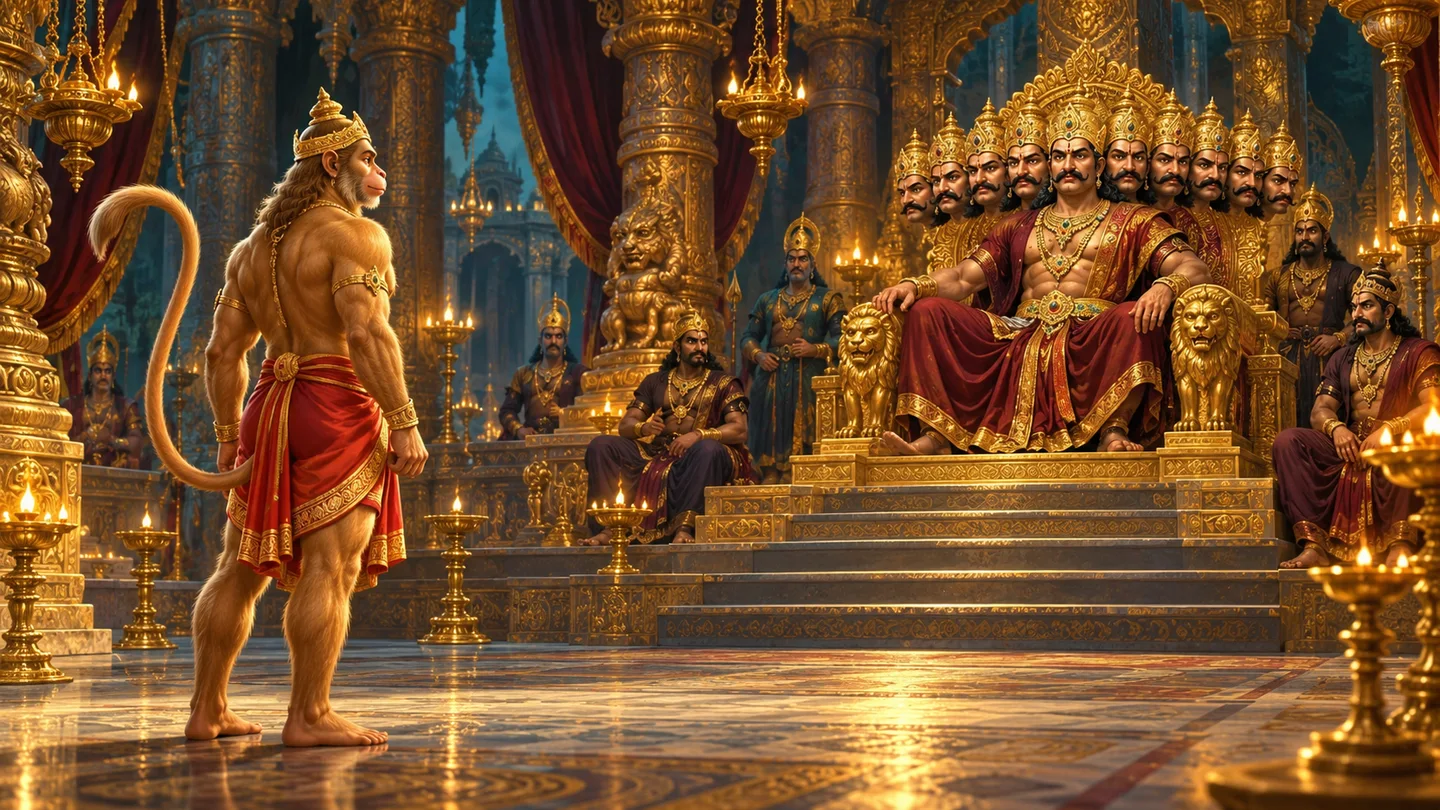
Hanuman stands as Rama’s messenger before Ravana in a grand royal hall.
Original DHIH illustration · artistic interpretation

Verse 1 · 5.52.1

#

स तस्य वचनं श्रुत्वा वानरस्य महात्मनः ।

Hearing the words of the great vanara,

आज्ञापयद् वधं तस्य रावणः क्रोधमूर्च्छितः ॥

Ravana, overcome by anger, ordered him to be killed.

Verse 2 · 5.52.2

#

वधे तस्य समाज्ञप्ते रावणेन दुरात्मना ।

When the ill-minded Ravana commanded that death,

निवेदितवतो दौत्यं नानुमेने विभीषणः ॥

Vibhishana would not approve the killing of one who had declared himself an envoy.

Verse 3 · 5.52.3

#

तं रक्षोऽधिपतिं क्रुद्धं तच्च कार्यमुपस्थितम् ।

Understanding the king's anger and the immediate danger,

विदित्वा चिन्तयामास कार्यं कार्यविधौ स्थितः ॥

he reflected on what must be done, holding to proper procedure.

Verse 4 · 5.52.4

#

निश्चितार्थस्ततः साम्ना पूज्यं शत्रुजिदग्रजम् ।

Having reached a decision, that skilled speaker respectfully and gently

उवाच हितमत्यर्थं वाक्यं वाक्यविशारदः ॥

offered deeply beneficial words to his elder brother, conqueror of foes.

Verse 5 · 5.52.5

#

क्षमस्व रोषं त्यज राक्षसेन्द्र

'Be patient, rakshasa king; put away anger.

प्रसीद मे वाक्यमिदं शृणुष्व ।

Be gracious and listen to these words of mine.

वधं न कुर्वन्ति परावरज्ञा

Good sovereigns who understand right distinctions

दूतस्य सन्तो वसुधाधिपेन्द्राः ॥

do not put a messenger to death.

Verse 6 · 5.52.6

#

राजन् धर्मविरुद्धं च लोकवृत्तेश्च गर्हितम् ।

King, killing this vanara opposes righteousness,

तव चासदृशं वीर कपेरस्य प्रमापणम् ॥

is condemned by worldly practice, and is unworthy of you, hero.

Verse 7 · 5.52.7

#

धर्मज्ञश्च कृतज्ञश्च राजधर्मविशारदः ।

You know righteousness and gratitude and are skilled in royal duty;

परावरज्ञो भूतानां त्वमेव परमार्थवित् ॥

you discern the higher and lower among beings and understand what matters.

Verse 8 · 5.52.8

#

गृह्यन्ते यदि रोषेण त्वादृशोऽपि विचक्षणाः ।

If even discerning people like you are overcome by anger,

ततः शास्त्रविपश्चित्त्वं श्रम एव हि केवलम् ॥

then learning and knowledge of the teachings are merely wasted effort.

Verse 9 · 5.52.9

#

तस्मात् प्रसीद शत्रुघ्न राक्षसेन्द्र दुरासद ।

Therefore be gracious, enemy-subduing and unassailable rakshasa king;

युक्तायुक्तं विनिश्चित्य दूतदण्डो विधीयताम् ॥

decide what is proper and improper before imposing punishment on the envoy.

Verse 10 · 5.52.10

#

विभीषणवचः श्रुत्वा रावणो राक्षसेश्वरः ।

Hearing Vibhishana's words, the rakshasa king Ravana,

कोपेन महताऽऽविष्टो वाक्यमुत्तरमब्रवीत् ॥

possessed by great anger, spoke in reply.

Verse 11 · 5.52.11

#

न पापानां वधे पापं विद्यते शत्रुसूदन ।

'There is no wrongdoing in killing evildoers, destroyer of foes.

तस्मादिमं वधिष्यामि वानरं पापकारिणम् ॥

Therefore I will kill this vanara who has committed evil.'

Verse 12 · 5.52.12

#

अधर्ममूलं बहुदोषयुक्त-

Hearing words rooted in unrighteousness, full of faults

मनार्यजुष्टं वचनं निशम्य ।

and favoured by the ignoble,

उवाच वाक्यं परमार्थतत्त्वं

Vibhishana, foremost among the wise,

विभीषणो बुद्धिमतां वरिष्ठः ॥

spoke words expressing the true principle.

Verse 13 · 5.52.13

#

प्रसीद लङ्केश्वर राक्षसेन्द्र

'Be gracious, lord of Lanka and king of rakshasas.

धर्मार्थतत्त्वं वचनं शृणुष्व ।

Hear the principle of righteousness and sound policy.

दूता न वध्याः समयेषु राजन्

In every place and under every agreement, king,

सर्वेषु सर्वत्र वदन्ति सन्तः ॥

good people declare that envoys must not be killed.

Verse 14 · 5.52.14

#

असंशयं शत्रुरयं प्रवृद्धः

Undoubtedly this is a formidable enemy

कृतं ह्यनेनाप्रियमप्रमेयम् ।

who has done us immeasurable harm.

न दूतवध्यां प्रवदन्ति सन्तो

Yet good people do not prescribe death for a messenger;

दूतस्य दृष्टा बहवो हि दण्डाः ॥

many other punishments for envoys are known.

Verse 15 · 5.52.15

#

वैरूप्यमङ्गेषु कशाभिघातो

Disfigurement of limbs, blows with a whip,

मौण्ड्यं तथा लक्षणसंनिपातः ।

shaving the head and marking the body—

एतान् हि दूते प्रवदन्ति दण्डान्

these are punishments described for envoys;

वधस्तु दूतस्य न नः श्रुतोऽस्ति ॥

we have not heard of killing a messenger.

Verse 16 · 5.52.16

#

कथं च धर्मार्थविनीतबुद्धिः

How could one like you, trained in righteousness and statecraft,

परावरप्रत्ययनिश्चितार्थः ।

firm in judging relative strengths,

भवद्विधः कोपवशे हि तिष्ठेत्

remain under anger's control?

कोपं न गच्छन्ति हि सत्त्ववन्तः ॥

Those with self-command do not surrender to anger.

Verse 17 · 5.52.17

#

न धर्मवादे न च लोकवृत्ते

In discussion of righteousness, worldly conduct,

न शास्त्रबुद्धिग्रहणेषु वापि ।

or understanding the teachings,

विद्येत कश्चित्तव वीर तुल्य-

no one is your equal, hero;

स्त्वं ह्युत्तमः सर्वसुरासुराणाम् ॥

you surpass gods and asuras.

Verse 18 · 5.52.18

#

पराक्रमोत्साहमनस्विनां च

Invincible even to courageous, spirited gods and asuras,

सुरासुराणामपि दुर्जयेन ।

you possess immeasurable strength.

त्वयाप्रमेयेण सुरेन्द्रसङ्घा

Again and again in battle,

जिताश्च युद्धेष्वसकृन्नरेन्द्राः ॥

you have conquered hosts of divine chiefs and kings.

Verse 19 · 5.52.19

#

इत्थंविधस्यामरदैत्यशत्रोः

Against an undefeated, valiant hero such as you,

शूरस्य वीरस्य तवाजितस्य ।

enemy of gods and daityas,

कुर्वन्ति वीरा मनसाप्यलीकं

warriors can conceive of wrongdoing

प्राणैर्विमुक्ता न तु भोः पुरा ते ॥

only after surrendering hope of their lives, not before.

Verse 20 · 5.52.20

#

न चाप्यस्य कपेर्घाते कंचित् पश्याम्यहं गुणम् ।

I see no advantage in killing this vanara.

तेष्वयं पात्यतां दण्डो यैरयं प्रेषितः कपिः ॥

Let punishment fall upon those who sent him.

Verse 21 · 5.52.21

#

साधुर्वा यदि वासाधुः परैरेष समर्पितः ।

Whether good or bad, he has been commissioned by others.

ब्रुवन् परार्थं परवान् न दूतो वधमर्हति ॥

Speaking another's purpose under another's command, an envoy does not deserve death.

Verse 22 · 5.52.22

#

अपि चास्मिन् हते नान्यं राजन् पश्यामि खेचरम् ।

If he is killed, king, I see no other sky-traveller

इह यः पुनरागच्छेत् परं पारं महोदधेः ॥

who would come again from the far shore of the great ocean.

Verse 23 · 5.52.23

#

तस्मान्नास्य वधे यत्नः कार्यः परपुरंजय ।

Therefore, conqueror of enemy cities, do not exert yourself to kill him;

भवान् सेन्द्रेषु देवेषु यत्नमास्थातुमर्हति ॥

your efforts are worthy of opponents such as the gods with Indra.

Verse 24 · 5.52.24

#

अस्मिन् विनष्टे नहि भूतमन्यं

If this creature is destroyed, I see no other

पश्यामि यस्तौ नरराजपुत्रौ ।

who would rouse those two princes,

युद्धाय युद्धप्रिय दुर्विनीता-

your defiant human enemies,

वुद्योजयेद् वै भवता विरुद्धौ ॥

to come to battle, you who delight in war.

Verse 25 · 5.52.25

#

पराक्रमोत्साहमनस्विनां च

You are difficult even for brave and spirited

सुरासुराणामपि दुर्जयेन ।

gods and asuras to overcome.

त्वया मनोनन्दन नैर्ऋतानां

Delight of the rakshasas, it is not fitting

युद्धाय निर्नाशयितुं न युक्तम् ॥

to destroy this opportunity for battle.

Verse 26 · 5.52.26

#

हिताश्च शूराश्च समाहिताश्च

Your warriors are loyal, brave and disciplined,

कुलेषु जाताश्च महागुणेषु ।

born into highly distinguished families,

मनस्विनः शस्त्रभृतां वरिष्ठाः

resolute, foremost bearers of weapons,

कोपप्रशस्ताः सुभृताश्च योधाः ॥

renowned for fierce courage and well supported.

Verse 27 · 5.52.27

#

तदेकदेशेन बलस्य तावत्

Let some of them go today at your command

केचित् तवादेशकृतोऽद्य यान्तु ।

with only a portion of your forces.

तौ राजपुत्रावुपगृह्य मूढौ

Let them seize those two deluded princes

परेषु ते भावयितुं प्रभावम् ॥

and make your power known to your enemies.'

Verse 28 · 5.52.28

#

निशाचराणामधिपोऽनुजस्य

The immensely strong rakshasa king, enemy of heaven,

विभीषणस्योत्तमवाक्यमिष्टम् ।

thoughtfully accepted the excellent and welcome words

जग्राह बुद्ध्या सुरलोकशत्रु-

of his younger brother

र्महाबलो राक्षसराजमुख्यः ॥

Vibhishana.

CHAPTER 52 COMPLETE

The journey continues.

Ravana accepts the argument against killing an envoy, but another punishment remains to be chosen.

NEXT CHAPTER

Continue Hanuman’s journey in the next chapter.

About this reading

Vālmīki Rāmāyaṇa, Sundara Kanda, chapter 52. This reading follows Sanskrit Wikisource revision 355162, with all 28 numbered verses. Verse divisions and wording vary between editions.

The Sanskrit is preserved with normalized display spacing and line breaks. Some sentences continue across verse boundaries; the English follows that continuity. A yojana is a traditional distance unit, retained without assigning a modern measurement. Shape-changing and celestial beings belong to the epic’s sacred narrative.

English line senses and short meanings are original AI-assisted DHIH renderings checked against this Sanskrit reading; they are not a word-for-word grammatical commentary or a claim of human scholarly certification. Roman transliteration is generated mechanically in IAST. Names may also appear in familiar English spellings.

Sanskrit transcription credit: Wikisource contributors, revision history. The adapted reading text and DHIH English on this chapter page are offered under CC BY-SA 4.0. The ancient Sanskrit work is in the public domain. Illustrations are separately commissioned AI-generated DHIH artwork.

Historical comparison: M. N. Dutt’s Ramayana, volume II, a public-domain translation, was consulted for narrative context. The English displayed here is a fresh rendering of the pinned Sanskrit, not a reproduction of that translation.

The chapter discusses ancient punishments, including physical injury. The text records its narrative setting; those punishments are not offered as present-day ethical or legal guidance. Audio will be added only when suitable recording permissions are available.