Search DHIH library

VĀLMĪKI RĀMĀYAṆA · CHAPTER 53

सुन्दरकाण्डम् · सर्गः 53

The burning tail

Ravana orders Hanuman’s tail to be burned and the captive paraded through Lanka. Sita prays for him while he turns the procession into a chance to study the city.

44 versesSanskrit + English1 illustration
Begin reading ↓

An edition-specific reading with original English meanings. Source & reading notes

SCENE 01 · VERSES 1–44

A punishment becomes an opening

Hanuman observes Lanka, recognizes unexpected protection and chooses the moment to break free.

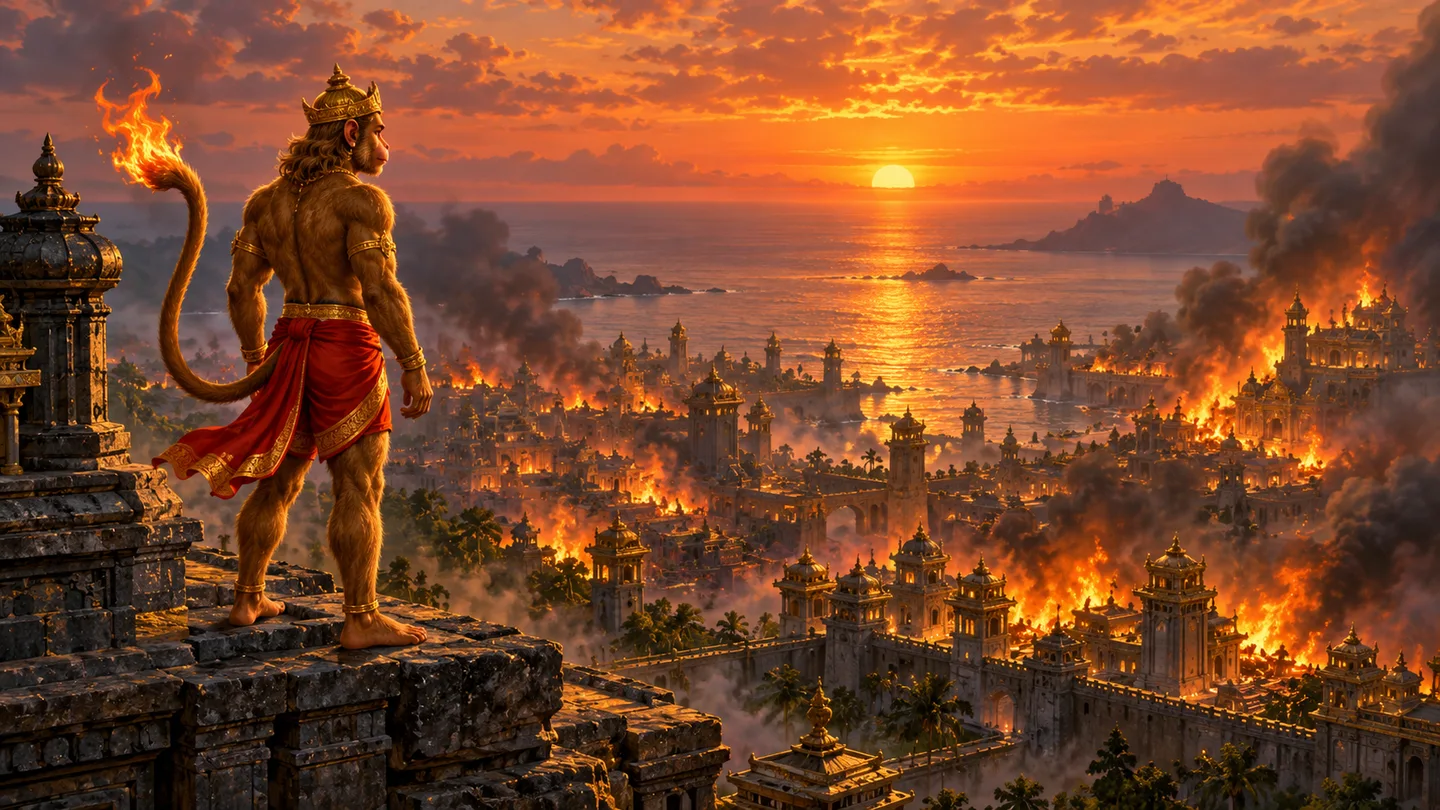
Hanuman looks across Lanka’s glowing rooftops during the epic fire episode.
Original DHIH illustration · artistic interpretation

Verse 1 · 5.53.1

#

तस्य तद् वचनं श्रुत्वा दशग्रीवो महात्मनः ।

Hearing his noble brother's words,

देशकालहितं वाक्यं भ्रातुरुत्तरमब्रवीत् ॥

the ten-necked king gave an answer suited to the occasion.

Verse 2 · 5.53.2

#

सम्यगुक्तं हि भवता दूतवध्या विगर्हिता ।

'You have spoken rightly: killing an envoy is condemned.

अवश्यं तु वधायान्यः क्रियतामस्य निग्रहः ॥

Another punishment, however, must certainly be imposed upon him.

Verse 3 · 5.53.3

#

कपीनां किल लाङ्गूलमिष्टं भवति भूषणम् ।

Vanaras, they say, cherish their tails as ornaments.

तदस्य दीप्यतां शीघ्रं तेन दग्धेन गच्छतु ॥

Set his tail alight at once; let him depart with it burned.

Verse 4 · 5.53.4

#

ततः पश्यन्त्वमुं दीनमङ्गवैरूप्यकर्शितम् ।

Then let all his friends, relatives and companions

सुमित्रज्ञातयः सर्वे बान्धवाः ससुहृज्जनाः ॥

see him miserable and distressed by the disfigurement of his body.'

Verse 5 · 5.53.5

#

आज्ञापयद् राक्षसेन्द्रः पुरं सर्वं सचत्वरम् ।

The rakshasa king ordered, 'Let the guards parade him

लाङ्गूलेन प्रदीप्तेन रक्षोभिः परिणीयताम् ॥

through the whole city and its squares with his tail burning.'

Verse 6 · 5.53.6

#

तस्य तद् वचनं श्रुत्वा राक्षसाः कोपकर्कशाः ।

Hearing the command, the angry, harsh rakshasas

वेष्टन्ते तस्य लाङ्गूलं जीर्णैः कार्पासिकैः पटैः ॥

wrapped his tail in old cotton cloths.

Verse 7 · 5.53.7

#

संवेष्ट्यमाने लाङ्गूले व्यवर्धत महाकपिः ।

As his tail was wrapped, the great vanara grew,

शुष्कमिन्धनमासाद्य वनेष्विव हुताशनम् ॥

like forest fire expanding when it reaches dry fuel.

Verse 8 · 5.53.8

#

तैलेन परिषिच्याथ तेऽग्निं तत्रोपपादयन् ।

They soaked the wrappings in oil and set them alight;

लाङ्गूलेन प्रदीप्तेन राक्षसांस्तानताडयत् ॥

with his blazing tail he struck those rakshasas.

Verse 9 · 5.53.9

#

रोषामर्षपरीतात्मा बालसूर्यसमाननः ।

His face like the young sun, his mind filled with anger and indignation,

स भूयः संगतैः क्रूरै राक्षसैर्हरिपुङ्गवः ॥

the foremost vanara was again surrounded by those cruel rakshasas.

Verse 10 · 5.53.10

#

सहस्त्रीबालवृद्धाश्च जग्मुः प्रीतिं निशाचराः ।

The night-wanderers, including women, children and elders, rejoiced;

निबद्धः कृतवान् वीरस्तत्कालसदृशीं मतिम् ॥

bound, the hero formed a plan suited to that moment.

Verse 11 · 5.53.11

#

कामं खलु न मे शक्ता निबद्धस्यापि राक्षसाः ।

'Even though I am bound, these rakshasas cannot overpower me.

छित्त्वा पाशान् समुत्पत्य हन्यामहमिमान् पुनः ॥

I could break the ropes, leap up and kill them again.

Verse 12 · 5.53.12

#

यदि भर्तृहितार्थाय चरन्तं भर्तृशासनात् ।

These wicked beings bind me while I carry out my lord's orders for his good;

निबध्नन्ते दुरात्मानो न तु मे निष्कृतिः कृता ॥

they have not yet received my answer for it.

Verse 13 · 5.53.13

#

सर्वेषामेव पर्याप्तो राक्षसानामहं युधि ।

I am a match for all the rakshasas in battle;

किं तु रामस्य प्रीत्यर्थं विषहिष्येऽहमीदृशम् ॥

nevertheless, for Rama's sake I will endure this treatment.

Verse 14 · 5.53.14

#

लङ्का चारयितव्या मे पुनरेव भवेदिति ।

I should inspect Lanka once more,

रात्रौ नहि सुदृष्टा मे दुर्गकर्मविधानतः ॥

for at night I did not fully see the arrangement of its defences.

Verse 15 · 5.53.15

#

अवश्यमेव द्रष्टव्या मया लङ्का निशाक्षये ।

I must certainly view Lanka when night has ended.

कामं बध्नन्तु मे भूयः पुच्छस्योद्दीपनेन च ॥

Let them bind me further and set my tail alight.

Verse 16 · 5.53.16

#

पीडां कुर्वन्ति रक्षांसि न मेऽस्ति मनसः श्रमः ।

Though the rakshasas inflict pain, my mind is not distressed.'

ततस्ते संवृताकारं सत्त्ववन्तं महाकपिम् ॥

Then they took that mighty vanara, who concealed his intentions—

Verse 17 · 5.53.17

#

परिगृह्य ययुर्हृष्टा राक्षसाः कपिकुञ्जरम् ।

and happily led away the foremost vanara,

शङ्खभेरीनिनादैश्च घोषयन्तः स्वकर्मभिः ॥

announcing their deed with the sounds of conches and drums.

Verse 18 · 5.53.18

#

राक्षसाः क्रूरकर्माणश्चारयन्ति स्म तां पुरीम् ।

Those cruel rakshasas took him through the city;

अन्वीयमानो रक्षोभिर्ययौ सुखमिरंदमः ॥

followed by the guards, the enemy-subduer went along at ease.

Verse 19 · 5.53.19

#

हनूमांश्चारयामास राक्षसानां महापुरीम् ।

Hanuman surveyed the rakshasas' great city;

अथापश्यद् विमानानि विचित्राणि महाकपिः ॥

the mighty vanara saw its wonderfully varied lofty buildings.

Verse 20 · 5.53.20

#

संवृतान् भूमिभागांश्च सुविभक्तांश्च चत्वरान् ।

He observed enclosed grounds and well-arranged squares,

रथ्याश्च गृहसम्बाधाः कपिः शृङ्गाटकानि च ॥

streets crowded with houses, and road junctions.

Verse 21 · 5.53.21

#

तथा रथ्योपरथ्याश्च तथैव च गृहान्तरान् ।

He saw major roads and side streets, and the spaces between houses,

चत्वरेषु चतुष्केषु राजमार्गे तथैव च ॥

as they passed through squares, crossroads and the royal road.

Verse 22 · 5.53.22

#

घोषयन्ति कपिं सर्वे चार इत्येव राक्षसाः ।

Everywhere the rakshasas proclaimed, 'This vanara is a spy!'

स्त्रीबालवृद्धा निर्जग्मुस्तत्र तत्र कुतूहलात् ॥

Women, children and elders came out in curiosity.

Verse 23 · 5.53.23

#

तं प्रदीपितलाङ्गूलं हनूमन्तं दिदृक्षवः ।

They wished to see Hanuman with his burning tail.

दीप्यमाने ततस्तस्य लाङ्गूलाग्रे हनूमतः ॥

While the tip of his tail blazed—

Verse 24 · 5.53.24

#

राक्षस्यस्ता विरूपाक्ष्यः शंसुर्देव्यास्तदप्रियम् ।

the misshapen rakshasis told Sita the unwelcome news:

यस्त्वया कृतसंवादः सीते ताम्रमुखः कपिः ॥

'That copper-faced vanara with whom you spoke, Sita—

Verse 25 · 5.53.25

#

लाङ्गूलेन प्रदीप्तेन स एष परिणीयते ।

is now being led around with his tail on fire.'

श्रुत्वा तद् वचनं क्रूरमात्मापहरणोपमम् ॥

Hearing those cruel words, which felt like a threat to her own life—

Verse 26 · 5.53.26

#

वैदेही शोकसंतप्ता हुताशनमुपागमत् ।

Vaidehi, tormented by grief, turned to the Fire-god;

मङ्गलाभिमुखी तस्य सा तदासीन्महाकपेः ॥

she directed her thoughts towards the great vanara's welfare.

Verse 27 · 5.53.27

#

उपतस्थे विशालाक्षी प्रयता हव्यवाहनम् ।

The large-eyed lady reverently addressed the bearer of offerings:

यद्यस्ति पतिशुश्रूषा यद्यस्ति चरितं तपः ।

'If I have served my husband, if I have practised austerity,

यदि वा त्वेकपत्नीत्वं शीतो भव हनूमतः ॥

if I have remained faithful to him alone, be cool to Hanuman.

Verse 28 · 5.53.28

#

यदि किंचिदनुक्रोशस्तस्य मय्यस्ति धीमतः ।

If that wise one has any compassion for me,

यदि वा भाग्यशेषो मे शीतो भव हनूमतः ॥

and if any good fortune remains to me, be cool to Hanuman.

Verse 29 · 5.53.29

#

यदि मां वृत्तसम्पन्नां तत्समागमलालसाम् ।

If that righteous one knows me to be virtuous

स विजानाति धर्मात्मा शीतो भव हनूमतः ॥

and longing for reunion with him, be cool to Hanuman.

Verse 30 · 5.53.30

#

यदि मां तारयेदार्यः सुग्रीवः सत्यसंगरः ।

If noble Sugriva, true to his promise, will rescue me

अस्माद् दुःखाम्बुसंरोधाच्छीतो भव हनूमतः ॥

from this enclosing sea of sorrow, be cool to Hanuman.'

Verse 31 · 5.53.31

#

ततस्तीक्ष्णार्चिरव्यग्रः प्रदक्षिणशिखोऽनलः ।

Then Fire burned steadily with sharp flames turning to the right,

जज्वाल मृगशावाक्ष्याः शंसन्निव शुभं कपेः ॥

seeming to announce the vanara's safety to the doe-eyed lady.

Verse 32 · 5.53.32

#

हनूमज्जनकश्चैव पुच्छानलयुतोऽनिलः ।

The Wind, Hanuman's father, joined the fire upon his tail

ववौ स्वास्थ्यकरो देव्याः प्रालेयानिलशीतलः ॥

and blew cool as a snowy breeze, bringing comfort to the lady.

Verse 33 · 5.53.33

#

दह्यमाने च लाङ्गूले चिन्तयामास वानरः ।

While his tail burned, the vanara wondered,

प्रदीप्तोऽग्निरयं कस्मान्न मां दहति सर्वतः ॥

'Why does this blazing fire not burn me all over?

Verse 34 · 5.53.34

#

दृश्यते च महाज्वालः करोति च न मे रुजम् ।

I see a great flame, yet it causes me no pain;

शिशिरस्येव सम्पातो लाङ्गूलाग्रे प्रतिष्ठितः ॥

at my tail's tip it feels like a touch of cold.

Verse 35 · 5.53.35

#

अथ वा तदिदं व्यक्तं यद् दृष्टं प्लवता मया ।

Perhaps this plainly resembles the wonder I saw in my flight:

रामप्रभावादाश्चर्यं पर्वतः सरितां पतौ ॥

a mountain rising in the ocean through Rama's power.

Verse 36 · 5.53.36

#

यदि तावत् समुद्रस्य मैनाकस्य च धीमतः ।

If the ocean and wise Mainaka showed such eagerness

रामार्थं सम्भ्रमस्तादृक् किमग्निर्न करिष्यति ॥

for Rama's sake, why should Fire not do the same?

Verse 37 · 5.53.37

#

सीतायाश्चानृशंस्येन तेजसा राघवस्य च ।

Through Sita's compassion, Raghava's radiance,

पितुश्च मम सख्येन न मां दहति पावकः ॥

and Fire's friendship with my father, the flame does not burn me.'

Verse 38 · 5.53.38

#

भूयः स चिन्तयामास मुहूर्तं कपिकुञ्जरः ।

Again the foremost vanara reflected briefly:

कथमस्मद्विधस्येह बन्धनं राक्षसाधमैः ॥

'How can someone like me remain bound here by these low rakshasas?

Verse 39 · 5.53.39

#

प्रतिक्रियास्य युक्ता स्यात् सति मह्यं पराक्रमे ।

Since I possess strength, a response to this is fitting.'

ततश्छित्त्वा च तान् पाशान् वेगवान् वै महाकपिः ॥

Then the swift great vanara broke those bonds—

Verse 40 · 5.53.40

#

उत्पपाताथ वेगेन ननाद च महाकपिः ।

leapt up rapidly and gave a mighty roar.

पुरद्वारं ततः श्रीमान् शैलशृङ्गमिवोन्नतम् ॥

Then the glorious one approached the city gateway, lofty as a mountain peak—

Verse 41 · 5.53.41

#

विभक्तरक्षःसम्बाधमाससादानिलात्मजः ।

crowded with guards stationed in their assigned places.

स भूत्वा शैलसंकाशः क्षणेन पुनरात्मवान् ॥

The self-controlled Wind's son became mountainlike, then in an instant—

Verse 42 · 5.53.42

#

ह्रस्वतां परमां प्राप्तो बन्धनान्यवशातयत् ।

became exceedingly small and let the bindings fall away.

विमुक्तश्चाभवच्छ्रीमान् पुनः पर्वतसंनिभः ॥

Freed, that splendid hero again grew as large as a mountain.

Verse 43 · 5.53.43

#

वीक्षमाणश्च ददृशे परिघं तोरणाश्रितम् ।

Looking around, he saw an iron bar at the gateway.

स तं गृह्य महाबाहुः कालायसपरिष्कृतम् ।

Taking that black-iron-bound bar, the strong-armed one

रक्षिणस्तान् पुनः सर्वान् सूदयामास मारुतिः ॥

once more killed all those guards.

Verse 44 · 5.53.44

#

स तान् निहत्वा रणचण्डविक्रमः

Having killed them with fierce battle-prowess,

समीक्षमाणः पुनरेव लङ्काम् ।

he looked again over Lanka.

प्रदीप्तलाङ्गूलकृतार्चिमाली

Garlanded with flames from his burning tail,

प्रकाशितादित्य इवार्चिमाली ॥

he shone like the sun encircled by rays.

CHAPTER 53 COMPLETE

The journey continues.

Hanuman has escaped his bonds and stands above Lanka with his tail still blazing.

NEXT CHAPTER

Continue Hanuman’s journey in the next chapter.

About this reading

Vālmīki Rāmāyaṇa, Sundara Kanda, chapter 53. This reading follows Sanskrit Wikisource revision 355166, with all 44 numbered verses. Verse divisions and wording vary between editions.

The Sanskrit is preserved with normalized display spacing and line breaks. Some sentences continue across verse boundaries; the English follows that continuity. A yojana is a traditional distance unit, retained without assigning a modern measurement. Shape-changing and celestial beings belong to the epic’s sacred narrative.

English line senses and short meanings are original AI-assisted DHIH renderings checked against this Sanskrit reading; they are not a word-for-word grammatical commentary or a claim of human scholarly certification. Roman transliteration is generated mechanically in IAST. Names may also appear in familiar English spellings.

Sanskrit transcription credit: Wikisource contributors, revision history. The adapted reading text and DHIH English on this chapter page are offered under CC BY-SA 4.0. The ancient Sanskrit work is in the public domain. Illustrations are separately commissioned AI-generated DHIH artwork.

Historical comparison: M. N. Dutt’s Ramayana, volume II, a public-domain translation, was consulted for narrative context. The English displayed here is a fresh rendering of the pinned Sanskrit, not a reproduction of that translation.

The complete account includes public humiliation, fire, prayers and fatal violence against guards. It is not a child-focused retelling. Audio will be added only when suitable recording permissions are available.