Search DHIH library

VĀLMĪKI RĀMĀYAṆA · CHAPTER 58

सुन्दरकाण्डम् · सर्गः ५८

Hanuman recounts his journey

Back on Mount Mahendra, Hanuman gives Jambavan and the vanaras a full account: the ocean crossing, Sita’s suffering and steadfastness, the embassy to Ravana, and his return with hope.

169 versesSanskrit + English1 illustration
Begin reading ↓

An edition-specific reading with original English meanings. Source & reading notes

SCENE 01 · VERSES 1–169

A messenger’s full account

Jambavan asks for an accurate report so the companions can decide what to do next. Hanuman honours Sita before recounting the journey.

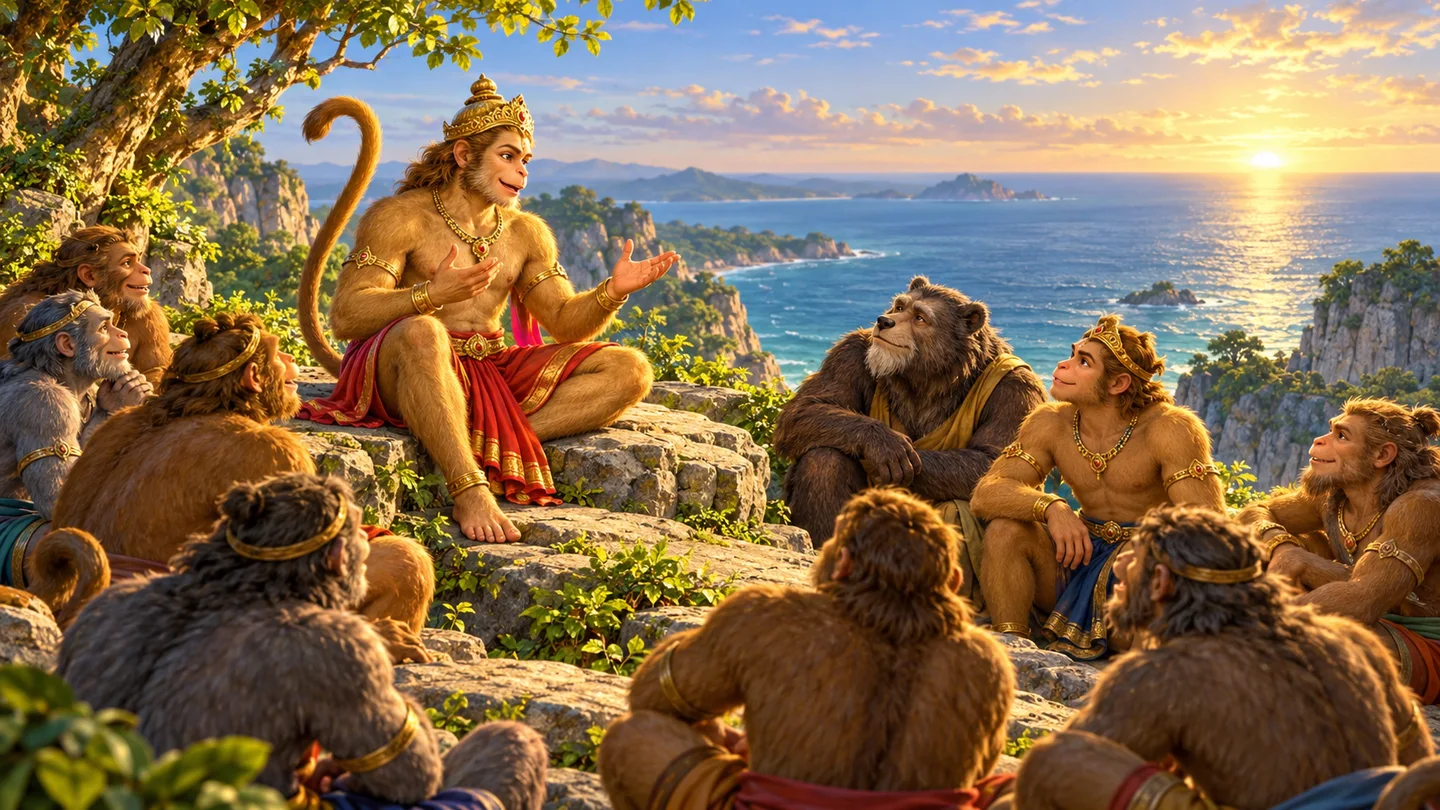
Hanuman recounts his journey to Jambavan, Angada and the vanaras on Mount Mahendra.
Original DHIH illustration · artistic interpretation

Verse 1 · 5.58.1

#

ततस्तस्य गिरेः शृङ्गे महेन्द्रस्य महाबलाः ।

Then, on the summit of Mount Mahendra, the mighty vanaras,

हनुमत्प्रमुखाः प्रीतिं हरयो जग्मुरुत्तमाम् ॥

with Hanuman foremost among them, felt the greatest joy.

Verse 2 · 5.58.2

#

प्रीतिमत्सूपविष्टेषु वानरेषु महात्मसु ।

When those noble vanaras had seated themselves happily,

तं ततः प्रतिसंहृष्टः प्रीतियुक्तं महाकपिम् ॥

the great vanara, himself delighted and full of gladness—

Verse 3 · 5.58.3

#

जाम्बवान् कार्यवृत्तान्तमपृच्छदनिलात्मजम् ।

Jambavan asked the son of the Wind about the mission:

कथं दृष्टा त्वया देवी कथं वा तत्र वर्तते ॥

How did you find the lady, and how is she living there?

Verse 4 · 5.58.4

#

तस्यां चापि कथं वृत्तः क्रूरकर्मा दशाननः ।

How has the cruel ten-headed Ravana behaved towards her?

तत्त्वतः सर्वमेतन्नः प्रब्रूहि त्वं महाकपे ॥

Great vanara, tell us all this exactly as it happened.

Verse 5 · 5.58.5

#

सम्मार्गिता कथं देवी किं च सा प्रत्यभाषत ।

How did you search out the lady, and what did she say?

श्रुतार्थाश्चिन्तयिष्यामो भूयः कार्यविनिश्चयम् ॥

Once we have heard, we shall consider what must be done next.

Verse 6 · 5.58.6

#

यश्चार्थस्तत्र वक्तव्यो गतैरस्माभिरात्मवान् ।

Tell us, thoughtful one, what we should say when we return,

रक्षितव्यं च यत्तत्र तद् भवान् व्याकरोतु नः ॥

and what matters we must carefully keep in mind there.

Verse 7 · 5.58.7

#

स नियुक्तस्ततस्तेन सम्प्रहृष्टतनूरुहः ।

Thus requested, with the hair on his body bristling in joy,

नमस्यन् शिरसा देव्यै सीतायै प्रत्यभाषत ॥

he bowed his head in reverence to Lady Sita and began to speak.

Verse 8 · 5.58.8

#

प्रत्यक्षमेव भवतां महेन्द्राग्रात् खमाप्लुतः ।

Before your own eyes I leapt into the sky from Mahendra’s summit,

उदधेर्दक्षिणं पारं काङ्क्षमाणः समाहितः ॥

concentrating on reaching the ocean’s southern shore.

Verse 9 · 5.58.9

#

गच्छतश्च हि मे घोरं विघ्नरूपमिवाभवत् ।

As I travelled, something appeared that seemed a formidable obstacle:

काञ्चनं शिखरं दिव्यं पश्यामि सुमनोहरम् ॥

I saw a wondrous golden peak, exceedingly beautiful.

Verse 10 · 5.58.10

#

स्थितं पन्थानमावृत्य मेने विघ्नं च तं नगम् ।

It stood blocking my way, and I took the mountain for an obstacle.

उपसंगम्य तं दिव्यं काञ्चनं नगमुत्तमम् ॥

Approaching that magnificent, heavenly golden mountain,

Verse 11 · 5.58.11

#

कृता मे मनसा बुद्धिर्भेत्तव्योऽयं मयेति च ।

I resolved in my mind that I must break through it.

प्रहतस्य मया तस्य लाङ्गूलेन महागिरेः ॥

When I struck that great mountain with my tail,

Verse 12 · 5.58.12

#

शिखरं सूर्यसंकाशं व्यशीर्यत सहस्रधा ।

its sun-bright peak broke into a thousand pieces.

व्यवसायं च तं बुद्‍ध्वा स होवाच महागिरिः ॥

Understanding my determination, that great mountain spoke,

Verse 13 · 5.58.13

#

पुत्रेति मधुरां वाणीं मनः प्रह्लादयन्निव ।

calling me ‘son’ in a sweet voice that gladdened my heart:

पितृव्यं चापि मां विद्धि सखायं मातरिश्वनः ॥

Know me as your father’s brother, a friend of the Wind.

Verse 14 · 5.58.14

#

मैनाकमिति विख्यातं निवसन्तं महोदधौ ।

I am known as Mainaka and dwell in the great ocean.

पक्षवन्तः पुरा पुत्र बभूवुः पर्वतोत्तमाः ॥

Long ago, my son, the foremost mountains possessed wings.

Verse 15 · 5.58.15

#

छन्दतः पृथिवीं चेरुर्बाधमानाः समन्ततः ।

They roamed the earth at will, troubling beings everywhere.

श्रुत्वा नगानां चरितं महेन्द्रः पाकशासनः ॥

Hearing how the mountains behaved, mighty Indra, destroyer of Paka,

Verse 16 · 5.58.16

#

वज्रेण भगवान् पक्षौ चिच्छेदैषां सहस्रशः ।

cut their wings by the thousand with his thunderbolt.

अहं तु मोचितस्तस्मात् तव पित्रा महात्मना ॥

But your noble father saved me from him.

Verse 17 · 5.58.17

#

मारुतेन तदा वत्स प्रक्षिप्तो वरुणालये ।

Dear child, the Wind cast me into Varuna’s ocean abode.

राघवस्य मया साह्ये वर्तितव्यमरिंदम ॥

Now I must help Raghava, subduer of foes.

Verse 18 · 5.58.18

#

रामो धर्मभृतां श्रेष्ठो महेन्द्रसमविक्रमः ।

Rama is foremost among those upholding dharma, equal to Indra in valour.

एतच्छ्रुत्वा मया तस्य मैनाकस्य महात्मनः ॥

When I heard these words of noble Mainaka,

Verse 19 · 5.58.19

#

कार्यमावेद्य च गिरेरुद्धतं वै मनो मम ।

I explained my mission to the mountain, and my spirits rose.

तेन चाहमनुज्ञातो मैनाकेन महात्मना ॥

Then that noble Mainaka gave me permission to continue.

Verse 20 · 5.58.20

#

स चाप्यन्तर्हितः शैलो मानुषेण वपुष्मता ।

The great mountain then disappeared into the ocean,

शरीरेण महाशैलः शैलेन च महोदधौ ॥

both in his splendid human form and in his mountain form.

Verse 21 · 5.58.21

#

उत्तमं जवमास्थाय शेषमध्वानमास्थितः ।

Taking on my greatest speed, I continued the remaining journey.

ततोऽहं सुचिरं कालं जवेनाभ्यगमं पथि ॥

For a long time I travelled swiftly along that course.

Verse 22 · 5.58.22

#

ततः पश्याम्यहं देवीं सुरसां नागमातरम् ।

Then I saw the goddess Surasa, mother of serpents.

समुद्रमध्ये सा देवी वचनं चेदमब्रवीत् ॥

In the middle of the ocean she spoke these words to me:

Verse 23 · 5.58.23

#

मम भक्ष्यः प्रदिष्टस्त्वममरैर्हरिसत्तम ।

Foremost vanara, the immortals have assigned you as my food.

ततस्त्वां भक्षयिष्यामि विहितस्त्वं हि मे सुरैः ॥

I shall therefore eat you, for the gods have allotted you to me.

Verse 24 · 5.58.24

#

एवमुक्तः सुरसया प्राञ्जलिः प्रणतः स्थितः ।

At Surasa’s words I stood bowing with folded hands.

विवर्णवदनो भूत्वा वाक्यं चेदमुदीरयम् ॥

My face losing its colour, I spoke as follows:

Verse 25 · 5.58.25

#

रामो दाशरथिः श्रीमान् प्रविष्टो दण्डकावनम् ।

The glorious Rama, Dasharatha’s son and scourge of foes, entered Dandaka forest

लक्ष्मणेन सह भ्रात्रा सीतया च परंतपः ॥

with his brother Lakshmana and with Sita.

Verse 26 · 5.58.26

#

तस्य सीता हृता भार्या रावणेन दुरात्मना ।

His wife Sita has been carried away by wicked Ravana.

तस्याः सकाशं दूतोऽहं गमिष्ये रामशासनात् ॥

At Rama’s command I am going to her as his messenger.

Verse 27 · 5.58.27

#

कर्तुमर्हसि रामस्य साहाय्यं विषये सती ।

You should help Rama while I am within your domain.

अथवा मैथिलीं दृष्ट्वा रामं चाक्लिष्टकारिणम् ॥

Otherwise, after seeing Maithili and Rama, tireless in action,

Verse 28 · 5.58.28

#

आगमिष्यामि ते वक्त्रं सत्यं प्रतिशृणोमि ते ।

I shall return to enter your mouth; I promise you this truthfully.

एवमुक्ता मया सा तु सुरसा कामरूपिणी ॥

When I said this, Surasa, able to assume forms at will,

Verse 29 · 5.58.29

#

अब्रवीन्नातिवर्तेत कश्चिदेष वरो मम ।

replied: No one may pass me; that is the boon I possess.

एवमुक्तः सुरसया दशयोजनमायतः ॥

At Surasa’s words I became ten yojanas long,

Verse 30 · 5.58.30

#

ततोऽर्धगुणविस्तारो बभूवाहं क्षणेन तु ।

and in an instant half as much in breadth.

मत्प्रमाणाधिकं चैव व्यादितं तु मुखं तया ॥

But she opened her mouth wider still than my size.

Verse 31 · 5.58.31

#

तद् दृष्ट्वा व्यादितं त्वास्यं ह्रस्वं ह्यकरवं पुनः ।

Seeing her mouth stretched open, I made myself small again.

तस्मिन् मुहूर्ते च पुनर्बभूवाङ्गुष्ठसम्मितः ॥

In that very instant I became no larger than a thumb.

Verse 32 · 5.58.32

#

अभिपत्याशु तद्वक्त्रं निर्गतोऽहं ततः क्षणात् ।

I swiftly entered her mouth and came out again in a moment.

अब्रवीत् सुरसा देवी स्वेन रूपेण मां पुनः ॥

Resuming her own form, the goddess Surasa spoke to me:

Verse 33 · 5.58.33

#

अर्थसिद्धौ हरिश्रेष्ठ गच्छ सौम्य यथासुखम् ।

Gentle, foremost vanara, go freely to accomplish your purpose.

समानय च वैदेहीं राघवेण महात्मना ॥

Reunite Vaidehi with the noble Raghava.

Verse 34 · 5.58.34

#

सुखी भव महाबाहो प्रीतास्मि तव वानर ।

Be happy, mighty-armed vanara; I am pleased with you.

ततोऽहं साधुसाध्वीति सर्वभूतैः प्रशंसितः ॥

Then all beings praised me, crying: Well done, well done!

Verse 35 · 5.58.35

#

ततोऽन्तरिक्षं विपुलं प्लुतोऽहं गरुडो यथा ।

Then I leapt through the vast sky like Garuda.

छाया मे निगृहीता च न च पश्यामि किंचन ॥

My shadow was seized, yet I could see nothing.

Verse 36 · 5.58.36

#

सोऽहं विगतवेगस्तु दिशो दश विलोकयन् ।

With my speed checked, I looked in all ten directions,

न किंचित् तत्र पश्यामि येन मे विहता गतिः ॥

but saw nothing there that could have stopped my passage.

Verse 37 · 5.58.37

#

अथ मे बुद्धिरुत्पन्ना किंनाम गमने मम ।

Then I wondered: What can this be upon my journey?

ईदृशो विघ्न उत्पन्नो रूपमत्र न दृश्यते ॥

Such an obstacle has arisen, yet no form can be seen here.

Verse 38 · 5.58.38

#

अधोभागे तु मे दृष्टिः शोचतः पतिता तदा ।

As I considered it, my gaze fell downwards.

तत्राद्राक्षमहं भीमां राक्षसीं सलिलेशयाम् ॥

There I saw a terrifying rakshasi lying in the water.

Verse 39 · 5.58.39

#

प्रहस्य च महानादमुक्तोऽहं भीमया तया ।

Laughing loudly, that dreadful being addressed me,

अवस्थितमसम्भ्रान्तमिदं वाक्यमशोभनम् ॥

as I stood steady and unalarmed, with these ominous words:

Verse 40 · 5.58.40

#

क्वासि गन्ता महाकाय क्षुधिताया ममेप्सितः ।

Huge-bodied one, where are you going? You are the food I desire in my hunger.

भक्षः प्रीणय मे देहं चिरमाहारवर्जितम् ॥

Satisfy this body of mine, deprived of food for so long.

Verse 41 · 5.58.41

#

बाढमित्येव तां वाणीं प्रत्यगृह्णामहं ततः ।

I accepted her challenge, answering: Very well.

आस्यप्रमाणादधिकं तस्याः कायमपूरयम् ॥

Then I enlarged my body beyond the measure of her mouth.

Verse 42 · 5.58.42

#

तस्याश्चास्यं महद् भीमं वर्धते मम भक्षणे ।

Her immense, dreadful mouth grew wider to swallow me.

न तु मां सा नु बुबुधे मम वा विकृतं कृतम् ॥

But she did not perceive me properly or understand my change of form.

Verse 43 · 5.58.43

#

ततोऽहं विपुलं रूपं संक्षिप्य निमिषान्तरात् ।

Then, shrinking my vast form within the blink of an eye,

तस्या हृदयमादाय प्रपतामि नभःस्थलम् ॥

I tore out her heart and sprang back into the sky.

Verse 44 · 5.58.44

#

सा विसृष्टभुजा भीमा पपात लवणाम्भसि ।

With her arms flung out, that dreadful, mountain-sized being fell

मया पर्वतसंकाशा निकृत्तहृदया सती ॥

into the salt sea, her heart cut out by me.

Verse 45 · 5.58.45

#

शृणोमि खगतानां च वाचः सौम्या महात्मनाम् ।

I heard the gracious words of noble beings travelling in the sky:

राक्षसी सिंहिका भीमा क्षिप्रं हनुमता हता ॥

Hanuman has swiftly slain the terrible rakshasi Simhika.

Verse 46 · 5.58.46

#

तां हत्वा पुनरेवाहं कृत्यमात्ययिकं स्मरन् ।

Having killed her, I again remembered my urgent duty.

गत्वा च महदध्वानं पश्यामि नगमण्डितम् ॥

After travelling a great distance, I saw a mountain-adorned shore—

Verse 47 · 5.58.47

#

दक्षिणं तीरमुदधेर्लङ्का यत्र गता पुरी ।

the ocean’s southern coast, where the city of Lanka stands.

अस्तं दिनकरे याते रक्षसां निलयं पुरीम् ॥

When the sun had set, that city, the rakshasas’ dwelling,

Verse 48 · 5.58.48

#

प्रविष्टोऽहमविज्ञातो रक्षोभिर्भीमविक्रमैः ।

I entered without being noticed by its fiercely powerful rakshasas.

तत्र प्रविशतश्चापि कल्पान्तघनसप्रभा ॥

But as I was entering, a woman like a cloud at the world’s end,

Verse 49 · 5.58.49

#

अट्टहासं विमुञ्चन्ती नारी काप्युत्थिता पुरः ।

laughing loudly, rose before me.

जिघांसन्तीं ततस्तां तु ज्वलदग्निशिरोरुहाम् ॥

She wished to kill me, and her hair blazed like fire.

Verse 50 · 5.58.50

#

सव्यमुष्टिप्रहारेण पराजित्य सुभैरवाम् ।

Defeating that fearsome woman with a blow of my left fist,

प्रदोषकाले प्रविशं भीतयाहं तयोदितः ॥

I entered at dusk; afraid, she said to me:

Verse 51 · 5.58.51

#

अहं लङ्कापुरी वीर निर्जिता विक्रमेण ते ।

Hero, I am the city of Lanka, conquered by your valour.

यस्मात् तस्माद् विजेतासि सर्वरक्षांस्यशेषतः ॥

Because of this, you will conquer all the rakshasas without exception.

Verse 52 · 5.58.52

#

तत्राहं सर्वरात्रं तु विचरञ्जनकात्मजाम् ।

All night I wandered there in search of Janaka’s daughter.

रावणान्तःपुरगतो न चापश्यं सुमध्यमाम् ॥

Though I entered Ravana’s inner apartments, I did not see the slender-waisted lady.

Verse 53 · 5.58.53

#

ततः सीतामपश्यंस्तु रावणस्य निवेशने ।

Unable to find Sita in Ravana’s residence,

शोकसागरमासाद्य न पारमुपलक्षये ॥

I entered an ocean of sorrow whose far shore I could not see.

Verse 54 · 5.58.54

#

शोचता च मया दृष्टं प्राकारेणाभिसंवृतम् ।

While I grieved, I noticed a splendid palace garden,

काञ्चनेन विकृष्टेन गृहोपवनमुत्तमम् ॥

enclosed by a tall, extensive golden wall.

Verse 55 · 5.58.55

#

सप्राकारमवप्लुत्य पश्यामि बहुपादपम् ।

Leaping across its wall, I saw a place full of trees.

अशोकवनिकामध्ये शिंशपापादपो महान् ॥

In the middle of the ashoka grove stood a great shimshapa tree.

Verse 56 · 5.58.56

#

तमारुह्य च पश्यामि काञ्चनं कदलीवनम् ।

Climbing it, I saw a golden grove of plantain trees.

अदूराच्छिंशपावृक्षात् पश्यामि वरवर्णिनीम् ॥

Not far from the shimshapa I saw a beautiful woman:

Verse 57 · 5.58.57

#

श्यामां कमलपत्राक्षीमुपवासकृशाननाम् ।

dusky and lotus-eyed, her face made thin by fasting,

तदेकवासःसंवीतां रजोध्वस्तशिरोरुहाम् ॥

wrapped in a single garment, her hair covered with dust.

Verse 58 · 5.58.58

#

शोकसंतापदीनाङ्गीं सीतां भर्तृहिते स्थिताम् ।

It was Sita, her limbs weakened by sorrow and anguish, devoted to her husband’s welfare,

राक्षसीभिर्विरूपाभिः क्रूराभिरभिसंवृताम् ॥

surrounded by cruel, misshapen rakshasis.

Verse 59 · 5.58.59

#

मांसशोणितभक्ष्याभिर्व्याघ्रीभिर्हरिणीं यथा ।

Those eaters of flesh and blood encircled her like tigresses around a doe.

सा मया राक्षसीमध्ये तर्ज्यमाना मुहुर्मुहुः ॥

I saw her among the rakshasis, threatened again and again,

Verse 60 · 5.58.60

#

एकवेणीधरा दीना भर्तृचिन्तापरायणा ।

her hair in a single braid, distressed and absorbed in thoughts of her husband,

भूमिशय्या विवर्णाङ्गी पद्मिनीव हिमागमे ॥

sleeping on the ground, her body pale like a lotus plant in winter.

Verse 61 · 5.58.61

#

रावणाद् विनिवृत्तार्था मर्तव्ये कृतनिश्चया ।

Rejecting Ravana entirely, she had resolved to die.

कथंचिन्मृगशावाक्षी तूर्णमासादिता मया ॥

With difficulty I managed to reach that doe-eyed lady promptly.

Verse 62 · 5.58.62

#

तां दृष्ट्वा तादृशीं नारीं रामपत्नीं यशस्विनीम् ।

Seeing the renowned wife of Rama in such a condition,

तत्रैव शिंशपावृक्षे पश्यन्नहमवस्थितः ॥

I remained in that very shimshapa tree, watching her.

Verse 63 · 5.58.63

#

ततो हलहलाशब्दं काञ्चीनूपुरमिश्रितम् ।

Then I heard a deep, rising clamour, mingled with the sound

शृणोम्यधिकगम्भीरं रावणस्य निवेशने ॥

of girdles and anklets, coming from Ravana’s residence.

Verse 64 · 5.58.64

#

ततोऽहं परमोद्विग्नः स्वरूपं प्रत्यसंहरम् ।

Greatly concerned, I drew my form back into concealment.

अहं च शिंशपावृक्षे पक्षीव गहने स्थितः ॥

I remained like a bird hidden in the dense shimshapa tree.

Verse 65 · 5.58.65

#

ततो रावणदाराश्च रावणश्च महाबलः ।

Then Ravana’s wives and mighty Ravana himself

तं देशमनुसम्प्राप्तो यत्र सीताभवत् स्थिता ॥

came to the place where Sita was staying.

Verse 66 · 5.58.66

#

तं दृष्ट्वाथ वरारोहा सीता रक्षोगणेश्वरम् ।

Seeing that lord of the rakshasa host, the graceful Sita

संकुच्योरू स्तनौ पीनौ बाहुभ्यां परिरभ्य च ॥

drew her thighs together and covered her full breasts with her arms.

Verse 67 · 5.58.67

#

वित्रस्तां परमोद्विग्नां वीक्ष्यमाणामितस्ततः ।

She was terrified and deeply disturbed, looking about on every side,

त्राणं कंचिदपश्यन्तीं वेपमानां तपस्विनीम् ॥

finding no protector, trembling in her misery.

Verse 68 · 5.58.68

#

तामुवाच दशग्रीवः सीतां परमदुःखिताम् ।

The ten-necked one spoke to Sita in her great distress,

अवाक्शिराः प्रपतितो बहुमन्यस्व मामिति ॥

bowing his head low and saying: Regard me with favour.

Verse 69 · 5.58.69

#

यदि चेत्त्वं तु मां दर्पान्नाभिनन्दसि गर्विते ।

But if, proud woman, you refuse me out of arrogance,

द्विमासानन्तरं सीते पास्यामि रुधिरं तव ॥

Sita, after two months I shall drink your blood.

Verse 70 · 5.58.70

#

एतच्छ्रुत्वा वचस्तस्य रावणस्य दुरात्मनः ।

Hearing those words from wicked Ravana,

उवाच परमक्रुद्धा सीता वचनमुत्तमम् ॥

Sita became deeply angry and gave this noble answer:

Verse 71 · 5.58.71

#

राक्षसाधम रामस्य भार्याममिततेजसः ।

Lowest of rakshasas, I am the wife of Rama, whose splendour is boundless,

इक्ष्वाकुवंशनाथस्य स्नुषां दशरथस्य च ॥

the lord of Ikshvaku’s line, and I am Dasharatha’s daughter-in-law.

Verse 72 · 5.58.72

#

अवाच्यं वदतो जिह्वा कथं न पतिता तव ।

How has your tongue not fallen out for speaking such unspeakable words?

किंस्विद्वीर्य तवानार्य यो मां भर्तुरसंनिधौ ॥

Ignoble one, what valour is yours, when in my husband’s absence

Verse 73 · 5.58.73

#

अपहृत्यागतः पाप तेनादृष्टो महात्मना ।

you stole me away, sinful one, unseen by that great soul?

न त्वं रामस्य सदृशो दास्येऽप्यस्य न युज्यसे ॥

You are no equal of Rama; you are not fit even to serve him.

Verse 74 · 5.58.74

#

अजेयः सत्यवाक् शूरो रणश्लाघी च राघवः ।

Raghava is unconquerable, truthful, heroic and renowned in battle.

जानक्या परुषं वाक्यमेवमुक्तो दशाननः ॥

When Janaka’s daughter addressed the ten-headed one so sternly,

Verse 75 · 5.58.75

#

जज्वाल सहसा कोपाच्चितास्थ इव पावकः ।

he suddenly blazed with fury like fire upon a funeral pyre.

विवृत्य नयने क्रूरे मुष्टिमुद्यम्य दक्षिणम् ॥

Opening his cruel eyes wide and raising his right fist,

Verse 76 · 5.58.76

#

मैथिलीं हन्तुमारब्धः स्त्रीभिर्हाहाकृतं तदा ।

he moved to strike Maithili, and the women cried out in alarm.

स्त्रीणां मध्यात् समुत्पत्य तस्य भार्या दुरात्मनः ॥

Springing from among them, a wife of that wicked one—

Verse 77 · 5.58.77

#

वरा मन्दोदरी नाम तया स प्रतिषेधितः ।

the foremost queen named Mandodari—restrained him.

उक्तश्च मधुरां वाणीं तया स मदनार्दितः ॥

She addressed sweet words to him, overcome as he was by desire:

Verse 78 · 5.58.78

#

सीतया तव किं कार्यं महेन्द्रसमविक्रम ।

You whose valour equals Indra’s, what need have you of Sita?

मया सह रमस्वाद्य मद्विशिष्टा न जानकी ॥

Take your pleasure with me now; Janaki is not superior to me.

Verse 79 · 5.58.79

#

देवगन्धर्वकन्याभिर्यक्षकन्याभिरेव च ।

My lord, enjoy the company of maidens of the gods, gandharvas and yakshas.

सार्धं प्रभो रमस्वेति सीतया किं करिष्यसि ॥

What will you accomplish through Sita?

Verse 80 · 5.58.80

#

ततस्ताभिः समेताभिर्नारीभिः स महाबलः ।

Then those women together suddenly raised the powerful

उत्थाप्य सहसा नीतो भवनं स्वं निशाचरः ॥

night-roaming rakshasa and led him back to his own palace.

Verse 81 · 5.58.81

#

याते तस्मिन् दशग्रीवे राक्षस्यो विकृताननाः ।

When the ten-headed one had gone, the misshapen-faced rakshasis

सीतां निर्भर्त्सयामासुर्वाक्यैः क्रूरैः सुदारुणैः ॥

reviled Sita with cruel and dreadful words.

Verse 82 · 5.58.82

#

तृणवद् भाषितं तासां गणयामास जानकी ।

Janaki counted their speech as worthless as straw.

गर्जितं च तथा तासां सीतां प्राप्य निरर्थकम् ॥

Their roaring, directed against Sita, achieved nothing.

Verse 83 · 5.58.83

#

वृथा गर्जितनिश्चेष्टा राक्षस्यः पिशिताशनाः ।

Their vain roaring exhausted, those flesh-eating rakshasis

रावणाय शशंसुस्ताः सीताव्यवसितं महत् ॥

reported Sita’s firm determination to Ravana.

Verse 84 · 5.58.84

#

ततस्ताः सहिताः सर्वा विहताशा निरुद्यमाः ।

Then, their hopes frustrated and their efforts abandoned,

परिक्लिश्य समस्तास्ता निद्रावशमुपागताः ॥

all of them, worn out by their exertions, fell asleep.

Verse 85 · 5.58.85

#

तासु चैव प्रसुप्तासु सीता भर्तृहिते रता ।

While they slept, Sita, intent on her husband’s welfare,

विलप्य करुणं दीना प्रशुशोच सुदुःखिता ॥

lamented piteously and grieved in deep distress.

Verse 86 · 5.58.86

#

तासां मध्यात् समुत्थाय त्रिजटा वाक्यमब्रवीत् ।

Rising from among them, Trijata said:

आत्मानं खादत क्षिप्रं न सीतामसितेक्षणाम् ॥

Quickly eat yourselves instead, not dark-eyed Sita—

Verse 87 · 5.58.87

#

जनकस्यात्मजां साध्वीं स्नुषां दशरथस्य च ।

the virtuous daughter of Janaka and daughter-in-law of Dasharatha.

स्वप्नो ह्यद्य मया दृष्टो दारुणो रोमहर्षणः ॥

Today I have seen a terrible dream that made my hair stand on end.

Verse 88 · 5.58.88

#

रक्षसां च विनाशाय भर्तुरस्या जयाय च ।

It foretells the destruction of the rakshasas and her husband’s victory.

अलमस्मान् परित्रातुं राघवाद् राक्षसीगणम् ॥

She can save us, this company of rakshasis, from Raghava.

Verse 89 · 5.58.89

#

अभियाचाम वैदेहीमेतद्धि मम रोचते ।

Let us beg Vaidehi for protection; that is what I advise.

यदि ह्येवंविधः स्वप्नो दुःखितायाः प्रदृश्यते ॥

If such a dream is seen concerning a woman in distress,

Verse 90 · 5.58.90

#

सा दुःखैर्विविधैर्मुक्ता सुखमाप्नोत्यनुत्तमम् ।

she will be freed from her many sorrows and attain unsurpassed happiness.

प्रणिपातप्रसन्ना हि मैथिली जनकात्मजा ॥

Maithili, Janaka’s daughter, is pleased by a humble bow.

Verse 91 · 5.58.91

#

अलमेषा परित्रातुं राक्षस्यो महतो भयात् ।

Rakshasis, she can protect you from great danger.

ततः सा ह्रीमती बाला भर्तुर्विजयहर्षिता ॥

Then that modest young lady, delighted by the prospect of her husband’s victory,

Verse 92 · 5.58.92

#

अवोचद् यदि तत् तथ्यं भवेयं शरणं हि वः ।

said: If that comes true, I shall indeed be your refuge.

तां चाहं तादृशीं दृष्ट्वा सीताया दारुणां दशाम् ॥

Seeing Sita’s terrible condition in this way,

Verse 93 · 5.58.93

#

चिन्तयामास विश्रान्तो न च मे निर्वृतं मनः ।

I considered matters while resting, but my mind found no peace.

सम्भाषणार्थे च मया जानक्याश्चिन्तितो विधिः ॥

I thought out a way to enter into conversation with Janaki.

Verse 94 · 5.58.94

#

इक्ष्वाकुकुलवंशस्तु स्तुतो मम पुरस्कृतः ।

First I praised the lineage of the house of Ikshvaku.

श्रुत्वा तु गदितां वाचं राजर्षिगणभूषिताम् ॥

Hearing my words, adorned with accounts of its royal sages,

Verse 95 · 5.58.95

#

प्रत्यभाषत मां देवी बाष्पैः पिहितलोचना ।

the lady, her eyes covered with tears, answered me:

कस्त्वं केन कथं चेह प्राप्तो वानरपुङ्गव ॥

Foremost vanara, who are you, and why and how have you come here?

Verse 96 · 5.58.96

#

का च रामेण ते प्रीतिस्तन्मे शंसितुमर्हसि ।

What bond of friendship have you with Rama? Tell me this.

तस्यास्तद् वचनं श्रुत्वा अहमप्यब्रुवं वचः ॥

Hearing her question, I replied:

Verse 97 · 5.58.97

#

देवि रामस्य भर्तुस्ते सहायो भीमविक्रमः ।

Lady, your husband Rama has a helper of formidable valour,

सुग्रीवो नाम विक्रान्तो वानरेन्द्रो महाबलः ॥

a courageous and mighty king of the vanaras named Sugriva.

Verse 98 · 5.58.98

#

तस्य मां विद्धि भृत्यं त्वं हनूमन्तमिहागतम् ।

Know me as his servant Hanuman, who has come here.

भर्त्रा सम्प्रहितस्तुभ्यं रामेणाक्लिष्टकर्मणा ॥

Your husband Rama, tireless in action, has sent me to you.

Verse 99 · 5.58.99

#

इदं तु पुरुषव्याघ्रः श्रीमान् दाशरथिः स्वयम् ।

The glorious son of Dasharatha, that tiger among men, himself

अङ्गुलीयमभिज्ञानमदात् तुभ्यं यशस्विनि ॥

gave this ring as a token for you, renowned lady.

Verse 100 · 5.58.100

#

तदिच्छामि त्वयाज्ञप्तं देवि किं करवाण्यहम् ।

Lady, I wish to act at your command. What shall I do?

रामलक्ष्मणयोः पार्श्वं नयामि त्वां किमुत्तरम् ॥

Shall I take you to Rama and Lakshmana? What is your answer?

Verse 101 · 5.58.101

#

एतच्छ्रुत्वा विदित्वा च सीता जनकनन्दिनी ।

Hearing and understanding this, Sita, Janaka’s beloved daughter,

आह रावणमुत्पाट्य राघवो मां नयत्विति ॥

said: Let Raghava overthrow Ravana and take me away himself.

Verse 102 · 5.58.102

#

प्रणम्य शिरसा देवीमहमार्यामनिन्दिताम् ।

Bowing my head to that noble, blameless lady,

राघवस्य मनोह्लादमभिज्ञानमयाचिषम् ॥

I asked for a token that would gladden Raghava’s heart.

Verse 103 · 5.58.103

#

अथ मामब्रवीत् सीता गृह्यतामयमुत्तमः ।

Then Sita said to me: Take this excellent jewel;

मणिर्येन महाबाहू रामस्त्वां बहु मन्यते ॥

through it mighty-armed Rama will hold you in high regard.

Verse 104 · 5.58.104

#

इत्युक्त्वा तु वरारोहा मणिप्रवरमुत्तमम् ।

Having spoken, that graceful lady gave me the finest jewel,

प्रायच्छत् परमोद्विग्ना वाचा मां संदिदेश ह ॥

and, deeply distressed, entrusted a spoken message to me.

Verse 105 · 5.58.105

#

ततस्तस्यै प्रणम्याहं राजपुत्र्यै समाहितः ।

Then, composed, I bowed to that princess

प्रदक्षिणं परिक्राममिहाभ्युद‍्गतमानसः ॥

and walked reverently around her, my mind turned towards returning here.

Verse 106 · 5.58.106

#

उत्तरं पुनरेवाह निश्चित्य मनसा तदा ।

Resolving firmly in her mind, she spoke once more:

हनूमन् मम वृत्तान्तं वक्तुमर्हसि राघवे ॥

Hanuman, you must tell Raghava of my condition.

Verse 107 · 5.58.107

#

यथा श्रुत्वैव नचिरात् तावुभौ रामलक्ष्मणौ ।

Act so that, as soon as they hear, those two heroes Rama and Lakshmana,

सुग्रीवसहितौ वीरावुपेयातां तथा कुरु ॥

together with Sugriva, will come here without delay.

Verse 108 · 5.58.108

#

यदन्यथा भवेदेतद् द्वौ मासौ जीवितं मम ।

If matters turn out otherwise, my life has only two months left.

न मां द्रक्ष्यति काकुत्स्थो म्रिये साहमनाथवत् ॥

Kakutstha will not see me; I shall die as one without protection.

Verse 109 · 5.58.109

#

तच्छ्रुत्वा करुणं वाक्यं क्रोधो मामभ्यवर्तत ।

Hearing those sorrowful words, anger came over me.

उत्तरं च मया दृष्टं कार्यशेषमनन्तरम् ॥

Then I saw what further part of the mission still needed doing.

Verse 110 · 5.58.110

#

ततोऽवर्धत मे कायस्तदा पर्वतसंनिभः ।

My body then grew until it resembled a mountain.

युद्धाकाङ्क्षी वनं तस्य विनाशयितुमारभे ॥

Desiring battle, I began to destroy Ravana’s garden.

Verse 111 · 5.58.111

#

तद् भग्नं वनखण्डं तु भ्रान्तत्रस्तमृगद्विजम् ।

The grove was broken, its animals and birds confused and frightened.

प्रतिबुद्ध्य निरीक्षन्ते राक्षस्यो विकृताननाः ॥

Waking, the misshapen-faced rakshasis looked upon it.

Verse 112 · 5.58.112

#

मां च दृष्ट्वा वने तस्मिन् समागम्य ततस्ततः ।

Seeing me in that garden, they gathered from every side,

ताः समभ्यागताः क्षिप्रं रावणायाचचक्षिरे ॥

then quickly went and reported the matter to Ravana.

Verse 113 · 5.58.113

#

राजन् वनमिदं दुर्गं तव भग्नं दुरात्मना ।

King, this protected garden of yours has been broken by a wicked

वानरेण ह्यविज्ञाय तव वीर्यं महाबल ॥

vanara who does not know your power, mighty one.

Verse 114 · 5.58.114

#

तस्य दुर्बुद्धिता राजंस्तव विप्रियकारिणः ।

King, how foolish is this creature who acts against your pleasure!

वधमाज्ञापय क्षिप्रं यथासौ न पुनर्व्रजेत् ॥

Order his death at once, so that he cannot return.

Verse 115 · 5.58.115

#

तच्छ्रुत्वा राक्षसेन्द्रेण विसृष्टा बहुदुर्जयाः ।

Hearing this, the rakshasa king sent out hard-to-conquer

राक्षसाः किंकरा नाम रावणस्य मनोऽनुगाः ॥

rakshasas called Kinkaras, obedient to Ravana’s will.

Verse 116 · 5.58.116

#

तेषामशीतिसाहस्रं शूलमुद‍्गरपाणिनाम् ।

Eighty thousand of them came carrying spears and iron clubs.

मया तस्मिन् वनोद्देशे परिघेण निषूदितम् ॥

In that part of the garden I killed them with an iron bar.

Verse 117 · 5.58.117

#

तेषां तु हतशिष्टा ये ते गता लघुविक्रमाः ।

Those who survived the slaughter fled swiftly

निहतं च मया सैन्यं रावणायाचचक्षिरे ॥

and told Ravana that I had destroyed the force.

Verse 118 · 5.58.118

#

ततो मे बुद्धिरुत्पन्ना चैत्यप्रासादमुत्तमम् ।

Then I turned my thoughts to the splendid sanctuary.

तत्रस्थान् राक्षसान् हत्वा शतं स्तम्भेन वै पुनः ॥

After killing a hundred rakshasas stationed there with a pillar,

Verse 119 · 5.58.119

#

ललामभूतो लङ्काया मया विध्वंसितो रुषा ।

I angrily demolished that building, an ornament of Lanka.

ततः प्रहस्तस्य सुतं जम्बुमालिनमादिशत् ॥

Then Ravana ordered Prahasta’s son Jambumali to go,

Verse 120 · 5.58.120

#

राक्षसैर्बहुभिः सार्धं घोररूपैर्भयानकैः ।

together with many dreadful, terrifying rakshasas.

तमहं बलसम्पन्नं राक्षसं रणकोविदम् ॥

That powerful rakshasa, well versed in battle, I—

Verse 121 · 5.58.121

#

परिघेणातिघोरेण सूदयामि सहानुगम् ।

killed with a formidable iron bar, together with his followers.

तच्छ्रुत्वा राक्षसेन्द्रस्तु मन्त्रिपुत्रान् महाबलान् ॥

Hearing this, the rakshasa king Ravana sent the mighty sons of his ministers,

Verse 122 · 5.58.122

#

पदातिबलसम्पन्नान् प्रेषयामास रावणः ।

accompanied by a force of infantry.

परिघेणैव तान् सर्वान् नयामि यमसादनम् ॥

With that same iron bar I sent them all to Yama’s abode.

Verse 123 · 5.58.123

#

मन्त्रिपुत्रान् हतान् श्रुत्वा समरे लघुविक्रमान् ।

Hearing that the swift-fighting ministers’ sons had been killed,

पञ्च सेनाग्रगान् शूरान् प्रेषयामास रावणः ॥

Ravana sent five courageous army commanders.

Verse 124 · 5.58.124

#

तानहं सहसैन्यान् वै सर्वानेवाभ्यसूदयम् ।

I killed every one of them, together with their troops.

ततः पुनर्दशग्रीवः पुत्रमक्षं महाबलम् ॥

Then the ten-headed one sent his mighty son Aksha,

Verse 125 · 5.58.125

#

बहुभी राक्षसैः सार्धं प्रेषयामास संयुगे ।

with many rakshasas into the battle.

तं तु मन्दोदरीपुत्रं कुमारं रणपण्डितम् ॥

That prince, Mandodari’s son and an expert in warfare,

Verse 126 · 5.58.126

#

सहसा खं समुद्यन्तं पादयोश्च गृहीतवान् ।

I suddenly caught by both feet as he rose into the sky.

तमासीनं शतगुणं भ्रामयित्वा व्यपेषयम् ॥

Whirling him around a hundred times, I dashed him down and killed him.

Verse 127 · 5.58.127

#

तमक्षमागतं भग्नं निशम्य स दशाननः ।

Hearing that Aksha had been destroyed after going out, the ten-headed Ravana

ततश्चेन्द्रजितं नाम द्वितीयं रावणः सुतम् ॥

then turned to another son, named Indrajit.

Verse 128 · 5.58.128

#

व्यादिदेश सुसंक्रुद्धो बलिनं युद्धदुर्मदम् ।

Furious, he ordered that powerful warrior, fierce in battle, to go.

तच्चाप्यहं बलं सर्वं तं च राक्षसपुङ्गवम् ॥

That entire army and its foremost rakshasa warrior I—

Verse 129 · 5.58.129

#

नष्टौजसं रणे कृत्वा परं हर्षमुपागतः ।

deprived of their strength in battle and became greatly delighted.

महतापि महाबाहुः प्रत्ययेन महाबलः ॥

That mighty, powerful-armed warrior had been sent with great confidence,

Verse 130 · 5.58.130

#

प्रहितो रावणेनैष सह वीरैर्मदोद्धतैः ।

by Ravana, together with proud and confident heroes.

सोऽविषह्यं हि मां बुद्‍ध्वा स्वसैन्यं चावमर्दितम् ॥

Knowing me to be irresistible and seeing his own force crushed,

Verse 131 · 5.58.131

#

ब्रह्मणोऽस्त्रेण स तु मां प्रबद्‍ध्वा चातिवेगिनः ।

he bound me with Brahma’s weapon; then those swift-moving

रज्जुभिश्चापि बध्नन्ति ततो मां तत्र राक्षसाः ॥

rakshasas also tied me there with ropes.

Verse 132 · 5.58.132

#

रावणस्य समीपं च गृहीत्वा मामुपागमन् ।

Taking hold of me, they brought me before Ravana.

दृष्ट्वा सम्भाषितश्चाहं रावणेन दुरात्मना ॥

That wicked Ravana saw me and addressed me.

Verse 133 · 5.58.133

#

पृष्टश्च लङ्कागमनं राक्षसानां च तं वधम् ।

He questioned me about my arrival in Lanka and the killing of the rakshasas.

तत्सर्वं च रणे तत्र सीतार्थमुपजल्पितम् ॥

I explained that all my actions there concerned Sita.

Verse 134 · 5.58.134

#

तस्यास्तु दर्शनाकाङ्क्षी प्राप्तस्त्वद्भवनं विभो ।

Lord, wishing to see her, I have reached your residence.

मारुतस्यौरसः पुत्रो वानरो हनुमानहम् ॥

I am the vanara Hanuman, the Wind’s own son.

Verse 135 · 5.58.135

#

रामदूतं च मां विद्धि सुग्रीवसचिवं कपिम् ।

Know me as Rama’s messenger and Sugriva’s vanara minister.

सोऽहं दौत्येन रामस्य त्वत्सकाशमिहागतः ॥

I have come to your presence here on Rama’s embassy.

Verse 136 · 5.58.136

#

शृणु चापि समादेशं यदहं प्रब्रवीमि ते ।

Hear the message that I shall tell you.

राक्षसेश हरीशस्त्वां वाक्यमाह समाहितम् ॥

Rakshasa lord, the king of the vanaras addresses these considered words to you:

Verse 137 · 5.58.137

#

सुग्रीवश्च महाभागः स त्वां कौशलमब्रवीत् ।

Noble Sugriva asks after your welfare.

धर्मार्थकामसहितं हितं पथ्यमुवाच ह ॥

He speaks beneficial and wholesome counsel concerning dharma, prosperity and desire.

Verse 138 · 5.58.138

#

वसतो ऋष्यमूके मे पर्वते विपुलद्रुमे ।

While I dwelt on Mount Rishyamuka, rich in great trees,

राघवो रणविक्रान्तो मित्रत्वं समुपागतः ॥

Raghava, valiant in battle, entered into friendship with me.

Verse 139 · 5.58.139

#

तेन मे कथितं राजन् भार्या मे रक्षसा हृता ।

He told me: King, a rakshasa has taken away my wife.

तत्र साहाय्यहेतोर्मे समयं कर्तुमर्हसि ॥

You should make an agreement to help me in this matter.

Verse 140 · 5.58.140

#

वालिना हृतराज्येन सुग्रीवेण सह प्रभुः ।

With Sugriva, whose kingdom Vali had taken away,

चक्रेऽग्निसाक्षिकं सख्यं राघवः सहलक्ष्मणः ॥

Lord Raghava, accompanied by Lakshmana, formed a friendship witnessed by fire.

Verse 141 · 5.58.141

#

तेन वालिनमाहत्य शरेणैकेन संयुगे ।

Killing Vali in battle with a single arrow,

वानराणां महाराजः कृतः सम्प्लवतां प्रभुः ॥

he made the lord of the leaping vanaras their great king.

Verse 142 · 5.58.142

#

तस्य साहाय्यमस्माभिः कार्यं सर्वात्मना त्विह ।

We must therefore help him here with our whole strength.

तेन प्रस्थापितस्तुभ्यं समीपमिह धर्मतः ॥

For that rightful purpose I have been sent here to your presence.

Verse 143 · 5.58.143

#

क्षिप्रमानीयतां सीता दीयतां राघवस्य च ।

Let Sita be brought back at once and handed over to Raghava,

यावन्न हरयो वीरा विधमन्ति बलं तव ॥

before the heroic vanaras scatter your forces.

Verse 144 · 5.58.144

#

वानराणां प्रभावोऽयं न केन विदितः पुरा ।

The power of the vanaras has not previously been known by anyone—

देवतानां सकाशं च ये गच्छन्ति निमन्त्रिताः ॥

these beings go into the presence of the gods when summoned.

Verse 145 · 5.58.145

#

इति वानरराजस्त्वामाहेत्यभिहितो मया ।

Thus speaks the vanara king to you, I said.

मामैक्षत ततो रुष्टश्चक्षुषा प्रदहन्निव ॥

Then Ravana stared angrily at me, as though burning me with his eyes.

Verse 146 · 5.58.146

#

तेन वध्योऽहमाज्ञप्तो रक्षसा रौद्रकर्मणा ।

That rakshasa of terrible deeds, wicked Ravana,

मत्प्रभावमविज्ञाय रावणेन दुरात्मना ॥

not understanding my power, ordered that I be killed.

Verse 147 · 5.58.147

#

ततो विभीषणो नाम तस्य भ्राता महामतिः ।

Then his wise brother, named Vibhishana,

तेन राक्षसराजश्च याचितो मम कारणात् ॥

appealed to the rakshasa king on my behalf.

Verse 148 · 5.58.148

#

नैवं राक्षसशार्दूल त्यज्यतामेष निश्चयः ।

Do not act so, foremost rakshasa; abandon this decision.

राजशास्त्रव्यपेतो हि मार्गः संलक्ष्यते त्वया ॥

The path you propose departs from the teachings on kingship.

Verse 149 · 5.58.149

#

दूतवध्या न दृष्टा हि राजशास्त्रेषु राक्षस ।

Rakshasa, the killing of envoys is not sanctioned in the teachings on kingship.

दूतेन वेदितव्यं च यथाभिहितवादिना ॥

A messenger must deliver the words entrusted to him.

Verse 150 · 5.58.150

#

सुमहत्यपराधेऽपि दूतस्यातुलविक्रम ।

Even if an envoy has committed a very great offence, peerless warrior,

विरूपकरणं दृष्टं न वधोऽस्ति हि शास्त्रतः ॥

disfigurement is prescribed, but the teachings do not permit his death.

Verse 151 · 5.58.151

#

विभीषणेनैवमुक्तो रावणः संदिदेश तान् ।

Thus addressed by Vibhishana, Ravana commanded those rakshasas:

राक्षसानेतदेवाद्य लाङ्गूलं दह्यतामिति ॥

Let this creature’s tail be burned today.

Verse 152 · 5.58.152

#

ततस्तस्य वचः श्रुत्वा मम पुच्छं समन्ततः ।

Hearing his words, they wrapped my tail all around

वेष्टितं शणवल्कैश्च पट्टैः कार्पासकैस्तथा ॥

with hemp and bark fibre and also with strips of cotton cloth.

Verse 153 · 5.58.153

#

राक्षसाः सिद्धसंनाहास्ततस्ते चण्डविक्रमाः ।

Then those fully armed rakshasas, fierce in their valour,

तदादीप्यन्त मे पुच्छं हनन्तः काष्ठमुष्टिभिः ॥

set my tail alight and struck me with wooden clubs.

Verse 154 · 5.58.154

#

बद्धस्य बहुभिः पाशैर्यन्त्रितस्य च राक्षसैः ।

Though tied with many bonds and restrained by the rakshasas,

न मे पीडाभवत् काचिद् दिदृक्षोर्नगरीं दिवा ॥

I felt no distress, wishing to see the city in daylight.

Verse 155 · 5.58.155

#

ततस्ते राक्षसाः शूरा बद्धं मामग्निसंवृतम् ।

Those rakshasa warriors paraded me, bound and surrounded by flame,

अघोषयन् राजमार्गे नगरद्वारमागताः ॥

proclaiming through the royal road as they reached the city gate.

Verse 156 · 5.58.156

#

ततोऽहं सुमहद्रूपं संक्षिप्य पुनरात्मनः ।

Then I shrank my very large body again,

विमोचयित्वा तं बन्धं प्रकृतिस्थः स्थितः पुनः ॥

freed myself from the bonds, and resumed my natural form.

Verse 157 · 5.58.157

#

आयसं परिघं गृह्य तानि रक्षांस्यसूदयम् ।

Taking an iron bar, I killed those rakshasas.

ततस्तन्नगरद्वारं वेगेन प्लुतवानहम् ॥

Then I sprang swiftly onto the city gateway.

Verse 158 · 5.58.158

#

पुच्छेन च प्रदीप्तेन तां पुरीं साट्टगोपुराम् ।

With my blazing tail I burned that city, with its towers and gateways,

दहाम्यहमसम्भ्रान्तो युगान्ताग्निरिव प्रजाः ॥

unshaken, like the fire at an age’s end consuming living beings.

Verse 159 · 5.58.159

#

विनष्टा जानकी व्यक्तं न ह्यदग्धः प्रदृश्यते ।

Then I feared: Janaki has surely perished; no part of Lanka

लङ्कायाः कश्चिदुद्देशः सर्वा भस्मीकृता पुरी ॥

can be seen unburned, and the whole city has become ash.

Verse 160 · 5.58.160

#

दहता च मया लङ्कां दग्धा सीता न संशयः ।

While burning Lanka I must have burned Sita—there is no doubt, I thought.

रामस्य च महत्कार्यं मयेदं विफलीकृतम् ॥

I have made this great task of Rama’s fruitless.

Verse 161 · 5.58.161

#

इति शोकसमाविष्टश्चिन्तामहमुपागतः ।

Overcome with sorrow, I fell into anxious thought.

ततोऽहं वाचमश्रौषं चारणानां शुभाक्षराम् ॥

Then I heard auspicious words from the celestial charanas,

Verse 162 · 5.58.162

#

जानकी न च दग्धेति विस्मयोदन्तभाषिणाम् ।

who spoke in wonder, saying: Janaki has not been burned.

ततो मे बुद्धिरुत्पन्ना श्रुत्वा तामद्भुतां गिरम् ॥

Hearing those astonishing words, understanding arose in me.

Verse 163 · 5.58.163

#

अदग्धा जानकीत्येव निमित्तैश्चोपलक्षितम् ।

The signs too indicated that Janaki had not been burned:

दीप्यमाने तु लाङ्गूले न मां दहति पावकः ॥

though my tail was blazing, the fire did not burn me.

Verse 164 · 5.58.164

#

हृदयं च प्रहृष्टं मे वाताः सुरभिगन्धिनः ।

My heart was joyful, and fragrant breezes were blowing.

तैर्निमित्तैश्च दृष्टार्थैः कारणैश्च महागुणैः ॥

Through those signs, whose meaning was clear, and those powerful reasons,

Verse 165 · 5.58.165

#

ऋषिवाक्यैश्च दृष्टार्थैरभवं हृष्टमानसः ।

and the sages’ words bearing evident truth, my mind grew glad.

पुनर्दृष्टा च वैदेही विसृष्टश्च तया पुनः ॥

I saw Vaidehi again and once more received her leave.

Verse 166 · 5.58.166

#

ततः पर्वतमासाद्य तत्रारिष्टमहं पुनः ।

Then I reached Mount Arishta there and again

प्रतिप्लवनमारेभे युष्मद्दर्शनकाङ्क्षया ॥

began the return leap, eager to see all of you.

Verse 167 · 5.58.167

#

ततः श्वसनचन्द्रार्कसिद्धगन्धर्वसेवितम् ।

Travelling the path frequented by the Wind, Moon and Sun,

पन्थानमहमाक्रम्य भवतो दृष्टवानिह ॥

by siddhas and gandharvas, I have seen you here again.

Verse 168 · 5.58.168

#

राघवस्य प्रसादेन भवतां चैव तेजसा ।

By Raghava’s favour, by your own strength and radiance,

सुग्रीवस्य च कार्यार्थं मया सर्वमनुष्ठितम् ॥

and for Sugriva’s purpose, I have carried out all this.

Verse 169 · 5.58.169

#

एतत् सर्वं मया तत्र यथावदुपपादितम् ।

All this I have duly accomplished there.

तत्र यन्न कृतं शेषं तत् सर्वं क्रियतामिति ॥

Now let everything that remains undone be carried out.

CHAPTER 58 COMPLETE

The journey continues.

The companions now know what Hanuman saw and heard. They turn to the task of bringing the news to Rama.

NEXT CHAPTER

Continue Hanuman’s journey in the next chapter.

About this reading

Vālmīki Rāmāyaṇa, Sundara Kanda, chapter 58. This reading follows Sanskrit Wikisource revision 355581, with all 169 numbered verses. Verse divisions and wording vary between editions.

The Sanskrit is preserved with normalized display spacing and line breaks. Some sentences continue across verse boundaries; the English follows that continuity. A yojana is a traditional distance unit, retained without assigning a modern measurement. Shape-changing and celestial beings belong to the epic’s sacred narrative.

English line senses and short meanings are original AI-assisted DHIH renderings checked against this Sanskrit reading; they are not a word-for-word grammatical commentary or a claim of human scholarly certification. Roman transliteration is generated mechanically in IAST. Names may also appear in familiar English spellings.

Sanskrit transcription credit: Wikisource contributors, revision history. The adapted reading text and DHIH English on this chapter page are offered under CC BY-SA 4.0. The ancient Sanskrit work is in the public domain. Illustrations are separately commissioned AI-generated DHIH artwork.

Historical comparison: M. N. Dutt’s Ramayana, volume II, a public-domain translation, was consulted for narrative context. The English displayed here is a fresh rendering of the pinned Sanskrit, not a reproduction of that translation.

This is the complete epic report, with battle deaths, captivity, coercive threats and Sita’s despair. It is intended for general reading rather than as a young child’s retelling. Some details in Hanuman’s retrospective account differ from earlier narration: this chapter names Mandodari as the queen who restrains Ravana and retains a two-month deadline. Those details have not been silently harmonized. Audio will be added only when suitable recording permissions are available.