Search DHIH library

VĀLMĪKI RĀMĀYAṆA · CHAPTER 59

सुन्दरकाण्डम् · सर्गः 59

What should the searchers do next?

After his report, Hanuman praises Sita’s steadfastness and the strength of the allied vanaras. He asks the group to consider the next action.

32 versesSanskrit + English1 illustration
Begin reading ↓

An edition-specific reading with original English meanings. Source & reading notes

SCENE 01 · VERSES 1–32

Strength, loyalty and the next decision

Hanuman’s confidence in his companions is joined with concern for Sita and respect for collective approval.

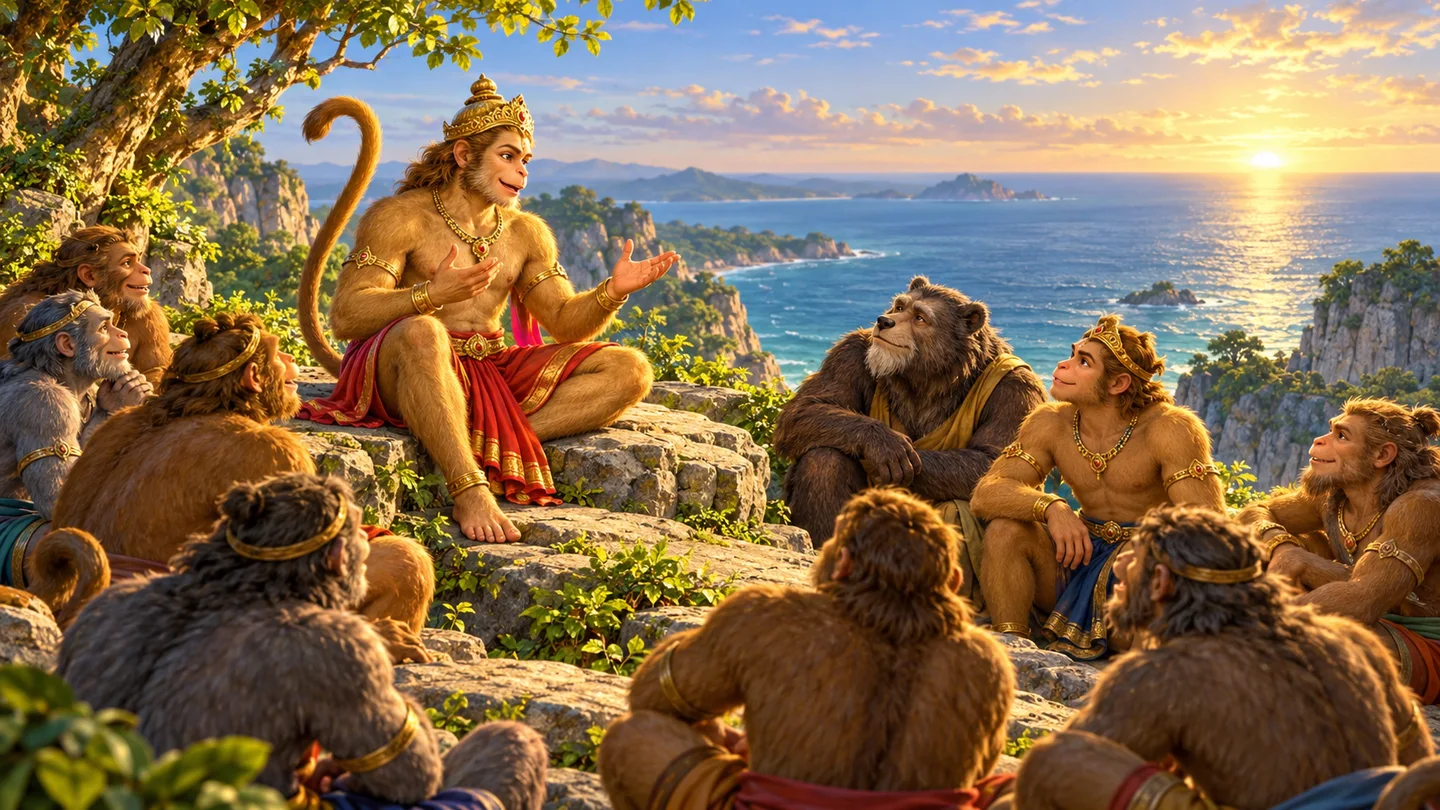
Hanuman recounts his journey to Jambavan, Angada and the vanaras on Mount Mahendra.
Original DHIH illustration · artistic interpretation

Verse 1 · 5.59.1

#

एतदाख्याय तत् सर्वं हनूमान् मारुतात्मजः ।

Having related all this, Hanuman, the Wind's son,

भूयः समुपचक्राम वचनं वक्तुमुत्तरम् ॥

began once more to speak further.

Verse 2 · 5.59.2

#

सफलो राघवोद्योगः सुग्रीवस्य च सम्भ्रमः ।

'Raghava's effort and Sugriva's earnest activity have borne fruit.

शीलमासाद्य सीताया मम च प्रीणितं मनः ॥

Having witnessed Sita's steadfast character, my own mind is satisfied.

Verse 3 · 5.59.3

#

आर्यायाः सदृशं शीलं सीतायाः प्लवगर्षभाः ।

Foremost vanaras, Sita's conduct is worthy of a noble lady.

तपसा धारयेल्लोकान् क्रुद्धा वा निर्दहेदपि ॥

Through austerity she could sustain the worlds, or burn them in anger.

Verse 4 · 5.59.4

#

सर्वथातिप्रकृष्टोऽसौ रावणो राक्षसेश्वरः ।

The rakshasa king Ravana must possess extraordinary austerity,

यस्य तां स्पृशतो गात्रं तपसा न विनाशितम् ॥

since his body was not destroyed when he touched her.

Verse 5 · 5.59.5

#

न तदग्निशिखा कुर्यात् संस्पृष्टा पाणिना सती ।

A flame touched by the hand could not do

जनकस्य सुता कुर्याद् यत् क्रोधकलुषीकृता ॥

what Janaka's daughter could do if overcome by wrath.

Verse 6 · 5.59.6

#

जाम्बवत्प्रमुखान् सर्वाननुज्ञाप्य महाकपीन् ।

With the approval of all the great vanaras, beginning with Jambavan,

अस्मिन् नेवंगते कार्ये भवतां च निवेदिते ।

now that the mission has reached this point and I have informed you,

न्याय्यं स्म सह वैदेह्या द्रष्टुं तौ पार्थिवात्मजौ ॥

it would be fitting to see the two princes together with Vaidehi.

Verse 7 · 5.59.7

#

अहमेकोऽपि पर्याप्तः सराक्षसगणां पुरीम् ।

I alone am sufficient to destroy by force

तां लङ्कां तरसा हन्तुं रावणं च महाबलम् ॥

Lanka with its rakshasa hosts and mighty Ravana.

Verse 8 · 5.59.8

#

किं पुनः सहितो वीरैर्बलवद्भिः कृतात्मभिः ।

How much more could I do together with you—brave, powerful and disciplined,

कृतास्त्रैः प्लवगैः शक्तैर्भवद्भिर्विजयैषिभिः ॥

trained in weapons, capable vanaras eager for victory!

Verse 9 · 5.59.9

#

अहं तु रावणं युद्धे ससैन्यं सपुरःसरम् ।

In battle I could kill Ravana with his army and foremost warriors,

सहपुत्रं वधिष्यामि सहोदरयुतं युधि ॥

together with his sons and brothers.

Verse 10 · 5.59.10

#

ब्राह्ममस्त्रं च रौद्रं च वायव्यं वारुणं तथा ।

Even if Indrajit released Brahma's, Rudra's, Wind's and Varuna's weapons,

यदि शक्रजितोऽस्त्राणि दुर्निरीक्ष्याणि संयुगे ।

dreadful to face in battle,

तान्यहं निहनिष्यामि विधमिष्यामि राक्षसान् ॥

I would defeat them and scatter the rakshasas.

Verse 11 · 5.59.11

#

भवतामभ्यनुज्ञातो विक्रमो मे रुणद्धि तम् ।

If you approve, my prowess will restrain him;

मयातुला विसृष्टा हि शैलवृष्टिर्निरन्तरा ॥

the unequalled, unbroken shower of rocks I unleash—

Verse 12 · 5.59.12

#

देवानपि रणे हन्यात् किं पुनस्तान् निशाचरान् ।

could destroy even gods in battle, much more those night-wanderers.

भवतामननुज्ञातो विक्रमो मे रुणद्धि माम् ॥

Without your permission, however, I restrain my prowess.

Verse 13 · 5.59.13

#

सागरोऽप्यतियाद् वेलां मन्दरः प्रचलेदपि ।

The ocean might pass its bounds and Mandara might shake,

न जाम्बवन्तं समरे कम्पयेदरिवाहिनी ॥

but an enemy army could not shake Jambavan in battle.

Verse 14 · 5.59.14

#

सर्वराक्षससङ्घानां राक्षसा ये च पूर्वजाः ।

Vali's heroic vanara son alone is sufficient

अलमेकोऽपि नाशाय वीरो वालिसुतः कपिः ॥

to destroy all rakshasa hosts, including their ancient champions.

Verse 15 · 5.59.15

#

प्लवगस्योरुवेगेन नीलस्य च महात्मनः ।

At the rush of noble Nila's thighs,

मन्दरोऽप्यवशीर्येत किं पुनर्युधि राक्षसाः ॥

even Mandara might crumble—how much more rakshasas in battle!

Verse 16 · 5.59.16

#

सदेवासुरयक्षेषु गन्धर्वोरगपक्षिषु ।

Among gods, asuras, yakshas, gandharvas, serpents and birds,

मैन्दस्य प्रतियोद्धारं शंसत द्विविदस्य वा ॥

name anyone who could oppose Mainda or Dvivida.

Verse 17 · 5.59.17

#

अश्विपुत्रौ महावेगावेतौ प्लवगसत्तमौ ।

These swift sons of the Ashvins are foremost vanaras;

एतयोः प्रतियोद्धारं न पश्यामि रणाजिरे ॥

I see no opponent for them on the battlefield.

Verse 18 · 5.59.18

#

मयैव निहता लङ्का दग्धा भस्मीकृता पुरी ।

I myself struck Lanka; the city was burned and reduced to ashes.

राजमार्गेषु सर्वेषु नाम विश्रावितं मया ॥

In all its royal streets I proclaimed my identity.

Verse 19 · 5.59.19

#

जयत्यतिबलो रामो लक्ष्मणश्च महाबलः ।

"Victory to immensely strong Rama and mighty Lakshmana!

राजा जयति सुग्रीवो राघवेणाभिपालितः ॥

Victory to King Sugriva, protected by Raghava!"

Verse 20 · 5.59.20

#

अहं कोसलराजस्य दासः पवनसम्भवः ।

"I am the Wind-born servant of the king of Kosala,

हनूमानिति सर्वत्र नाम विश्रावितं मया ॥

named Hanuman." Thus I announced my name everywhere.

Verse 21 · 5.59.21

#

अशोकवनिकामध्ये रावणस्य दुरात्मनः ।

In wicked Ravana's Ashoka grove,

अधस्ताच्छिंशपामूले साध्वी करुणमास्थिता ॥

beneath a shimshapa tree, the virtuous lady sits in sorrow—

Verse 22 · 5.59.22

#

राक्षसीभिः परिवृता शोकसंतापकर्शिता ।

surrounded by rakshasis and worn by grief and anguish,

मेघरेखापरिवृता चन्द्ररेखेव निष्प्रभा ॥

dimmed like a crescent Moon enclosed by a line of clouds.

Verse 23 · 5.59.23

#

अचिन्तयन्ती वैदेही रावणं बलदर्पितम् ।

Vaidehi gives no thought to Ravana's arrogant power;

पतिव्रता च सुश्रोणी अवष्टब्धा च जानकी ॥

faithful Janaki remains firmly devoted to her husband.

Verse 24 · 5.59.24

#

अनुरक्ता हि वैदेही रामे सर्वात्मना शुभा ।

The blessed Vaidehi loves Rama with her whole being;

अनन्यचित्ता रामेण पौलोमीव पुरन्दरे ॥

her mind is his alone, as Shachi's is devoted to Indra.

Verse 25 · 5.59.25

#

तदेकवासःसंवीता रजोध्वस्ता तथैव च ।

Wearing only that single garment and covered in dust,

सा मया राक्षसीमध्ये तर्ज्यमाना मुहुर्मुहुः ॥

she was among the rakshasis, being repeatedly threatened—

Verse 26 · 5.59.26

#

राक्षसीभिर्विरूपाभिर्दृष्टा हि प्रमदावने ।

I saw her in the pleasure grove, guarded by misshapen rakshasis,

एकवेणीधरा दीना भर्तृचिन्तापरायणा ॥

with a single braid, distressed and absorbed in thoughts of her husband.

Verse 27 · 5.59.27

#

अधःशय्या विवर्णाङ्गी पद्मिनीव हिमोदये ।

Sleeping on the ground, her body faded like a lotus at the coming of frost,

रावणाद् विनिवृत्तार्था मर्तव्यकृतनिश्चया ॥

she had rejected Ravana and resolved on death rather than submission.

Verse 28 · 5.59.28

#

कथंचिन्मृगशावाक्षी विश्वासमुपपादिता ।

With difficulty I won the doe-eyed lady's trust;

ततः सम्भाषिता चैव सर्वमर्थं प्रकाशिता ॥

then I spoke with her and explained the whole purpose of my visit.

Verse 29 · 5.59.29

#

रामसुग्रीवसख्यं च श्रुत्वा प्रीतिमुपागता ।

Hearing of Rama's friendship with Sugriva, she became glad.

नियतः समुदाचारो भक्तिर्भर्तरि चोत्तमा ॥

Her conduct remains disciplined and her devotion to her husband supreme.

Verse 30 · 5.59.30

#

यन्न हन्ति दशग्रीवं स महात्मा दशाननः ।

She does not herself kill the powerful ten-headed Ravana;

निमित्तमात्रं रामस्तु वधे तस्य भविष्यति ॥

Rama will be the instrument of his destruction.

Verse 31 · 5.59.31

#

सा प्रकृत्यैव तन्वङ्गी तद्वियोगाच्च कर्शिता ।

Naturally slender, she has become thinner through separation,

प्रतिपत्पाठशीलस्य विद्येव तनुतां गता ॥

like learning that fades in someone who studies only on the month's first day.

Verse 32 · 5.59.32

#

एवमास्ते महाभागा सीता शोकपरायणा ।

Thus the noble Sita remains overcome with sorrow.

यदत्र प्रतिकर्तव्यं तत् सर्वमुपकल्प्यताम् ॥

Let everything that ought to be done for her now be arranged.'

CHAPTER 59 COMPLETE

The journey continues.

Hanuman has placed Sita’s condition and a possible rescue before his companions for discussion.

NEXT CHAPTER

Continue Hanuman’s journey in the next chapter.

About this reading

Vālmīki Rāmāyaṇa, Sundara Kanda, chapter 59. This reading follows Sanskrit Wikisource revision 355586, with all 32 numbered verses. Verse divisions and wording vary between editions.

The Sanskrit is preserved with normalized display spacing and line breaks. Some sentences continue across verse boundaries; the English follows that continuity. A yojana is a traditional distance unit, retained without assigning a modern measurement. Shape-changing and celestial beings belong to the epic’s sacred narrative.

English line senses and short meanings are original AI-assisted DHIH renderings checked against this Sanskrit reading; they are not a word-for-word grammatical commentary or a claim of human scholarly certification. Roman transliteration is generated mechanically in IAST. Names may also appear in familiar English spellings.

Sanskrit transcription credit: Wikisource contributors, revision history. The adapted reading text and DHIH English on this chapter page are offered under CC BY-SA 4.0. The ancient Sanskrit work is in the public domain. Illustrations are separately commissioned AI-generated DHIH artwork.

Historical comparison: M. N. Dutt’s Ramayana, volume II, a public-domain translation, was consulted for narrative context. The English displayed here is a fresh rendering of the pinned Sanskrit, not a reproduction of that translation.

The chapter includes proposals for battle and Sita’s despair in captivity. Its praise of spiritual power is part of the epic’s devotional language. Audio will be added only when suitable recording permissions are available.