Search DHIH library

VĀLMĪKI RĀMĀYAṆA · CHAPTER 62

सुन्दरकाण्डम् · सर्गः 62

Dadhimukha seeks the king

The disturbance in Madhuvana intensifies. Injured while trying to protect the grove, Dadhimukha goes to Sugriva with his guards to report what has happened.

38 versesSanskrit + English1 illustration
Begin reading ↓

An edition-specific reading with original English meanings. Source & reading notes

SCENE 01 · VERSES 1–38

A guardian’s complaint

Dadhimukha turns to the king after his attempts to restore order fail.

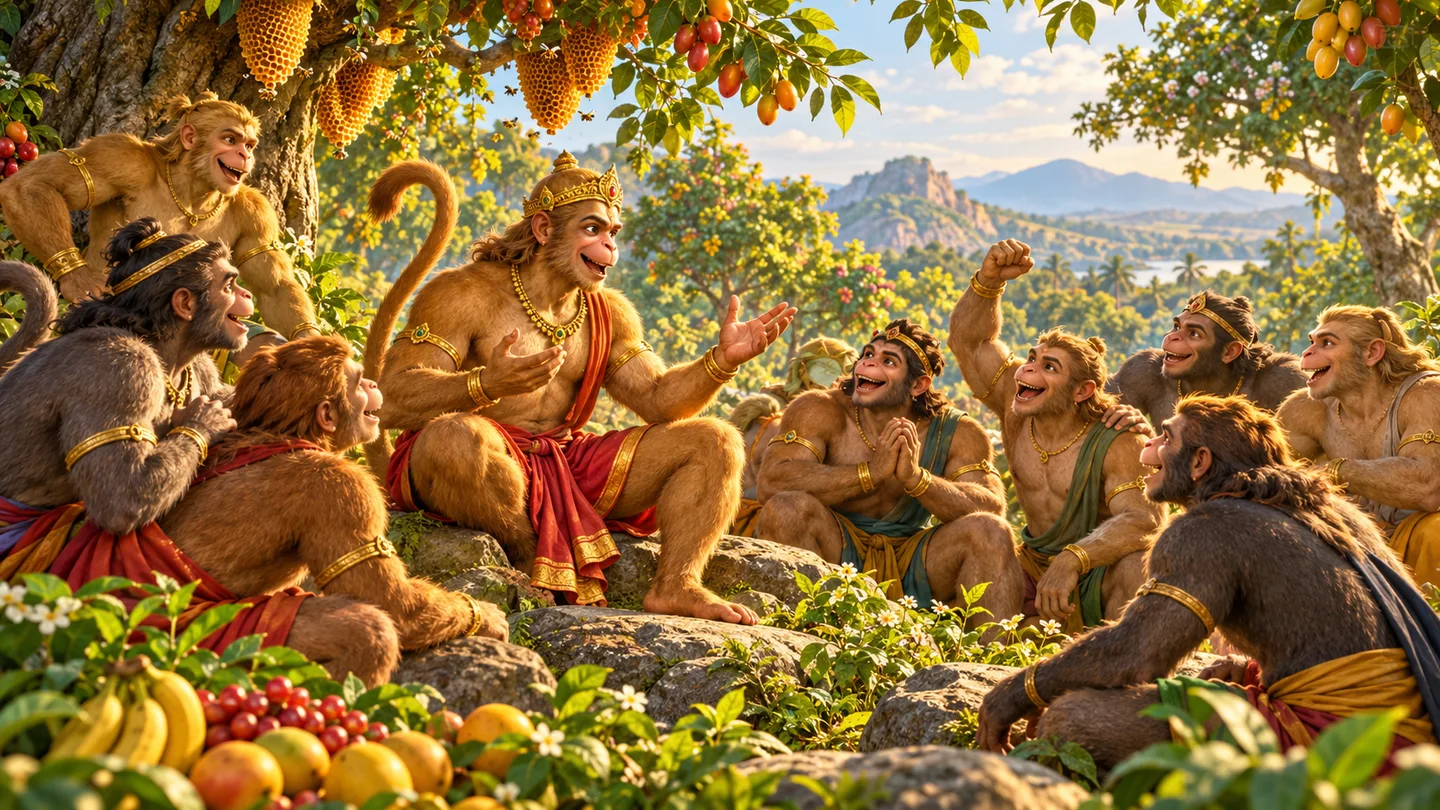
Vanara companions gather in a sunny woodland with flowering trees and honeycombs.
Original DHIH illustration · artistic interpretation

Verse 1 · 5.62.1

#

तानुवाच हरिश्रेष्ठो हनूमान् वानरर्षभः ।

Hanuman, foremost among the vanaras, told them,

अव्यग्रमनसो यूयं मधु सेवत वानराः ॥

'Vanaras, enjoy the honey without anxiety.

Verse 2 · 5.62.2

#

अहमावर्जयिष्यामि युष्माकं परिपन्थिनः ।

I will deal with those who obstruct you.'

श्रुत्वा हनूमतो वाक्यं हरीणां प्रवरोऽङ्गदः ॥

Hearing Hanuman's words, Angada, foremost of the vanaras—

Verse 3 · 5.62.3

#

प्रत्युवाच प्रसन्नात्मा पिबन्तु हरयो मधु ।

answered cheerfully, 'Let the vanaras drink the honey.

अवश्यं कृतकार्यस्य वाक्यं हनुमतो मया ॥

I must certainly honour the word of Hanuman, who has completed the task—

Verse 4 · 5.62.4

#

अकार्यमपि कर्तव्यं किमङ्गं पुनरीदृशम् ।

even if the action were improper; how much more in a matter like this!'

अङ्गदस्य मुखाच्छ्रुत्वा वचनं वानरर्षभाः ॥

Hearing these words from Angada's mouth, the foremost vanaras—

Verse 5 · 5.62.5

#

साधु साध्विति संहृष्टा वानराः प्रत्यपूजयन् ।

joyfully cried, 'Excellent! Excellent!'

पूजयित्वाङ्गदं सर्वे वानरा वानरर्षभम् ॥

All honoured Angada, their foremost vanara—

Verse 6 · 5.62.6

#

जग्मुर्मधुवनं यत्र नदीवेग इव द्रुमम् ।

and rushed into Madhuvana like a river's current against a tree.

ते प्रविष्टा मधुवनं पालानाक्रम्य शक्तितः ॥

Entering the honey-grove, they overpowered its guards—

Verse 7 · 5.62.7

#

अतिसर्गाच्च पटवो दृष्ट्वा श्रुत्वा च मैथिलीम् ।

emboldened by permission and by seeing or hearing of Maithili.

पपुः सर्वे मधु तदा रसवत् फलमाददुः ॥

They all drank honey and gathered juicy fruit.

Verse 8 · 5.62.8

#

उत्पत्य च ततः सर्वे वनपालान् समागतान् ।

They sprang upon the approaching forest guards,

ते ताडयन्तः शतशः सक्ता मधुवने तदा ॥

striking them by the hundreds while intent upon Madhuvana.

Verse 9 · 5.62.9

#

मधूनि द्रोणमात्राणि बाहुभिः परिगृह्य ते ।

Some vanaras held quantities of honey as large as a drona in their arms

पिबन्ति कपयः केचित् सङ्घशस्तत्र हृष्टवत् ॥

and joyfully drank together in groups.

Verse 10 · 5.62.10

#

घ्नन्ति स्म सहिताः सर्वे भक्षयन्ति तथापरे ।

Some struck out together, while others ate;

केचित् पीत्वापविध्यन्ति मधूनि मधुपिङ्गलाः ॥

some tawny vanaras drank and threw the remaining honey away.

Verse 11 · 5.62.11

#

मधूच्छिष्टेन केचिच्च जघ्नुरन्योन्यमुत्कटाः ।

Some boisterously struck one another with honeycomb remnants;

अपरे वृक्षमूलेषु शाखा गृह्य व्यवस्थिताः ॥

others stood at tree roots holding branches.

Verse 12 · 5.62.12

#

अत्यर्थं च मदग्लानाः पर्णान्यास्तीर्य शेरते ।

Exhausted by extreme intoxication, some spread leaves and lay down;

उन्मत्तवेगाः प्लवगा मधुमत्ताश्च हृष्टवत् ॥

others, drunk on honey, moved about with frantic delight.

Verse 13 · 5.62.13

#

क्षिपन्त्यपि तथान्योन्यं स्खलन्ति च तथापरे ।

Some hurled one another about, while others stumbled;

केचित् क्ष्वेडान् प्रकुर्वन्ति केचित् कूजन्ति हृष्टवत् ॥

some whistled and others called out joyfully.

Verse 14 · 5.62.14

#

हरयो मधुना मत्ताः केचित् सुप्ता महीतले ।

Some honey-intoxicated vanaras slept on the ground;

धृष्टाः केचिद्धसन्त्यन्ये केचित् कुर्वन्ति चेतरत् ॥

some behaved boldly, others laughed, and others did something else entirely.

Verse 15 · 5.62.15

#

कृत्वा केचिद् वदन्त्यन्ये केचिद् बुध्यन्ति चेतरत् ।

Some acted, others spoke, and others understood something different.

येऽप्यत्र मधुपालाः स्युः प्रेष्या दधिमुखस्य तु ॥

Even the honey-guards, the servants of Dadhimukha—

Verse 16 · 5.62.16

#

तेऽपि तैर्वानरैर्भीमैः प्रतिषिद्धा दिशो गताः ।

were driven away in every direction by the fierce vanaras,

जानुभिश्च प्रघृष्टाश्च देवमार्गं च दर्शिताः ॥

struck with knees and thrown upwards towards the sky.

Verse 17 · 5.62.17

#

अब्रुवन् परमोद्विग्ना गत्वा दधिमुखं वचः ।

Deeply distressed, they went to Dadhimukha and said,

हनूमता दत्तवरैर्हतं मधुवनं बलात् ।

'Those given leave by Hanuman have forcibly ruined Madhuvana;

वयं च जानुभिर्घृष्टा देवमार्गं च दर्शिताः ॥

we were struck with knees and hurled upwards.'

Verse 18 · 5.62.18

#

तदा दधिमुखः क्रुद्धो वनपस्तत्र वानरः ।

Hearing that Madhuvana was damaged, its guardian Dadhimukha

हतं मधुवनं श्रुत्वा सान्त्वयामास तान् हरीन् ॥

grew angry and reassured those vanaras.

Verse 19 · 5.62.19

#

एतागच्छत गच्छामो वानरानतिदर्पितान् ।

'Come, let us go! I shall forcibly restrain

बलेनावारयिष्यामि प्रभुञ्जानान् मधूत्तमम् ॥

those arrogant vanaras who are consuming the finest honey.'

Verse 20 · 5.62.20

#

श्रुत्वा दधिमुखस्येदं वचनं वानरर्षभाः ।

Hearing Dadhimukha's words, those brave foremost vanaras

पुनर्वीरा मधुवनं तेनैव सहिता ययुः ॥

returned with him to Madhuvana.

Verse 21 · 5.62.21

#

मध्ये चैषां दधिमुखः सुप्रगृह्य महातरुम् ।

Dadhimukha stood among them holding a great tree firmly,

समभ्यधावन् वेगेन सर्वे ते च प्लवंगमाः ॥

and all those vanaras rushed forward at speed.

Verse 22 · 5.62.22

#

ते शिलाः पादपांश्चैव पाषाणानपि वानराः ।

Taking rocks, trees and stones, the angry vanaras

गृहीत्वाभ्यागमन् क्रुद्धा यत्र ते कपिकुञ्जराः ॥

approached the place where the foremost revelers stood.

Verse 23 · 5.62.23

#

बलान्निवारयन्तश्च आसेदुर्हरयो हरीन् ।

They advanced upon the other vanaras to restrain them forcibly,

संदष्टौष्ठपुटाः क्रुद्धा भर्त्सयन्तो मुहुर्मुहुः ॥

biting their lips in anger and repeatedly threatening them.

Verse 24 · 5.62.24

#

अथ दृष्ट्वा दधिमुखं क्रुद्धं वानरपुङ्गवाः ।

Seeing Dadhimukha angry, the foremost vanaras,

अभ्यधावन्त वेगेन हनुमत्प्रमुखास्तदा ॥

led by Hanuman, rushed rapidly towards him.

Verse 25 · 5.62.25

#

सवृक्षं तं महाबाहुमापतन्तं महाबलम् ।

As the mighty, strong-armed guardian charged with his tree,

वेगवन्तं विजग्राह बाहुभ्यां कुपितोऽङ्गदः ॥

angry Angada seized him in both arms.

Verse 26 · 5.62.26

#

मदान्धो न कृपां चक्रे आर्यकोऽयं ममेति सः ।

Blinded by intoxication, he showed no consideration that this was his elder kinsman;

अथैनं निष्पिपेषाशु वेगेन वसुधातले ॥

he quickly dashed him against the ground with force.

Verse 27 · 5.62.27

#

स भग्नबाहूरुमुखो विह्वलः शोणितोक्षितः ।

His arms, thighs and face injured, distressed and covered in blood,

प्रमुमोह महावीरो मुहूर्तं कपिकुञ्जरः ॥

that mighty foremost vanara lost consciousness for a while.

Verse 28 · 5.62.28

#

स कथंचिद् विमुक्तस्तैर्वानरैर्वानरर्षभः ।

Somehow freed from those vanaras, the foremost guardian

उवाचैकान्तमागत्य स्वान् भृत्यान् समुपागतान् ॥

withdrew and spoke to his servants who gathered around him.

Verse 29 · 5.62.29

#

एतागच्छत गच्छामो भर्ता नो यत्र वानरः ।

'Come, let us go where our broad-necked vanara lord

सुग्रीवो विपुलग्रीवः सह रामेण तिष्ठति ॥

Sugriva is staying with Rama.

Verse 30 · 5.62.30

#

सर्वं चैवाङ्गदे दोषं श्रावयिष्याम पार्थिवे ।

We shall tell the king all of Angada's wrongdoing.

अमर्षी वचनं श्रुत्वा घातयिष्यति वानरान् ॥

Hearing it, the intolerant king will order these vanaras killed.

Verse 31 · 5.62.31

#

इष्टं मधुवनं ह्येतत् सुग्रीवस्य महात्मनः ।

This divine Madhuvana is dear to noble Sugriva,

पितृपैतामहं दिव्यं देवैरपि दुरासदम् ॥

inherited from his fathers and forefathers and difficult even for gods to approach.

Verse 32 · 5.62.32

#

स वानरानिमान् सर्वान् मधुलुब्धान् गतायुषः ।

Sugriva will punish to death all these honey-greedy vanaras,

घातयिष्यति दण्डेन सुग्रीवः ससुहृज्जनान् ॥

together with their companions, whose lives are now forfeit.

Verse 33 · 5.62.33

#

वध्या ह्येते दुरात्मानो नृपाज्ञापरिपन्थिनः ।

These wicked opponents of the king's command deserve death;

अमर्षप्रभवो रोषः सफलो मे भविष्यति ॥

my anger, born from indignation, will then bear fruit.'

Verse 34 · 5.62.34

#

एवमुक्त्वा दधिमुखो वनपालान् महाबलः ।

Having spoken thus to the forest guards, mighty Dadhimukha

जगाम सहसोत्पत्य वनपालैः समन्वितः ॥

suddenly sprang up and departed with them.

Verse 35 · 5.62.35

#

निमेषान्तरमात्रेण स हि प्राप्तो वनालयः ।

In barely the interval of a blink, the forest-dweller arrived

सहस्रांशुसुतो धीमान् सुग्रीवो यत्र वानरः ॥

where wise Sugriva, son of the thousand-rayed Sun, was staying.

Verse 36 · 5.62.36

#

रामं च लक्ष्मणं चैव दृष्ट्वा सुग्रीवमेव च ।

Seeing Rama, Lakshmana and Sugriva,

समप्रतिष्ठां जगतीमाकाशान्निपपात ह ॥

he descended from the sky onto level ground.

Verse 37 · 5.62.37

#

स निपत्य महावीरः सर्वैस्तैः परिवारितः ।

Dadhimukha, the mighty vanara and chief of the guardians,

हरिर्दधिमुखः पालैः पालानां परमेश्वरः ॥

alighted surrounded by all those forest guards.

Verse 38 · 5.62.38

#

स दीनवदनो भूत्वा कृत्वा शिरसि चाञ्जलिम् ।

With a sorrowful face and joined hands raised above his head,

सुग्रीवस्याशु तौ मूर्ध्ना चरणौ प्रत्यपीडयत् ॥

he quickly pressed his head against Sugriva's feet.

CHAPTER 62 COMPLETE

The journey continues.

Dadhimukha has bowed before Sugriva, ready to explain the damage and assaults.

NEXT CHAPTER

Continue Hanuman’s journey in the next chapter.

About this reading

Vālmīki Rāmāyaṇa, Sundara Kanda, chapter 62. This reading follows Sanskrit Wikisource revision 355612, with all 38 numbered verses. Verse divisions and wording vary between editions.

The Sanskrit is preserved with normalized display spacing and line breaks. Some sentences continue across verse boundaries; the English follows that continuity. A yojana is a traditional distance unit, retained without assigning a modern measurement. Shape-changing and celestial beings belong to the epic’s sacred narrative.

English line senses and short meanings are original AI-assisted DHIH renderings checked against this Sanskrit reading; they are not a word-for-word grammatical commentary or a claim of human scholarly certification. Roman transliteration is generated mechanically in IAST. Names may also appear in familiar English spellings.

Sanskrit transcription credit: Wikisource contributors, revision history. The adapted reading text and DHIH English on this chapter page are offered under CC BY-SA 4.0. The ancient Sanskrit work is in the public domain. Illustrations are separately commissioned AI-generated DHIH artwork.

Historical comparison: M. N. Dutt’s Ramayana, volume II, a public-domain translation, was consulted for narrative context. The English displayed here is a fresh rendering of the pinned Sanskrit, not a reproduction of that translation.

The chapter describes intoxication, physical assaults and angry demands for punishment. It is a complete epic reading rather than a simplified moral tale for young children. Audio will be added only when suitable recording permissions are available.