Search DHIH library

VĀLMĪKI RĀMĀYAṆA · CHAPTER 65

सुन्दरकाण्डम् · सर्गः 65

Sita’s jewel and message

Hanuman gives Rama Sita’s carefully preserved jewel and explains where she is, how she is enduring captivity and why rescue is urgent.

28 versesSanskrit + English1 illustration
Begin reading ↓

An edition-specific reading with original English meanings. Source & reading notes

SCENE 01 · VERSES 1–28

A token carried with care

The messenger brings both tangible proof and Sita’s own words to Rama.

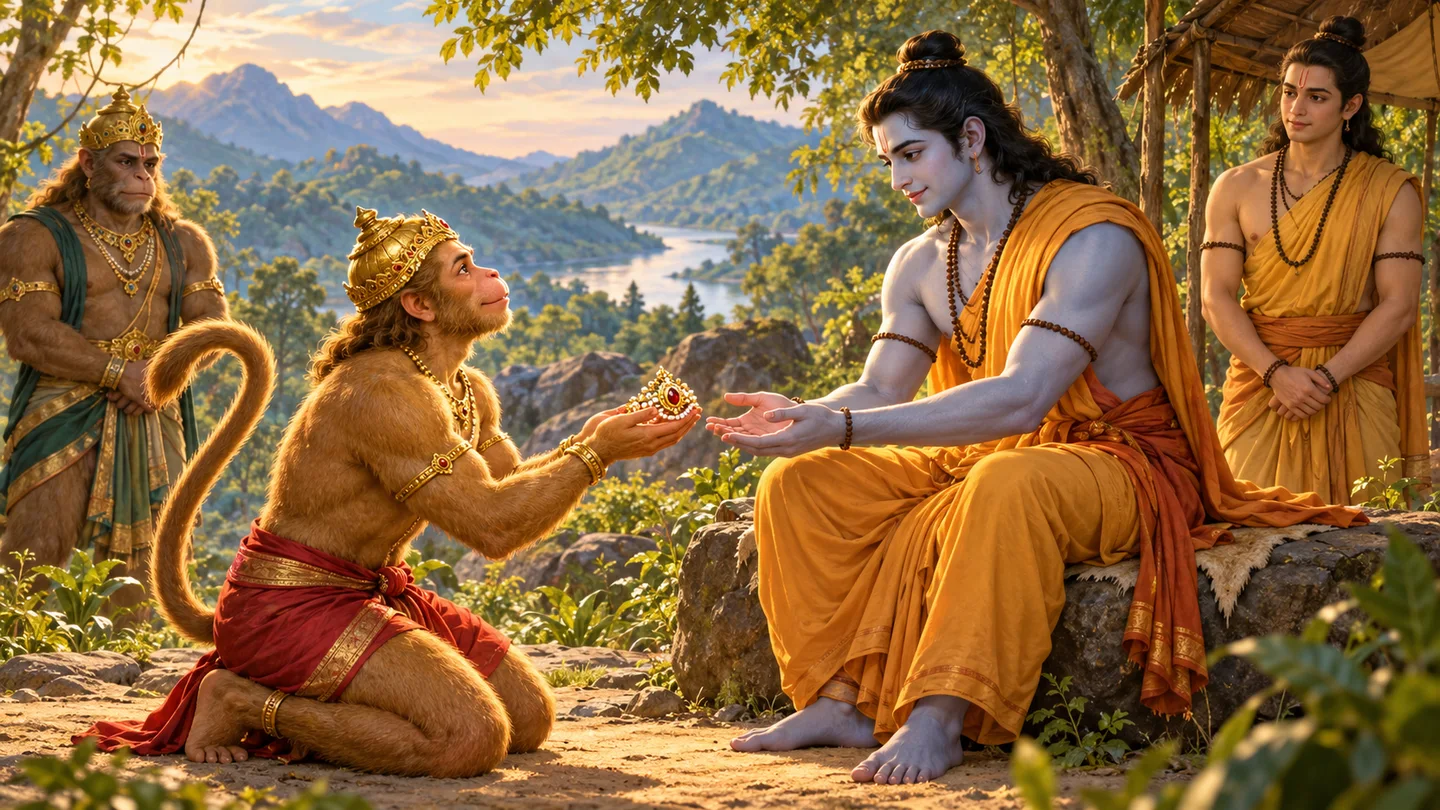
Hanuman respectfully brings Sita’s jewel and message to Rama, with Lakshmana nearby.
Original DHIH illustration · artistic interpretation

Verse 1 · 5.65.1

#

ततः प्रस्रवणं शैलं ते गत्वा चित्रकाननम् ।

They reached Mount Prasravana with its varied forests

प्रणम्य शिरसा रामं लक्ष्मणं च महाबलम् ॥

and bowed their heads to Rama and mighty Lakshmana.

Verse 2 · 5.65.2

#

युवराजं पुरस्कृत्य सुग्रीवमभिवाद्य च ।

With the crown prince foremost, they saluted Sugriva

प्रवृत्तिमथ सीतायाः प्रवक्तुमुपचक्रमुः ॥

and began to relate the news of Sita.

Verse 3 · 5.65.3

#

रावणान्तःपुरे रोधं राक्षसीभिश्च तर्जनम् ।

They described her confinement in Ravana's inner domain and the rakshasis' threats,

रामे समनुरागं च यथा च नियमः कृतः ॥

her unwavering love for Rama and the restraint she maintained.

Verse 4 · 5.65.4

#

एतदाख्याय ते सर्वं हरयो रामसंनिधौ ।

The vanaras told all this in Rama's presence.

वैदेहीमक्षतां श्रुत्वा रामस्तूत्तरमब्रवीत् ॥

Hearing that Vaidehi was unharmed, Rama replied.

Verse 5 · 5.65.5

#

क्व सीता वर्तते देवी कथं च मयि वर्तते ।

'Where is the lady Sita staying, and how does she think of me?

एतन्मे सर्वमाख्यात वैदेहीं प्रति वानराः ॥

Vanaras, tell me everything about Vaidehi.'

Verse 6 · 5.65.6

#

रामस्य गदितं श्रुत्वा हरयो रामसंनिधौ ।

Hearing Rama speak, the vanaras before him

चोदयन्ति हनूमन्तं सीतावृत्तान्तकोविदम् ॥

urged Hanuman, who knew Sita's circumstances, to answer.

Verse 7 · 5.65.7

#

श्रुत्वा तु वचनं तेषां हनूमान् मारुतात्मजः ।

Hearing their request, Hanuman, the Wind's son,

प्रणम्य शिरसा देव्यै सीतायै तां दिशं प्रति ॥

bowed his head towards the direction where the lady Sita remained.

Verse 8 · 5.65.8

#

उवाच वाक्यं वाक्यज्ञः सीताया दर्शनं यथा ।

That skilled speaker began describing how he had seen Sita.

तं मणिं काञ्चनं दिव्यं दीप्यमानं स्वतेजसा ॥

Taking the divine golden jewel, shining with its own radiance—

Verse 9 · 5.65.9

#

दत्त्वा रामाय हनुमांस्ततः प्राञ्जलिरब्रवीत् ।

Hanuman gave it to Rama and spoke with folded hands:

समुद्रं लङ्घयित्वाहं शतयोजनमायतम् ॥

'After crossing the ocean, a hundred yojanas wide—

Verse 10 · 5.65.10

#

अगच्छं जानकीं सीतां मार्गमाणो दिदृक्षया ।

I went searching for Janaki Sita, longing to see her.

तत्र लङ्केति नगरी रावणस्य दुरात्मनः ॥

There is a city named Lanka, belonging to wicked Ravana—

Verse 11 · 5.65.11

#

दक्षिणस्य समुद्रस्य तीरे वसति दक्षिणे ।

standing on the southern shore of the southern ocean.

तत्र सीता मया दृष्टा रावणान्तःपुरे सती ॥

There I saw the virtuous Sita within Ravana's inner domain.

Verse 12 · 5.65.12

#

त्वयि संन्यस्य जीवन्ती रामा राम मनोरथम् ।

Rama, she lives with all her hopes fixed upon you.

दृष्टा मे राक्षसीमध्ये तर्ज्यमाना मुहुर्मुहुः ॥

I saw her among rakshasis, repeatedly threatened—

Verse 13 · 5.65.13

#

राक्षसीभिर्विरूपाभी रक्षिता प्रमदावने ।

guarded in the pleasure grove by misshapen rakshasis.

दुःखमापद्यते देवी त्वया वीर सुखोचिता ॥

Hero, the lady who deserved happiness with you now endures suffering.

Verse 14 · 5.65.14

#

रावणान्तःपुरे रुद्धा राक्षसीभिः सुरक्षिता ।

Confined in Ravana's domain and closely guarded by rakshasis,

एकवेणीधरा दीना त्वयि चिन्तापरायणा ॥

wearing a single braid, she remains miserable and absorbed in thoughts of you.

Verse 15 · 5.65.15

#

अधःशय्या विवर्णाङ्गी पद्मिनीव हिमागमे ।

Sleeping upon the ground, faded like a lotus when frost arrives,

रावणाद् विनिवृत्तार्था मर्तव्यकृतनिश्चया ॥

she has rejected Ravana and resolved on death rather than yielding.

Verse 16 · 5.65.16

#

देवी कथंचित् काकुत्स्थ त्वन्मना मार्गिता मया ।

Kakutstha, I found the lady with her mind devoted to you,

इक्ष्वाकुवंशविख्यातिं शनैः कीर्तयतानघ ॥

blameless one, by softly recounting the fame of the Ikshvaku lineage.

Verse 17 · 5.65.17

#

सा मया नरशार्दूल शनैर्विश्वासिता तदा ।

Lion among men, little by little I won her confidence.

ततः सम्भाषिता देवी सर्वमर्थं च दर्शिता ॥

Then I spoke with the lady and explained the whole purpose.

Verse 18 · 5.65.18

#

रामसुग्रीवसख्यं च श्रुत्वा हर्षमुपागता ।

Hearing of Rama's friendship with Sugriva, she became joyful.

नियतः समुदाचारो भक्तिश्चास्याः सदा त्वयि ॥

Her behaviour remains disciplined and her devotion to you constant.

Verse 19 · 5.65.19

#

एवं मया महाभाग दृष्टा जनकनन्दिनी ।

Fortunate and foremost man, thus I saw Janaka's daughter,

उग्रेण तपसा युक्ता त्वद्भक्त्या पुरुषर्षभ ॥

engaged in severe austerity through her devotion to you.

Verse 20 · 5.65.20

#

अभिज्ञानं च मे दत्तं यथावृत्तं तवान्तिके ।

She gave me a private sign: the event involving the crow

चित्रकूटे महाप्राज्ञ वायसं प्रति राघव ॥

that occurred near you at Chitrakuta, wise Raghava.

Verse 21 · 5.65.21

#

विज्ञाप्यः पुनरप्येष रामो वायुसुत त्वया ।

Janaki told me, 'Wind's son, once more you must inform Rama

अखिलेन यथा दृष्टमिति मामाह जानकी ॥

fully of everything exactly as you have seen it.

Verse 22 · 5.65.22

#

अयं चास्मै प्रदातव्यो यत्नात् सुपरिरक्षितः ।

This carefully preserved jewel must also be given to him.'

ब्रुवता वचनान्येवं सुग्रीवस्योपशृण्वतः ॥

As these words were related with Sugriva listening—

Verse 23 · 5.65.23

#

एष चूडामणिः श्रीमान् मया ते यत्नरक्षितः ।

she also said, 'I have carefully kept this splendid crest-jewel for you.

मनःशिलायास्तिलकं तत् स्मरस्वेति चाब्रवीत् ॥

Remember the mark of red mineral pigment you once placed upon my forehead.

Verse 24 · 5.65.24

#

एष निर्यातितः श्रीमान् मया ते वारिसम्भवः ।

I have sent this beautiful jewel, born from water, to you.

एनं दृष्ट्वा प्रमोदिष्ये व्यसने त्वामिवानघ ॥

In distress its sight gives me joy as though I were seeing you, blameless one.

Verse 25 · 5.65.25

#

जीवितं धारयिष्यामि मासं दशरथात्मज ।

Son of Dasharatha, I shall sustain my life for one month.

ऊर्ध्वं मासान्न जीवेयं रक्षसां वशमागता ॥

Beyond that month I cannot live, held in the rakshasas' power.'

Verse 26 · 5.65.26

#

इति मामब्रवीत् सीता कृशाङ्गी धर्मचारिणी ।

Thus the thin, righteous Sita spoke to me,

रावणान्तःपुरे रुद्धा मृगीवोत्फुल्ललोचना ॥

confined in Ravana's domain, her eyes wide like a frightened doe's.

Verse 27 · 5.65.27

#

एतदेव मयाऽऽख्यातं सर्वं राघव यद् यथा ।

Raghava, I have told you everything exactly as it occurred.

सर्वथा सागरजले संतारः प्रविधीयताम् ॥

By every possible means, arrange to cross the ocean's waters.'

Verse 28 · 5.65.28

#

तौ जाताश्वासौ राजपुत्रौ विदित्वा

Seeing that both princes had gained reassurance,

तच्चाभिज्ञानं राघवाय प्रदाय ।

and having given Raghava the identifying token,

देव्या चाख्यातं सर्वमेवानुपूर्व्याद्

the Wind's son related in full and proper order

वाचा सम्पूर्णं वायुपुत्रः शशंस ॥

everything the lady had told him.

CHAPTER 65 COMPLETE

The journey continues.

The jewel and the full account have reached Rama. Hanuman asks that the ocean crossing now be arranged.

NEXT CHAPTER

Continue Hanuman’s journey in the next chapter.

About this reading

Vālmīki Rāmāyaṇa, Sundara Kanda, chapter 65. This reading follows Sanskrit Wikisource revision 355617, with all 28 numbered verses. Verse divisions and wording vary between editions.

The Sanskrit is preserved with normalized display spacing and line breaks. Some sentences continue across verse boundaries; the English follows that continuity. A yojana is a traditional distance unit, retained without assigning a modern measurement. Shape-changing and celestial beings belong to the epic’s sacred narrative.

English line senses and short meanings are original AI-assisted DHIH renderings checked against this Sanskrit reading; they are not a word-for-word grammatical commentary or a claim of human scholarly certification. Roman transliteration is generated mechanically in IAST. Names may also appear in familiar English spellings.

Sanskrit transcription credit: Wikisource contributors, revision history. The adapted reading text and DHIH English on this chapter page are offered under CC BY-SA 4.0. The ancient Sanskrit work is in the public domain. Illustrations are separately commissioned AI-generated DHIH artwork.

Historical comparison: M. N. Dutt’s Ramayana, volume II, a public-domain translation, was consulted for narrative context. The English displayed here is a fresh rendering of the pinned Sanskrit, not a reproduction of that translation.

The account includes Sita’s despair and her stated limit for enduring captivity. The jewel and shared memories are presented as identifying signs within the narrative. Audio will be added only when suitable recording permissions are available.