An original retelling of the Sabarimala tradition · 471 words
The story in 100 words
King Rajasekhara of Pandalam finds a baby in the forest. The child wears a little ornament at his neck. In the familiar telling, it is a bell, and the baby is called Manikandan. The king takes him home and raises him with the queen. They welcome him as their son. The palace becomes the setting for his childhood, but his divine identity is not yet understood by everyone. This chapter remembers the kindness of making room for someone. A family is shown through the care it gives. Manikandan’s journey begins with a loving welcome and a safe place to grow.
Swipe left for the next page · swipe right to go back
Original illustration · artistic interpretation
01 / 04
A surprising meeting
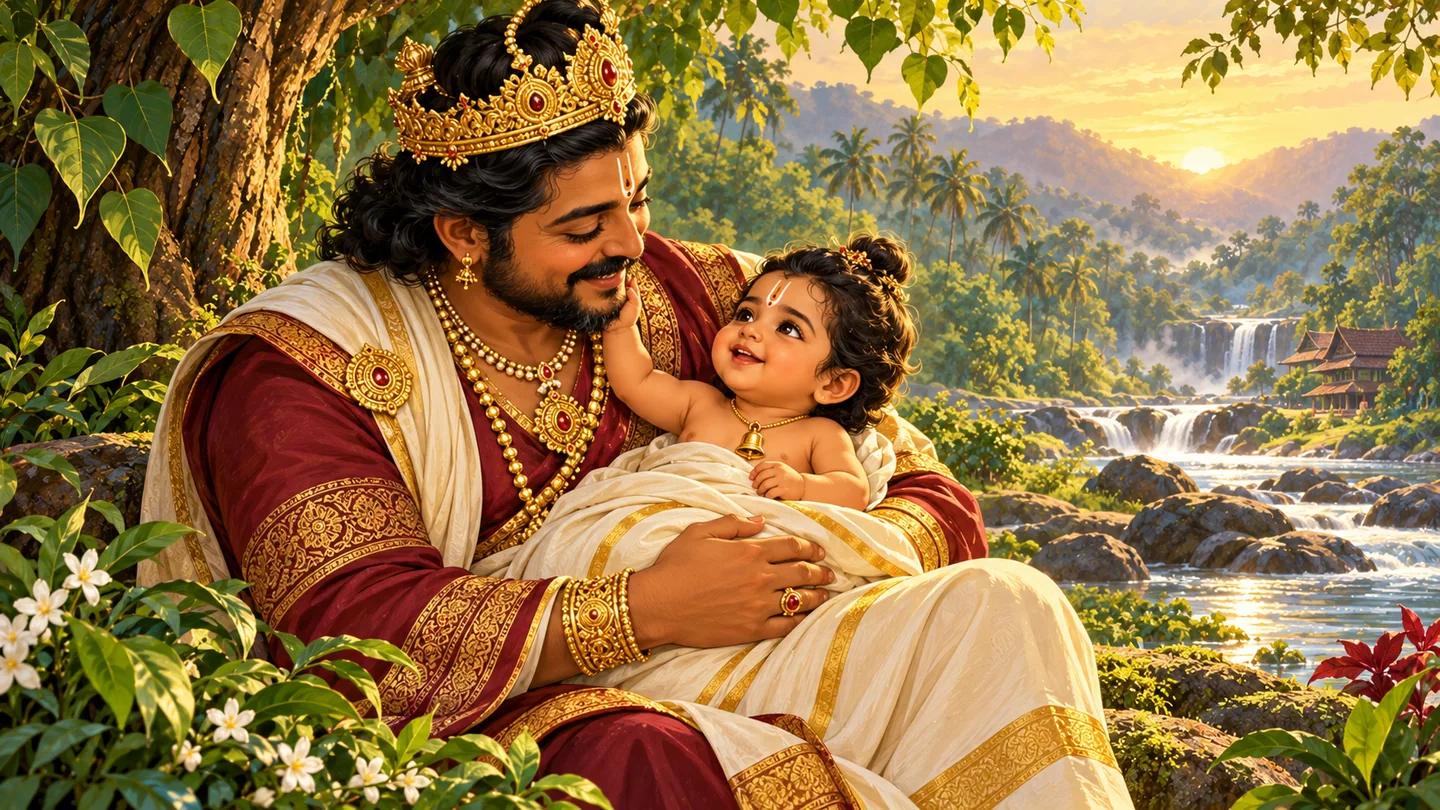
King Rajasekhara ruled at Pandalam. In the traditional story, he and his queen longed for a child. One day, while the king was in the forest, he came upon an infant. The busy concerns of the palace suddenly seemed far away. Here was a small child who needed care.
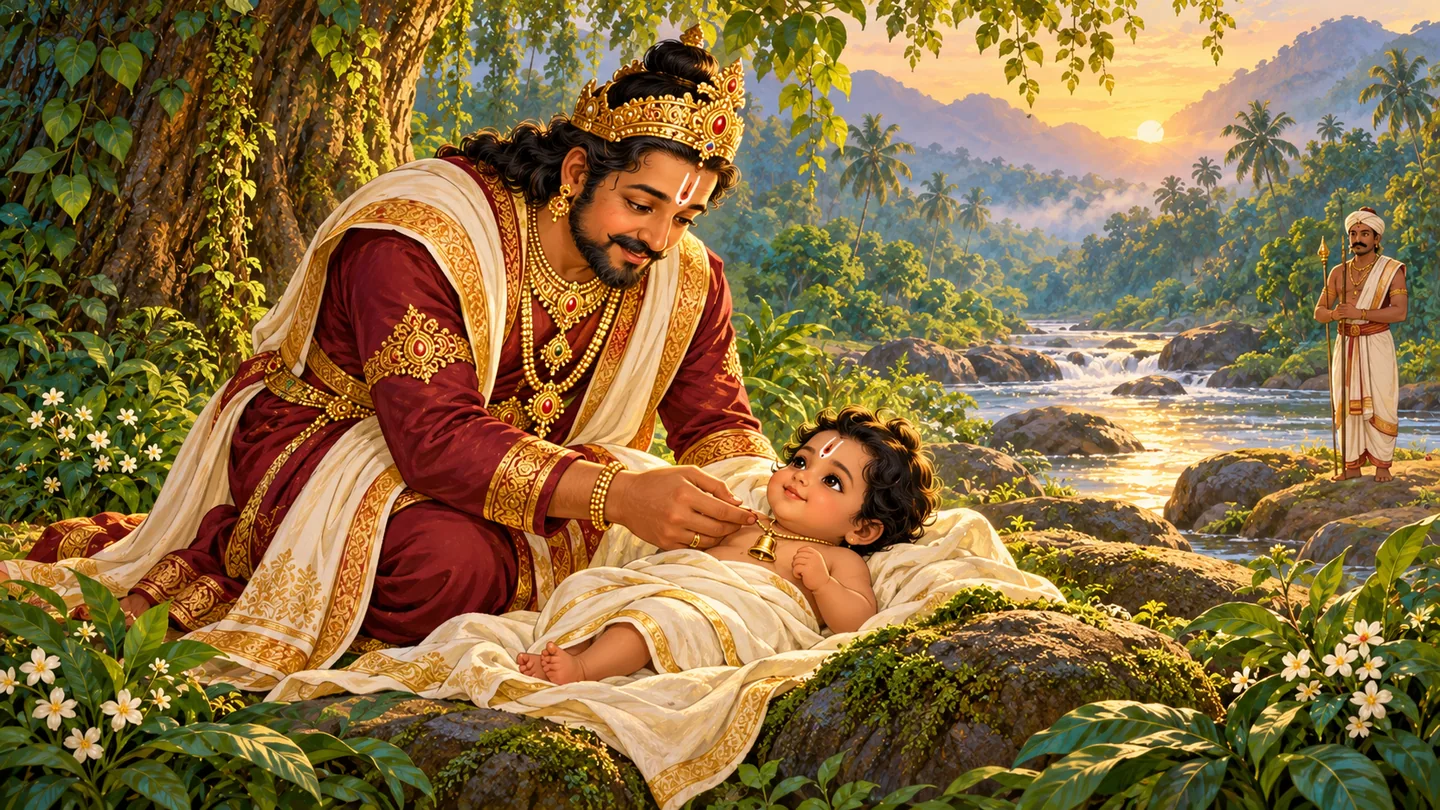
Picture the king lowering himself beside the baby, looking closely before lifting him gently. A king might be used to people asking him for decisions, but this moment asked for something simple: care. There was no need to wait for a grand announcement. A child needed a home. Rajasekhara welcomed him, becoming the loving foster father whose kindness would always belong to Ayyappa’s story.
Original illustration · artistic interpretation
02 / 04
The little neck ornament
The child wore a little ornament around his neck. In the telling followed by our pictures, it was a small bell. He became known as Manikandan, a name connected with that ornament at his neck. The king had found more than a child to care for. He had found a new reason to look towards the future with joy. The little bell would become a familiar sign as the boy grew.
A name can carry a memory. Each time we hear Manikandan, we can remember this meeting in the forest. The king did not need to understand every mystery before showing kindness. He could begin with the simple task before him: hold the child carefully and bring him home.
Original illustration · artistic interpretation
03 / 04
The journey home
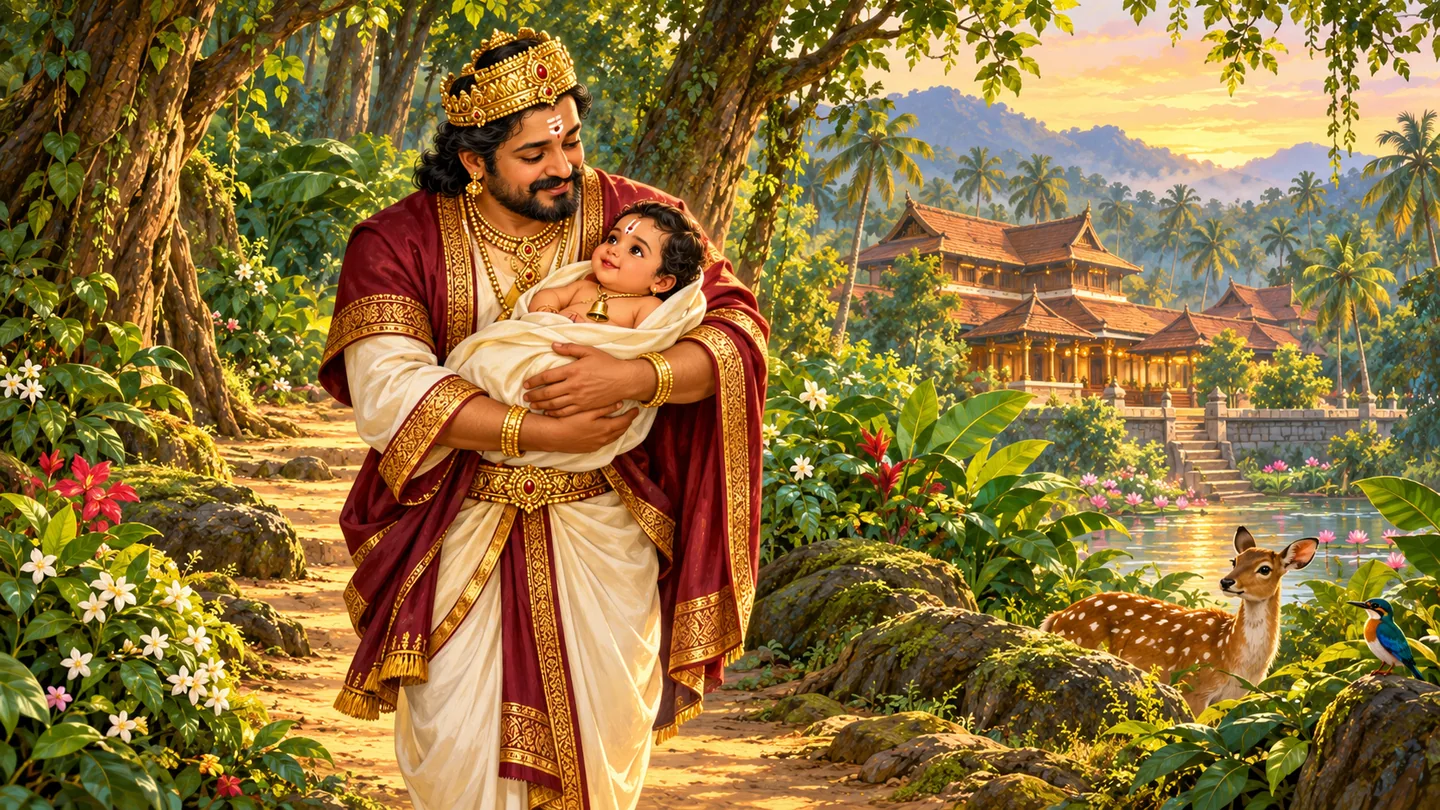
The forest path now led towards a different future. Rajasekhara returned with the child to Pandalam. Imagine the familiar palace roof coming into view through the trees. Every turn brought the baby closer to the family waiting there. The king had entered the forest without knowing what he would find. He was returning with someone whose place in his heart had already begun.
Caring for someone is not only a feeling. It becomes an action. The king made a place for the child in his home and accepted the responsibility of helping him grow. A baby cannot prepare a meal, find shelter or explain every need. Someone must notice, protect and provide. The king’s welcome began that patient work of love.
Original illustration · artistic interpretation
04 / 04
A place in the family
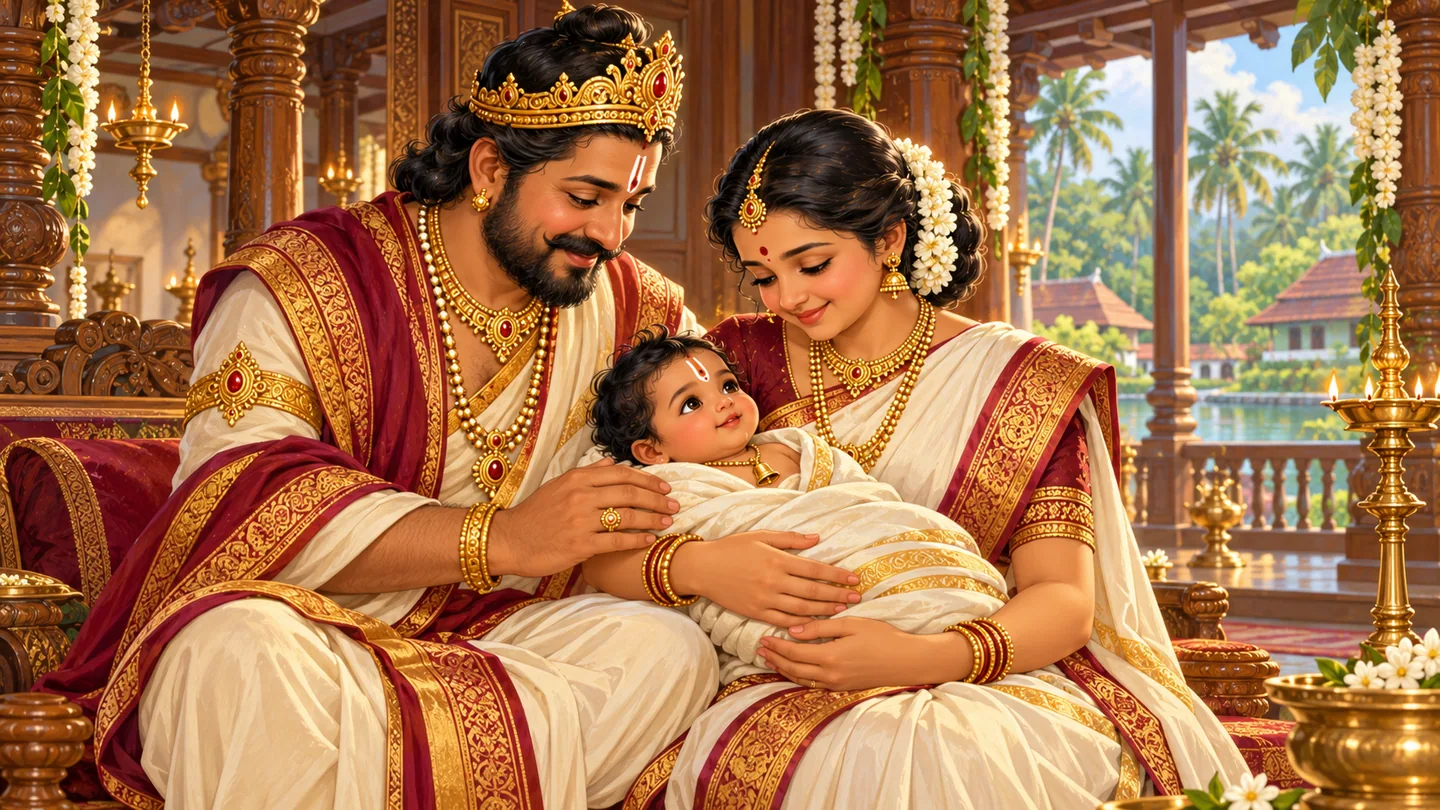
At the palace, the queen welcomed Manikandan. The royal couple raised him as their son. The child who had been found among trees would grow up among teachers, palace rooms and the people of Pandalam. His story was moving into a new chapter.
Later, the king and queen would have another son. That event would bring difficult choices into the story. For now, there was a new child to welcome, and many days of growing ahead. Think of all the little ways a family shows care: listening, comforting, feeding and staying close when someone is afraid. The story’s great adventures were still far away. Before Manikandan became known for extraordinary courage, he was a child held with love.
Meet the characters
King Rajasekhara
Baby Manikandan
The queen
Little words, big meanings
Manikandan
The childhood name associated with the ornament at his neck.
Pandalam
The Kerala place associated with his foster family.
Rajasekhara
The king who raises Manikandan in this tradition.
READ WITH A GROWN-UP
Let’s talk together
Who found Manikandan?
What helps you recognise him in the pictures?
How can you help someone feel welcome?
Tradition, sources and a note for grown-ups
An original educational retelling of the cited tradition. Scenery, transitions and reflections are imaginative reading aids. No invented dialogue is presented as scripture. Illustrations are artistic interpretations.
The Kerala Tourism telling describes a small bell at the child’s neck; the official Sabarimala account describes a gold neck ornament. The illustrations consistently use a bell. Palace scenery and gestures are imaginative details.
Traditional narrative motifs checked against the cited witnesses. Original AI-assisted prose; not a literal translation or a scholar-certified critical edition. Last reviewed: 2026-10-27.
Kerala Tourism: “King Rajasekhara’s Discovery of Lord Ayyappa”
An official presentation of religious tradition, not independent historical proof. DHIH retells traditional motifs in original language; source prose and art are not reproduced.
The narrative was available through the indexed official page; direct retrieval was intermittent. Childhood miracle is a traditional religious account, not a medical promise.