An original retelling of the Sabarimala tradition · 504 words
The story in 100 words
Mahishi’s power has brought suffering to the devas. A boon says that only the child of Shiva and Vishnu can defeat her. Manikandan is that divine child. During his forest quest, he confronts Mahishi. The traditional account describes a fierce struggle and says that Mahishi dies. Our pictures keep the struggle gentle and do not show wounds or a body. The meaning is not that fighting is a game. Ayyappa’s divine task is to end destructive power. Together, we can reflect on using strength to protect others, seeking help when harm occurs, and valuing the peace that follows the struggle.
Swipe left for the next page · swipe right to go back
Original illustration · artistic interpretation
01 / 04
Remembering the purpose
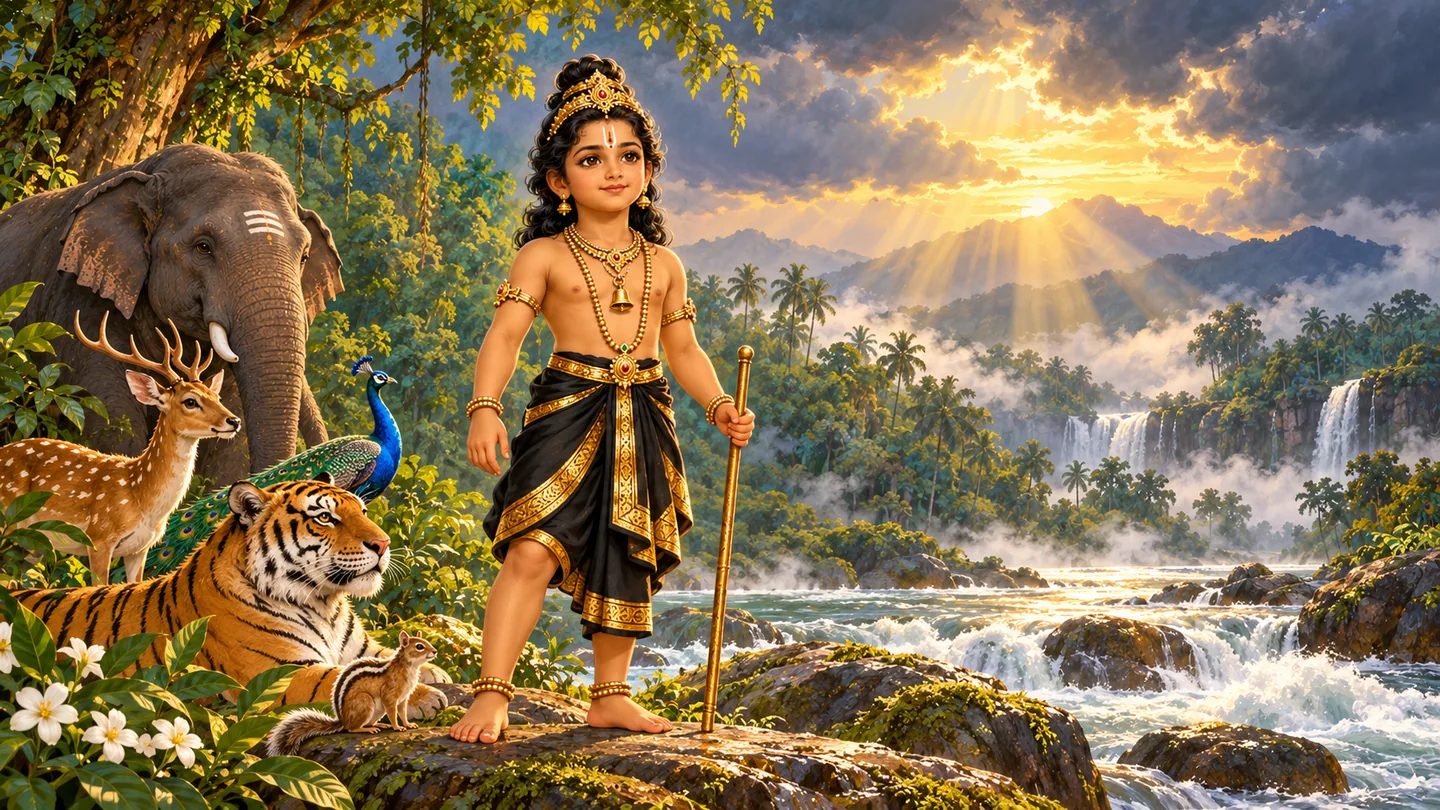
At the beginning of this storybook, we learned why the devas sought help. Mahishi had used her power to bring suffering. A boon said that only the child of Shiva and Vishnu could defeat her. The divine child was Ayyappa, known in Pandalam as Manikandan.
Now the forest quest reaches that deeper purpose. The request for tigress’s milk has brought Manikandan away from the palace, but his mission is larger than a royal family’s argument. The world still needs protection from Mahishi. What began with the devas asking for help will now meet its answer. Manikandan, the child once found in the forest, stands ready to fulfil the purpose of his birth.
Original illustration · artistic interpretation
02 / 04
Facing harmful power
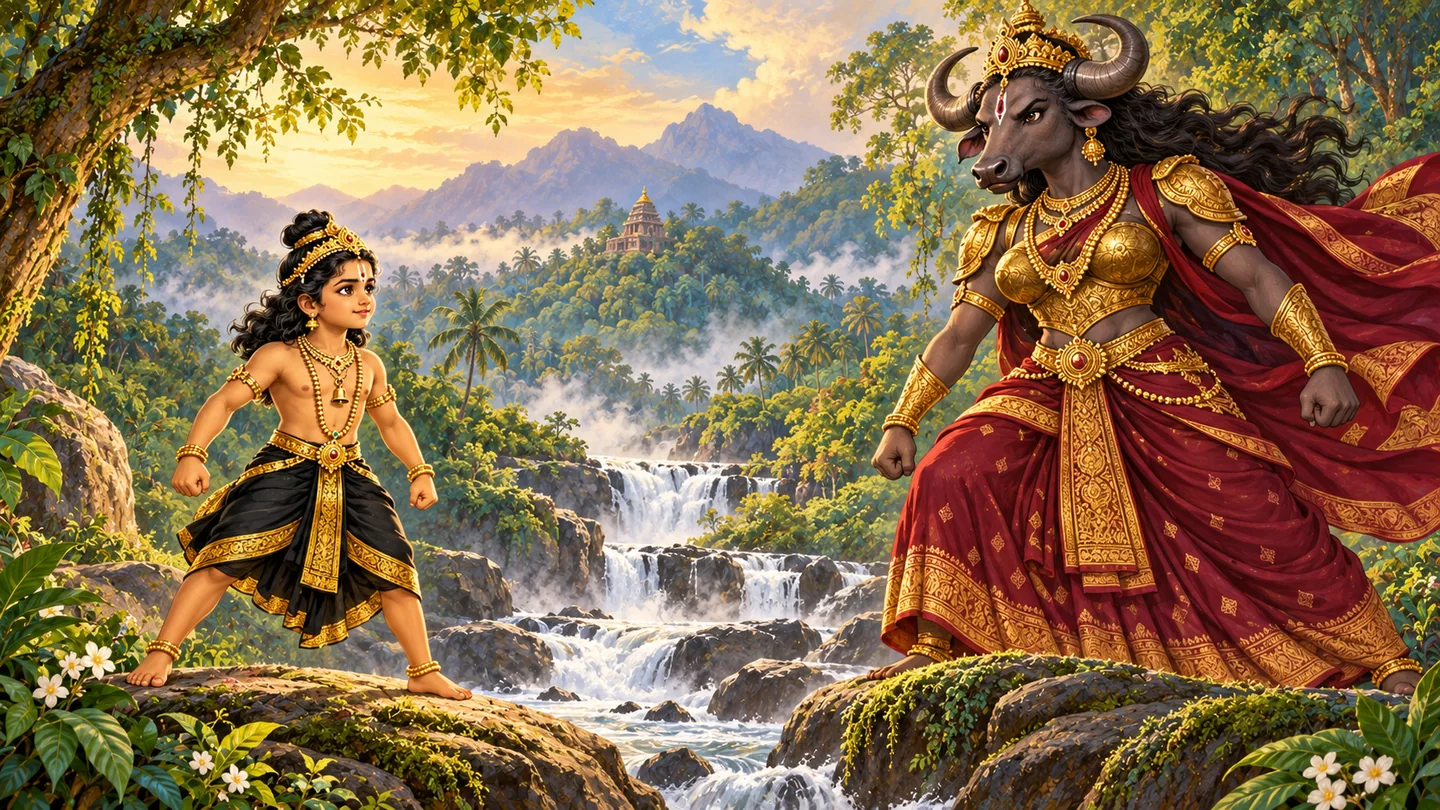
Mahishi is an asura associated with the buffalo. In our picture, her buffalo-like head helps us recognise her. She had relied on her boon and believed that no one could overcome her. But a gift of power had become a reason for pride. Instead of protecting others, she had caused suffering. Now she faced the very child whom the boon had named: the child of Shiva and Vishnu.
Manikandan confronted Mahishi. The tradition tells of a fierce struggle that moved from the divine realm to the earth. For the devas, this was the answer to the help they had sought. Mahishi’s strength could no longer remain unchecked. The story holds our attention because so much depends on the outcome: not a prize, a crown or a palace, but an end to the harm that had troubled the world.
Original illustration · artistic interpretation
03 / 04
The traditional outcome
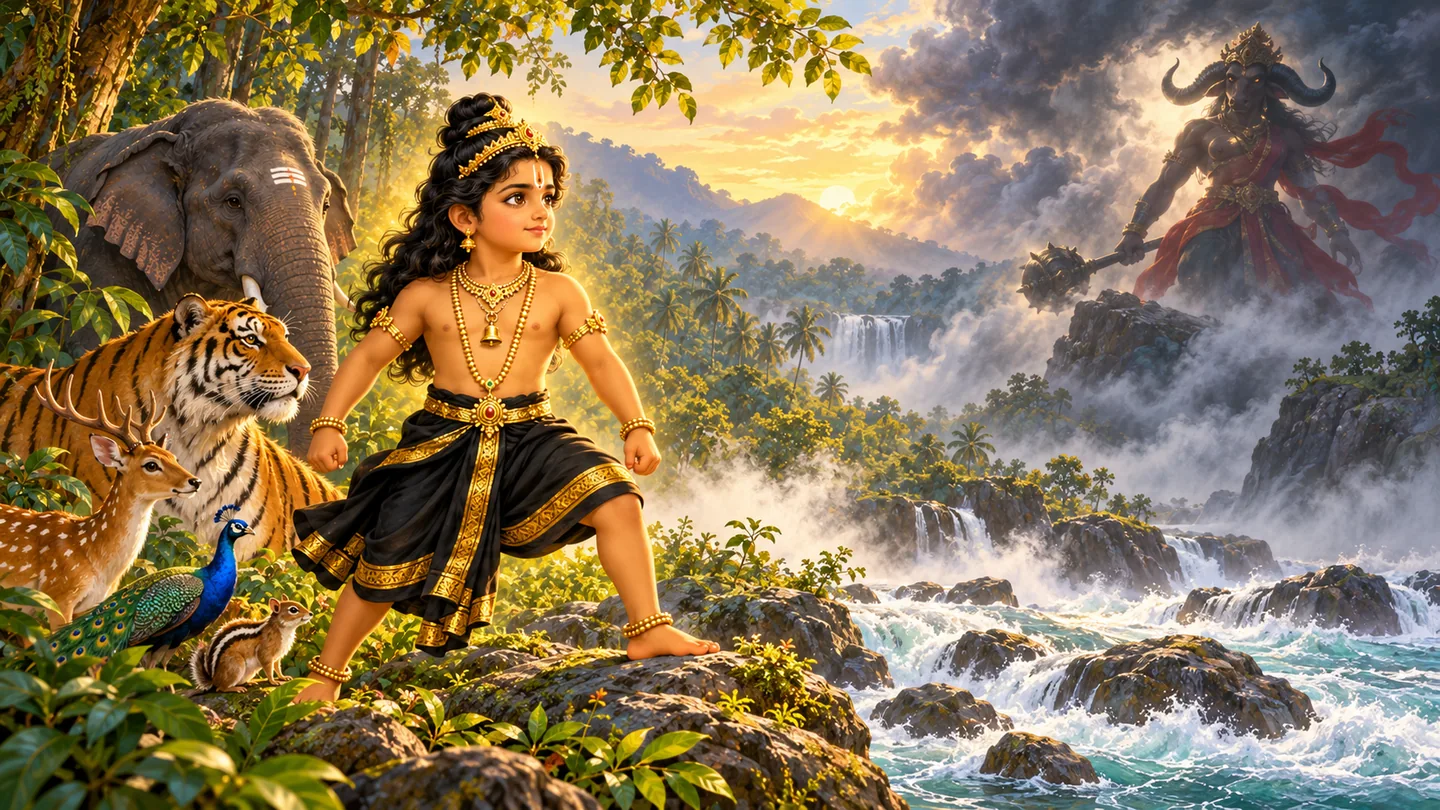
In the familiar telling, Manikandan overcomes Mahishi. The account describes him standing upon her and a mighty dance. Mahishi recognises that he is the child foretold by the boon, and she dies. The boon that had seemed to make her unbeatable has reached its foretold ending.
This is a solemn moment in the story. The struggle is over, and Mahishi’s destructive power has ended. Manikandan has fulfilled the purpose for which he was born. We can picture the land becoming still again, with space for life to continue beneath the trees. The return to Pandalam is still ahead. First, the story lets us understand that the great task behind the forest journey has been completed.
Original illustration · artistic interpretation
04 / 04
What peace asks of us
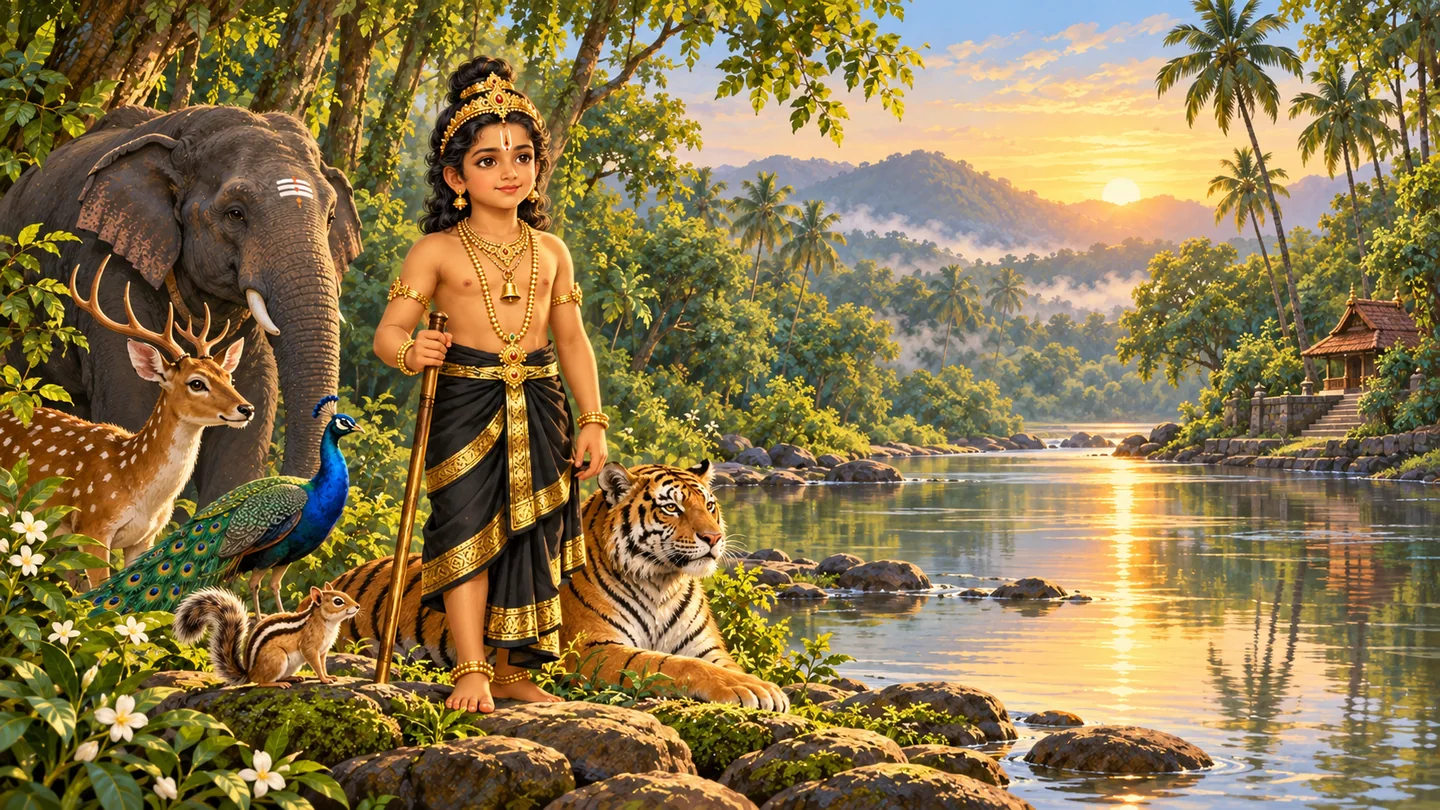
Imagine the river after the struggle, its surface quiet beneath the trees. The water continues on its way. Leaves move above the bank. This peaceful picture gives us room to pause after a difficult part of the story. When harm stops, there is space for care and trust to grow again. Peace is not an empty ending; it is something precious that others can live within.
Strength is valuable when it protects someone. That is the lesson we can bring into an ordinary day. A strong voice can call a teacher. A steady hand can help a friend stand up. A truthful account can help an adult understand what happened. Children do not need to fight danger alone. We can ask responsible people for help and look after one another. With the task completed, Manikandan’s story turns towards home.
Meet the characters
Ayyappa / Manikandan
Mahishi
The devas
Little words, big meanings
Mahishi
The powerful opponent in this Ayyappa tradition.
Asura
A being in Hindu narratives; this story’s asura is an antagonist.
Divine realm
The world of the devas within the religious story.
READ WITH A GROWN-UP
Let’s talk together
Why did the devas need help?
What purpose does Ayyappa fulfil in this chapter?
What is a safe way to help someone who is being hurt?
Tradition, sources and a note for grown-ups
An original educational retelling of the cited tradition. Scenery, transitions and reflections are imaginative reading aids. No invented dialogue is presented as scripture. Illustrations are artistic interpretations.
This chapter retains the traditional struggle and Mahishi’s death without graphic imagery. Read with a younger child and pause for questions. The calm river scene is an artistic transition, not an additional scriptural event.
Traditional narrative motifs checked against the cited witnesses. Original AI-assisted prose; not a literal translation or a scholar-certified critical edition. Last reviewed: 2026-10-27.
Kerala Tourism: “Divine Birth” and “The Defeat of Mahishi”
An official presentation of religious tradition, not independent historical proof. DHIH retells traditional motifs in original language; source prose and art are not reproduced.