Tattva Bodha
तत्त्वबोधः
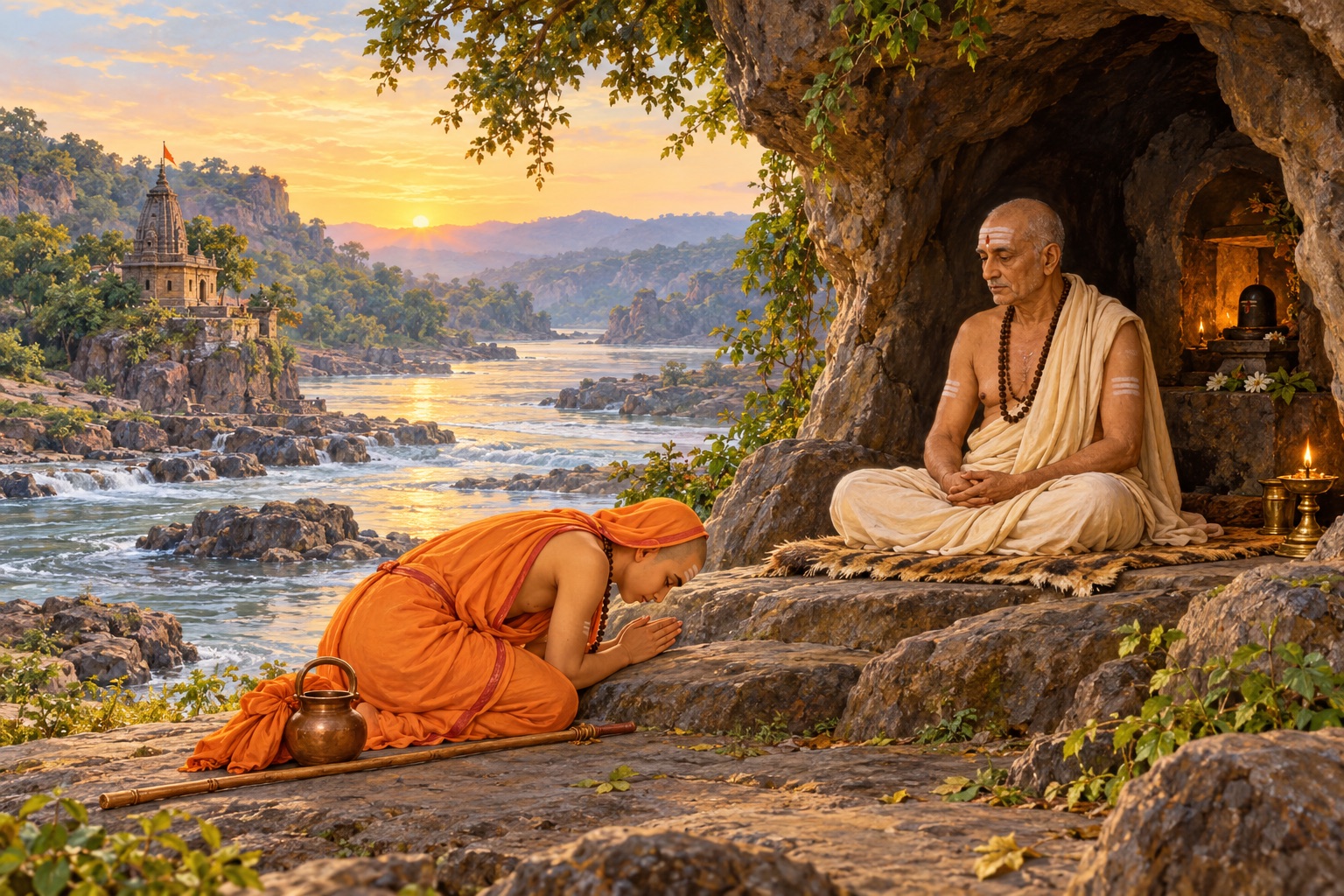
Invocation
वासुदेवेन्द्रयोगीन्द्रं नत्वा ज्ञानप्रदं गुरुम् । मुमुक्षूणां हितार्थाय तत्त्वबोधोऽभिधीयते ॥ साधनचतुष्टयसम्पन्नाधिकारिणां मोक्षसाधनभूतं तत्त्वविवेकप्रकारं वक्ष्यामः ।
English meaning
The author bows to the teacher Vasudevendra, giver of knowledge. For those seeking freedom, this inquiry explains how to distinguish reality when the four qualifications are present.
Section 1
१॥० साधनचतुष्टयम् साधनचतुष्टयं किम् ? १॥१ नित्यानित्यवस्तुविवेकः । १॥२ इहामुत्रार्थफलभोगविरागः । १॥३ शमादिषट्कसम्पत्तिः । १॥४ मुमुक्षुत्वं चेति । १॥१॥१ विवेकः नित्यानित्यवस्तुविवेकः कः ? नित्यवस्त्वेकं ब्रह्म तद्व्यतिरिक्तं सर्वमनित्यम् । अयमेव नित्यानित्यवस्तुविवेकः । १॥१॥२ वैराग्यम् विरागः कः ? इहस्वर्गभोगेषु इच्छाराहित्यम् । १॥१॥३ शमादिसाधनसम्पत्तिः का ? शमो दम उपरमस्तितिक्षा श्रद्धा समाधानं च इति । १॥१॥३॥१ शमः शमः कः ? मनोनिग्रहः । १॥१॥३॥२ दमः दमः कः ? चक्षुरादिबाह्येन्द्रियनिग्रहः । १॥१॥३॥३ उपरमः उपरमः कः ? स्वधर्मानुष्ठानमेव । १॥१॥३॥४ तितिक्षा तितिक्षा का ? शीतोष्णसुखदुःखादिसहिष्णुत्वम् । १॥१॥३॥५ श्रद्धा श्रद्धा कीदृशी ? गुरुवेदान्तवाक्यादिषु विश्वासः श्रद्धा । १॥१॥३॥६ समाधानम् समाधानं किम् ? चित्तैकाग्रता । १॥४ मुमुक्षुत्वम् मुमुक्षुत्वं किम् ? मोक्षो मे भूयाद् इति इच्छा । एतत् साधनचतुष्टयम् । ततस्तत्त्वविवेकस्याधिकारिणो भवन्ति ।
English meaning
The four preparations are discernment, dispassion, six inner disciplines and longing for liberation. Discernment recognizes Brahman as enduring and everything else as transient. Dispassion loosens the craving for rewards here or in heaven. The six disciplines are quieting the mind, guiding the senses, attending to one’s duty, bearing opposites, trusting the teacher and scripture, and steady concentration. Longing for liberation is the desire to be free.
Section 2
२॥० तत्त्वविवेकः २॥१ तत्त्वविवेकः कः ? आत्मा सत्यं तदन्यत् सर्वं मिथ्येति । २॥२ आत्मा कः ? स्थूलसूक्ष्मकारणशरीराद्व्यतिरिक्तः पञ्चकोशातीतः सन् अवस्थात्रयसाक्षी सच्चिदानन्दस्वरूपः सन् यस्तिष्ठति स आत्मा ।
English meaning
Inquiry into reality distinguishes the Self, which is real, from everything that depends upon it. The Self is distinct from the three bodies and five sheaths, witnesses the three states of experience, and is being, awareness and joy.
Section 3
३॥० शरीरत्रयम् ३॥१ स्थूलशरीरं किम् ? पञ्चीकृतपञ्चमहाभूतैः कृतं सत्कर्मजन्यं सुखदुःखादिभोगायतनं शरीरम् अस्ति जायते वर्धते विपरिणमते अपक्षीयते विनश्यतीति षड्विकारवदेतत्स्थूलशरीरम् । ३॥२ सूक्ष्मशरीरं किम् ? अपञ्चीकृतपञ्चमहाभूतैः कृतं सत्कर्मजन्यं सुखदुःखादिभोगसाधनं पञ्चज्ञानेन्द्रियाणि पञ्चकर्मेन्द्रियाणि पञ्चप्राणादयः मनश्चैकं बुद्धिश्चैका एवं सप्तदशकलाभिः सह यत्तिष्ठति तत्सूक्ष्मशरीरम् । ३॥३ कारणशरीरं किम् ? अनिर्वाच्यानाद्यविद्यारूपं शरीरद्वयस्य कारणमात्रं सत्स्वरूपाज्ञानं निर्विकल्पकरूपं यदस्ति तत्कारणशरीरम् ।
English meaning
The physical body consists of the five combined elements and provides a place for experiencing the results of past action. It exists, is born, grows, changes, declines and dies. The subtle body consists of the five senses, five faculties of action, five vital functions, mind and intellect. It arises from the subtle elements and enables experience. The causal body is beginningless ignorance of one’s real nature, the seed of the other two bodies.
Section 4
४॥० ज्ञानेन्द्रियाणि ४॥१ श्रोत्रं त्वक् चक्षुः रसना घ्राणम् इति पञ्च ज्ञानेन्द्रियाणि । ४॥१॥० ज्ञानेन्द्रियदेवताः ४॥१॥१ श्रोत्रस्य दिग्देवता । ४॥१॥२ त्वचो वायुः । ४॥१॥३ चक्षुषः सूर्यः । ४॥१॥४ रसनाया वरुणः । ४॥१॥५ घ्राणस्य अश्विनौ । इति ज्ञानेन्द्रियदेवताः । ४॥२ ज्ञानेन्द्रियविषयाः ४॥२॥१ श्रोत्रस्य विषयः शब्दग्रहणम् । ४॥२॥२ त्वचो विषयः स्पर्शग्रहणम् । ४॥२॥३ चक्षुषो विषयः रूपग्रहणम् । ४॥२॥४ रसनाया विषयः रसग्रहणम् । ४॥२॥५ घ्राणस्य विषयः गन्धग्रहणम् इति ।
English meaning
The ear hears sound, skin feels touch, the eye sees form, the tongue tastes and the nose smells. The corresponding presiding powers are the directions, wind, sun, Varuna and the Ashvin twins.
Section 5
५॥० कर्मेन्द्रियाणि ५॥१ वाक्पाणिपादपायूपस्थानीति पञ्चकर्मेन्द्रियाणि । ५॥१॥० कर्मेन्द्रियदेवताः ५॥१॥१ वाचो देवता वह्निः । ५॥१॥२ हस्तयोरिन्द्रः । ५॥१॥३ पादयोर्विष्णुः । ५॥१॥४ पायोर्मृत्युः । ५॥१॥५ उपस्थस्य प्रजापतिः । इति कर्मेन्द्रियदेवताः । ५॥२ कर्मेन्द्रियविषयाः ५॥२॥१ वाचो विषयः भाषणम् । ५॥२॥२ पाण्योर्विषयः वस्तुग्रहणम् । ५॥२॥३ पादयोर्विषयः गमनम् । ५॥२॥४ पायोर्विषयः मलत्यागः । ५॥२॥५ उपस्थस्य विषयः आनन्द इति ।
English meaning
Speech speaks, the hands grasp, the feet move, the organ of elimination expels waste, and the reproductive organ affords pleasure. Their presiding powers are fire, Indra, Vishnu, Death and Prajapati respectively.
Section 6
६॥० अवस्थात्रयम् अवस्थात्रयं किम् ? ६॥१ जाग्रत्स्वप्नसुषुप्त्यवस्थाः । ६॥१॥१ जाग्रदवस्था का ? श्रोत्रादिज्ञानेन्द्रियैः शब्दादिविषयैश्च ज्ञायते इति यत् सा जाग्रदवस्था । ६॥१॥१॥१ स्थूल शरीराभिमानी आत्मा विश्व इत्युच्यते । ६॥१॥२ स्वप्नावस्था केति चेत् ? जाग्रदवस्थायां यद्दृष्टं यद् श्रुतम् तज्जनितवासनया निद्रासमये यः प्रपञ्चः प्रतीयते सा स्वप्नावस्था । ६॥१॥२॥१ सूक्ष्मशरीराभिमानी आत्मा तैजस इत्युच्यते । ६॥१॥३ अतः सुषुप्त्यवस्था का ? अहं किमपि न जानामि सुखेन मया निद्राऽनुभूयत इति सुषुप्त्यवस्था । ६॥१॥३॥१ कारणशरीराभिमानी आत्मा प्राज्ञ इत्युच्यते ।
English meaning
In waking, the senses encounter their objects. The Self identified with the physical body is called Vishva. In dream, impressions of waking experience give rise to a world during sleep. Identified with the subtle body, the Self is called Taijasa. In deep sleep there is rest without distinct objects of knowledge. Identified with the causal body, the Self is called Prajna.
Section 7
७॥० पञ्चकोशाः ७॥१ पञ्च कोशाः के ? अन्नमयः प्राणमयः मनोमयः विज्ञानमयः आनन्दमयश्चेति । ७॥१॥१ अन्नमयः कः ? अन्नरसेनैव भूत्वा अन्नरसेनैव वृद्धिं प्राप्य अन्नरूपपृथिव्यां यद्विलीयते तदन्नमयः कोशः स्थूलशरीरम् । ७॥१॥२ प्राणमयः कः ? प्राणाद्याः पञ्चवायवः वागादीन्द्रियपञ्चकं प्राणमयः कोशः । ७॥१॥३ मनोमयः कोशः कः ? मनश्च ज्ञानेन्द्रियपञ्चकं मिलित्वा यो भवति स मनोमयः कोशः । ७॥१॥४ विज्ञानमयः कः ? बुद्धिज्ञानेन्द्रियपञ्चकं मिलित्वा यो भवति स विज्ञानमयः कोशः । ७॥१॥५ आनन्दमयः कः ? एवमेव कारणशरीरभूताविद्यास्थमलिनसत्त्वं प्रियादिवृत्तिसहितं सत् आनन्दमयः कोशः । एतत्कोशपञ्चकम् ।
English meaning
The food sheath is the physical body, sustained by food and returning to earth. The vital sheath comprises the five vital functions and five faculties of action. Mind together with the senses forms the mental sheath. Intellect together with the senses forms the discernment sheath. The bliss sheath belongs to the causal condition and includes experiences of pleasure while ignorance remains.
Section 8
८॥० आत्मन् मदीयं शरीरं मदीयाः प्राणाः मदीयं मनश्च मदीया बुद्धिर्मदीयं अज्ञानमिति स्वेनैव ज्ञायते तद्यथा मदीयत्वेन ज्ञातं कटककुण्डल गृहादिकं तद्यथा मदीयत्वेन ज्ञातं कटककुण्डलगृहादिकं स्वस्मद्भिन्नं तथा पञ्चकोशादिकं स्वस्मद्भिन्नं मदीयत्वेन ज्ञातमात्मा न भवति ॥ ८॥१ आत्मा तर्हि कः ? सच्चिदानन्दस्वरूपः । ८॥१॥१ सत्किम् ? कालत्रयेऽपि तिष्ठतीति सत् । ८॥१॥२ चित्किम् ? ज्ञानस्वरूपः । ८॥१॥३ आनन्दः कः ? सुखस्वरूपः । ८॥२ एवं सच्चिदानन्दस्वरूपं स्वात्मानं विजानीयात् ।
English meaning
One can say “my body,” “my mind,” “my intellect,” and even “my ignorance.” What is recognized as mine is distinguishable from me, just as my ornaments and house are. The Self is being, present in past, present and future; awareness, whose nature is knowing; and joy, whose nature is happiness.
Section 9
९॥० अथ चतुर्विंशतितत्त्वोत्पत्तिप्रकारं वक्ष्यामः । ९॥१ ब्रह्माश्रया सत्त्वरजस्तमोगुणात्मिका माया अस्ति । ९॥१॥१ ततः आकाशः सम्भूतः । ९॥१॥२ आकाशाद् वायुः । ९॥१॥३ वायोस्तेजः । ९॥१॥४ तेजस आपः । ९॥१॥५ अद्भ्यः पृथिवी । ९॥२ ज्ञानेन्द्रियसम्बूति एतेषां पञ्चतत्त्वानां मध्ये ९॥२॥१ आकाशस्य सात्विकांशात् श्रोत्रेन्द्रियं सम्भूतम् । ९॥२॥२ वायोः सात्विकांशात् त्वगिन्द्रियं सम्भूतम् । ९॥२॥३ अग्नेः सात्विकांशात् चक्षुरिन्द्रियं सम्भूतम् । ९॥२॥४ जलस्य सात्विकांशात् रसनेन्द्रियं सम्भूतम् । ९॥२॥५ पृथिव्याः सात्विकांशात् घ्राणेन्द्रियं सम्भूतम् । ९॥३ एतेषां पञ्चतत्त्वानां समष्टिसात्विकांशात् मनोबुद्ध्यहङ्कार चित्तान्तःकरणानि सम्भूतानि । ९॥३॥१ सङ्कल्पविकल्पात्मकं मनः । ९॥३॥२ निश्चयात्मिका बुद्धिः । ९॥३॥३ अहंकर्ता अहंकारः । ९॥३॥४ चिन्तनकर्तृ चित्तम् । ९॥४ अन्तःकरणदेवताः ९॥४॥१ मनसो देवता चन्द्रमाः । ९॥४॥२ बुद्धेर्ब्रह्मा । ९॥४॥३ अहंकारस्य रुद्रः । ९॥४॥४ चित्तस्य वासुदेवः । ९॥५ कर्मेन्द्रितसम्भूति एतेषां पञ्चतत्त्वानां मध्ये ९॥५॥१ आकाशस्य राजसांशात् वागिन्द्रियं सम्भूतम् । ९॥५॥२ वायोः राजसांशात् पाणीन्द्रियं सम्भूतम् । ९॥५॥३ वन्हे राजसांशात् पादेन्द्रियं सम्भूतम् । ९॥५॥४ जलस्य राजसांशात् उपस्थेन्द्रियं सम्भूतम् । ९॥५॥५ पृथिव्या राजसांशात् गुदेन्द्रियं सम्भूतम् । ९॥५॥६ एतेषां समष्टिराजसांशात् पञ्चप्राणाः सम्भूताः । ९॥६ पञ्चतत्त्वसम्भूति ९॥६॥१ एतेषां पञ्चतत्त्वानां तामसांशात् पञ्चीकृतपञ्चतत्त्वानि भवन्ति । पञ्चीकरणं कथम् इति चेत् । ९॥६॥२ एतेषां पञ्चमहाभूतानां तामसांशस्वरूपम् एकमेकं भूतं द्विधा विभज्य एकमेकमर्धं पृथक् तूष्णीं व्यवस्थाप्य अपरमपरमर्धं चतुर्धां विभज्य स्वार्धमन्येषु अर्धेषु स्वभागचतुष्टयसंयोजनं कार्यम् । तदा पञ्चीकरणं भवति । ९॥६॥३ एतेभ्यः पञ्चीकृतपञ्चमहाभूतेभ्यः स्थूलशरीरं भवति । ९॥६॥४ एवं पिण्डब्रह्माण्डयोरैक्यं सम्भूतम् ।
English meaning
The text traces the elements to Maya, dependent on Brahman and characterized by clarity, activity and inertia. Space gives rise in turn to air, fire, water and earth. Their clear aspects yield hearing, touch, sight, taste and smell. Together these aspects yield mind, which considers possibilities, intellect, which decides, ego, which claims agency, and memory or reflective thought. Their presiding powers are the moon, Brahma, Rudra and Vasudeva. The active aspects yield speech, grasping, movement, reproduction and elimination, and collectively the five vital functions. In grossification each element retains half of itself and receives one eighth of each of the other four. These mixed elements form the physical body, linking individual embodiment and cosmos.
Section 10
१०॥० जीवेश्वरभेदबुद्धिः १०॥१ स्थूलशरीराभिमानी जीवनामकं ब्रह्मप्रतिबिम्बं भवति । स एव जीवः प्रकृत्या स्वस्मात् ईश्वरं भिन्नत्वेन जानाति । १०॥२ अविद्योपाधिः सन् आत्मा जीव इत्युच्यते । १०॥३ मायोपाधिः सन् ईश्वर इत्युच्यते । १०॥४ एवं उपाधिभेदात् जीवेश्वरभेददृष्टिः यावत्पर्यन्तं तिष्ठति तावत्पर्यन्तं जन्ममरणादिरूपसंसारो न निवर्तते । १०॥५ तस्मात्कारणान्न जीवेश्वरयोर्भेदबुद्धिः स्वीकार्या ।
English meaning
The individual, or jiva, is described as a reflection of Brahman identified with a body. The Self viewed through individual ignorance is called jiva; viewed through cosmic Maya it is called Ishvara, the Lord. So long as the difference between these conditions is taken as final, the cycle of birth and death continues.
Section 11
११॥० जीवेश्वरैक्यम् ननु साहंकारस्य किंचिदज्ञस्य जीवस्य निरहंकारस्य सर्वज्ञस्य ईश्वरस्य तत्त्वमसीति महावाक्यात् कथमभेदबुद्धिः स्यादुभयोः विरुद्धधर्माक्रान्तत्वात् । इति चेन्न । ११॥१ स्थूलसूक्ष्मशरीराभिमानी त्वंपदवाच्यार्थः । उपाधिविनिर्मुक्तं समाधिदशासंपन्नं शुद्धं चैतन्यं त्वंपदलक्ष्यार्थः । ११॥२ एवं सर्वज्ञत्वादिविशिष्ट ईश्वरः तत्पदवाच्यार्थः । उपाधिशून्यं शुद्धचैतन्यं तत्पदलक्ष्यार्थः । ११॥३ एवं च जीवेश्वरयो चैतन्यरूपेणाभेदे बाधकाभावः ।
English meaning
How can “you are That” identify a limited individual with the all-knowing Lord? In ordinary speech “you” refers to the embodied person and “That” to the Lord with divine attributes. The intended meaning of each term is pure awareness when limiting conditions are set aside. In that respect their unity involves no contradiction.
Section 12
१२॥० जीवन्मुक्तिः एवं च वेदान्तवाक्यैः सद्गुरूपदेशेन च सर्वेष्वपि भूतेषु येषां ब्रह्मबुद्धिरुत्पन्ना ते जीवन्मुक्ताः इत्यर्थः । १२॥१ ननु जीवन्मुक्तः कः ? यथा देहोऽहं पुरुषोऽहं ब्राह्मणोऽहं शूद्रोऽहमस्मीति दृढनिश्चयस्तथा नाहं ब्राह्मणः न शूद्रः न पुरुषः किन्तु असंगः सच्चिदानन्दस्वरूपः प्रकाशरूपः सर्वान्तर्यामी चिदाकाशरूपोऽस्मीति दृढनिश्चय रूपोऽपरोक्षज्ञानवान् जीवन्मुक्तः ॥ १२॥२ ब्रह्मैवाहमस्मीत्यपरोक्षज्ञानेन निखिलकर्मबन्धविनिर्मुक्तः स्यात् ।
English meaning
Through the Upanishadic teaching and a true teacher, one recognizes Brahman in all beings. Someone liberated while living knows directly, with the certainty ordinarily given to bodily or social identity, “I am unattached awareness, being and joy, shining within all.” Such knowledge releases the binding force of action.
Section 13
१३॥० कर्माणि कर्माणि कतिविधानि सन्तीति चेत् १३॥१ आगामिसञ्चितप्रारब्धभेदेन त्रिविधानि सन्ति । १३॥१॥१ ज्ञानोत्पत्त्यनन्तरं ज्ञानिदेहकृतं पुण्यपापरूपं कर्म यदस्ति तदागामीत्यभिधीयते । १३॥१॥२ सञ्चितं कर्म किम् ? अनन्तकोटिजन्मनां बीजभूतं सत् यत्कर्मजातं पूर्वार्जितं तिष्ठति तत् सञ्चितं ज्ञेयम् । १३॥१॥३ प्रारब्धं कर्म किमिति चेत् । इदं शरीरमुत्पाद्य इह लोके एवं सुखदुःखादिप्रदं यत्कर्म तत्प्रारब्धं भोगेन नष्टं भवति प्रारब्धकर्मणां भोगादेव क्षय इति । १३॥२ सञ्चितं कर्म ब्रह्मैवाहमिति निश्चयात्मकज्ञानेन नश्यति । १३॥३ आगामि कर्म अपि ज्ञानेन नश्यति किंच आगामि कर्मणां नलिनीदलगतजलवत् ज्ञानिनां सम्बन्धो नास्ति । १३॥४ किंच ये ज्ञानिनं स्तुवन्ति भजन्ति अर्चयन्ति तान्प्रति ज्ञानिकृतं आगामि पुण्यं गच्च्हति । १३॥५ ये ज्ञानिनं निन्दन्ति द्विषन्ति दुःखप्रदानं कुर्वन्ति तान्प्रति ज्ञानिकृतं सर्वमागामि क्रियमाणं यदवाच्यं कर्म पापात्मकं तद्गच्च्हति । १३॥६ तथा चात्मवित्संसारं तीर्त्वा ब्रह्मानन्दमिहैव प्राप्नोति । तरति शोकमात्मवित् इति श्रुतेः । १३॥७ तनुं त्यजतु वा काश्यां श्वपचस्य गृहेऽथ वा । ज्ञानसंप्राप्तिसमये मुक्तोऽसौ विगताशयः । इति स्मृतेश्च । इति तत्त्वबोधप्रकरणं समाप्तम् ।
English meaning
The text distinguishes actions whose results are yet to come, the accumulated store from past lives, and the portion already bearing fruit in this body. Direct knowledge dissolves the store. Future results do not cling to the knower, like water on a lotus leaf. Results already underway run their course through experience. The text traditionally assigns merit to those who honour the sage and demerit to those who harm the sage. The knower crosses sorrow and realizes the joy of Brahman here. Whether death comes in Kashi or in the home of someone deemed an outcaste, freedom was already attained at the moment of knowledge.
Source and attribution
Traditionally attributed to Adi Shankara. The invocation names Vasudevendra as teacher. Sanskrit from Sanskrit Wikisource contributors, selected revision. Paragraph breaks and editorial markup adapted. Transcription under CC BY-SA 4.0. English meanings prepared for DHIH.